

© PR
© PR

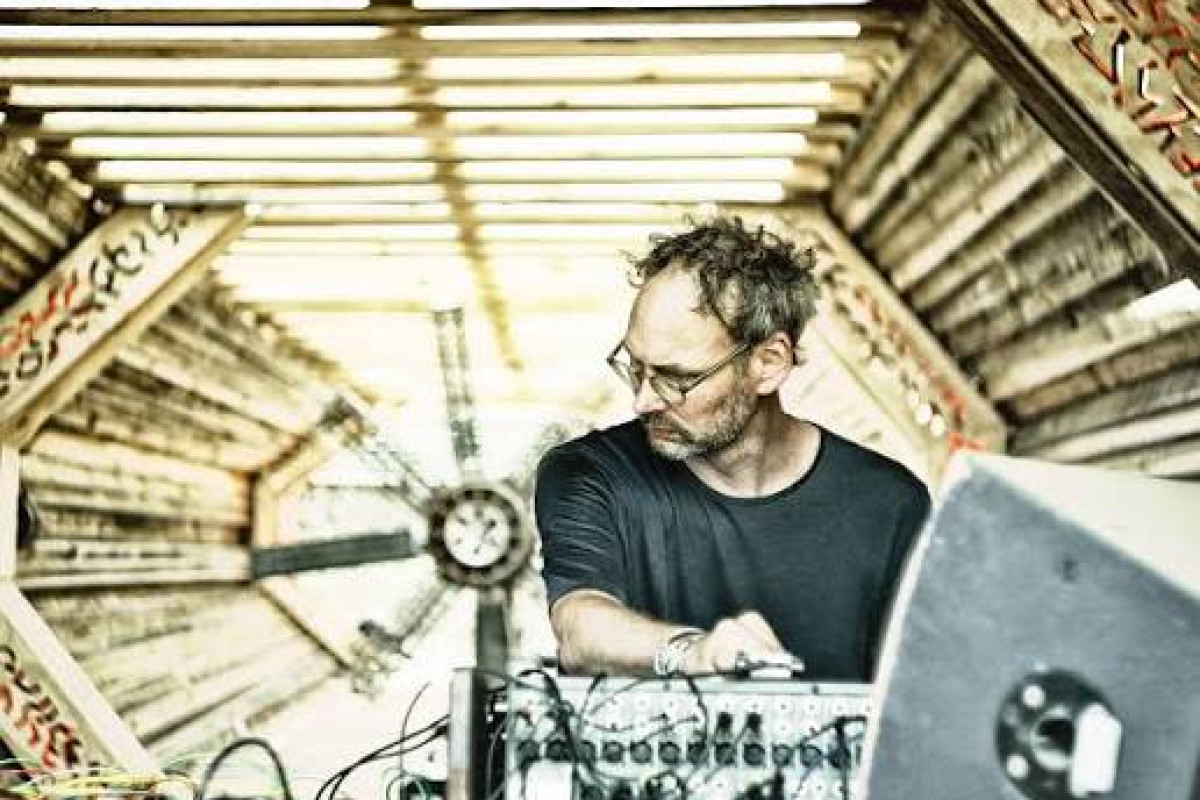
Danish composer Sofus Forsberg has died at the age of 56. With his distinctive blend of melodic sensibility, electronic processing and rhythmic precision, he created a musical world that moved effortlessly between IDM, pop and the avant-garde.

Forsberg’s compositions were often tonal, melodic and beat-driven, but beneath their immediately accessible surface lay a deep interest in the materiality of sound. He worked, among other things, with fragmented recordings of real-world sounds, transforming them into rhythmic patterns, pulsating structures and processed soundscapes. The recognisability of everyday sounds could gradually dissolve, becoming something abstract and dreamlike.

There was a particular melancholy to Forsberg’s music, but also a lightness and a strong sense of pop’s direct communicative power. He had a sure instinct for bringing electronic textures, beats and melodic passages together without allowing any of them to lose their distinct character. The experimental was never an end in itself, but part of a natural and personal musical language.

Sofus Forsberg leaves behind a body of work in which the electronic and the organic, the immediately accessible and the exploratory, could exist side by side. His music possessed both precision and sensitivity – qualities that made it unmistakably his own, and that will remain his lasting imprint.

© Malthe Folke Ivarsson

»In his music, composer Allan Gravgaard Madsen tries to create a better version of himself.« 

Allan Gravgaard Madsen is a Danish composer based in Copenhagen. His most recent works include Träume nicht and Nachtmusik. He tries to create a better version of himself in his music – where his personality tends to be restless, chatty and has an active inner life, his music is controlled, simple and merciless in its expression. He is the recipient of the Carl Nielsen & Anne Marie Carl-Nielsens Hæderspris 2022.

in briefrelease
23.01.2022

Finnish Space Travel

Tomutonttu: »Hoshi«
© Tomutonttu: »Hoshi«

The Finnish multimedia artist Jan Anderzén has, with the album Hoshi, released under the solo moniker Tomutonttu, created a true little star. Not only because »hoshi« literally means »star« in Japanese, but above all due to the music itself. There is something cosmic, yet infinitely minute, about the sonic worlds Anderzén conjures—like a galaxy reflected in a puddle, or a space journey in a rocket carved from a hollow tree trunk. Synths emit busy, warm blips and bloops, while ultra-short vocal and instrumental samples create a recognizable blur. At once artificial and organic – soft, rounded, jagged, crackling.

Anderzén approaches sound with a playfulness I simply adore. His music is strange in an incredibly comforting way. It places me in a kind of colorful, trance-like state, only interrupted when, several times over the course of the album, I find myself smiling in delight at a particularly great sound. The synths on »Katse osuu sähköön!« The choral samples on »Kesä oli äkkiä ohi!« Milo Linnovaara’s flute on »Malta lausua ‘AH’!« And many more. Hoshi is an album packed with microscopic moments that together form a frayed, exploding, radiant, idiosyncratic whole—a stellar moment of just under 38 minutes.