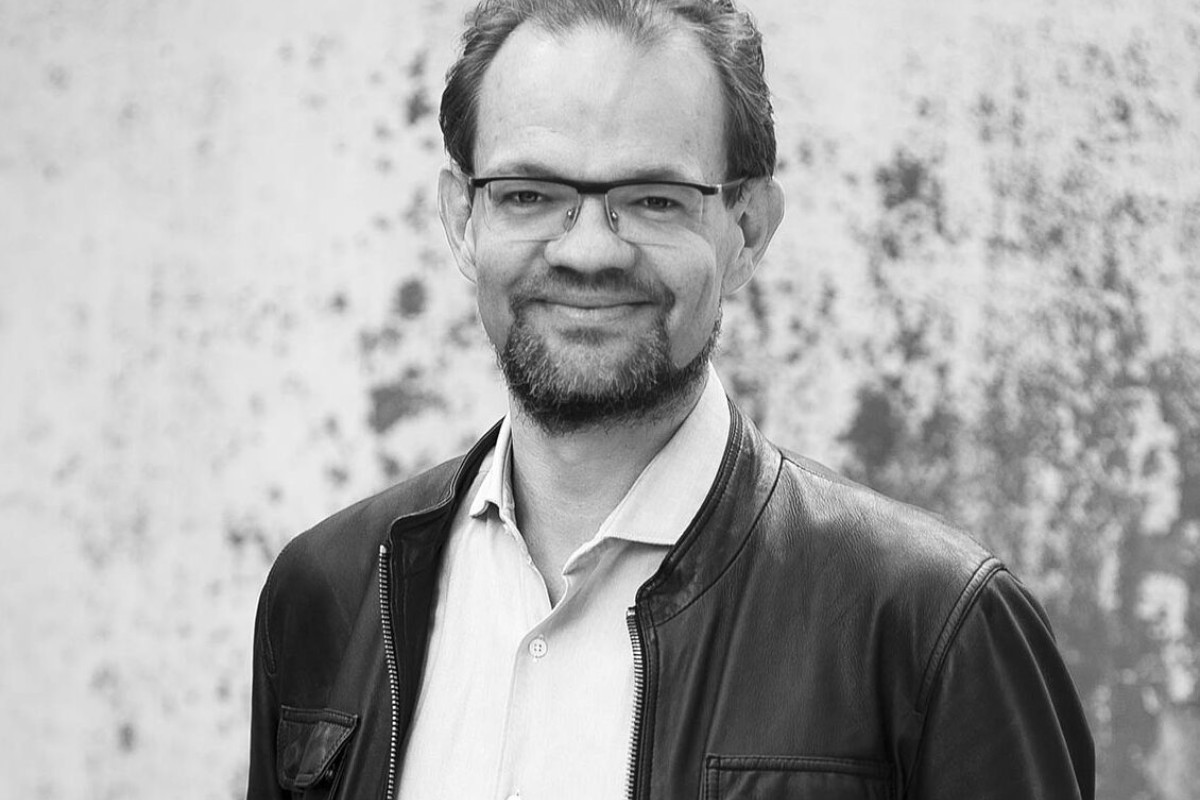
Thorbjørn Tønder Hansen has died. With Thorbjørn’s passing, the art music community has lost one of the Nordic region’s most significant producers, curators and cultural leaders.
For more than two decades, Thorbjørn worked at the intersection of contemporary music, sound art, festival management and Danish-Norwegian cultural cooperation. From 2000 to 2006, Thorbjørn was manager of the Norwegian Cikada Ensemble. In 2009, he became director of Art Music Denmark (then Snyk), a position he held until 2017, when he returned to the Norwegian cultural scene as director of the Ultima Festival. In the final years of his life, Thorbjørn served as a board member of the Foundation for Danish-Norwegian Cooperation.
Thorbjørn was a well-liked and visionary cultural leader who left an indelible mark on the music scene. I, like many other Danish artists, probably remember Thorbjørn best for his inspiring and courageous projects, such as the G((o))ng Tomorrow Festival (formerly Wundergrund). Thorbjørn was never afraid to give young and emerging artists a chance to perform, and I do not think it is an exaggeration to say that, for this reason alone, Thorbjørn had an impact on an entire generation of Danish artists.
I was still a young composition student when I first met Thorbjørn. It must have been around 2008. At the time, Thorbjørn was a project manager at Art Music Denmark, which was in the midst of developing G((o))ng Tomorrow. A festival that mixed genres and crossed artistic communities, Thorbjørn explained – a radical concept in Denmark at the time. The next thing I knew, I was standing on the G((o))ng stage at Råhuset with a group of wild young artists – musicians and composers, from both classical and rhythmic traditions, with vastly different artistic expressions and working methods. The concert that followed was hardly an artistic revelation, but the conversations, friendships and nights at the bar with a group of artists I would otherwise never have encountered opened my eyes to an entirely new way of collaborating – both artistically and in terms of cultural production.
Over the years, Thorbjørn developed many international friendships with artists and institutions from near and far. Thorbjørn and G((o))ng Tomorrow introduced countless exciting artists to Denmark while also opening new doors abroad for Danish artists. For many years, Thorbjørn was almost synonymous with Danish art music abroad and an exceptionally important link between artists, venues and festivals.
This is how I believe many people remember Thorbjørn: as an inspiring figure with forward-looking ideas, curious and courageous, and with a strong understanding of the value of international musical exchange.
The Danish music scene would not be the same without Thorbjørn. The same can be said of Art Music Denmark. Our small genre organisation has changed considerably since Thorbjørn was its director. Nevertheless, I am proud of the organisation I myself took over, and where the fundamental values from that time are still very much alive. An organisation that works to create new opportunities for artists. An organisation with a strong international network and a focus on international musical exchange. I do not believe this would have been possible without Thorbjørn’s immense and tireless groundwork.
Thorbjørn Tønder Hansen has died. He will be deeply missed, not only by artists and the cultural community across the Nordic region, but also by his many friends and collaborators around the world. Thorbjørn created connections, ideas and visions that continue to shape today’s cultural landscape. I have no doubt that his impact on the cultural life of the Nordic region will live on.
My warmest thoughts go out to Thorbjørn’s family and loved ones at this difficult time.
May Thorbjørn’s memory be honoured.
Regin Petersen
Director, Art Music Denmark