



© Thor Brødreskift
© Thor Brødreskift
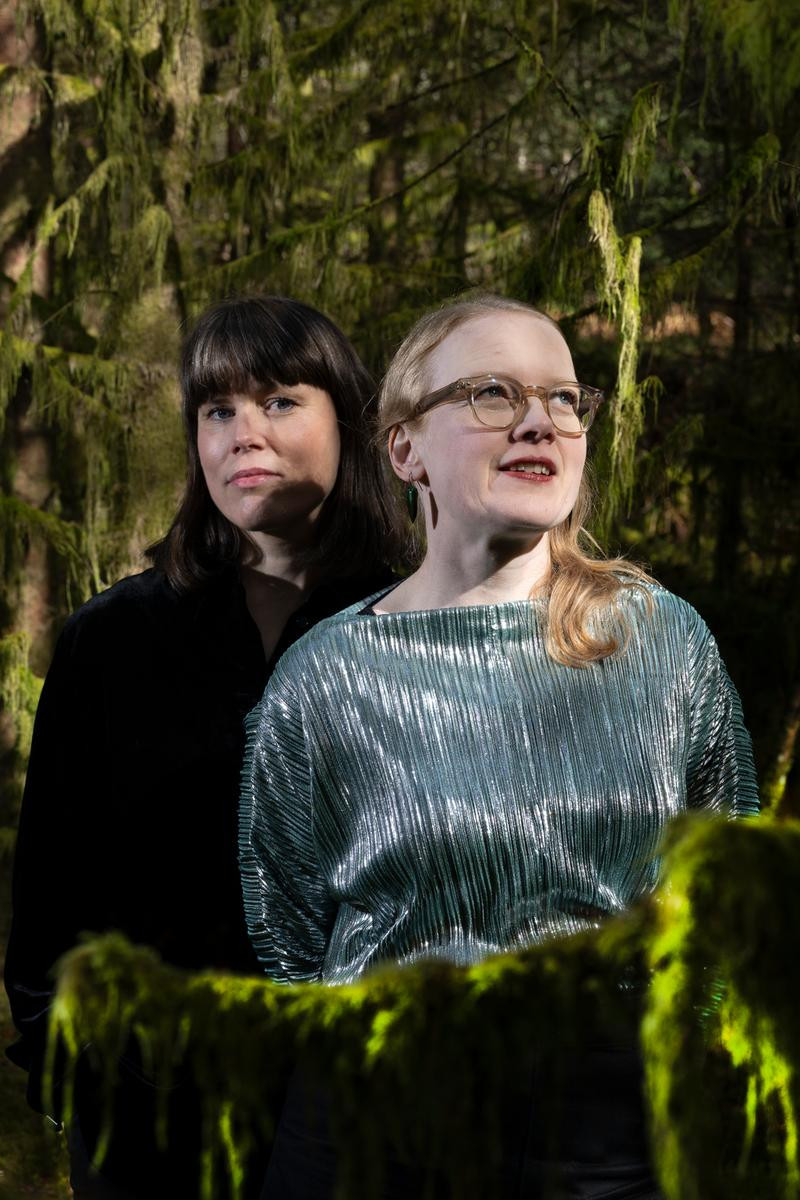
The 2026 Nordic Council Music Prize goes to Norwegian composers Kristine Tjøgersen and Benedicte Maurseth for Elja, a suite for the Kronos Quartet and Hardanger fiddle.
 
Rationale

Elja is an innovative and ambitious work that unites folk tradition, contemporary music, and a strong ecological perspective within a single, fully realised artistic vision. Drawing on the open landscapes of Hardangervidda, the composers create a rich and coherent sonic world in which birds, animals, weather, and vast distances emerge as musical movements and states of being. In it, nature appears not as a subject to be depicted, but as a fragile ecosystem in which everything is connected – and the music carries a quiet awareness of what is at risk of being lost.

The piece was written for a purpose-built family of instruments – Hardanger fiddles, Hardanger viola, and Hardanger cello, crafted by luthier Ottar Kåsa – with Maurseth as soloist. Their sympathetic strings, alternative tunings, and rich overtones open an immersive space in which the tonal heritage of the Hardanger fiddle tradition meets new musical landscapes. The meeting between Maurseth’s grounding in a living, oral tradition and Tjøgersen’s precise and exploratory approach to sound gives rise to a poetic, richly detailed, and sonically daring expression. 

Elja demonstrates how collaboration between different artistic practices can expand the possibilities of the instrument, the tradition, and contemporary music itself. Through its artistic originality, its profound engagement with nature, and its international impact, the work stands out as a significant contribution to the music of our time – a work that invites deep listening and reflection on humanity’s place within the wider ecological community. 

Commissioned by Kronos Quartet and Carnegie Hall, the work had its world premiere in New York in March 2025, marking an international breakthrough for two of the most distinctive voices in Norwegian music. 

Source: Nordic Co-operation

in briefrelease
10.04

Squarepusher in a Straitjacket Among Strings

Squarepusher: »Kammerkonzert«
© PR
© PR

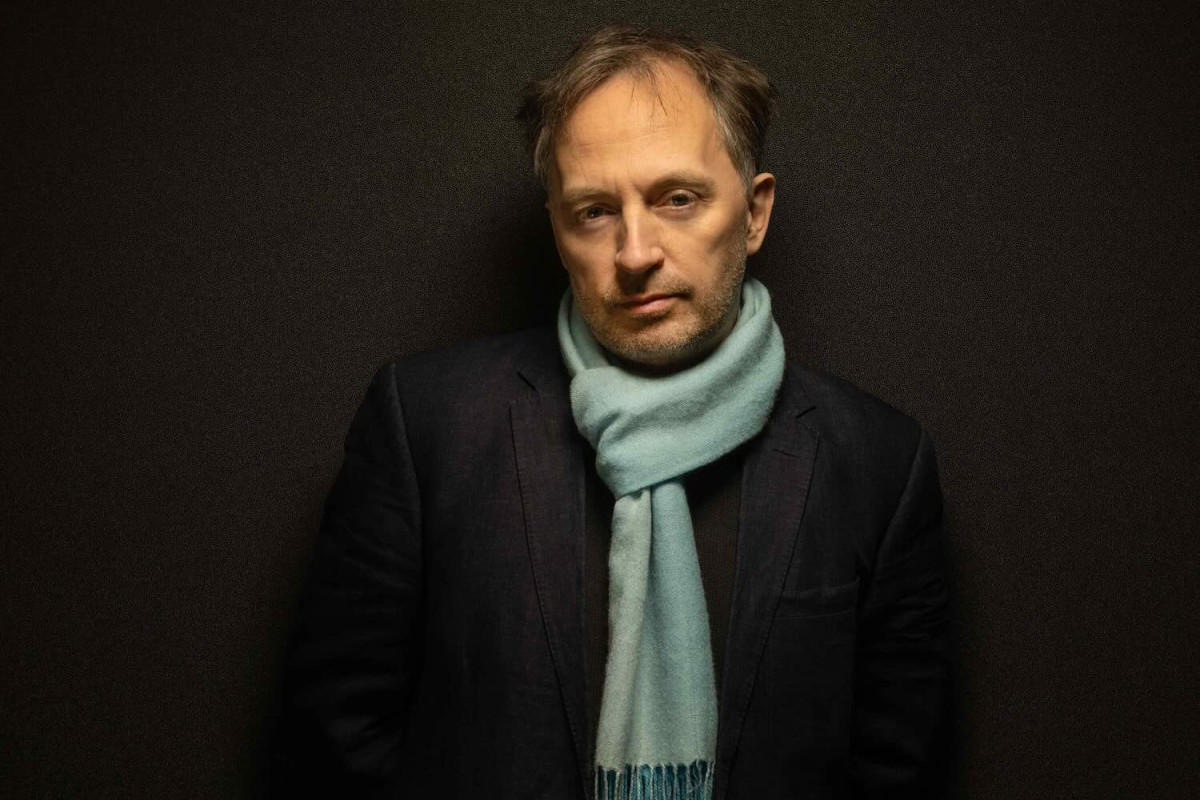
With Kammerkonzert, British electronic composer Tom Jenkinson, better known as Squarepusher, places himself within the braindance tradition of the 1990s and 2000s, when electronic artists flirted with classical music – from Aphex Twin’s collaborations with Philip Glass to Venetian Snares’ Rossz Csillag Alatt Született, where baroque patterns were folded into mechanical rhythms and the melancholy of strings torn apart by breakbeats.

Squarepusher is no stranger to the acoustic: his hyperactive bass guitar – often sounding as if in flight from its own virtuosity – has been central to his music since Music Is Rotted One Note (1998). Here, too, it takes a leading role. On »K2 Central«, a looped, faintly anxious bass figure drives the music forward while strings swell in and shift its harmonic function. The effect is not without merit, but the execution is strikingly conventional. The MIDI-generated strings move in neat chord blocks with an almost overly reverent sense of decorum. The classical tradition is not challenged but merely cited, and the arrangements are so polished that the orchestra’s presence feels barely justified.

The compositions also hover awkwardly between the slick functionality of elevator jazz and something exaggerated, almost circus-like, as if unable to decide whether they want to be serious or ironic – and end up being neither. »K4 Fairlands« stands out by pairing string quartet with the busy breakbeats that are Squarepusher’s trademark. Here, a friction emerges between the rigid and the fluid that briefly opens the album up, suggesting how two otherwise incompatible systems might coexist.

Overall, Kammerkonzert comes across as artistically cautious, marked by a peculiar restraint. What remains is the sense of something only half realised. One wishes Squarepusher had either ventured further into the orchestral realm or trusted more in what he actually excels at, giving the electronics freer rein. Preferably both.

in brieflive
07.04

PowerPoint Against the Dark

Laurie Anderson with Sexmob: »Republic of Love«
© Ebru Yildiz
© Ebru Yildiz

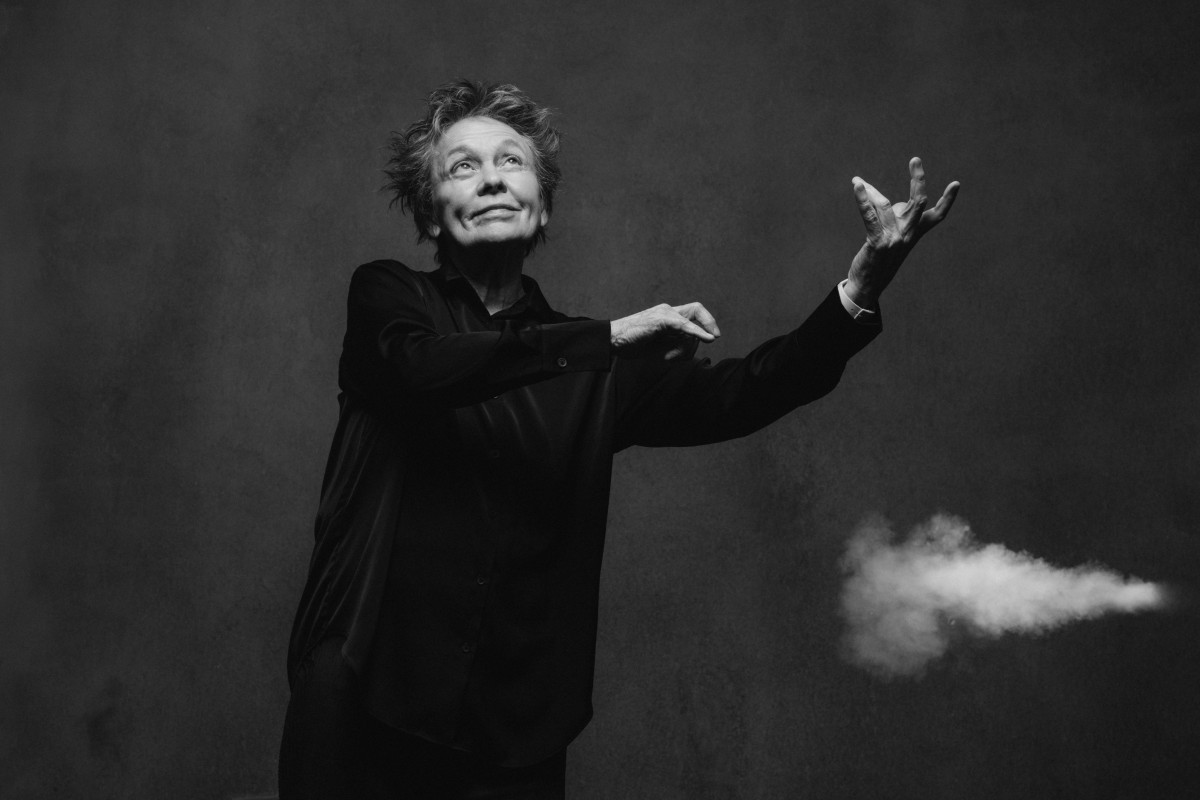
With her characteristic curiosity, Laurie Anderson opened Sunday’s concert in DR’s concert hall with a political statement and the remark, »Thank you for your attention to this matter.« The theme of the evening was a heavy political climate, to which Anderson – like a professor emerita of the avant-garde – offered a musical framing narrative of music, slideshow, and quotes from thinkers and artists who, each in their own way, nuance an increasingly dark world. A framework in which every piece of music had a clear purpose: to evaporate any residue of convention.

Slide by slide, the audience was guided through curious glimpses of the totalitarian and the conventional. The long list of words deleted from government documents by the Trump administration, for instance, served as an introduction to »Language Is a Virus«, inspired by writer William Burroughs, who also appeared on the screen behind Anderson and the band Sexmob. So did Lou Reed, Anderson’s late husband. Dressed in a glittering jacket that, like a kind of magical Kraftwerk, triggered sounds of drums, foghorns, and cash registers, Anderson shared the couple’s three life lessons while playfully dancing and narrating.

I don’t think I’ve ever attended a concert where the entire production team – both on and off stage – was credited with rolling end titles. Yet it felt like a completely natural conclusion to Anderson’s slightly dry and remarkably hopeful PowerPoint concert. A performance that, as a delightfully deconstructive reminder, united the experimental and the concrete in a hands-on first aid kit against tyranny and oppression.

© Peter Gannushkin

»Music for me is a world full of sound that you can explore, juggle with, systematize, be inspired by and form a starting point for meetings between people across cultures and generations.«  

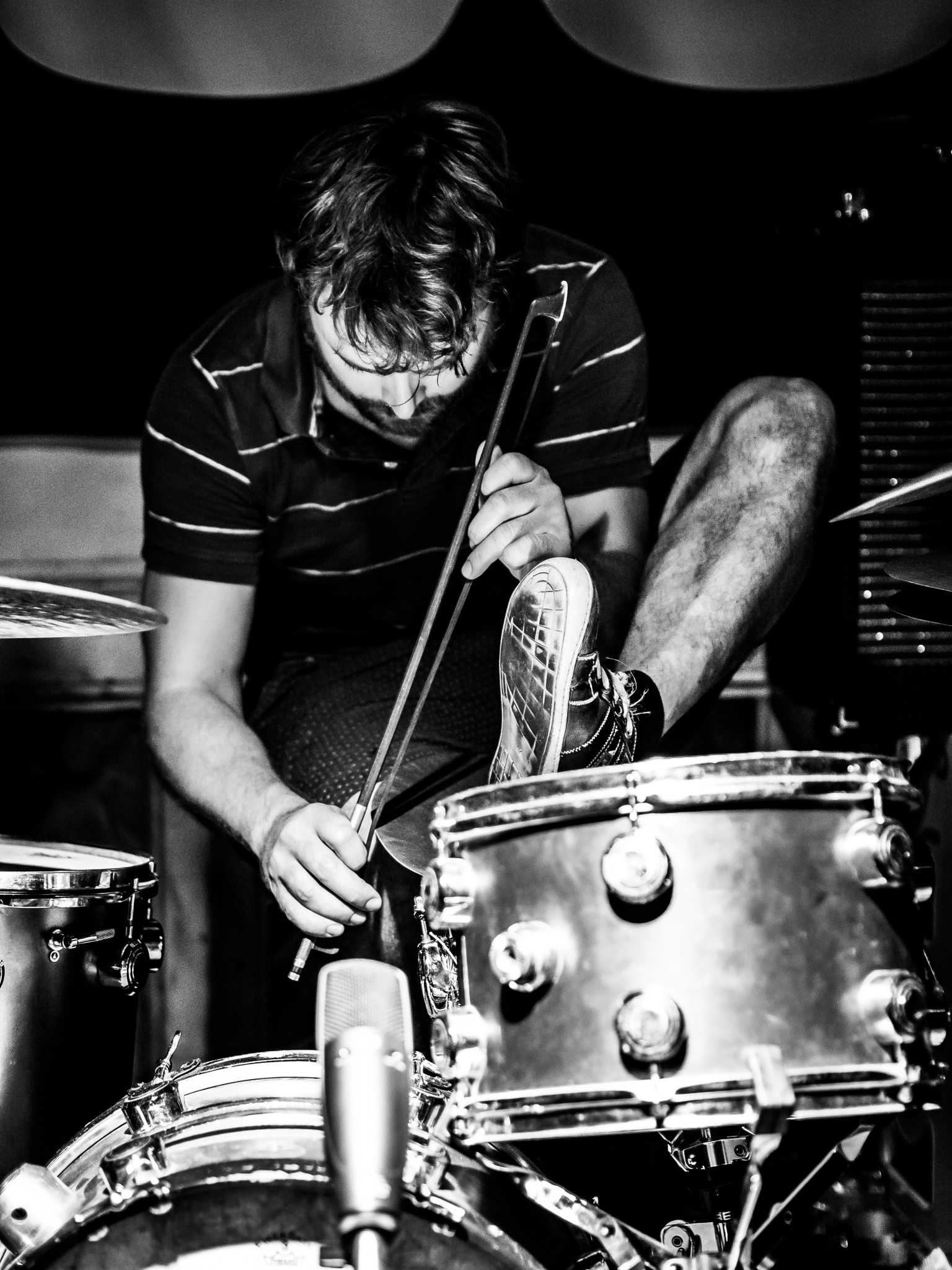
Håkon Berre (b. 1980) has made his mark as a central figure on the Danish improvised music scene. His practice is characterized by an expanded approach to percussion, where both traditional instruments and everyday objects – such as doorbells, tin plates, chains and kitchen utensils – are included in a nuanced and often unpredictable sonic expression. He has performed at clubs and festivals internationally and collaborated with a wide range of notable musicians, including Peter Brötzmann, Phil Minton, Axel Dörner, John Tchicai, Jamie Branch and Otomo Yoshihide. Berre contributes to an extensive discography with more than 40 releases, many of which on the artist-run label Barefoot Records, which he co-founded. He has also composed and arranged music for theatre and exhibitions, and worked on interactive sound installations shown in museums in Denmark and Germany. He is active in a number of ensembles and collaborations, including Ytterlandet, TEETH, VÍÍK and Mirror Matter, as well as in various duo and quartet constellations.
© Niklas Ottander

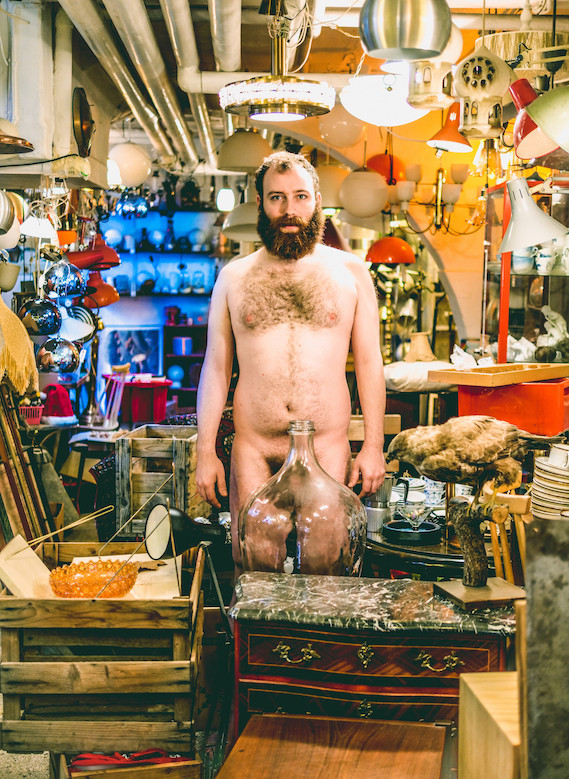
»Music is a deep, but not serious, spiritual practice, in which creator, collaborator, and consumer alike are their own personal pope.«

James Black (b. 1990) is a composer, performer, and artistic director of Klang Festival – Copenhagen Experimental Music. Originally from Bristol, England, they moved to Copenhagen in 2013. Black's works have attracted a large amount of attention both nationally and internationally for their signature combination of artistic courage and vulnerability, described by the Danish Arts Council as »a universe of real madness where everything goes«. Their work is a deep and personal exploration of topics such as religion, loss, and queer identity, that is unafraid to be stupid or serious in any direction.

© Christian Klintholm

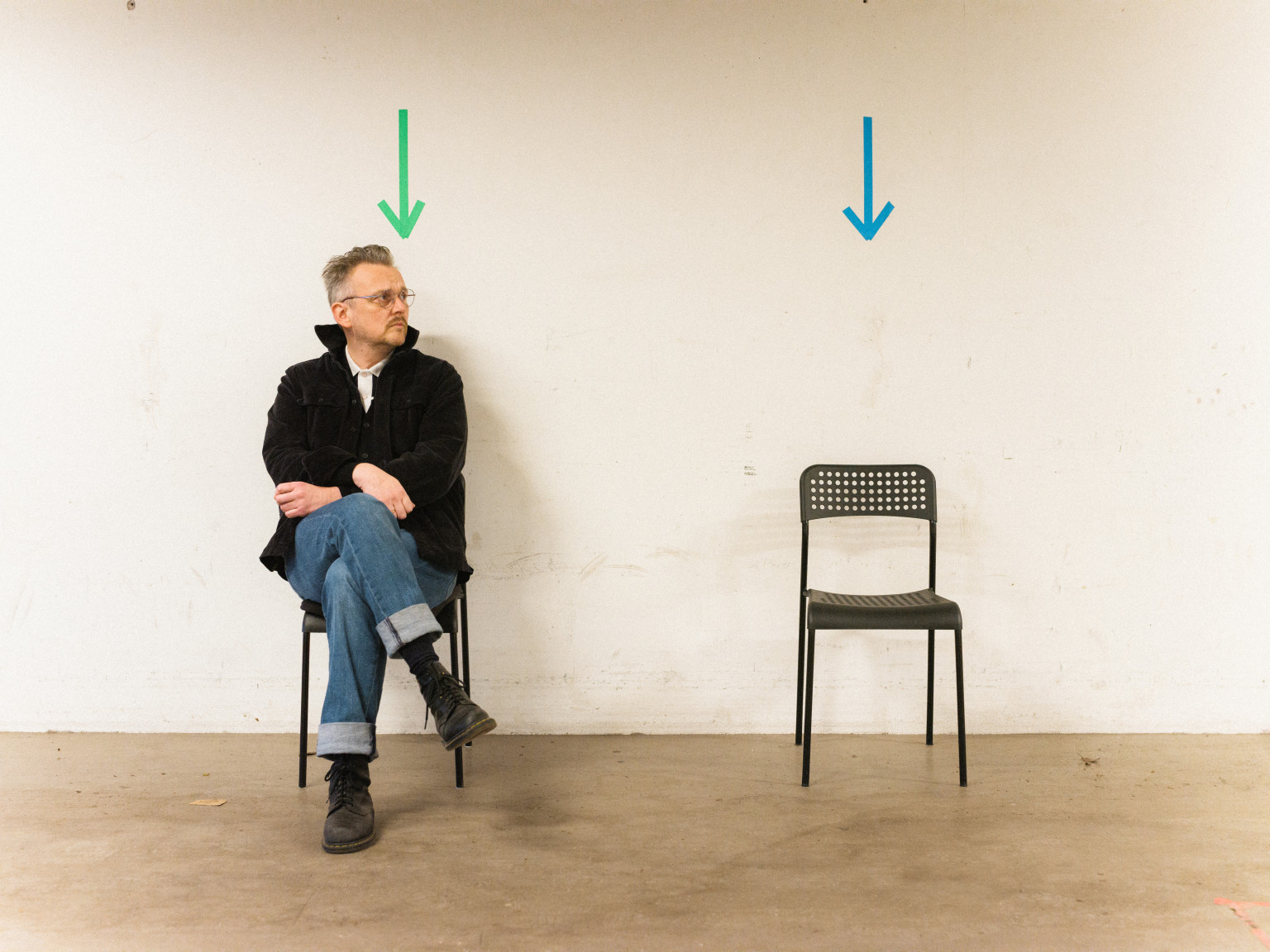
»Music is just something for me.«

Christian Juncker is a Danish musician and songwriter who has released a number of Danish-language albums. He debuted in 1995 with the band Bloom. Together with his friend Jakob Groth Bastiansen, he formed the duo Juncker in 2002. He is also behind the Christmas carol »Luk julefreden ind« from 2024.