In brief
16.03.2021

Doing it anyway

Mikkel Schou: Debut Concert I-II
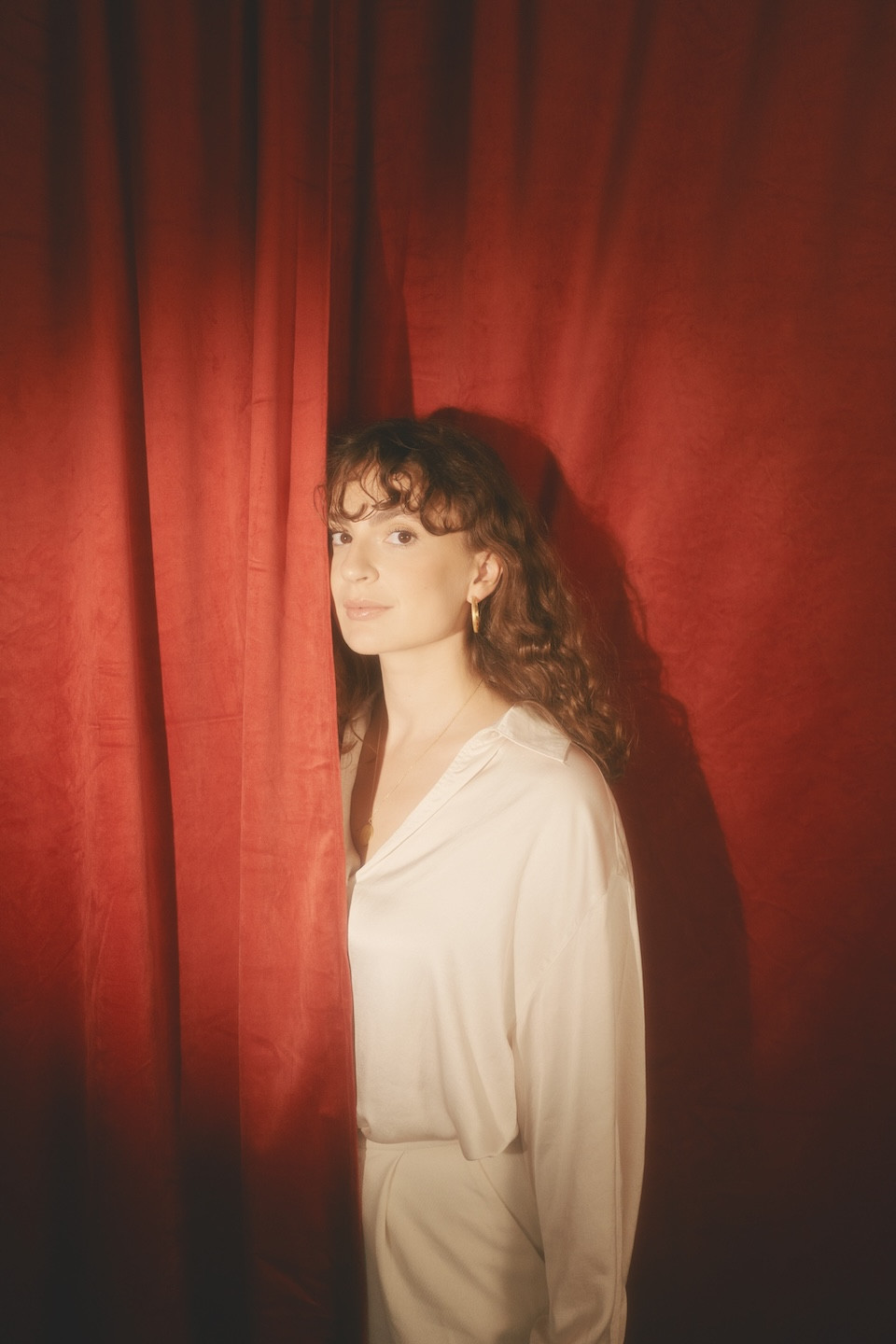
Mikkel Schou. © The Royal Danish Academy of Music
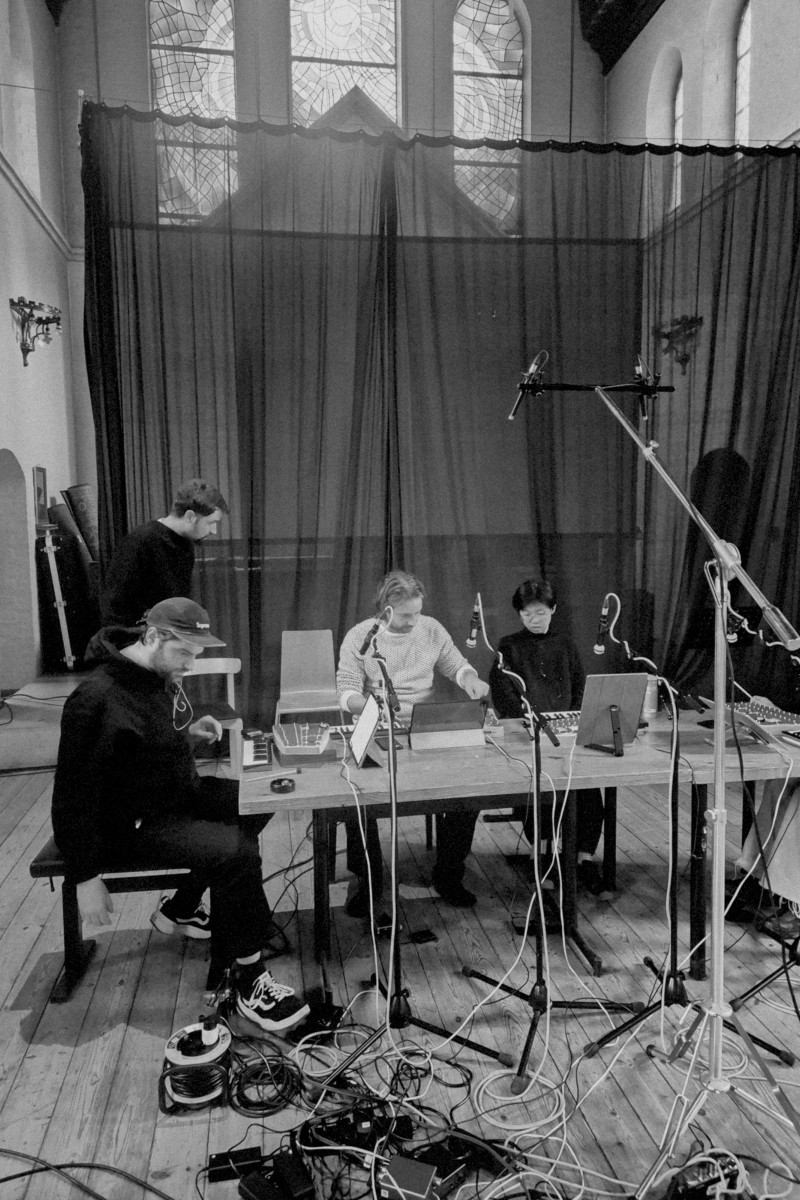
Mikkel Schou at his Debut Concert. © The Royal Danish Academy of Music

Schou is a powerhouse – unafraid to try new things, push himself in new directions, and pull us all along with him. We sorely need this energy, and we are lucky to have Schou and his do-it-anyway attitude.

But sometimes do-it-anyway needs tempering a little. Schou spoke about how he prepared this concert without guidance from his teachers. Brave, but I missed a guiding hand, a sharper focus. Both concerts were too long, and not always coherent. I sensed an artist who has defined himself by who he isn’t, but not yet by who he is.

Still, there were glimpses of a unique personality. Stefan Prins’ Generation Kill was an odd choice to start a debut concert with – Schou’s back was facing the audience, and the piece did little to highlight his skills as a performer (I also hated the piece, but that’s a personal matter). So I’m going to pretend that the concert started with Johannes Kreidler’s Guitar Piece – a vile little video-nasty to which Schou fully committed. A perfect manifesto – the absolute nerve of presenting two years of soloist class education by eating your guitar. I wish we’d had more of this playfulness.

But the energy sagged with a disparate selection of pieces that seemed more like a composer class concert than a presentation of a fresh artistic profile. Props to Schou for this – using your debut concert to focus on younger composers is bold, and should be celebrated. I just wish we’d had more Schou. My highlight was Emil Vijgen’s Photobooth Study, where Schou got to engage with his instrument in a different way, let loose a little, and be a soloist.

Schou may present himself as a force of nature, and he is, but there is an air of sensitivity (reticence, even) to his presence that does not always match up with the pieces being performed. Rob Durnin’s What, de facto could have benefitted from some more ‘fuck you’ attitude – the performance was oddly shy.

The late-night concert’s improvisation was fun: it’s always a joy to see Marcela Lucatelli and Henrik Olsson improvise (although Schou was the clear third wheel). However, the concert was overlong, and did not add much to Schou’s profile. I get that he wanted to show more sides of himself, but, again, it came at the expense of focus. Replacing Esben Nordborg Møller’s bloated Drones with Sarah Nemtsov’s lounge-jazz tinged Seven Colours from earlier would both shorten the concerts and sharpen the intention.

But these things are matters of polish. Schou is a rare and exceptional artist, and deserves accolades for his work and for these concerts. With more confidence and time to refine his vision, there is no doubt that Schou will be an essential fixture on the new music scene for years to come.

In brieflive
08.12.2024

The Perfect Conception of Perfect Love

toaspern-moeller: »Liebe«
© Kirsten Nijhof
© Kirsten Nijhof

Liebe is a performance in which everythingcomes together in a higher unity in a way one only rarely encounters. Even the ripples in the stage carpet, created by the performers’ imprints, are tender and electric to behold. The music is sparse and austere, like modernized Renaissance vocal music, while the dance is rooted in the traditional and is just as restrained and measured.

The two performers, Alma Toaspern and Mathias Monrad Møller – who also serve respectively as choreographer and composer – sing and dance alone on stage, while excerpts from the French writer Annie Ernaux’s recollections of an all-consuming infatuation and the desire for »perfect love« are projected onto the backdrop.

If I were to describe Liebe in a single word, it would be contrapuntal – a strict way of writing music with particular attention to how melodies in polyphony affect one another. It is astonishing how this otherwise old idea has been revitalized so convincingly. The material is carefully selected and thoroughly worked through – the music, scenography, lighting, and costumes felt like both the softest surprise and the most natural inevitability.

Møller’s and Toaspern’s meticulous synchronization, with no support beyond each other, is equally astonishing. The duo’s rigorous compositional strategy and uncompromising choreography are more than mere tools in a toolbox. They are part of an investigation of the erotic and the amorous: to be subjected, examined, and desired. Liebe is one of those performances one feels grateful to have experienced.

Katarina Gryvul. © Sam Clarke

»For me music is meditative chaos.«

Katarina Gryvul is a Ukrainian composer, violinist, music producer, and founder of Gryvul School. She emphasizes timbre as the primary element of form in her compositions. positioned between classical and electronic scenes, she has developed a unique way of composing that melds classical contemporary approaches with modern music technology. Gryvul works in the field of ambisonics and multichannel composition, utilizing live electronics for instruments and voice alongside analog modular synths. At the heart of her artistic vision lies the concept of duality, a theme intricately woven into every facet of her musical expression.


© Klaudia Krupa

»I can’t say what music is but I can say what music does: it is an experience, it travels through all my bodily senses, it brings energy (not only power but also tranquilizing and soothing, even peaceful energy); above all, it revives the memory of frozen moments, not unlike the scent of perfume, and yet it remains in the moment, the 'now' – in a recording a 'now' conserved from the past which we can relive whenever we press 'play' – and thus my playlist is a selection of moments related to person or event that was important to me.« 

Rei Nakamura is a pianist specialized in contemporary music. Her career has a wide range as solo pianist, ensemble player, improviser as well as writer. Through her on-going project Movement to Sound, Sound to Movement for piano and multimedia, she has worked in close collaboration with  composers as Annesley Black, Malin Bång, Christian Winther Christensen and Simon Steen-Andersen. Her observations and theoretical approaches are expressed in published texts in Neue Zeitschrift für Musik thematizing parallels in music, art and performance. 2021 she published the book Movement to sound, sound to Movement – Interpreting Multimedia Piano Compositions by Wolke Edition. As a Soloist she has premiered piano concertos with orchestras such as the SWR Symphonieorchester, WDR Synfonieorchester, RSO Berlin, Polish Nation Radio Symphony Orchestra and RAI National Radio Symphony Orchestra with conductor as Brad Lubman, Robert Treviño, Yaroslav Shemet, Michael Wendeberg and Bas Wiegers. She performed in Warsaw Philharmonic (Warsaw) and Arturo Toscanini Hall (Turin) and music festivals such as Eclat Festival Stuttgart, Ultraschall Berlin, Festival Acht Brücken Colon, MITO Festival (Turin), Warsaw Autumn (Poland) , Sound of Stockholm (Sweden), Monday Evening Concerts (USA).  She was was born in Japan, grew up in Brazil and is based in Germany.

In brieflive
12.10.2024

You Just Want to Disappear into These Cosmic Hordes of Sound

Christian Skjødt Hasselstrøm: »Myriader«
© Niels Nygaard
© Niels Nygaard

British Burial should have once said that in his music he strives to reproduce the experience of standing outside a club and feeling the rhythms on the asphalt. Distances are fascinating. The sounds in Christian Skjødt Hasselstrøm's work Myriads in an enormous water container at the Ole Rømer Observatory comes from afar. It is rain from space, cosmic radiation or high-energy particles, which are translated into sound via three detectors. They also flash with light in the pillared hall, and when you grope your way to them through the darkness, they puff softly and innocently. But when you walk around the 1,662 square meter room, the sounds still seem a little bit threatening – like artillery drums, sounds from modern wars or warning signals from ancient warlords... The sounds are always very far away and rumble at a low frequency in the room with a reverberation of 40 seconds. But they are just peaceful phenomena from distant galaxies, and they hardly want us any harm. They just make us feel so infinitely small. Hasselstrøm did the same to us in a former cereal silo in the city of Struer.

»You can get salt and minerals on your clothes. It can be washed off,« warned the guide, now ringing a bell. But what if you don't want to get rid of that sound at all and don't want to go home to Aarhus, but just want to stay deep underground for more than the given 15 minutes and disappear into the cosmic and very delicious hordes of sound? Distances are fascinating, and Myriads is better – more enriching – than any club in Aarhus’ Latin Quarter.