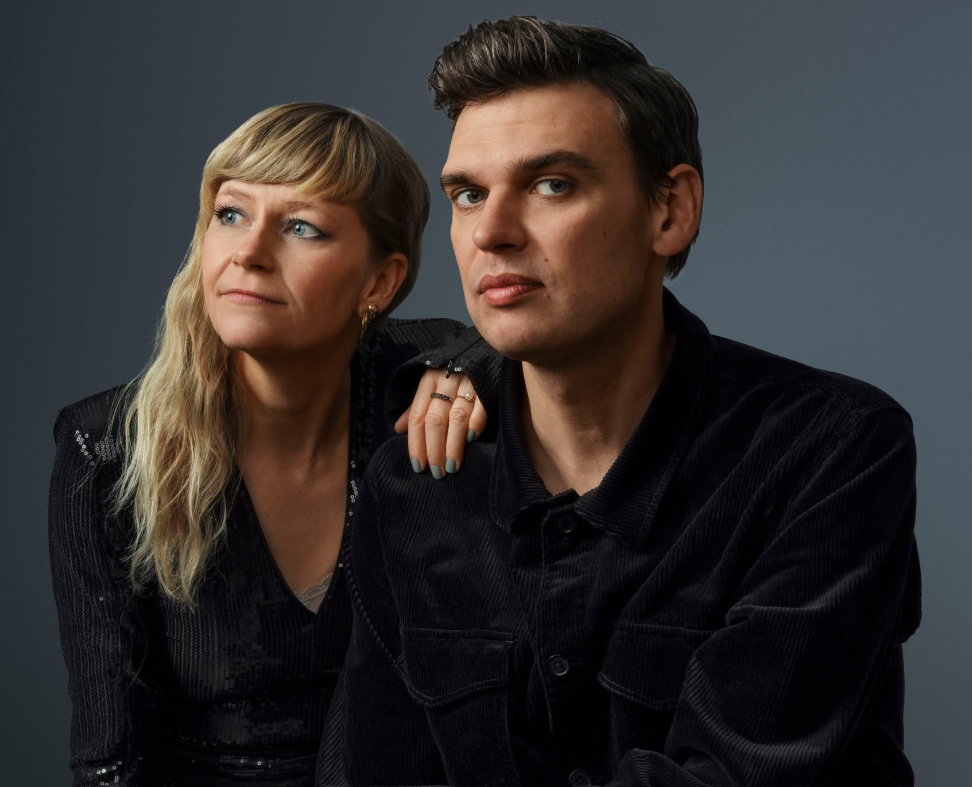
Lil Lacy: »You are somehow connected«. © Martin Dam Kristensen

I August Strindbergs symbolmættede drama Et Drømmespil fra 1902 forlader gudedatteren Agnes sit himmelske hjem og tager bolig blandt menneskene. Da hun ved stykkets slutning vender tilbage, opsummerer hun sine jordiske lidelser således: »At være til; at mærke mit syn svækket af et øje, min hørelse sløvet af et øre, og min tanke, min luftige, lyse tanke fanget i fedtfletningers labyrinter.«

Disse fedtfletninger væver sig ligeledes ud og ind af komponisten Lil Lacys Strindberg-fortolkning, mens det luftige, det lyse repræsenteres af lette overtoner. I Lacys multimedieundersøgelse fremstår mennesker forbundet på tværs af udstrakte geografier og generationer. Det understøttes af et komplekst landskab af klassisk og elektronisk musik, lys, billeder, skrevne og talte ord. 

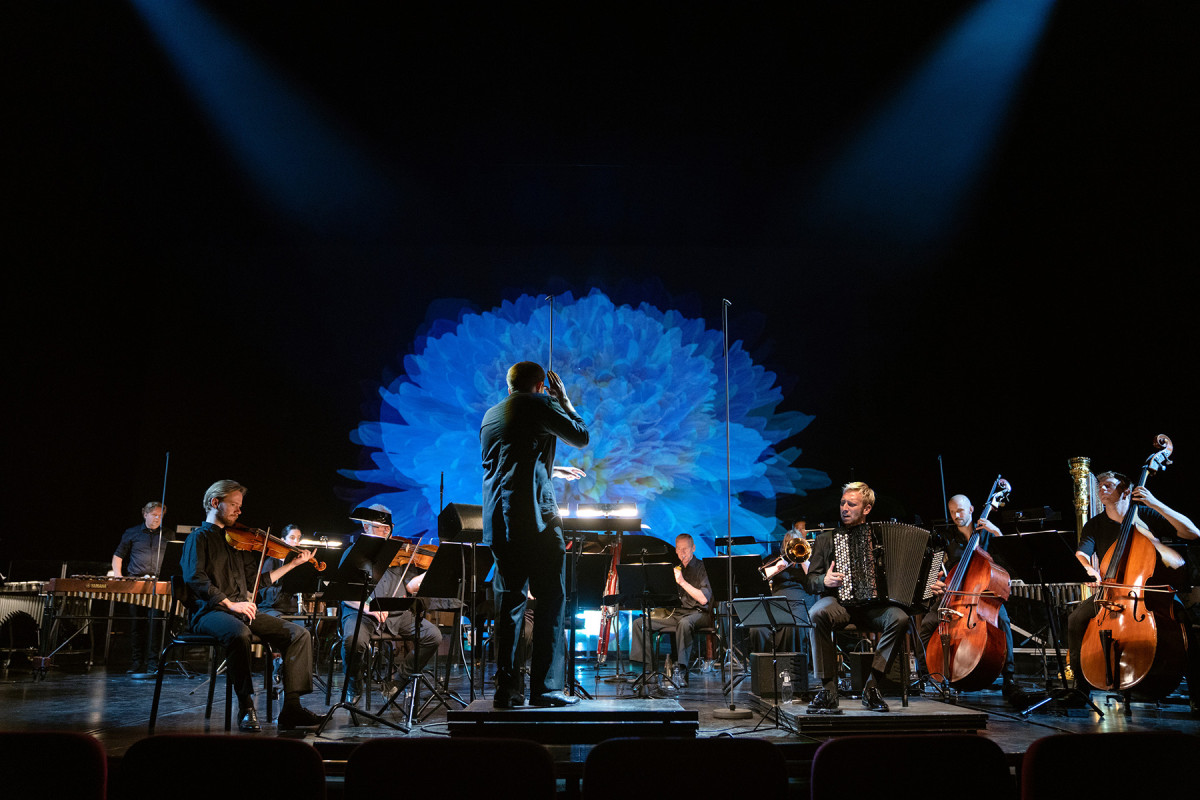
Som hos Strindberg er det gudernes verden, der har rod i det konkrete. Lacy starter med noget så jordnært som lyden af en gulerod, der skrælles og gnaskes, mens tandsættets kværnende rytmer runger gennem kraniet. Herefter glider vi over i drømmen. Agnes synker videre, langt, langt ned til menneskene, mens tonerne fra et akkordeon, spillet kyndigt af solisten Bjarke Mogensen, bliver til lyden af en lunge i konstant bevægelse, et organ der langsomt udvider sig, trækker sig sammen og holder os fast i livet, mens vi sover videre. Strygerne understreger denne skubbende, trækkende bevægelse. 

En række stemmer – tilhørende en sydafrikansk kunstner, forfatteren Suzanne Brøgger og andre – fylder salen. Nok er det »synd for menneskene« (jf. Strindberg), men hos Lacy er figurerne fulde af håb og drømme for fremtiden. Som mennesker ejer vi ikke guddommeligt overblik; vort syn er netop »svækket af et øje«, af den fysiske verden vi er kastet ned i. Samtidig er der skønhed at finde i »fedtfletningernes labyrinter«, i måden vi er bundet sammen på.

You are somehow connected slutter ligesom Et Drømmespil med en gigantisk krysantemum, der springer ud, mens Agnes vågner. Smukt, brusende og voldsomt. Andre steder i opsætningen svæver citater fra Strindbergs tekst over musikerne. Denne direkte forankring i den oprindelige dialog virker dog unødvendig. Lacys stykke kan sagtens stå selv.


in briefrelease
13.04

A Cave of Sound: TAK Ensemble Cuts into the Acoustic Darkness

TAK Ensemble: »Between the Air«
© Titilayo Ayangade
© Titilayo Ayangade

Between the Air demands ears in exploration mode. TAK Ensemble’s eighth album unfolds as a dense acoustic landscape – like a cavern of sonic stalactites, rich in texture and resonance.

The five works, written specifically for the New York-based ensemble, present distinct voices in experimental contemporary music. The album opens with Eric Wubbels’s Instruments, a compelling actualization of Helmut Lachenmann’s musique concrète instrumentale. Violinist Marina Kifferstein’s energetic scratch technique sets a raw tone, carried by the ensemble’s precise, noise-based interplay, which shapes the album as a whole. At its center lies Lewis Nielson’s Siesta Negra, a sonification of Che Guevara’s final notes, written in 1967 shortly before his execution. Its oppressive, almost nightmarish atmosphere is foreshadowed by the sharp-edged textures of Golnaz Shariatzadeh’s moon that sank | wet grass. Bethany Young’s At Midnight I Walked in the Middle of the Desert then follows as a surreal, radio-play-like, playfully exaggerated coda. The album concludes with Tyshawn Sorey’s For jamie branch, a restrained elegy for the exceptionally gifted jazz musician who tragically died in 2022 at the age of 41.

With Between the Air, TAK Ensemble once again demonstrates its remarkable sensitivity to the materiality of sound, inviting listeners to move beyond the often harsh surface of the present – and, perhaps, to breathe more freely again. 

© Julie Montauk

»Music for me is a huge gift and an equally big mystery. I think it's pretty crazy to think about how much music there actually is! Imagine that as a listener you can be let in and get access to the innermost selves and feelings of so many different artists – and how many small details are in the artist's choices, so that it will sound exactly the way it does. It's mind-blowing! And really cool! I listen to a lot of different music and love when it speaks to both the head, the heart and the body – regardless of genre. It can be Radiohead's »Exit Music (For a Film)« or Peter Gabriel's »Sledgehammer«, for example. 

Anja Roar is a Danish singer and songwriter with a career that spans more than three decades. She has, among other things, sung a duet with Peter Belli, worked with DJ Aligator in the 90s band Zoom and participated as a choir singer on a long list of Danish releases. She has just debuted as a solo artist with the album Gratification. The publication thematically revolves around love in many forms – from the romantic and redemptive to the self-loving and socially critical.

in brieflive
13.04

The Harp’s Quiet Slumber

Julianna Barwick & Mary Lattimore
© Mathias Bak Larsen

The harp – one of the oldest string instruments – has always, to me, been closely tied to the floating threshold between sleep and wakefulness. Its quiet paving between night and day became even more palpable when Julianna Barwick and Mary Lattimore brought the ancient instrument to life at DR Concert Hall’s Studio 2. Lattimore’s harp playing and Barwick’s ethereal vocals inhabit a space somewhere between modern ambient and classical nocturne – like an anachronistic lullaby infused with synthesizers and drenched in reverb.

Most of the concert’s pieces were drawn from Barwick and Lattimore’s recent album Tragic Magic (2026), recorded over ten days in a basement beneath the Philharmonie de Paris, with free access to its collection of antique instruments. Both 1970s synthesizers and 18th-century harps are awakened on the album. And although Barwick noted with a smile that the old harp from 1740 unfortunately could not join them that evening, it was clear to feel the two American musicians’ passion for the span between the antique and the contemporary. This tension was most evident in their story about the first rainfall following the devastating wildfires in their hometown of Los Angeles. A field recording of that very rain introduced their subsequent cover of Vangelis’ »Rachel’s Dream« from the Blade Runner (1982) soundtrack, casting the all-consuming fires in a dark science fiction glow. Yet Barwick’s cinematic whistling and Lattimore’s harp arpeggios still found a glimmer of light within the dystopian darkness. Though both musicians have long-standing solo careers behind them, one can only hope this will not be the last we hear of their collaboration.

in brieflive
13.04

White as a Wound

Barbara Hannigan, Laura Bowler, Copenhagen Phil: »The White Book«
© Henrik Overgaard Kristensen

In The White Book, author Han Kang circles around grief by describing white things – such as one’s breath on a winter morning or the cloth in which a newborn is wrapped. Drawing on this poetics, Laura Bowler has created a work of the same name, which received its Danish premiere at the Royal Danish Academy of Music’s Concert Hall in Copenhagen.

Bowler evoked the same oppressive sense of untouched stillness in her exploration of the white. The soloist was Barbara Hannigan, whose voice moved through a wide range of registers, techniques, and expressions, yet each phrase remained immediate and sincere. Copenhagen Phil played with captivating attention to detail, constantly pulling the listener into the music’s »white« sonic surfaces. In particular, Bowler’s disciplined use of extended techniques (unconventional playing methods), slow glissandi, and noise-generating percussion created this sense of elevation.

Even the most brutal sounds possessed a refined and disarming fragility. One particular »creaking« sound from the percussion section moved me so deeply that I struggled to put into words the feeling it stirred in me.

My only reservation concerned the literary layer. The melodies moved too slowly through the words for a truly poetic experience to emerge. For that reason, I listened with particular interest to Bowler’s reflections in the talk that followed. There, she described how the work grew out of the overwhelming affect she experienced upon encountering The White Book. At the same time, she explained that the noise sound I had noticed was intended as an expression of longing. That was it, I thought – the word I had been searching for.

Soli City. © Bruno Modesto Leal

Electronic duo Vanessa Amara are riding a wave of success at the moment. Last year, their caustic take on Gudmundsen-Holmgreen’s organ music earned them credits on Rosalía’s much-hyped Duolingo album LUX, and this summer Birk Gjerlufsen and Sebastián Santillana – both former volunteers at Koncertkirken – will appear at Roskilde Festival.

But on Thursday night at Christianshavns Beboerhus, they were overshadowed by RMC alumnus Harald Bjørn, who opened under the alias Soli City. He too placed a classical instrument, the cello, at the centre of his electronic music, and his masterstroke was to make it shimmer like a beautiful, lost memory amid a restless abundance of chopped-up hyperpop aesthetics and melancholic spoken-word poetry.

The cello, played on electric keyboard, was synthetic yet human: an intentionally sloppy fragment that set the tone for half an hour of dissolution. Even when Soli City reached for life with an urgent handclap beat in a vast sonic space, it was staged like a chance pause during a flickering radio scan, while relaxed piano chords sustained an ambient sadness. Impressive.

It was refreshing when Vanessa Amara followed with a different, ecstatic take on the atomised information society. At their best – and they were at their best in the beginning – the duo combined, with Kanye West-inspired genre agnosticism, distorted pop samples and polytonal church organ until the 21st century seemed ready to come apart at the seams. It was sublime, simply put.

But instead of delving deeper into the forces they unleashed, the duo quickly moved between tracks and veered far too early into dull, therapeutic deep house, a mode they never left again. We barely had time to lose our footing before we were handed a group hug – and frankly, I’d rather do without.