in brief
05.07.2022

På med den hvide kittel

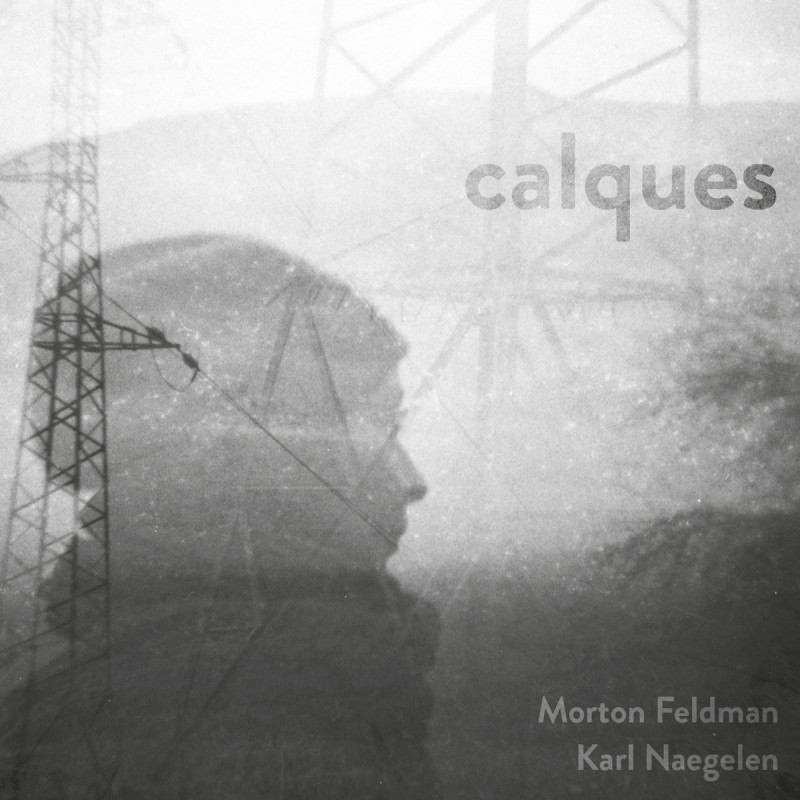
Quatuor Umlaut & Joris Rühl: »Calques«
© Quatuor Umlaut & Joris Rühl: »Calques«

Nogle komponister føler sig stadig draget af at trække i den hvide kittel, sådan som mange gjorde det i efterkrigstiden for at se musikken gennem mikroskop. Lidt videnskabsmand har man vel lov at være.

Den kategori hører franske Karl Naegelen til, hører man på albummets titelværk for klarinetkvintet – over en halv time zoomer komponisten ind og ud på nervøse strygerklange i tætte klynger, men fletter også pludselige temperamenter ind i musikken.

Strukturen minder næsten om en gyserfilm. Ud af ingenting kan klarinetten blive helt løbsk og lyde som en frø i drabelig dødskamp. Calques (2020) pendulerer mellem små bevægelser i stilstanden og hidsige fortællende elementer. Men narrativ drift er der egentlig ikke; det er først og fremmest ‘undersøgelsen’ af klang og multiphonics, der interesserer Naegelen.

Lyder det – som så megen anden dybdelytningsmusik – en smule tørt? Måske, men musikerne gør, hvad de kan for at holde liv i tonerne. Det er en kvalitetsindspilning. Det hører man også på albummets mere klassiske værk, Morton Feldmans Clarinet and String Quartet (1983).

Her tegner langsomme gentagelser og tvære strygerklange en fortabthed op, som klarinetten søger ud af uden rigtig at tro på foretagendet. Næsten romantisk og i hvert fald kun blødt radikalt lyder det lange værk i dag.

Jeg har det vanskeligt med musikkens hang til indspist mikroskoperi. Lad os da bruge undersøgelserne til noget. Det bliver lidt høvisk. Men delikat lyder det.

© PR

»Music is my daily nourishment, helping me become a better person. It's a formula of emotions, full of energy, that gives me the courage to always have hope.«

Nilza Costa is a Brazilian singer and songwriter from Salvador de Bahia and now living in Ferrara, Italy, whose heart beats with the ancestral rhythms of Africa, rhythms she channels through her voice into a singular and deeply original artistic language. Her new album Cantigas – released in February 2026 on Brutture Moderne Records – is inspired by and dedicated to the Cantigas, or Orin, the sacred songs passed down through African languages, in this album Yoruba, Kimbundu and also Brazilian Portuguese. Nilza Costa’s voice has long given life to the revolution of a people who, through music and spirituality, have reclaimed their path toward emancipation. Her songs tell the stories of men and women torn from their homeland — narratives filled with both melancholy and hope.

Throughout her career, Nilza has collaborated with renowned artists such as Roy Paci, Etnia Supersantos, and Senegalese musician Elhadj Demba S. Gueye. With her current band, she has performed on numerous international stages (Austria, Germany, Croatia, Hungary, Bulgaria, Romania, the Netherlands, Luxembourg, Poland, Belgium, Slovenia, and more) and has appeared at major festivals across Italy.

Louise Beck
Louise Beck

When Louise Beck presented her first opera at Copenhagen Opera Festival in 2022, the audience was asked to bring ski wear and thermal suits. Den Sidste Olie (The Last Oil), about the colonisation of Greenland and the exploitation of nature, unfolded on the ice at Østerbro Skøjtehal. It marked the beginning of a fruitful collaboration on newly written works that expand the frames and spaces of opera. Now that collaboration enters a new phase: from 1 September, Louise Beck will become the festival’s new artistic director.

»Music for me is peace.« 

Iris Gold is a Danish singer. She was born in London but raised in Christiania. She made her recording debut in 2015 with the single »Goldmine« and has since released a number of singles. Her debut album Planet Cool was released in 2019. She has just released the album Sugar on My Lips.

© PR

»Resonance – music is for me an indispensable inspiring resonance. In music, the big emotions fall into place, and the small ones bubble up. My grandfather introduced me to opera as a child – so loudly that my heart jumped in my ears, and I fell head over heels and deeply in love with these grand and dramatic compositions. Through it, I was introduced to the big emotions in the world – in music there was room for them in a way that I had not experienced anywhere else before.«

Astrid Kruse Jensen (b. 1975) is a Danish visual artist living in Copenhagen. Throughout her artistic career, she has been preoccupied with photography and its relationship to memory. With her poetic shifts of reality, she explores the borderland between the apparent and the hidden, between the real and the imaginary, between past and present. She has exhibited widely both in Denmark and internationally, with exhibitions in galleries and museums – from solo to group exhibitions in Slovenia, Lithuania, Poland, Sweden, Iceland, Finland, France, Belgium, the Netherlands, Germany, Spain, Italy, India, China, Korea, Ghana, Canada, the USA and the UK. In Denmark, her works have been exhibited at, among others, the Brundlund Castle Art Museum, Esbjerg Art Museum, Heerup Museum, Rønnebæksholm, Brandts, Aros, Kunsten, Skagen Museum, Willumsen Museum, Sorø Art Museum, Odsherred Art Museum and Johannes Larsen Museum. Astrid Kruse Jensen is represented by Martin Asbæk Gallery in Copenhagen and Wetterling Gallery in Stockholm & Gothenburg.

© PR

The red Husqvarna sewing machine stood centre stage, buzzing relentlessly like a tireless drummer locked in an endless blast beat. »Järnrör«, »Cyanid«, »Tramadol«, Tehran hissed between squealing guitar amplifiers and in front of videos showing idyllic Swedish roadside art and images of the many Husqvarna weapons. For behind Husqvarna’s innocent garden and household products lies an industry of death – a prism of growing up in Jönköping and an illusion of Swedish neutrality, which the Swedish-Iranian artist Tehran underscored with the concert Husqvarna The Movie.

Each track came with a new video bathed in sewing machine, guitar and growl vocals. But the song »Delam gerefteh« was more subdued, not least because Tehran leaned back in a chair, cigarette in mouth, letting the music and the video speak for themselves.

The evening’s second name, the Canadian-Iranian Saint Abdullah, spent the entire concert with a marker pen in his mouth, occasionally using it to jot down the course of the music. Saint Abdullah’s performance was like watching a radio operator adjusting a crackling signal – from birdsong to acoustic guitar, from news broadcasts to field recordings, the sampler at the centre of the table became a focal point for fragments of faith, culture and migration.

Where Tehran’s concert felt like a rehearsed, healing ritual, Saint Abdullah’s unfolded as an impulsive dialogue between a sea of sound bites. Both performances revolved around Iranian heritage. Not a heritage that necessarily needs to be understood, but one that appears as a mosaic of contradictions – and can only truly be processed in one place: in music.