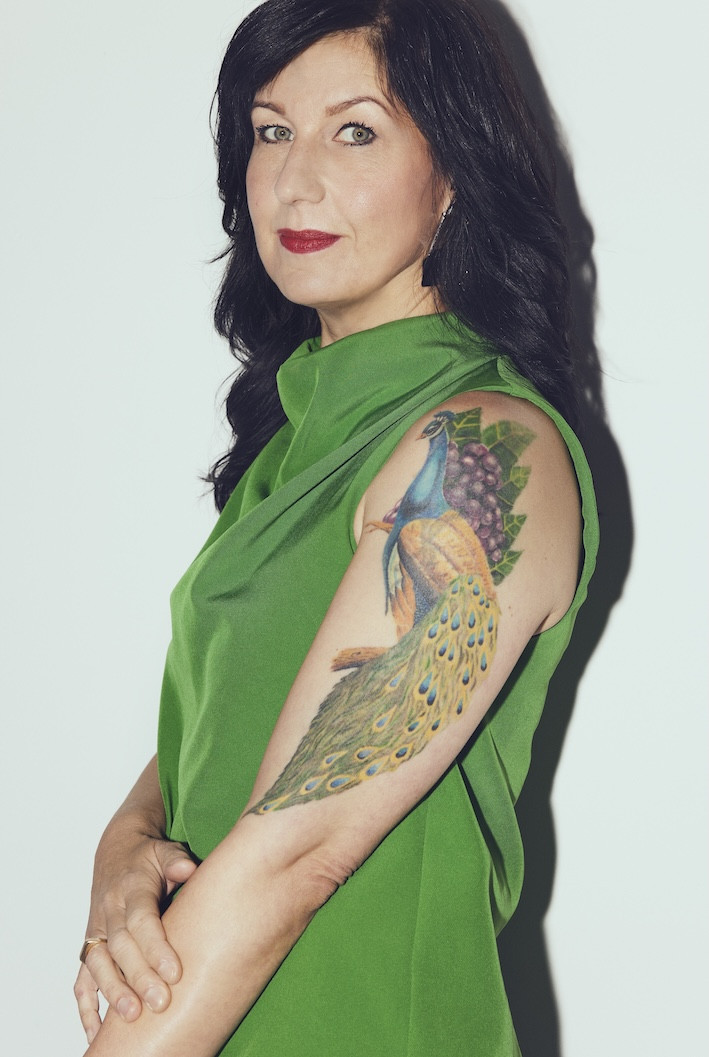
»Who ever said that music is ‘just’ music? To me, it is anything but that: an urge to understand and explain it all. A piece of jewelry I wear every single day. A joy that can, at times, run deep. An ever-changing imprint of millions of stitches in my heart. A longing to disappear.«
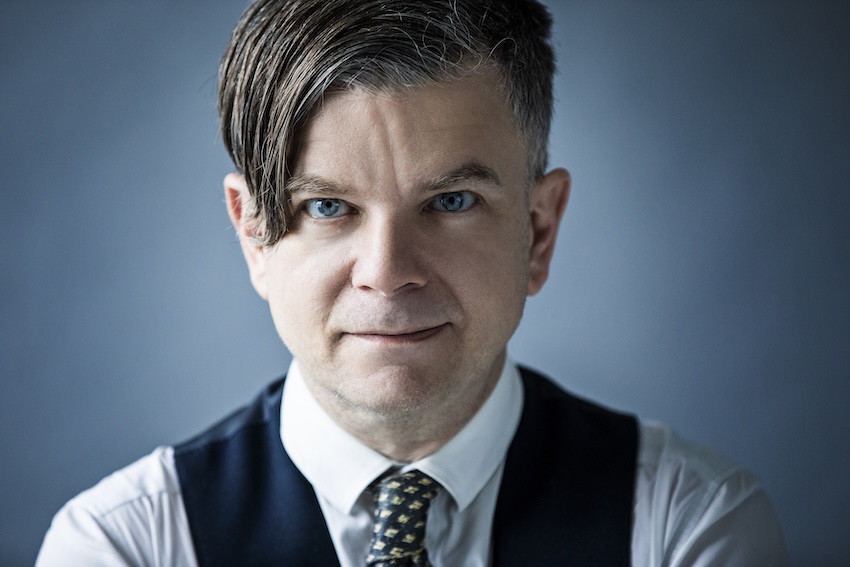
Henrik Marstal is a musician, author, and music researcher. He holds a PhD in musicology, is a senior lecturer at the Rhythmic Music Conservatory, and frequently appears in the media as an expert source on music. His areas of interest include contemporary music, such as electronic music. This winter, he will release both a new album with the pop group ibens and a book about Else Marie Pade, published by the British publishing house Bloomsbury.
Flipping the bird with a broken thumb
Since they formed in 1971, Faust has always been the »enfant terrible« of Krautrock. For one, even if they have produced a number called, precisely, »Krautrock« on their 1973 mythical album Faust IV, they have never fit any case, tag or cliché linked with German rock music. Less »kraut« than Can or Electric Sandwich, they tend to move closer to the early improvisation incarnations of Amon Düül and Ash Ra Tempel, with an injection of a heavy dose of industrial electronics found in Die Krupps or Einstürzende Neubauten.
Daumenbruch (»Broken Thumb«), their 16th album to date, is a perfect continuation of their rebellious career. It is a concept-album, created with guest musicians from other German bands such as, among others, Einstürzende Neubauten and Schneider TM, who added their sound to the track not knowing what the others were playing. The result is a mesmerizing three tracks album (»Weissechokolade«, »Default Mood«, »Border River«), which could almost be defined as »quantum music«, as it seems to occupy different spaces and epochs at the same time. The construction of each track plus the composition of the album makes one immediately feel both at home and in a totally other dimension. Echoes of contemporary industrial and ambient music mix, while memories of older radical German projects like DOM or Embryo surface.
Apparently friendlier to the listener than the 1973 Faust Tapes, it nonetheless craves an open-mind and a curiosity for dissonances and textures. It is an album of musical geniuses that have never really cared much for the hype, and prove it once again without flinching. Even with a broken thumb, Faust can flip the bird to mainstream and the contemporary musical gravy.

»For me, music is at its best when it appeals to both the head and the heart. I love music that plays with language and understands how words create images, while also possessing its own unique sonic quality and mood. It’s an added bonus if the music energizes me during a run, makes me dance in the kitchen, or makes me laugh. Or cry. Music can be like a chocolate-coated marshmallow treat with a surprise inside.«
Lone Hørslev is an author of poetry, novels, and song lyrics, as well as the TV series Den gode stemning. Together with Mads Mouritz, she forms one half of the Mouritz/Hørslev Project, and she recently wrote lyrics for the musical theatre production STOLT in collaboration with Katrine Muff. The songs can be found on the album Jeg ønsker mig.
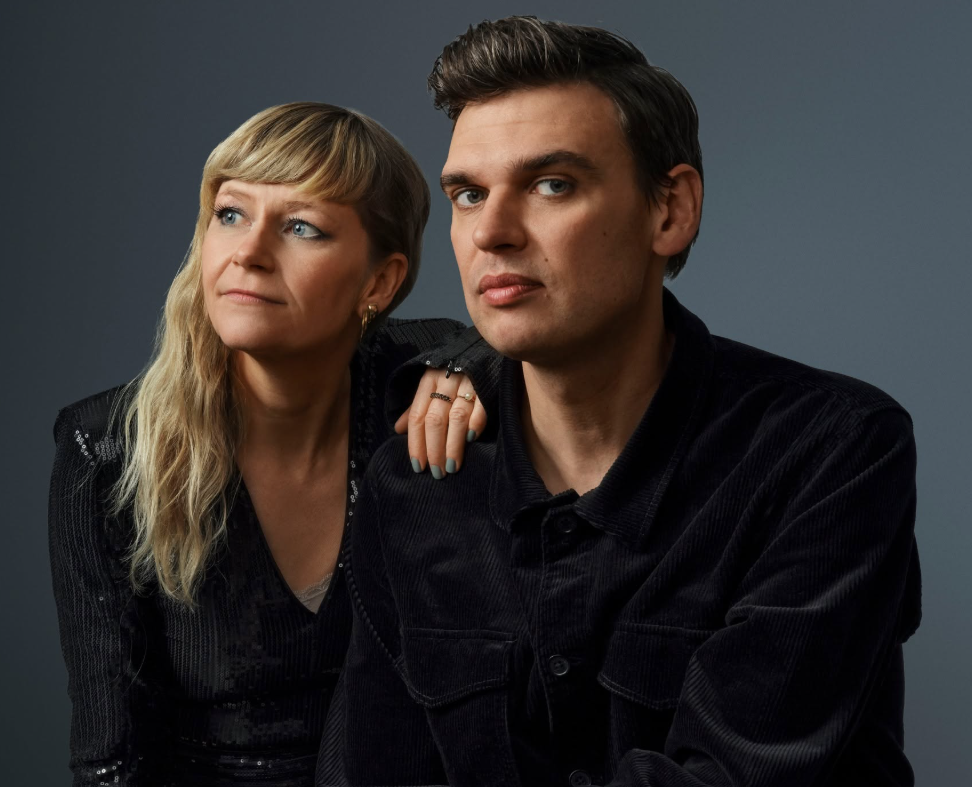
»For us, music is... magic? Aside from the fact that we are huge fans of silence, the closing line of one of our upcoming singles perfectly captures our relationship with music:
'Music feels like magic to me / A superior art form in a marketplace / Trying to find an empty space'.
That is what it can feel like as a songwriter and performing musician. We try to hold onto an almost childlike infatuation with music, yet the art form we work in – alternative-leaning pop-rock – was created and has evolved 'in a marketplace' driven by powerful economic forces. As a romantic, that can sometimes be a bit disheartening...«
Late Runner consists of Asger Tarpgaard and Tanja Forsberg Simonsen, both formerly of the bands Superheroes and Private.