Dansende epifani
Omtrent halvvejs i livet synes man måske nok, man har set det hele, men heldigvis tager man fejl. Tag nu bare det blomstrende københavnske miljø for moderne dans, som jeg har brugt et halvt liv på at overse. Det står klar til at gribe dig med sammenviklede kroppe og nye kompositioner, begge dele med akut antiblasert virkning.
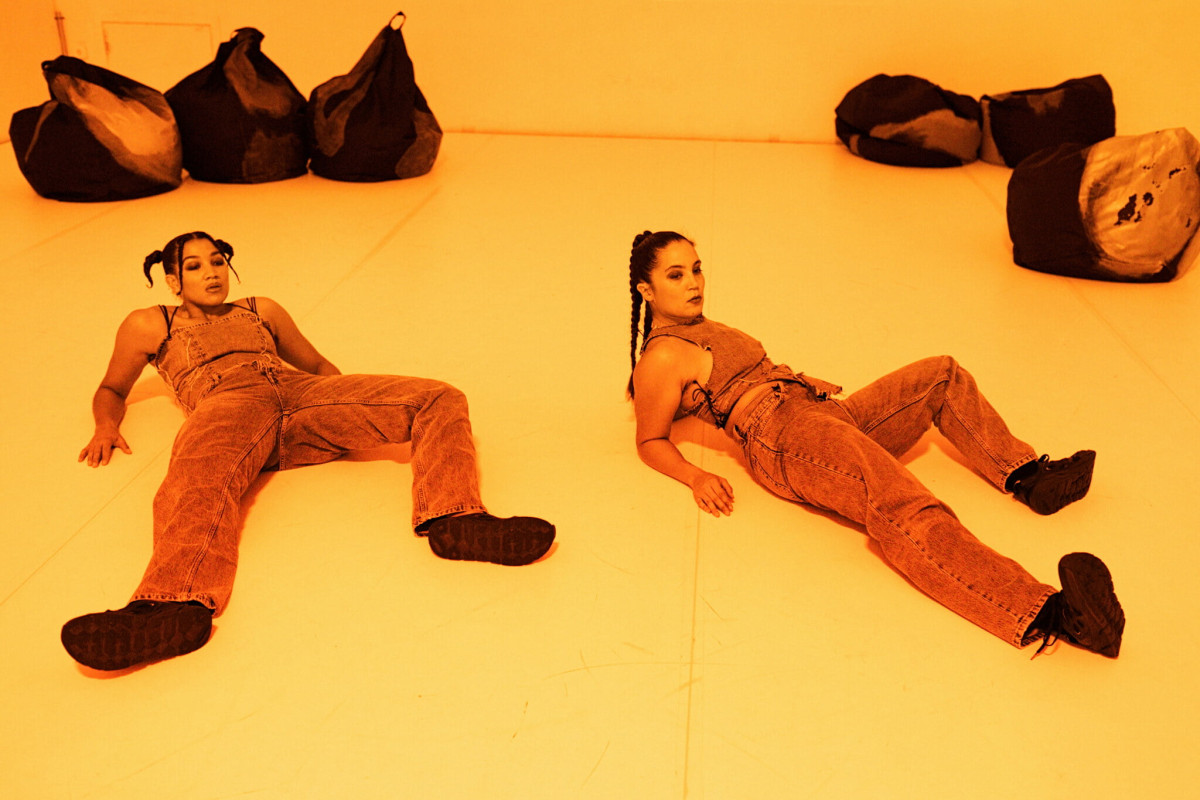
Som nu for eksempel Immortal Summit i aftes, en denimbetrukket duoperformance med flosset musik af Holger Hartvig for forvrænget guitar, dunkende bas og dinglende saxofon.
Her fremmanede to stolte kroppe – BamBam Frost og Lydia Östberg Diakité – en paradoksal mandehørm af arrogant afsky og muskelpositurer, mens de gik i cirkler og kastede med sækkestole. Friskt prikkede Hartvig hul på attituden med en udstrakt rundgang af rockvræl, der langsomt blev centrifugeret til ukendelighed: punkteret testosteron.
Efterhånden indfandt sig i stedet en intimitet. Kroppene viklede sig gulvnært ind i hinanden, og afstumpet guitarstøj blev til famlende ro med nøgen, let ustemt bas i centrum og svag cikadeimitation i baggrunden. Til lyden af drømmende syntharpeggio og en saxofon så fri som et vindspil forvandlede hanekamp sig til akrobatisk tillid og fælles ømhed. Saligt!
Samme opløftende brainstorm mellem musikalsk og koreografisk tænkning har jeg de sidste måneder også set i andre danseprojekter som MYKA’s Regnbuen med absurdistisk MIDI-lyd af Christian Vogel og Antoinette Helbings The Mirror Project med suggererende elektronik af Mads Emil Nielsen.
Danseverden, jeg ser og hører dig nu!
Deadly Serious Play at Louisiana
New Sounds at Louisiana is an initiative in which the Louisiana Museum of Modern Art has invited the record label Dacapo and the music publisher Edition S to curate concerts featuring living composers. Simon Steen-Andersen was the first composer in the series, and he seized the opportunity to assemble a programme that was not only overwhelming and exhilarating, but also deeply unsettling. Lasting an hour, the concert unfolded as a continuous sequence in which each work flowed seamlessly into the next, forming a single extended statement of at least part of the composer’s artistic practice and philosophy.
Combining video and live performance, the concert served as a manifestation of several of Steen-Andersen’s key artistic strategies. Central among them are techniques of estrangement and defamiliarisation, exemplified by Asthma (2017) for accordion, air pumps, and video, a work that explores and interrogates human breathing in all its positive and negative dimensions. Amid the many grotesque and humorous scenes – accompanied by Håkon Stene’s brilliant Foley-style soundtrack of air noises, sound effects, and spoken commentary – a brief clip of brutal police violence suddenly appears. In it, an officer methodically sprays pepper spray into the faces of handcuffed demonstrators. In that instant, everything else no longer seems quite so funny, and the crooked smile freezes.
The concert was a veritable sensory bombardment. Presenting all the works attacca undoubtedly created a powerful sense of flow, but it also left the audience almost saturated with impressions. Even so, the subsequent conversation between Simon Steen-Andersen and music critic and author Thomas Michelsen felt far too brief. Yet the composer succeeded in making his point: everything he does, he said, is a form of »deadly serious play.« Exactly.
Gintė Preisaitė Turns Doubt into Music
You increasingly encounter Gintė Preisaitė in different contexts and under different names – solo as Baraboro and as part of the trio Treen. With Instruments of Forgetting and the Singing Bone, the Lithuanian-Danish composer releases her first album under her own name, and it certainly feels like her most personal work to date.
Above all, this is because Preisaitė sings on seven of the album’s eight tracks. She treats her voice as an instrument equal to all the others, and although the singing is lyrical, she primarily uses it to create texture, depth, and contrast. On »Summary Saint Mary«, for instance, layers of vocals in different registers intermingle with scraping background noise, rapid pulses, resonant bass, and a multitude of sounds of both digital and analog origin. It feels refreshingly fragmentary – a willingness to play with uncertainty. Not everything coheres, yet it is precisely this lack of cohesion that makes the music feel alive and compelling.
Only on »Nippon Dreams« – a dense collage of percussion, samples, and field recordings of Japanese voices – is Preisaitė’s vocal absent. And it is only then that one realizes how essential it has been as a point of orientation throughout the album. Its absence leaves a void that underscores the duality Preisaitė works with: the music feels both intimate and cool, present and distant.
Instruments of Forgetting and the Singing Bone does not provide many answers. Instead, it becomes yet another fascinating piece in the puzzle of Preisaitė’s singular oeuvre.
A Violinist with Fire in His Bow
There is nothing quite like true enthusiasts. They champion composers and works that might otherwise have remained dormant. Here we have the exuberant violinist Darragh Morgan, who since the age of fifteen (!) has promoted and performed contemporary music. He knows what works and has a keen instinct for new pieces and composers – especially on this album with the not exactly catchy title Spin – New Music for Violin & Orchestra from Northern Ireland. Four relatively recent violin concertos, all centred around Morgan as soloist. Two of them are dedicated to the musical firebrand himself.
There is fire in Brian Irvine’s violin concerto À mon seul désir from the very beginning, where sparkling motifs and riffs erupt everywhere. Almost too much energy and activity – but it works, and all the fierce gestures are carefully balanced. The movement is titled »With a big life embracing energy«. Concrete and descriptive – the Irish leave the grand spheres of abstraction to the contemporary music scene in Central Europe. I have replayed the dramatic climax of the second movement several times out of sheer enthusiasm, and the entire concerto (which lasts only fifteen minutes) ends with angelic beauty on Morgan’s highest, finest strings.
Ryan Molloy’s three-movement violin concerto, stretching beyond twenty minutes, by contrast tends to drift somewhat aimlessly, although the final movement reaches a strong level. Bill Campbell’s Swim is unmistakably Irish in tone throughout, conjuring images of rolling fields and the proud Irish landscape. Midway through the quarter-hour work, Darragh Morgan delivers a heartfelt and expansive solo cadenza.
Fortunately, Frank Lyons’s Spin 3 is also a small gem, leaving the listener uplifted by this new Northern Irish music performed by the Ulster Orchestra and the fascinating Darragh Morgan, whose deep personal dedication gives so much to the music.
English translation: Andreo Michaelo Mielczarek