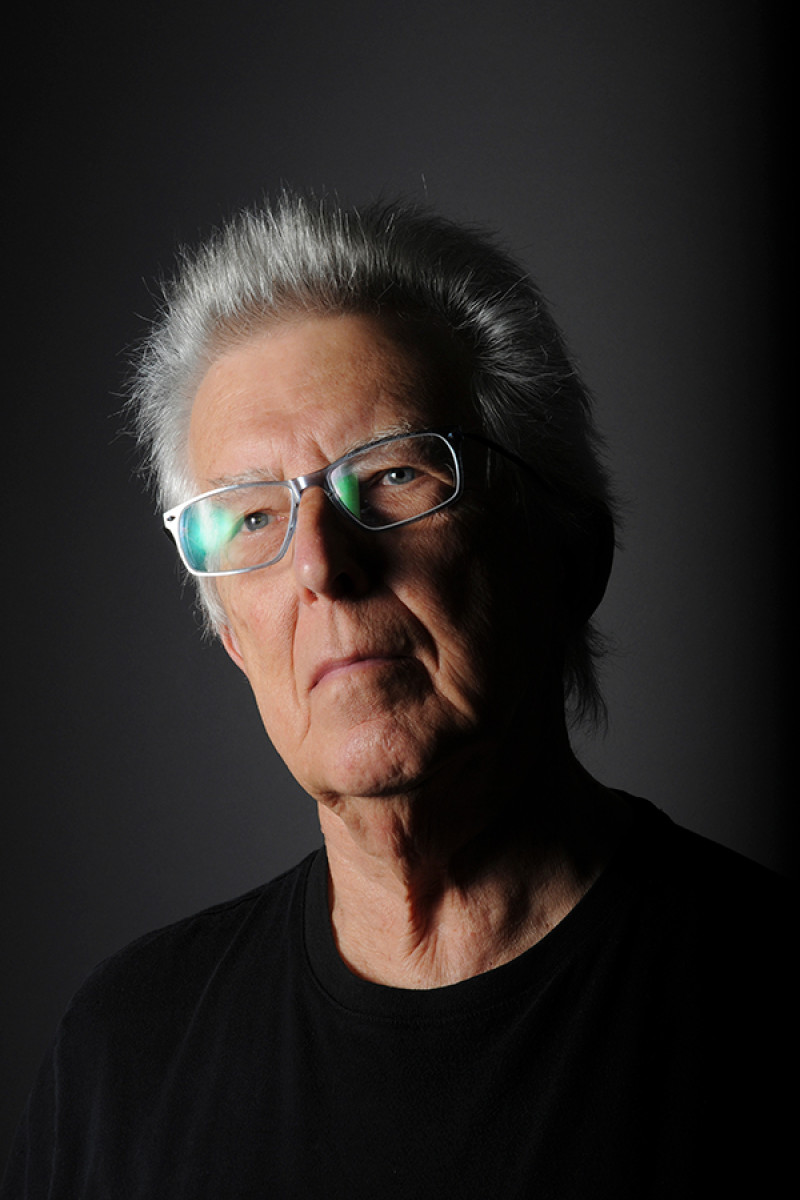
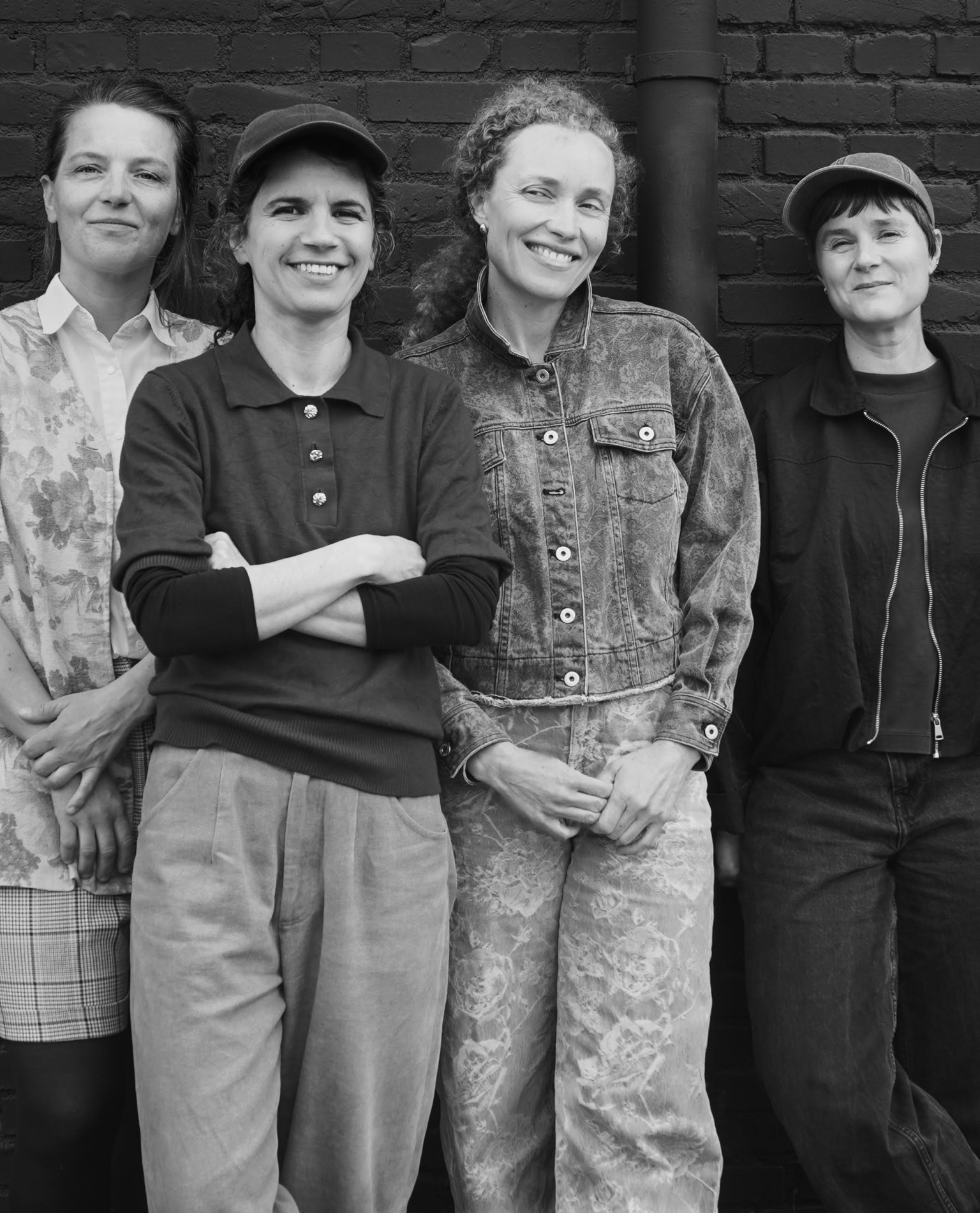
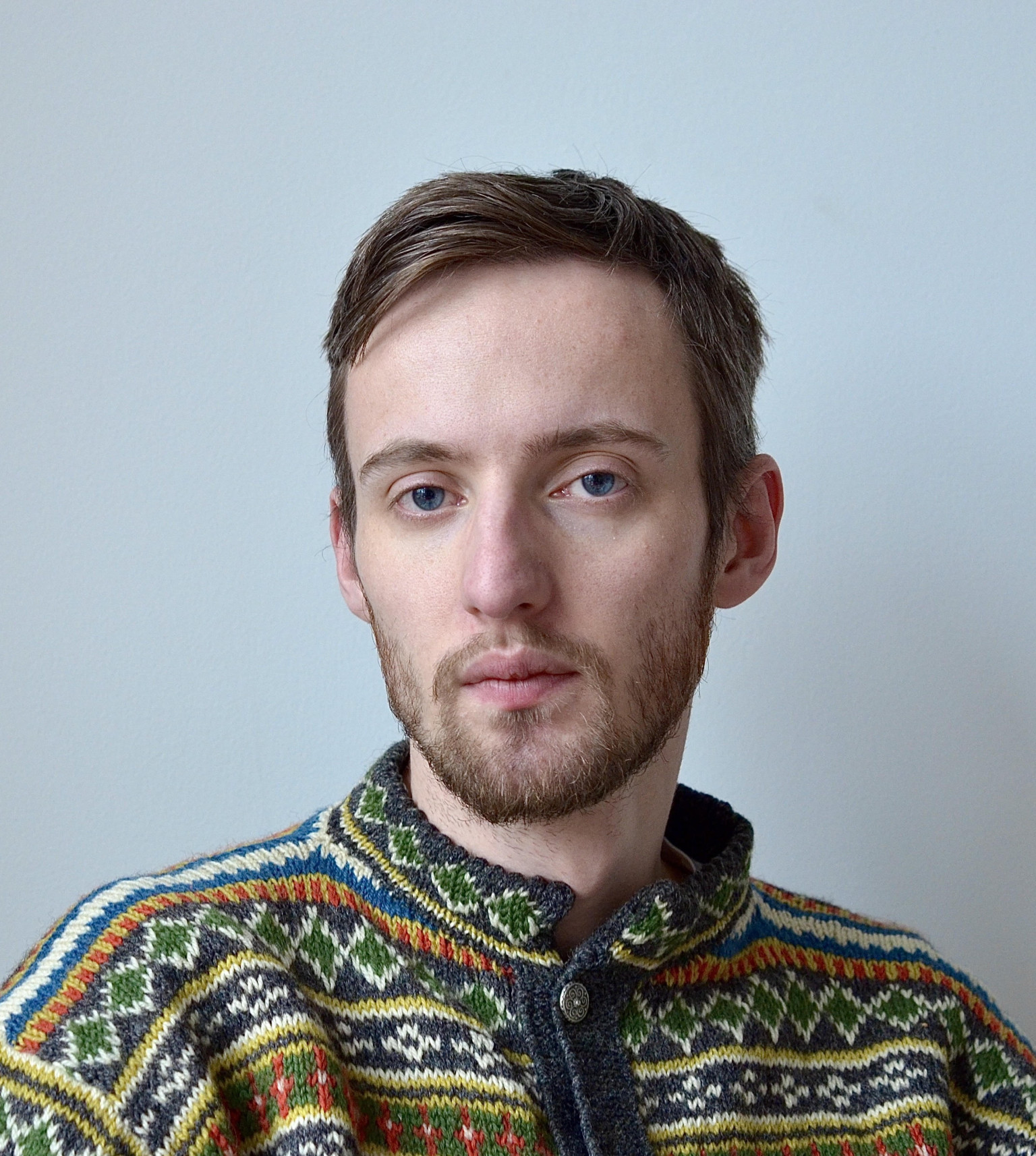
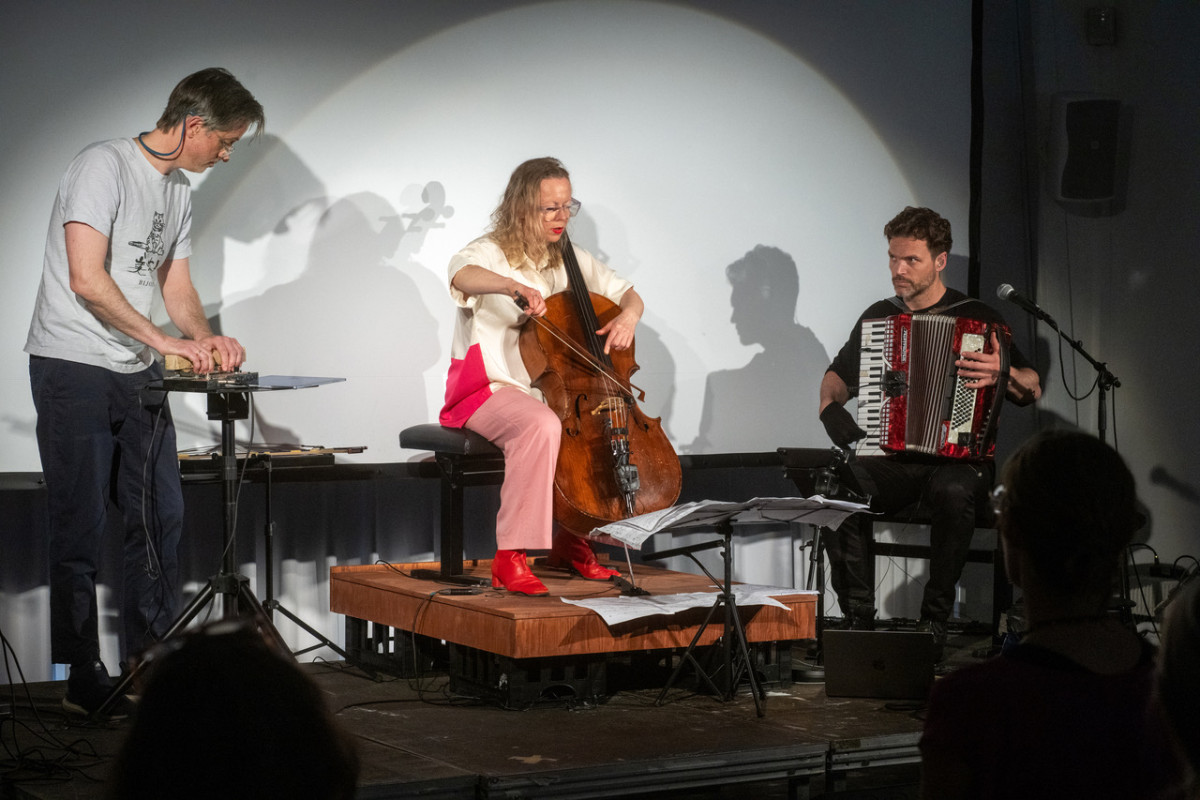
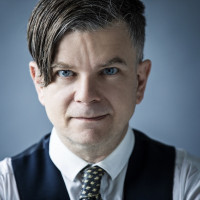
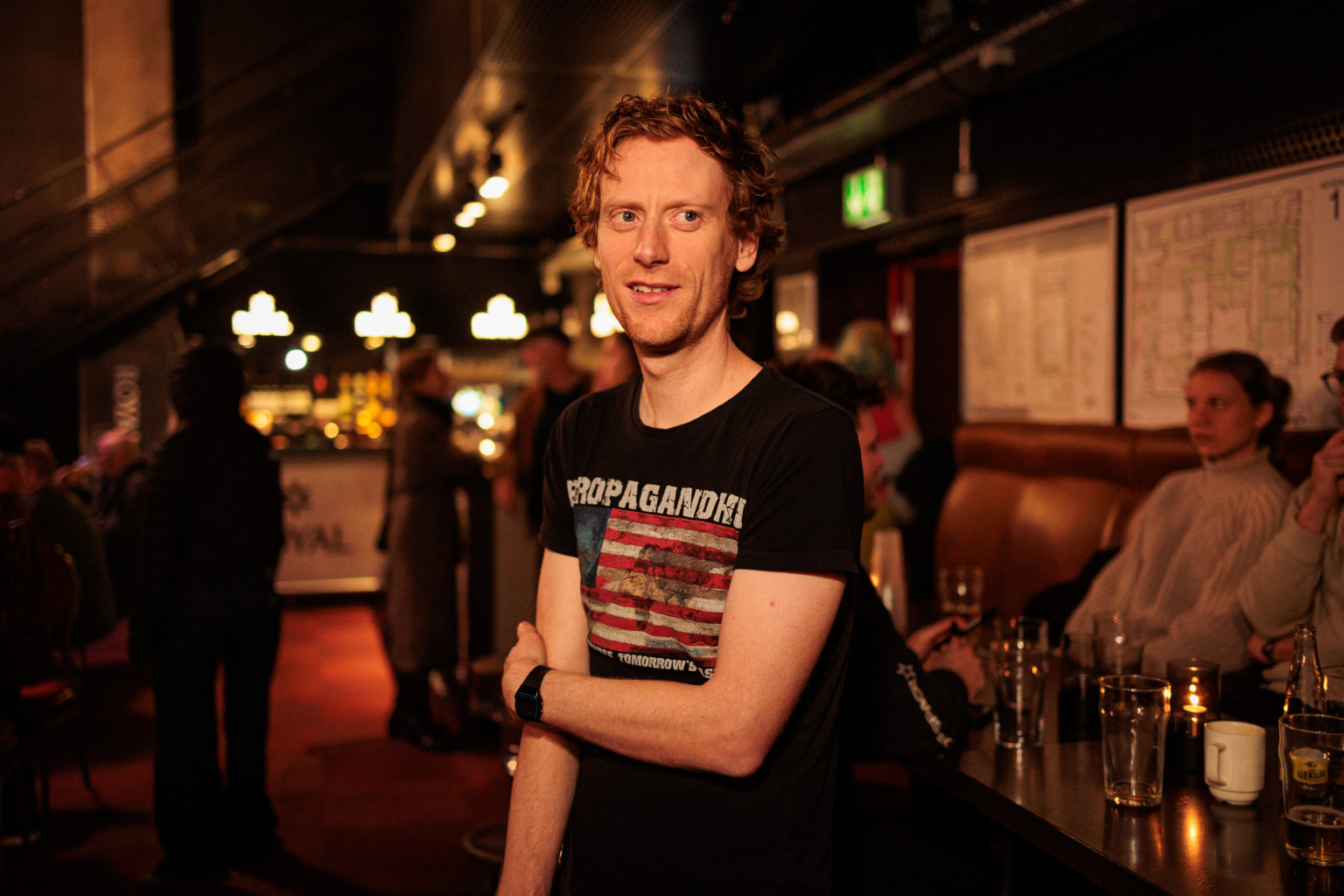
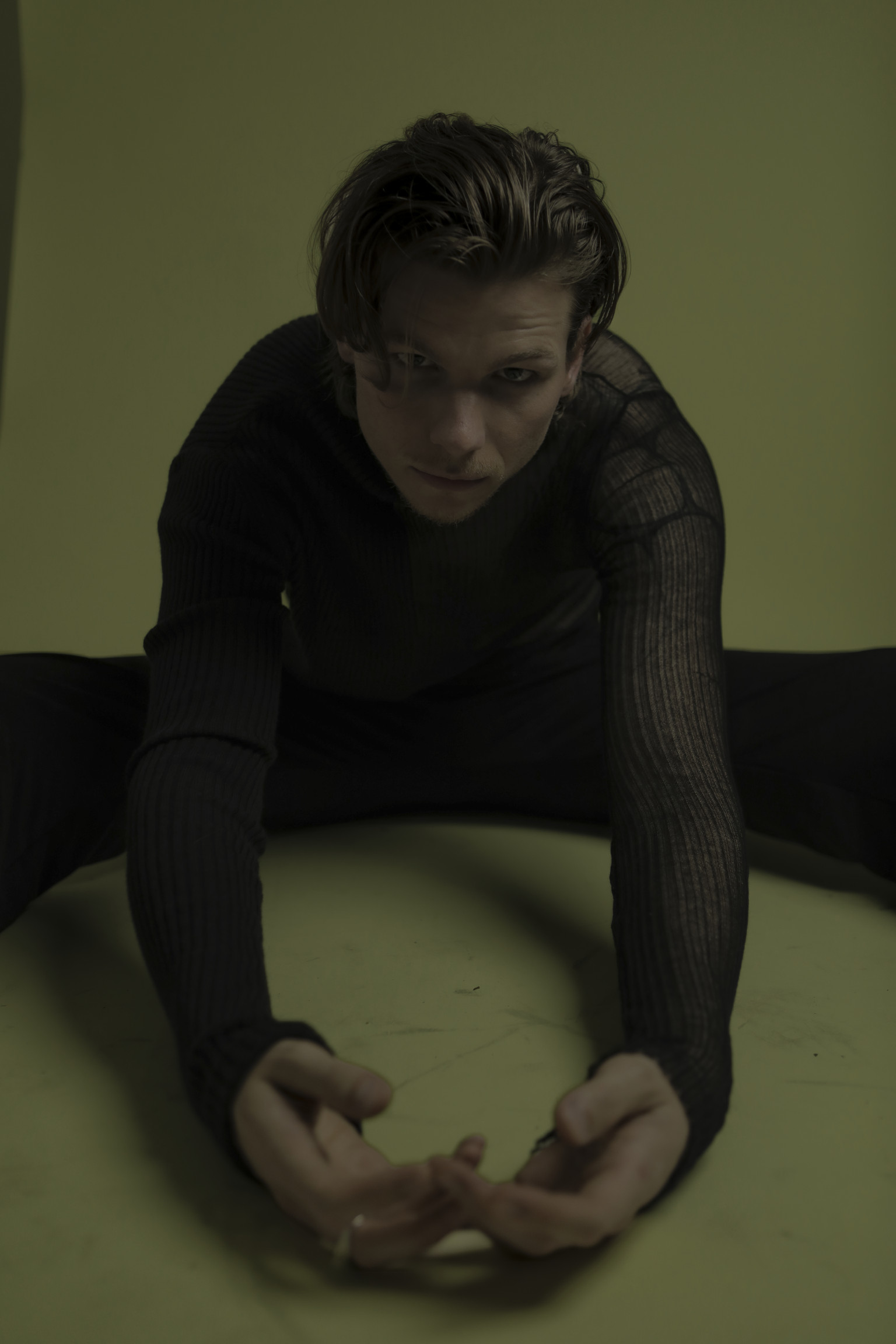
»Music for me is translation. Music for me is a musical score that can be released into sound in a thousand ways, depending on who picks up the instrument. Music for me is the attempt to embody the idea of sound in lines and dots and floor plans. Music for me is both a sought-after sound that does not ring, and a sought-after sound that does. Music for me is a song game, a parallel universe with its own temporality and its own rules.«
Matias Vestergård is a trained composer and pianist from the Royal Danish Academy of Music in Copenhagen. Since his debut in 2022, he has particularly distinguished himself with music-dramatic works – his first opera Murder on the Titanic will be performed for the third time this year, and his second opera Lisbon Floor won the award for Opera of the Year at the 2023 Reumert. He is currently working on orchestral works, a piano concerto and choral music, but dreams of writing more operas.
Roger Reynolds: Still worth its chops?
Nice idea: an entire concert of music by Roger Reynolds, the experimental American who won a Pulitzer in 1989 but whose music doesn’t sound that experimental anymore.
Even his newest music. Nørrebro hosted the world premiere of Reynolds’s new oboe concerto Journey as part of Matthias Reumert’s mini-festival Offbeat. It is an entirely un-rooted piece – a road movie betraying little allegiance to key, material or system as it capers forwards through a series of mystical images. Jacqueline Leclair played it charismatically. Necessary, as there can seem little beyond surface sound in the piece.
Mistral went big on Reynolds’s taxonomical tendencies. It is a score in which instrumental groups stick together before forming fragile coalitions across timbral boundaries – a process that plunges them into mania. The work’s antiphonal qualities and roaring brass cried out for a bigger space than Koncertkirken, or just a different spatial configuration.
Those who stuck around after an hour-long interval caused by a medical emergency were rewarded with the evening’s highlight: Transfigured Wind III. Again, Reynolds sanctifies musical gesture here: a solo flute cries, huffs and puffs (sometimes beguiling, sometimes clichéd) and is answered by a series of delicate ensemble ritornellos that transfigure the same material. Kerstin Thiele played it with an ardour neatly balanced-out by Reumert’s cool conducting.
In its patience, this last piece went deeper – its simpler structure drawing more nuance from Reynolds and giving us a clearer view of his quasi-spectral aesthetic. Is that aesthetic still worth its chops? Reynolds claims nobody can appreciate his music in one hearing. I certainly need more convincing.
»Music for me is a way to stay curious. It can feel completely overwhelming to hear some music you don't know, or revisit something you haven't heard in a long time. Music makes my heart race, it makes me cry, laugh, and gesticulate wildly. It's a way to understand myself at different times in my life, and a way to create bonds with others around me.«
Hannah Schneider creates cinematic alternative pop with electronic soundscapes and strong melodies. She has released several critically acclaimed albums, toured Europe and the US, and has established herself as one of the country's most original voices. Her music has been used in film, television, and on major Scandinavian theater stages, and in recent years she has also composed commissioned works for leading museums and cultural institutions.
On her new album In This Room (February 27, 2026), she chooses – in an era marked by artificial intelligence – to insist on presence, intuition, and craftsmanship as driving forces. The album was written and recorded during a two-month residency at Thorvaldsens Museum.
»I listen to music at all hours of the day when I’m at home – surrounded by family – or when I’m working and travelling. My playlist changes every day. It reflects my state of mind here and now, and the ideas, memories, joys and sorrows that currently occupy me. The last piece, Salve Regina, was only added late this evening, after I experienced Poulenc’s magnificent opera Dialogues des Carmélites at the Royal Danish Opera.«
Louise Beck is a scenographer, stage director and artistic director of OPE-N – and from the 2027 season, artistic director of Copenhagen Opera Festival. For nearly three decades, she has developed opera as a living and contemporary art form at the intersection of the established opera field and the independent music-theatre scene. She has created a number of critically acclaimed and award-nominated works, including Den Sidste Olie and LOL – Laughing Out Lonely, and, together with Niels Rønsholdt, stands behind the opera trilogy Den Stærkes Ret – Den Svages Pligt, whose second part will be presented at the University Library of Copenhagen during the 2026 festival.
»Music is my daily nourishment, helping me become a better person. It's a formula of emotions, full of energy, that gives me the courage to always have hope.«
Nilza Costa is a Brazilian singer and songwriter from Salvador de Bahia and now living in Ferrara, Italy, whose heart beats with the ancestral rhythms of Africa, rhythms she channels through her voice into a singular and deeply original artistic language. Her new album Cantigas – released in February 2026 on Brutture Moderne Records – is inspired by and dedicated to the Cantigas, or Orin, the sacred songs passed down through African languages, in this album Yoruba, Kimbundu and also Brazilian Portuguese. Nilza Costa’s voice has long given life to the revolution of a people who, through music and spirituality, have reclaimed their path toward emancipation. Her songs tell the stories of men and women torn from their homeland — narratives filled with both melancholy and hope.
Throughout her career, Nilza has collaborated with renowned artists such as Roy Paci, Etnia Supersantos, and Senegalese musician Elhadj Demba S. Gueye. With her current band, she has performed on numerous international stages (Austria, Germany, Croatia, Hungary, Bulgaria, Romania, the Netherlands, Luxembourg, Poland, Belgium, Slovenia, and more) and has appeared at major festivals across Italy.
When Louise Beck presented her first opera at Copenhagen Opera Festival in 2022, the audience was asked to bring ski wear and thermal suits. Den Sidste Olie (The Last Oil), about the colonisation of Greenland and the exploitation of nature, unfolded on the ice at Østerbro Skøjtehal. It marked the beginning of a fruitful collaboration on newly written works that expand the frames and spaces of opera. Now that collaboration enters a new phase: from 1 September, Louise Beck will become the festival’s new artistic director.