In brief
05.09.2023

Godt nyt fra krøllede finner

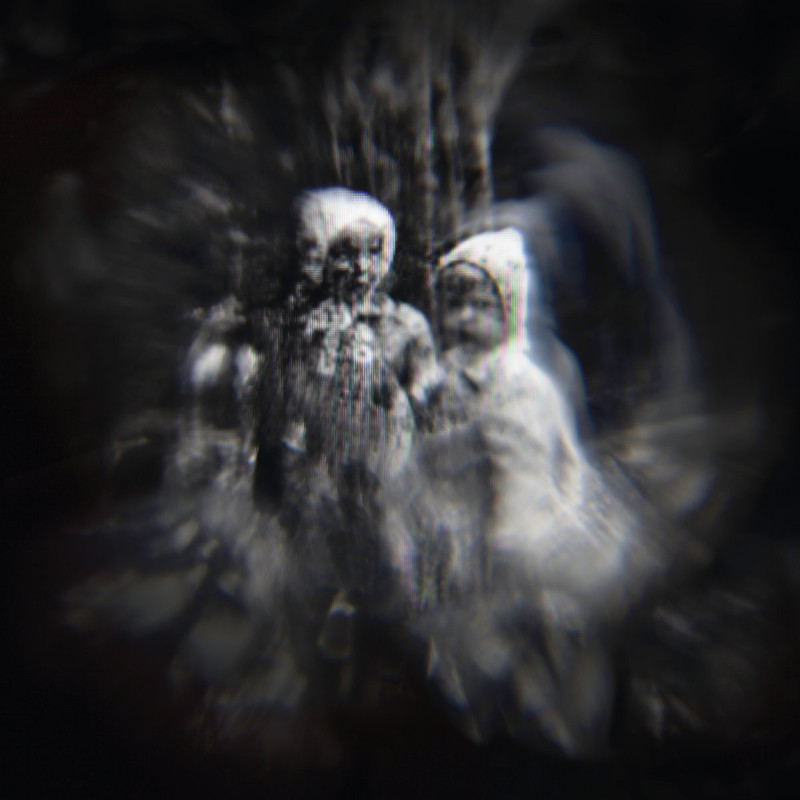
Paavoharju: »Yön mustia kukkia«
© PR
© PR

Med Yön mustia kukkia har finske Lauri Ainala og hans altid foranderlige mytisk-mystiske orkester Paavoharju udgivet, hvad de selv kalder tredje kapitel i en serie af albums, hvoraf de to foregående blev udgivet helt tilbage i 2005 og 2008. Der er altså løbet en anselig mængde vand under broen, siden man sidst kunne lytte til Paavoharju i denne type konstellation. 

Som tidligere lyder musikken, som er den hjemsøgt af venlige spøgelser. Man kan høre, at lydene kommer fra et land højt mod nord, hvor man lærer at være på god fod med mørket. Skurrende båndstøj, dirrende strenge, virrende samples og helt og halvt hviskede sangstemmer skaber en kalejdoskopisk melankolsk atmosfære. Som brudstykker af folkemusik fra flere forskellige verdner på én gang, der alle kæmper imod hinanden for at trænge igennem den kakofoni, de tilsammen skaber. Dette kan opleves i nummeret »Haihtuu« med Teemu Eerolas violin, der summer i stereo som en bi omkring lytterens hoved, mens rytmiske samples og Anniina Saksas vemodige sangstemme skaber en fremdrift, der tilnærmer sig en popsang. Mindre poppede er numre som »Marian kierto«, hvor en operaagtig vokal bølger frem og tilbage over en fugtigt skovbund af synths og samples. 

Lauri Ainala har stadig et helt særligt talent for at bakse lyde sammen, som i andres hænder bare ikke ville kunne fungere. Sammen med sine medsammensvorne har han med Yön mustia kukkia formået at skabe ikke bare et kærkomment genhør med fortidens spøgelser, men også et spændende nyt kapitel i Paavoharjus krøllede historie.

Nikolaj Nørlund. © Agnete Schlichtkrull

»Music, to me, is a companion through life, a premise, an excuse, a mystery, an explanation, a point of departure. It is old ideas, overlooked treasure chests, new angles, long concerts, doubt and conviction. It is words, tones, cracked voices, different points of departure, bass in the diaphragm, falsetto in the hair, challenges, rewards, and love.«

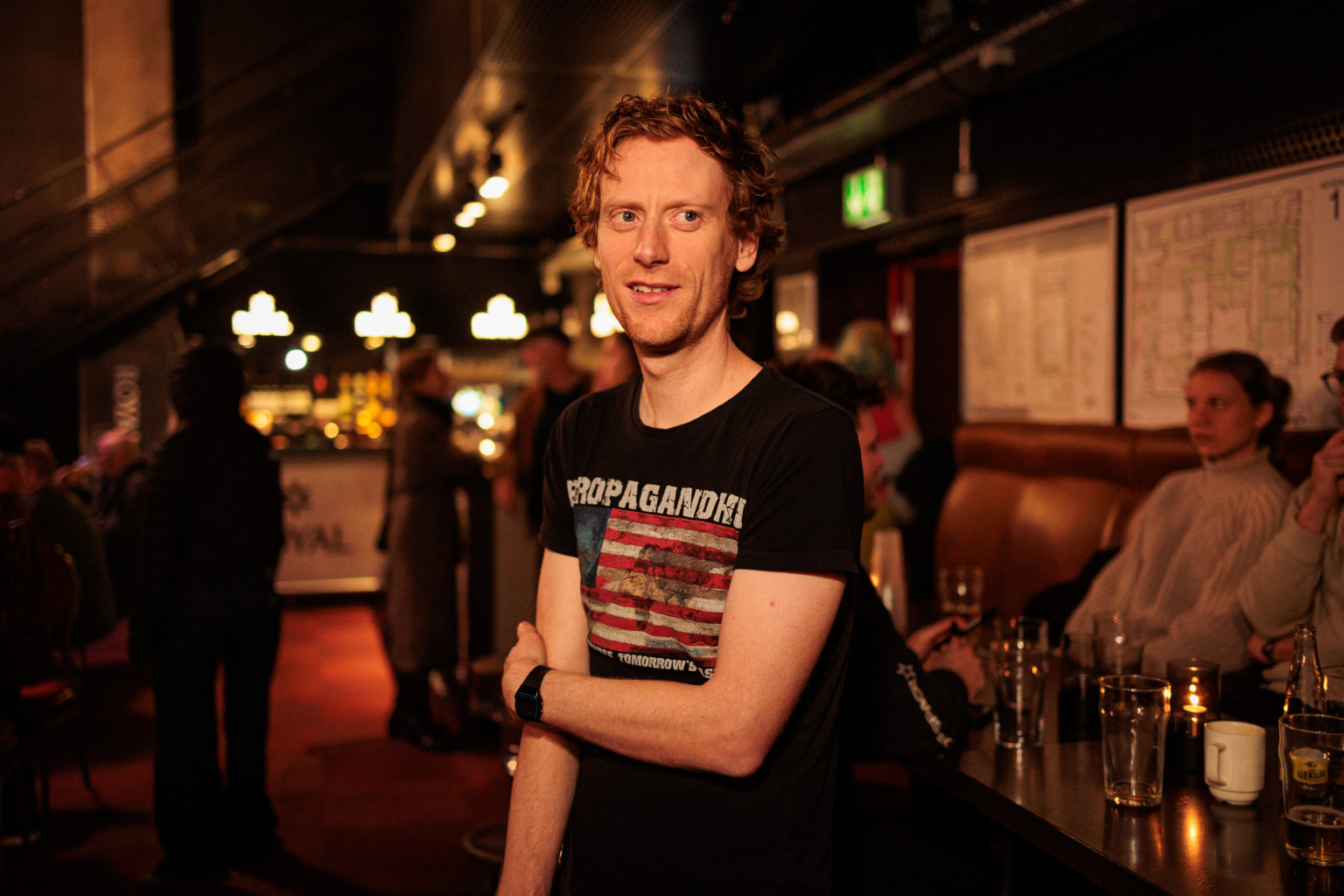
Nikolaj Nørlund made his solo debut with Navnløs (1996), an interpretation of poems by Michael Strunge, and released Nye Optagelser (1997) the following year, his first Danish-language singer-songwriter album. He has since worked broadly across music and poetry and is behind around 20 releases, both solo and in various band constellations. Nørlund’s projects range from collaborations with Copenhagen Phil on two orchestral albums, created together with author Naja Marie Aidt. His most recent release is the single »Englenes Park (nu ikke saa dark)«, the forerunner to the album Himlen skiftet ud, due for release at the end of November. In addition to his own work, Nørlund has, through the record label Auditorium, produced and released a number of Danish artists, including Niels Skousen, Ulige Numre, Jens Unmack, I Got You On Tape, and Martin Ryum. He was previously a member of Trains And Boats And Planes and periodically works with the English-language project Rhonda Harris. Nørlund has received a Danish Music Award (2003) and a Steppeulv (2006), both as Producer of the Year, as well as the Niels Mathiassen Cultural Award (2012).

© Mari Liis

»Music and sound for me is a language, the most present and fleeting one. It’s something that passes through your heart and becomes the past in a second. Music amplifies every emotion, love, happiness, anger, sadness a thousand times over, making me feel everything more deeply and sensitively.«

Sophia Sagaradze is a sound artist, composer, and performer from Georgia, based in Denmark. She experiments with space, multichannel electronics and audio-visual installations. Sagaradze is interested in creating works that explore the boundary between external and internal experiences of space. She holds a bachelor’s degree in classical composition from Tbilisi State Conservatory and a master’s degree in electronic composition from DIEM Royal Academy of Music, Aarhus/Aalborg. In 2022, she received the Carl Nielsen and Anne Marie Carl-Nielsen Foundation’s Talent Award in Composition. Sagaradze has performed in several countries, received commissioned works for ensembles, performed live and created audio-visual installations. She is a founder and artistic director of Aarhus Sound Association (Aarhus Lydforening), Project leader at ROSA  and a lecturer at the Royal Academy of Music, Aarhus/Aalborg.

»Like all art, music is a language for emotions, dreams, and the search for meaning—but for us it is just as crucial that music is a path to community.«

Girls in Airports is a Danish instrumental band with a palette that draws in particular on jazz, electronic music, and sounds from distant horizons. Since their debut album in 2010, they have created a sonic universe in which saxophones, synths, and pulsating grooves meet in a collective and dreamlike expression. Recently, the band has focused on artistic collaborations with, among others, Teitur and Aarhus Jazz Orchestra, and they are now on their way with a new album created in collaboration with the string trio Halvcirkel.

© @joachimdabrowski

»Music, to me, is the lifeline to the world that more than anything else creates emotional resonance and fills my head with confetti of thought.«

Steen Andersen is a cultural entrepreneur, festival manager, and writer. He is a co-founder of Lost Farm Festival and has coordinated projects such as Copenhagen and Odden Sauna Festival, the collective workspace PB43, the cultural venue BYGN 5, and Prags Have. Over the years, he has written books and articles on urban activism, entrepreneurship, and culture, including Byen bliver til and Learning from Sierra Leone together with Architects Without Borders, which won the Danish Architectural Association’s Initiative Award. He is currently based in Ukraine, where he is coordinating Lost Farm Festival’s Art Exchange Program, and has just curated the exhibition HIDE and SEEK with young Ukrainian artists in Kyiv.

In brieflive
29.10

Islands Of Sound Rising From the Sea

Athelas Sinfonietta: »Nordic Sounds«
© Kasper Vindeløv
© Kasper Vindeløv

Veroníque Vaka’s ongoing project to pin some of earth’s most momentous geological processes down in notated music is proving beguiling. The latest fruit was premiered on Saturday at Nordatlantens Brygge. Eyland (»Island«) was inspired by the formation of the island of Surtsey, which appeared 33km of Iceland’s coast on 14 November 1963 following a volcanic eruption.

Much of the Canadian-Icelandic composer’s work charts decline; its musical movement tracing harvested data around ecological destruction and decay. Eyland is about creation, and Vaka seemed to revel in the wonder and grandeur of it. The 15-strong Athelas Sinfonietta sounded with the sweep of a symphony orchestra under Bjarni Frímann and Jónas Ásgeir Ásgeirsson’s solo accordion like the emergent island itself, edging up from the spray with magnificent, slow force.

Some of the other five pieces in this concert focusing on music of the North Atlantic could feel like a ritualistic preparation for Vaka’s – a testament to the composers’ focus more than their lack of weight. Around the clear long lines of Eli Tausen a Láva’s Álvan are distinctive North Atlantic sparkle and harmonic depth; Daníel Bjarnason’s Skelja is a miniature sonic romance between harp and percussion and Friðrik Margrétar-Guðmundsson's Fikta a smudged chorale, played with shamanistic intensity by Ásgeirsson. Anna Thorvaldsdottir’s Entropic Arrows focused the mind with its threading of long string tendrils from out of frantic wind and percussion action.  

The other premiere was Aya Yoshida’s Song of the Voice – a non-vocal echo of the Faroese song tradition for cello and ensemble in which, at one point, you hear a chain-dance ratcheting round. The work is not without some imagination and effectiveness, but it was made to sound incoherent and unfocused by what surrounded it here.