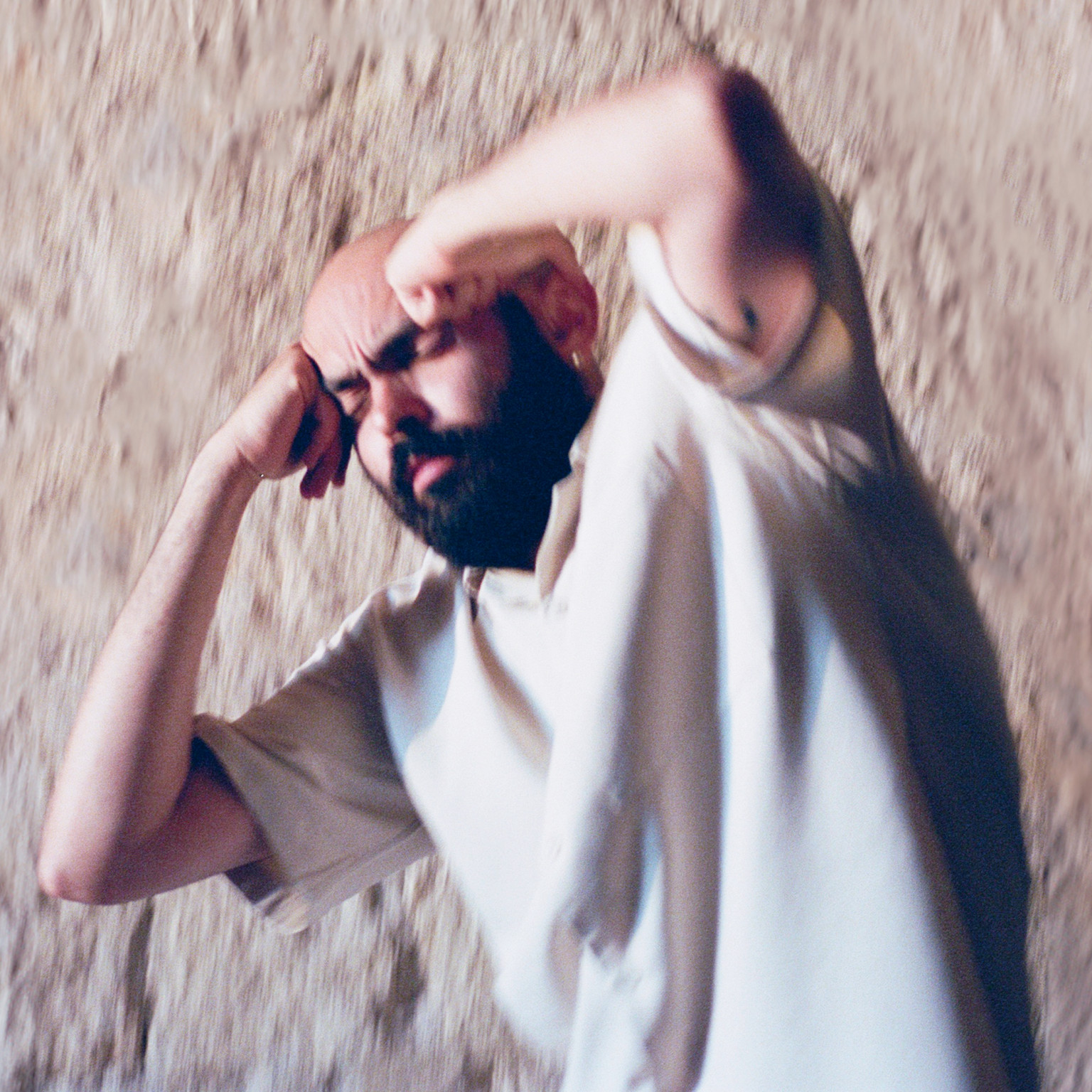
© PR

»Music for me at the moment is a heaven for non-believers.«

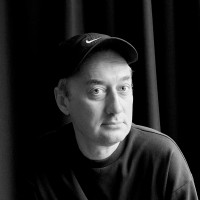
Abdullah Miniawy (born 1994) is an Egyptian expressionist, a writer, singer, composer, and actor. Over the years, he has shared the stage with acclaimed artists such as Erik Truffaz, Kamilya Jubran, Yom, Médéric Collignon, Aly Talibab, A Filetta, Hvad, Ziur, Simo Cell, and many others. Miniawy's performances have graced prestigious international stages and venues, including the Festival d’Avignon edition 72, French national theaters, Institute of Contemporary Arts London, Haus Der Kunst museum in Munich, Mao Asian Museum in Turin, even the Louvre in Paris.


In addition to his music career, Abdullah proved his natural acting talent in Alaadine Slim's Tlamess, a Tunisian feature film featured at the Directors' Fortnight at the Cannes Film Festival in 2019. Miniawy was also recognized with a nomination and shortlisting for the Best Actor Award from the Arab Cinema Center at Cannes.


As a composer, Miniawy has created different soundtracks for dance shows, theater productions, and exhibitions, including notable works like Cabaret Crusade III by Wael Shawki premiered at Moma PS1, AMDUAT by Kirsten Dehlholm premiered at Hotel Pro Forma, and Insurrection by Jilani Saadi.


Abdullah Miniawy's influence extends beyond the arts; he was selected by the European Parliament in Strasbourg as one of three change makers from the Schengen area to offer a French-Egyptian artist's perspective on pressing contemporary challenges at the European Youth Event 2021 in the Live Fully section. He also participated in Europe Takes Part, a gathering of 30 diverse speakers discussing new economic models and digital solutions for artists in a post-pandemic world.


Since 2016, Miniawy has collaborated with the German trio Carl Gari, blending avant-garde electronic soundscapes with poetic lyrics. Their debut album, Darraje, was recognized as one of the top 50 albums of 2016 by the American NPR. Their recent release, The Act of Falling from the 8th Floor, garnered attention from Pitchfork, The Quietus, and Wire Magazine, with Zawaj ranking at the top of Resident Advisor's list of Deep Listening tracks in 2019.


Most recently, Abdullah's album Le Cri Du Caire, featuring Erik Truffaz, won Les Victoires du Jazz 2023 award – the French equivalent of the Grammy Awards.  


As a writer, his lyrics have left a mark in the Middle East region, notably during the Arab Spring, where they were displayed in places like the Yarmouk camp in Syria.
In briefrelease
04.02

The Deep Breath

Blaume: »excess air«

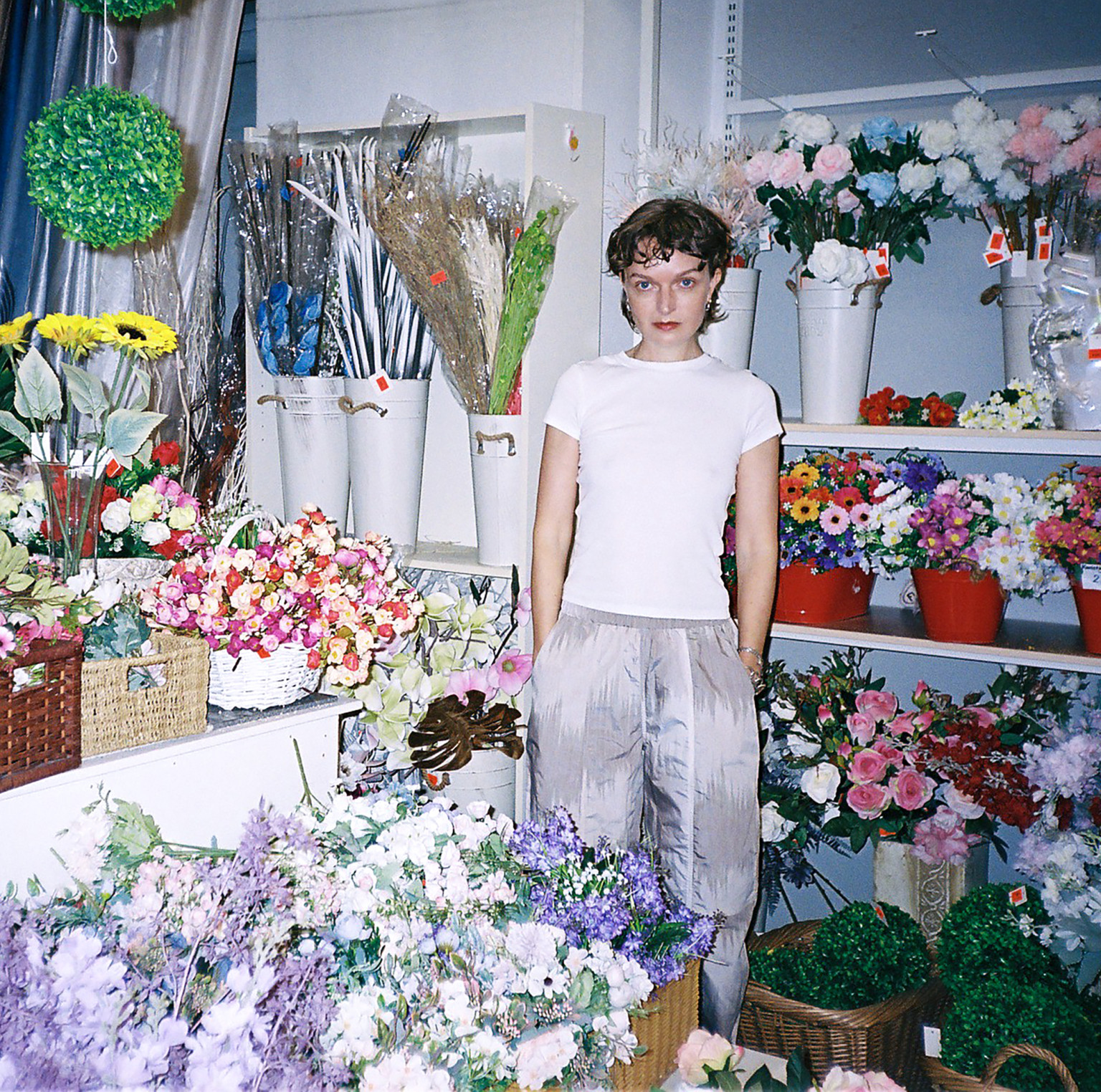
The Copenhagen-based duo Blaume’s EP excess air is a field study in the shared pulse of breathing, calmly taking a deep breath. The EP’s airy sound unfolds cyclically from the physical conditions of respiration, and with hoarse choral voices and chirping flute, the two artists – Laura Zöschg (IT) and Mette Hommel (DK) – wind their way around the healing and artistic qualities of breath.

Perhaps it is the strangely warm winter or the blooming figures on the cover, but excess air seems to carry a fragile sense of spring. The sparse instrumentation gropes its way forward improvisationally across the three tracks, and the many choral voices add a tangible physical sense of musicians at work, underscoring a feeling of tentative sprouting.

The electronic element, in the form of vocal effects and the music software Ableton, is an important part of Blaume’s expression. Vocal effects often come across as quite prominent, but when the processed voice on the track »vivus tremus« drifts into a hoarse rasp, the artificial divide between voice and effect dissolves, and the electronic becomes an obvious extension of Blaume’s shared breath.

Blaume’s excess air is a delightfully vital EP. It is music with the surplus energy to stretch far from a simple and immediate point of departure, and with a few simple means, Blaume’s debut emerges as a welcome harbinger of spring.

© Ellie Brown

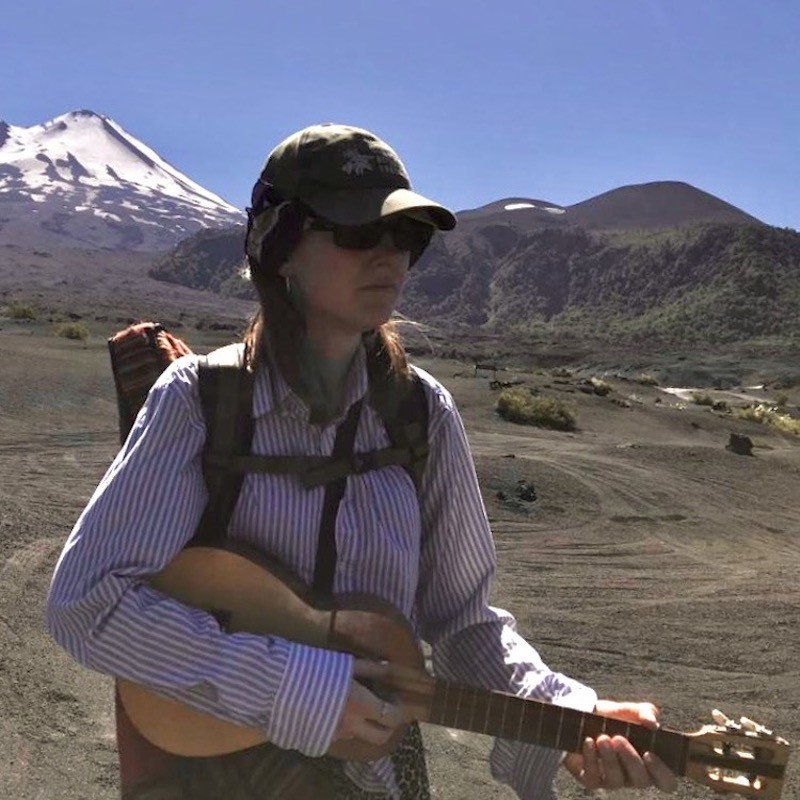
»Music for me is: inevitable.« 

Ryong is a composer, artist & DJ that explores: Danish and Korean heritage, spirituality, embodiment, family and love, Ryong is also a member of the experimental pop band haloplus+. Across her releases, she draws on both ambient, noise and pop music, incorporating the sound of field recordings and spoken word. Having previously released on Why Be’s label Yegorka, and debuting on Posh Isolation with Isa Ryong, an 11 part work that explores transition and the anguish of complexity, Ryong has established herself as a unique artist in the experimental electronic music scene in Copenhagen.
 

In brief
08.01.2025

Love and Poetry under Black Streetlights

Jørgensen/Botes: »Dråberne 5, 7, 8 og 11«
Marina Botes og Steen Jørgensen. © Isak Hoffmeyer

While many still sigh at the thought of seeing a full Sort Sol once again illuminate the dark grey Danish sky, the band’s eternal crooner Steen Jørgensen, together with his equally strong other half, pianist Marina Botes, has created music that is something entirely different – something deeper. And yes, I have seen words like »pretentious« and »boring« hurled at the duo, but none of that sticks to their new release, which consists of a series of intimate suites where Jørgensen’s spoken word is woven together with Botes’ magnificent piano playing. If the ambition is to build a bridge between the classical and the electronic, it succeeds convincingly.

As a lyricist who moves through the same pitch-black landscape as Jørgensen, I tip my hat to the strong poetic imagery that characterizes Dråberne 5, 7, 8, and 11 – especially on the album’s longest track, the dramatic »Hul – Dråberne 7«. As Jørgensen muses on the luminous melancholy of the inner city, the music becomes a transformation, a sphere of change made of ambient surfaces, muted strings, and a female vocal that slips in like a shadow—until the song rises in dramatic momentum, centering on the line »En nat i indre kvarter«.

The music is primarily grounded in piano-heavy terrain, where Botes’ keys find repose in muted pedal strikes and light strings. Only in rare moments do the compositions break free, as on the opener »Glemsel – Dråberne 5«, where chamber orchestra and jazzy breakbeats create a compelling and almost cinematic atmosphere.

Dråberne 5, 7, 8, and 11 is a seductive, inspiring, and downright sumptuous experiment in which the love between the two artists can be felt in every tone. If this is Jørgensen’s career winter, I will gladly accept more dark, warm moments.

In briefrelease
16.12.2024

A Riddle I Am Not the Right One to Solve

Abdullah Miniawy: »Nigma Enigma«
© PR
© PR

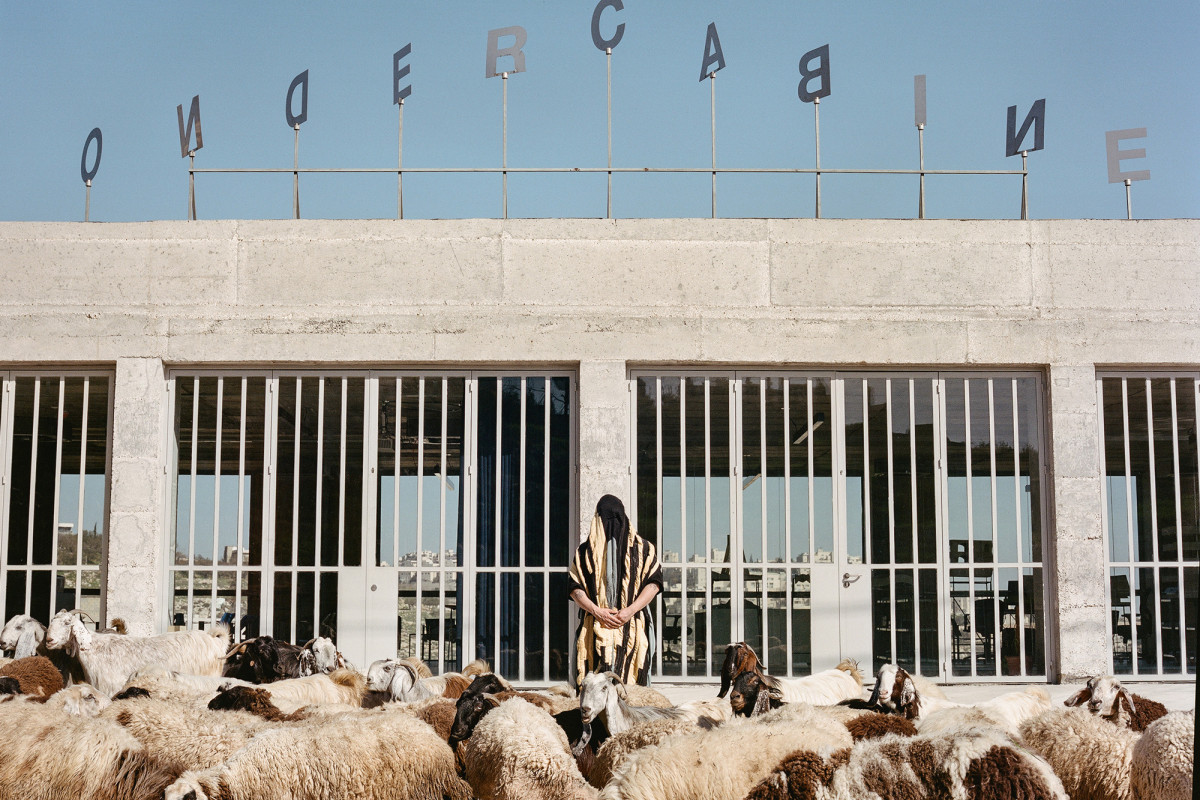
I believe I am not the right person to grapple with all the existential questions of faith and culture that the multidisciplinary artist and political experimentalist Abdullah Miniawy grapples with on his latest album, Nigma Enigma. The record is equal parts Arabic chant, folk music, and sound art, based on modular synths and field recordings. The Egyptian composer uses the album’s eleven abstractions as the soundtrack to what he himself calls »an Arabic opera of doubt and faith«. But as a non-Arab, lifelong atheist, it is difficult for this reviewer to fully engage with the big questions Miniawy poses in his mother tongue, while samples of crackling fires and layers of filtering create an otherwise enigmatic atmosphere that resonates well with the album’s title. As the music also functions as the soundtrack to an immersive video game, we are taken even further from familiar territory, given that the reviewer has not touched such things since Quakein 1992.

If one sets aside the search for meaning and allows oneself to be colored by the music’s immediacy, what emerges is a strongly conceptual, sonically accomplished work, in which Miniawy’s voice – most often chanting Arabic phrases from old folk songs – is interwoven with electronic noise. In particular, the transition from the beautiful two-part chanting on »Jayhano Al Kawahi« – with strong religious undertones – to the deeply anarchic noise vignette »Half a Year II«, featuring filtered sine tones and pounding bursts of bass noise, serves as an apt characterization of a minimalist piece of sound art.

Yet without being able to share Miniawy’s cultural and spiritual context, the album feels like a riddle I cannot solve. Like drinking an Irish coffee without the whiskey: the real praise is withheld. Nigma Enigma will speak to those who can relate to the spiritual and philosophical questions Miniawy raises, while others may experience it as a musical journey without fully understanding its destination.

English translation: Andreo Michaelo Mielczarek

In brieflive
14.12.2024

The Dust Would Not Settle on the Organs

Organ Sound Art Festival: Mads Emil Dreyer, Gamut inc., Aron Dahl & Mija Milovic
© www.francoadams.com

These days, Organ Sound Art Festival is taking place in its familiar setting at KoncertKirken, and yesterday marked the festival’s second day. The concert opened with revivals of Mads Emil Dreyer’s Vidder 1 and 4, along with a newly composed interlude for pump organ, house organ, keys, and bass flute – all instruments amplified. In this way, Dreyer obscured the sources of the sounds and created a beautiful interplay between the acoustic, the amplified, and the played-back. Was it the flute or the organ I was hearing? And did the sound come from an instrument or a loudspeaker? The music bore the mark of drone music, with beautiful dissonances and a tonal development that occasionally peeked through. Enchanting and compelling.

In the next performance, the German duo Gamut inc. had fitted the church organ with two robots, allowing a computer to control the instrument. Unfortunately, I was left wondering whether the robots were properly calibrated, or whether the music had been composed for a church space with significantly more reverberation. In any case, it sounded »MIDI-dead« – a bit like a silly »piano roll« video of an obscure serial work.

The duo Aron Dahl & Mija Milovic concluded the evening with music whose tenderness and honesty might recall The xx – if the British indie rock group were playing on out-of-tune house organs. Still, the music became somewhat monotonous, and their setup appeared underutilized.

The slightly mixed experience of the evening’s program does not change the fact that Organ Sound Art Festival is an atmospheric and ambitious festival that dares to take chances when presenting us with new works for an instrument that many still associate with bygone days. This Copenhagen-based festival is anything but dusty.