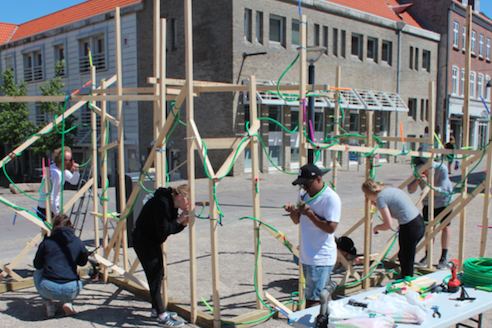
2-18. juni lægger Struer gader, pladser, parker m.m. til landets hidtil eneste festival for stedsspecifik lydkunst. Festivalleder Jacob Kreutzfeldt fortæller om Struer Tracks, som festivalen er døbt.

“Struer Tracks er en festival for lydkunst. Kernen er udstilling af lydkunstværker, og værkerne er stedspecifikke i den forstand at de er tænkt eller tilpasset til Struer og til de konkrete steder. Uden om udstillingen har vi en række arrangementer, koncerter, workshops og præsentationer, hvor vi inviterer borgere og besøgende til at lytte og give lyd”, indleder Jacob Kreutzfeldt.

Han uddyber, hvordan de urbane og offentlige rammer spiller med på lydkunstens præmisser på en helt anden måde end eksempelvis de traditionelle, hvide gallerirum.

“Vi ville gerne skabe situationer, hvor publikum møder kunst i hverdagen – frem for på museer eller i koncertsale. Her er der mulighed for at kommunikere på andre planer, end når det foregår på institutioner. Ved at arbejde i det offentlige rum er der en anden mulighed for at værkerne kan overraske folk i hverdagen. Det gælder for al kunst i det offentlige rum, men måske i særlig grad for lydkunst, hvor kan komme komme snigende og blande sig med omgivelsernes lyd”, forklarer han.

Valget af lige netop Struers offentlige rum som ramme for festivalen er langt fra tilfældig. Det lokale byråd har med en strategisk satsning brandet den midtjyske købstad under navnet Lydens By. Knap en femtedel af de ca. 10.000 indbyggere er da også beskæftiget hos byens største virksomhed, B&O, der er verdenskendt for især lyd-elektronik af høj kvalitet.

“Man har gennem de seneste 5 år arbejdet med at opbygge en identitet og kultur omkring lyd i Struer – ikke mindst baseret på at Bang & Olufsen har ligget i Struer i mere end 90 år. Det betyder at vi kan trække på initiativer og kompetencer, som vi ikke ville kunne finde i andre byer – og slet ikke i byer af Struers størrelse. F.eks. har Ursula Nistrup haft mulighed for at samarbejde med folk med stor teknisk kompetence på B&O, og vi kan spille Jacob Kirkegaards og Peter Albrechtsens Dolby Atmos-værk Den Usynlige By i en af de mest veludstyrede provinsbiografer, jeg nogensinde har set”, konstaterer han.

Udover at bidrage med gode tekniske faciliteter og samarbejdsmuligheder, kan Struer også noget andet, som kunst-hovedsæderne Aarhus eller København ikke kan.

“Struer Tracks er også et forsøg på at aktivere en anden lokalitet end de metropole omgivelser, som samtids- og lydkunsten tit præsenteres i. Struer er en provinsby, og med festivalen vil vi gerne undersøge mødet mellem samtidskunst og provinsby. Det er håbet at værkerne kan være med til at sætte fokus på steder, identiteter og kulturer, der kendetegner provinsdanmark – der jo trods alt er den største del af landet”, afslutter Jacob Kreutzfeldt.

Det er ambitionen, at Struer Tracks skal udvikle sig til at blive en international biennale for lydkunst, der således indtager Struer næste gang i 2019 og hvert andet år derefter.

Hvad? Struer Tracks
Hvor? Forskellige lokationer i Struer
Hvornår? 2-18. juni 2017

Læs mere om festivalen og se det komplette program af udstilling og arrangementer på festivalens hjemmeside.


© PR

»Music has always provided me with a clear pathway on which to navigate a meaningful life. It is imbued with a set of noble intentions that have taught me important lessons: the art of giving and receiving, how to grapple with the ever-shifting forces of tension and peace, what it is to trust the people who surround you, and the ability to let go.«

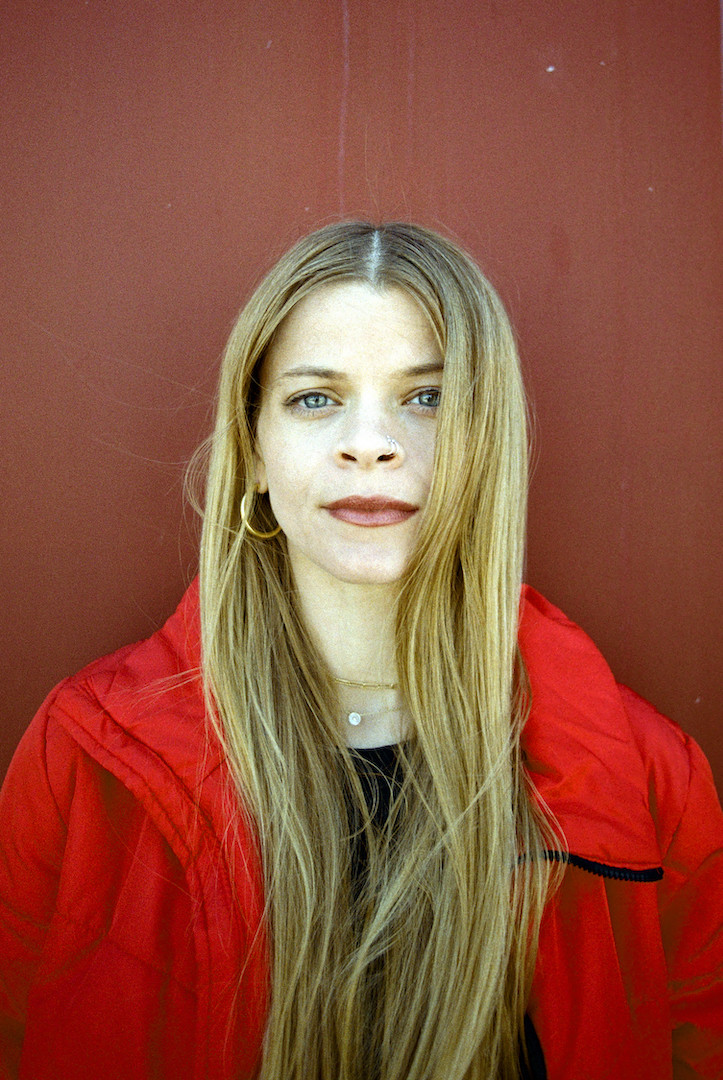
The Irish-born, Denmark-based composer-musician Carolyn Goodwin is a clarinetist and saxophonist, and the founder of Copenhagen Clarinet Choir. Her compositional work is driven by a desire to explore new frontiers in ensemble playing, bringing body and movement to the forefront, and combining the freedom of improvised music with her foundation in classical music. Goodwin's 2022 release with the Copenhagen Clarinet Choir, Organism, on the År & Dag label, has been described as »cranio-sacral therapy for the ear« and »a perfect cross between intelligent and sensory music.« It is these sound and performance parameters that have inspired composers like Marcela Lucatelli, Greta Eacott, and Anders Lauge Meldgaard to compose music for Goodwin’s ensemble.

Goodwin is a member of the trio Coriolis, alongside fellow saxophonists Maria Dybbroe and Nana-Pi Aabo Kim, as well as Jason Dungan’s Blue Lake project. She is also part of the musician collective Barefoot Records.


© Beowulf Sheehan

»Music is limitless, and its potential for meaning is infinite. This is neither good nor bad, but simply an acknowledgement that music is one kind of expression of any given culture (with many other inputs, of which I am mostly ignorant). From that perspective, I suppose then that music is just another medium through which I try to understand another human and/or the culture that they exist(ed) in, and more deeply feel the interconnectedness of the world that we live in, that we have inherited, and that we will pass on.«

Currently the only musician ever to receive two Avery Fisher Career Grants – in 2016 as a soloist and in 2019 as a member of the JACK Quartet – cellist Jay Campbell has brought his eclectic artistic interests both as a performer and curator to the New York Philharmonic, Deutsche-Symphonie Orchester, Los Angeles Philharmonic, Seattle Symphony, Ojai Festival, Lucerne Festival and many others. Deeply committed to collaborative music, Jay is a member of the JACK Quartet, as well as the Junction Triowith violinist Stefan Jackiw and composer/pianist Conrad Tao, multidisciplinary artist collective AMOC, and frequently works with composers and performers like Helmut Lachenmann, Patricia Kopatchinskaja, Barbara Hannigan, John Zorn, Tyshawn Sorey, and many more from his own generation. 

in brieflive
05.07.2024

A World of Contrasts – and a Touch of Smurf Vocals

Roskilde Festival: Slauson Malone 1
© PR

The cello is everywhere at this year’s Roskilde Festival. Some use it as just about anything else – hey, now it’s an electric bass, or how about a keyboard drowned in effects – but in American Jasper Marsalis’ Marcela Lucatelli-worthy bomb project Slauson Malone 1, the cello was actually used as, well, a cello.

Marsalis himself handled vocals and electric guitar on the open Platform stage, while Nicholas Wetherell opened the concert with a motor-race assault on his amplified cello, then pivoted into plucked meditations, to which Marsalis contributed overtone playing on guitar. Sensitive jazz guys? Nope – suddenly: synchronized noise sprints, intimacy splintered, and before long Marsalis threw himself into the seated audience with a somersault – and a scream.

Meanwhile, Wetherell played tender vibratos. Because contrasts thrive at Roskilde – and, after all, seem to be driving the world forward these days. And so it was the world itself that came into focus in the music: through violent shifts between 8-bit Smurf vocals, ambient gnawing solo cello, intimate indie layered over a one-second sample of Cher – culminating in a wistful lullaby veiled in digital theremin.

In many ways, it was peak hipster era. But it was also intensely moving – something like following Mahler out on the edge of the abyss as he tried to sketch the whole world into his scores. The only difference: the easel looks a bit different today.

© Kristoffer Juel Poulsen

It is not the first time Selvhenter have shown Roskilde how a saxophone can scream. Even the most avant-garde-ready listeners were left gasping for air. It was hard not to let your own lungs empathise with the long passages and unruly energy that the experimental Copenhagen quartet excelled in, wielding an instrumentarium consisting of two drum kits, synth, trombone, saxophone and assorted extras.

And the more the band – positioned in the centre of the Avalon tent, surrounded by the audience – wove their collective patchwork carpet, the more the individual character of the instruments was erased. Selvhenter could just as well have been playing entirely different instruments. You could see Sonja LaBianca standing there, forcing tones out of a wind instrument, yet it sounded more like a harp from outer space. It was astonishing how her saxophone fanfares resembled distress signals beamed into the cosmos. Meanwhile, the drums drove very grounded rhythms: Steve Reich-like pulses colliding with freer passages.

Selvhenter inflated the tent with full-fat punked and jazzy noise. Without pauses (not even when a snare drum went dead and had to be replaced mid-set) and without water for the crowd. Being so close to the musicians was a plus; on their small central stage they looked like giants in a battle arena. This was new music that was deeply physical. For about an hour we breathed together (and perhaps even sweated?) in sync. And it is profoundly good to do something together at a festival.

Selvhenter on the Orange Stage next year. Come on!

© Pavlos Fysakis

»Music involves a mix of noise, of existing or fabricated instruments, of alternative worlds that the sounds and voices assemble. Some are gentle, some less so. We shift gears with music, it shifts intensity, we shift with it. I listen when I can.«

Jussi Parikka is a Finnish cultural historian and writer who works at Aarhus University as professor of Digital Aesthetics and Culture. After some 15 years in the UK, he continues in Denmark his work on how ecology, digital culture, art and design, and philosophy intersect. He has written on visual culture and history and archaeology of media, including the recent books Operational Images (2023) and Living Surfaces: Images, Plants, and Environments of Media (2024) which is co-authored with the Madrid-based artist Abelardo Gil-Fournier. Besides his writing and work as educator, he has been active as a curator including the recent show Climate Engines at Laboral, in Gijon (Spain) that was co-curated with Daphne Dragona as well as his involvement in the curatorial team of Helsinki Biennial 2023.