I morgen i Reykjavik uddeles Nordisk Råds Musikpris, der samtidig kan holde 50 års jubilæum. Prisen uddeles sammen med Nordisk Råds priser i børne- og ungdomslitteratur, litteratur, musik, film, samt natur og miljø i Kulturhuset Harpa i Reykjavik.

Prisen blev uddelt første gang i 1965, i første omgang kun hvert tredje og siden hvert andet år. Siden 1990 er prisen, der desuden kommer med en check på 350.000 kr., blevet uddelt årligt. Hvert andet år gives prisen til et værk af en nulevende komponist, og hvert andet år går prisen til en solist eller et ensemble. Tidligere er prisen gået til danskere som Per Nørgård, Pelle Gudmundsen-Holmgreen, Niels-Henning Ørsted Pedersen, Palle Mikkelborg, og sidste år var det komponisten Simon Steen-Andersen, der løb med prisen for værket ”Black Box Music”.

Blandt de nominerede i år finder man den norske mezzosopran Tora Augestad, det islandske kammerorkester Kammersveit Reykjavíkur, den svenske bassist og cellist Svante Henryson, den finske akkordeonist Kimmo Pohjonen og den færøske doom metal-gruppe Hamferð.

Blandt de to danske nomineringer finder man - som det også var tilfældet i 1997 - den klassiske blokfløjtespiller Michala Petri. Læs mere om Petris vej mod Nordisk Råds Musikpris i Sune Anderbergs dugfriske anmeldelse af hendes seneste to udgivelser.

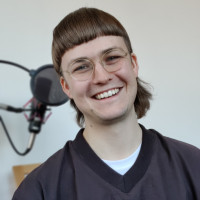
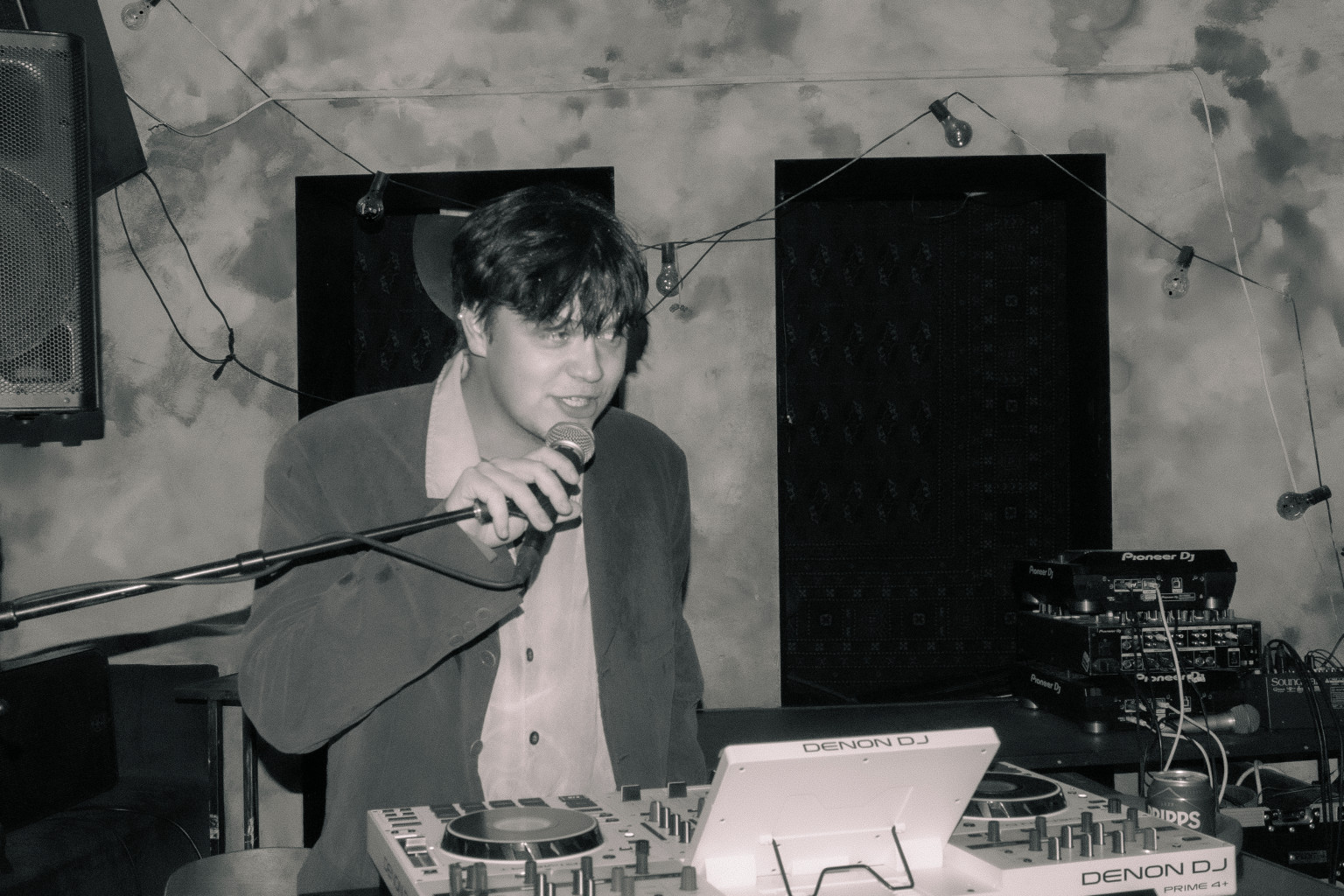
Den anden danske nominering er faldet på den elektroniske musiker HVAD. Bag navnet gemmer sig 31-årige Hari Shankar Kishore, der gennem det seneste tiår har tittet frem fra den københavnske undergrund under forskellige aliasser som DJ HVAD eller Kid Kishore eller som en del af samarbejderne Faderhuset eller Albertslund Terrorkorps, der i en slags hyldest til Rotterdam Terror Corps har indoptaget den hollandske 90’er-gabber-techno i sin lyd side om side med indiske bhangra beats, rituelle tempelklokker, alverdens glitch-lyde og hyppige vokalsamples af ord som ”perker” og ”hvad?”.

Kishore er heller ikke bleg for at køre den danske kulturarv gennem sin situationistiske dekonstruktionsmaskine af nydanskerslang og ”perker tech”, som det er blevet døbt. Hans tidlige dj-sæt indeholdt ofte brudstykker af John Mogensens ”Danmarks jord for de danske” (oprindeligt en EF-kritisk sang) og Kim Larsen, der pludselig med mussestemme sang "de kylede gas mellem hinduerne" indover helt knækkede beats og guitarfigurer fra ”Midt om natten”.

I 2007 lånte han navnet Trentemøller fra den på det tidspunkt måske mest efterspurgte danske dj, Anders Trentemøller, og fik via det sociale medie MySpace tilbudt dj-jobs i både Berlin og Rungsted, hvor man altså troede, man havde booket hitliste-housemusik.

Til daglig holder Kishore til på Kommunal Dubplate Service på Nørrebro i København, hvorfra han driver pladeselskabet Syg Nok Records og med kommunal støtte servicerer lokalbefolkningen med muligheden for at få produceret vinylplader på studiets nærmest antikke pladeskærer. Indtil videre har maskinen spyttet plader ud med Kishores egne projekter samt andre musikalske hackere som Teppop, Goodiepal eller Nørrebro-rapperen Kidd.

Og snart vil det altså vise sig, om Kishore også er vinder af Nordisk Råds Musikpris på 50-årsdagen. Den uddeles i morgen i Kulturhuset Harpa i Reykjavik. Læs mere om de nominerede og om prisen på dens officielle hjemmeside.

in brief
29.09

High to Fly, Ice-Cold to Crash

Jacob Kirkegaard: »Snowblind«
© Nils Strindberg
© Nils Strindberg

On his new album, Snowblind, Jacob Kirkegaard shifts his focus away from revealing the hidden sounds of our surroundings to instead depict a psychological drama. The inspiration: The Swedish polar explorer Salomon August Andrée, who in 1897 set course for the North Pole in a hot air balloon – a reckless journey that cost him and two others their lives, blinded by snow and the pursuit of fame.

Through 11 icy tableaus, Kirkegaard paints a portrait of the anxiety and doubt Andrée must have felt when the balloon crashed onto the pack ice east of Svalbard. For two months, the three men continued on foot until they reached the desolate island of Kvitøya – where they died a few weeks later, possibly poisoned by undercooked polar bear meat. By then, nature had long since revealed its hostility.

You hear all this on Snowblind. First, the balloon takes off in an air current that elegantly balances on the edge of suffocating dark synths and a heartbeat rhythm, while a metallic screech – reminiscent of a heroic electric guitar – subtly signals doubt: Was Andrée a hero or a villain? Shortly after, we land in a vast nothingness of scraped metal. The shockwave transforms into mischievous, squelchy synth footsteps as desperation and hallucinations grow: Was that a ship's horn I heard? A lifeline?

But no. Silence wins. The icy water rattles like a hungry beast. The hardboiled psychological drama leaves no room for hope, only a chance to stare at your end right in the face. Had Kirkegaard been a truly ruthless portraitist, we might have descended even further into darkness and disorientation, but his weightless ambience still leaves its marks in the snow.

English translation: Andreo Michaelo Mielczarek

in brief
29.09

Welcome to the Afterlife

Julian Charrière: »Solarstalgia«
»An Invitation to Disappear« - Bengkulu, 2018. Copyright The Artist, VG Bild Kunst Bonn Germany

We wander through a garden: it's dark, with palms and ferns everywhere, illuminated by infrared light and equipped with sensors, causing the plants to create crackling noise. Red blinking lights above resemble drones. Welcome to the end of the world. And the beginning of the world. We’re not entirely sure. Perhaps it’s a serious rave party that has come to a halt. Just like the techno in the film An Invitation to Disappear, set in a Southeast Asian oil plantation, blurring night and day – making the senses lulled, vulnerable, and compliant.

In the '90s, Erik Satie’s sad piano music always played in broadcasts about climate disasters. Here – at the beginning of a new chaotic year – you can disappear into the exhibition Solarstalgia created by the French-Swiss artist (and Olafur Eliasson student) Julian Charrière. Experience life in an apocalyptic afterworld with all its ominous sounds, in a fully immersive and enveloping way – as this might be how we can learn a bit about the geological forces and changes in nature around us today.

At the end of Arken's long exhibition space, the eye is drawn to an onyx boulder emitting light (the work Vertigo). When approaching something with light, one becomes greedy. The pig-like sounds you hear come from volcanoes in Ethiopia and Iceland. A devouring sound. Just like the entire exhibition, it elegantly addresses both the eyes and techno-loving ears.

in brieflive
29.09

The Art of Decay

August Rosenbaum: »Opløsninger«
© Flemming Bo Jensen

It's seriously clammy as you step down into the Cisterns beneath Søndermarken – humid, with brick columns dripping with condensation and chalk stalactites hanging down. A piano has been left down here for five months, slowly deteriorating. I was skeptical about Opløsninger: yet another Annea Lockwood-inspired work, simply inflicting violence on a poor instrument? And if not, is a composer like August Rosenbaum, who works with short, vibe-friendly piano pieces, the right person to elevate the idea into something greater? Yes, as it turns out, fortunately.

Together with visual artist Ea Verdoner, Rosenbaum has created an installation piece that spans three chambers, and in the first, you indeed see the decayed piano with centimeter-thick mold patches on the keys. As you shuffle along to the second chamber, Rosenbaum sits in the dark in front of a better-preserved grand piano. His playing is both minimalist and grandiose, but it’s the breaks in the composition that truly captivate me. Half motifs, repeated triplets, tritone-like intervals. Rosenbaum loops a captured sound from the decayed piano on a sequencer, gets up, and walks away briskly. He returns and turns up the industrial rumble of a gong, as if he were Trent Reznor in the studio. Combined with choreography about duality, a voice-over about life and birth, and a video about the body and decay, it becomes an exciting and reasonably new depiction of the raw, cold, and arbitrary nature of decomposition.

in briefrelease
29.09

The Perfect Storm

Yanling: »Cymatic«
© PR
© PR

It is rare for an album to be complimented for lulling someone to sleep. But after a month with the album Cymatic by the Swiss-resident, Hong Kong-born Natalja Romine, I have often found myself slipping into dreamland – something I rarely consider a good thing. In the case of Cymatic, however, it is a clear strength. Yanling comes from the world of art music, and the work has already been presented in that context. Still, it stands strong as a piece of cinematic sci-fi ambient. Names like Jean-Michel Jarre, Brian Eno, and Hans Zimmer haunt the album, as modular noise clouds, female vocals, and mysterious electronic pulses and sine waves blend together to create a harmonious tapestry. It is not groundbreaking, and the tracks can be difficult to distinguish from one another. Nevertheless, the captivating piano riffs on »Transmuted« and the gurgling bass synths on »Nebula« stand out. On »Fallen Tempest«, choirs, chords, and reverb coalesce into a higher unity, and on the album's pinnacle, »Aura Nova«, sudden synth stabs threaten to wake one from the dream.

Cymatic is not a masterpiece and can appear on gray days as disposable ambient for a Hollywood blockbuster no one wants to watch. But over time, it grows into a brilliant piece of contemporary art, only suffering from slightly too perfect production and somewhat grandiose gestures. Why get upset over the storm in your teacup if it storms in the right way?

English translation: Andreo Michaelo Mielczarek

in brieflive
29.09

If John Malkovich Could Sing, It Would be Devilish Singing

John Malkovich, Michael Sturminger, Marie Arnet, Theodora Raftis, Martin Haselböck, Orchester Wiener Akademie: »The Infernal Comedy: Confessions of a Serial Killer« 
© Anders Hede/Musikhuset

»Please, conductor play and give me some fucking peace«. The mass murderer – and now a writer, as he became one in prison – Jack Unterweger (John Malkovich) demands more »old fashioned music« as he talks about his barbaric actions in the forests of Vienna. We are at Unterweger's book reception. The baroque orchestra Orchester Wiener Akademie sits on stage as witnesses, while Malkovich strangles sopranos Marie Arnet and Theodora Raftis with their underwear to arias by Mozart, Vivaldi and Haydn. Yes, opera is often about men hitting on women.

»I don't usually like this kind of music, it makes me nervous«. Yes, of course, because the baroque music played on period instruments is not just lame background music, but an active narrator which »disrupts« the sales pitch of a monologue, and the repulsive truth that Malkovich wants to share with us – the murder of nine prostitutes. He would rather be a murderer than nothing, he says. But the two singers also make him roll on the ground like a child; he gasps, becomes uncomfortable in his white suit. These moments elevate The Infernal Comedy to more than a clever concept (well-known actor, ok well-known orchestra, authentic murder story). The women gain a glimmer of dignity, while Malkovich's Unterweger loses it. Now what is he without Dandy sunglasses?

The Infernal Comedy was created for Malkovich in 2008, his joker face, his swaying, yes über musical voice. We want to buy his books because evil sells. As a super simple chamber music piece it works. If Malkovich suddenly announced that he now wanted to sing opera, we would also buy a ticket. But how would this story of misogyny sound with the baroque music of 2024?