I morgen i Reykjavik uddeles Nordisk Råds Musikpris, der samtidig kan holde 50 års jubilæum. Prisen uddeles sammen med Nordisk Råds priser i børne- og ungdomslitteratur, litteratur, musik, film, samt natur og miljø i Kulturhuset Harpa i Reykjavik.

Prisen blev uddelt første gang i 1965, i første omgang kun hvert tredje og siden hvert andet år. Siden 1990 er prisen, der desuden kommer med en check på 350.000 kr., blevet uddelt årligt. Hvert andet år gives prisen til et værk af en nulevende komponist, og hvert andet år går prisen til en solist eller et ensemble. Tidligere er prisen gået til danskere som Per Nørgård, Pelle Gudmundsen-Holmgreen, Niels-Henning Ørsted Pedersen, Palle Mikkelborg, og sidste år var det komponisten Simon Steen-Andersen, der løb med prisen for værket ”Black Box Music”.

Blandt de nominerede i år finder man den norske mezzosopran Tora Augestad, det islandske kammerorkester Kammersveit Reykjavíkur, den svenske bassist og cellist Svante Henryson, den finske akkordeonist Kimmo Pohjonen og den færøske doom metal-gruppe Hamferð.

Blandt de to danske nomineringer finder man - som det også var tilfældet i 1997 - den klassiske blokfløjtespiller Michala Petri. Læs mere om Petris vej mod Nordisk Råds Musikpris i Sune Anderbergs dugfriske anmeldelse af hendes seneste to udgivelser.

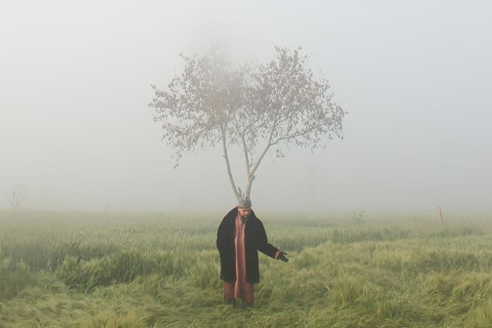
Den anden danske nominering er faldet på den elektroniske musiker HVAD. Bag navnet gemmer sig 31-årige Hari Shankar Kishore, der gennem det seneste tiår har tittet frem fra den københavnske undergrund under forskellige aliasser som DJ HVAD eller Kid Kishore eller som en del af samarbejderne Faderhuset eller Albertslund Terrorkorps, der i en slags hyldest til Rotterdam Terror Corps har indoptaget den hollandske 90’er-gabber-techno i sin lyd side om side med indiske bhangra beats, rituelle tempelklokker, alverdens glitch-lyde og hyppige vokalsamples af ord som ”perker” og ”hvad?”.

Kishore er heller ikke bleg for at køre den danske kulturarv gennem sin situationistiske dekonstruktionsmaskine af nydanskerslang og ”perker tech”, som det er blevet døbt. Hans tidlige dj-sæt indeholdt ofte brudstykker af John Mogensens ”Danmarks jord for de danske” (oprindeligt en EF-kritisk sang) og Kim Larsen, der pludselig med mussestemme sang "de kylede gas mellem hinduerne" indover helt knækkede beats og guitarfigurer fra ”Midt om natten”.

I 2007 lånte han navnet Trentemøller fra den på det tidspunkt måske mest efterspurgte danske dj, Anders Trentemøller, og fik via det sociale medie MySpace tilbudt dj-jobs i både Berlin og Rungsted, hvor man altså troede, man havde booket hitliste-housemusik.

Til daglig holder Kishore til på Kommunal Dubplate Service på Nørrebro i København, hvorfra han driver pladeselskabet Syg Nok Records og med kommunal støtte servicerer lokalbefolkningen med muligheden for at få produceret vinylplader på studiets nærmest antikke pladeskærer. Indtil videre har maskinen spyttet plader ud med Kishores egne projekter samt andre musikalske hackere som Teppop, Goodiepal eller Nørrebro-rapperen Kidd.

Og snart vil det altså vise sig, om Kishore også er vinder af Nordisk Råds Musikpris på 50-årsdagen. Den uddeles i morgen i Kulturhuset Harpa i Reykjavik. Læs mere om de nominerede og om prisen på dens officielle hjemmeside.


in briefrelease
14.01

In the Ruins of Old Organs, Builder Finds His Own Sonic Universe

Calum Builder: »Poor_in_Spirit – the (Re)constructed Pipe Organ« 
© PR
© PR

On his previous album, Renewal Manifestation, Calum Builder let the organ of Mariendal Church roar forth as an imposing protagonist. Now he returns with a work in which the same instrument not only carries the narrative but is the entire narrative – in the form of »the (Re)constructed Pipe Organ«, an organ he has assembled himself from discarded pipes and mechanics salvaged from Danish churches.

It’s a fascinating project, but what about the music? It’s a mixed experience. The three opening tracks, which together form the title piece, as well as »sometimes, I wonder«, are the highlights. The homemade organ surges beneath Builder’s touch on the keys, its frequencies rising and falling like hills and valleys in constant flux. The instrument howls like an autumn wind in the trees, while under- and overtones stand tall like runestones before crashing into each other. Builder’s talent for dramatic songwriting emerges in these miniature pieces – despite the instrument’s audible limitations.

Unfortunately, things unfold differently in several of the other tracks, such as »cicadas_nighttimesound« and »Pacific«. They appear more like sketches – demonstrations of the organ’s possibilities – than fully realised compositions. Ideas remain static and repeated, with very little development. The expected shifts and resolutions never arrive. On Poor_in_Spirit, Builder is clearly experimenting with form and function, and that in itself is interesting. But I miss the vitality and dramaturgy that are otherwise the core of his music.

English translation: Andreo Michaelo Mielczarek

in briefrelease
14.01

70 Minutes Confined to a Creaking Construction Site

Gayle Young & Robert Wheeler: »From Grimsby to Milan«
© PR
© PR

The Amranthen is a peculiar string instrument, invented and built by Canadian instrument maker Gayle Young. It consists of a wooden box fitted with 21 steel strings and three bass strings, and its unique, organic timbre unfolds on From Grimsby to Milan, where Young improvises alongside American musician Robert Wheeler on synthesizer. The recordings from Grant Avenue Studios capture the encounter between the acoustic and the electronic in a loosely shaped, raw musical flow.

Across nearly 70 minutes divided into six parts, the listener is kept in a state of constant uncertainty. The sonic landscape resembles a noisy, dystopian construction site: on »Seaweed Slowly Shifting«, bows are drawn with a saw-like rasp, fingers scratch, machines whirr, and sharp electronic zaps flash like warning lights. Later, bells and pulse-like rhythms enter on »Mariana Trench«, while »Consonant Harmony« slows the pace, settling into a subdued, crackling atmosphere where sparse melodic gestures suggest a momentary lull in the turmoil.

The construction-site metaphor fits well, for the most compelling version of this project would likely be to experience Young’s handmade instruments live, in direct dialogue with Wheeler’s electronics. As an audio recording, however, the project remains closed-off and somewhat insular. And although From Grimsby to Milan contains a wealth of fine detail, the journey – from Grimsby in Canada to Milan in Ohio – ultimately feels long and monotonous, without ever offering the listener the key to unlock its dystopian worksite.

English translation: Andreo Michaelo Mielczarek

© Hal Stucker

»Music is all of life in sound.«

Thomas Morgan is a double bass player based in New York. He has recorded and toured all over the world as a member of Paul Motian’s bands, the John Abercrombie Quartet, Steve Coleman and Five Elements, Tomasz Stanko New York Quartet, Bill Frisell Trio, Jakob Bro Trio w. Joey Baron among many others. He has also collaborated with Dan Tepfer, Craig Taborn and Masabumi Kikuchi, and released albums with Bill Frisell, Small Town; Maria Laurette Friis, Colors, and with Jakob Bro/Joe Lovano, Once Around The Room. In November 2025 he stepped forward with his first solo project, Around You Is a Forest (Loveland Music). The record is built around WOODS, a virtual string instrument Morgan designed in SuperCollider that evokes the sound of plucked and struck string instruments – West African lute-harps, Asian zithers, the Hungarian cimbalom, marimbas – while operating according to generative code that Morgan shaped into a living, evolving instrument. 

Lars Hannibal. © Søren Solkær

»Making a playlist is not an easy task for me. Music occupies most of my waking hours. It is a condition that began to grow when I was a teenager. If I am not playing myself, or working with the music I release or compose, music is still present, reaching out to me. I have always found it difficult to experience music in boxes or genres, so I listen very broadly and take pleasure in any music I can feel and that moves me. Music is a condition of life, and expressing oneself through music is a gift – but being able to experience music with openness is perhaps an even greater gift. I have chosen a list in which the guitar plays a part.«

Lars Hannibal began – like many others of his generation – playing folk and rock guitar at the age of fifteen. But when he heard the Spanish guitar master Andrés Segovia perform the gavotte from Bach’s Partita in E major, his musical life took a new direction, and he decided to devote himself to the classical guitar.

Since the early 1970s, Lars Hannibal has also composed songs and instrumental works. Today he performs primarily as a member of the Petri/Hannibal Duo and works alongside this as managing director of the record label OUR Recordings, which he founded together with Michala Petri in 2006, as well as a consultant for Edition Borup-Jørgensen.

in briefrelease
15.12

Uncompromising Vignettes of Silence and Sighs

Hildur Guðnadóttir: »Where to From«
© PR
© PR

It seemed to come like a bolt from the blue when the Icelandic cellist and composer Hildur Guðnadóttir broke the sound barrier with an uncompromising, inward-looking sound situated between contemporary classical and experimental music – most widely recognised through her suffocating soundtracks for Chernobyl and Joker.

Yet on her Deutsche Grammophon debut Where to From, it is the personal spaces we are invited into. The instrumentation is pared right back to a chamber ensemble, voices, and extended passages of near-absolute silence. The result is often achingly beautiful – and deeply affecting.

The work unfolds in small vignettes, rarely lasting more than a couple of minutes, before vocals are introduced in the album’s second half – most notably in »Make Space« and the exquisite a cappella hymn »I Hold Close«. The equally beautiful »Melody of Not Knowing« explores the cello’s darkest registers, striking blue midnight tones in the echo of the heart, especially as it glides into »All Along«, where voice and strings merge.

Where to From is a powerfully mood-saturated work that moves effortlessly between chamber music and neoclassicism, finding its uncompromising character in the quietest, most intimate sighs between human and instrument. It is neither too little nor too much – always precisely measured. And for that very reason, Guðnadóttir remains such a compelling musical presence.

English translation: Andreo Michaelo Mielczarek