I samarbejde Goethe-Institut Dänemark, Københavns og Roskilde Universitet inviterer Seismograf/DMT til seminar tirsdag den 3. juni kl 16-18 Teater Repulique i forbindelse med Klangfestivalen 2014.

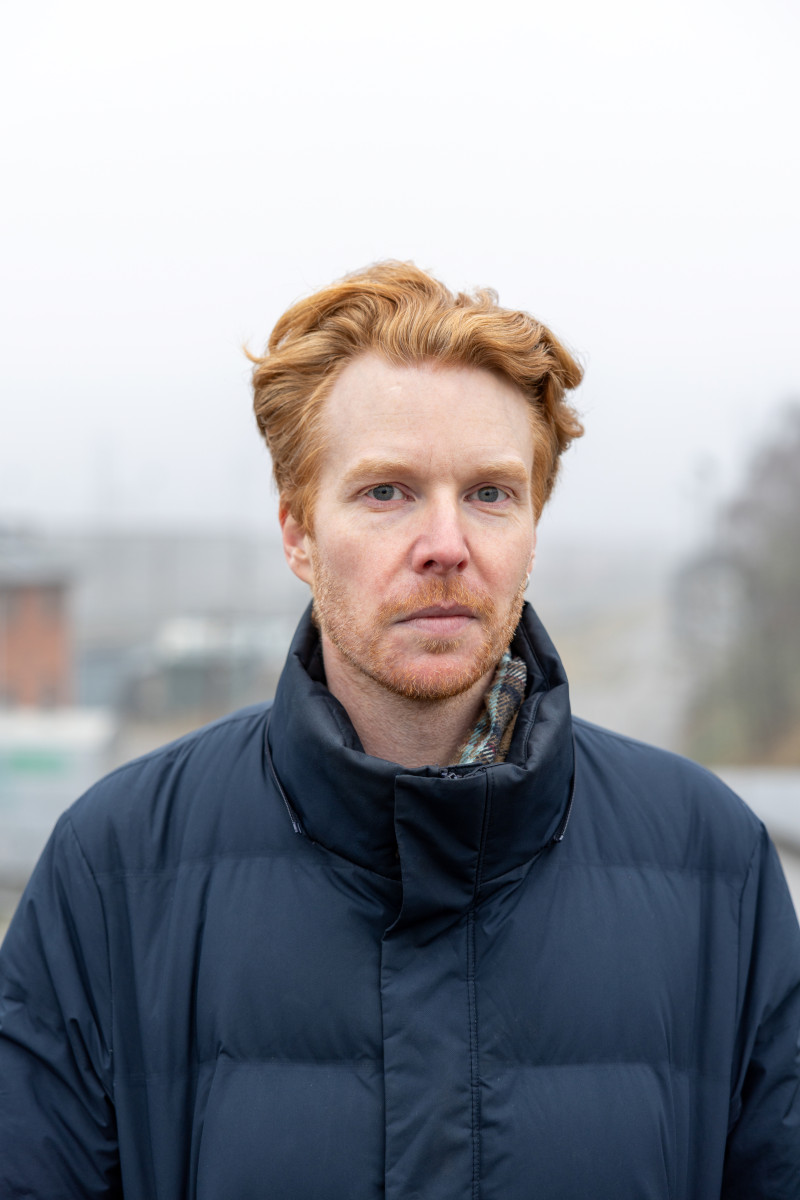
Ved seminaret " Modernisme, politik og det stedsspecifikke" har vi inviteret Dr. Kersten Glandien, Musikkritikeren Henrik Friis og komponisten Johannes Kreidler. Dr. Kersten Glandien fortæller om lydkunstscenerne i Berlin fra 1970erne og frem til i dag. Musikkritikeren Henrik Friis spørger, hvad der skete den radikale tyske modenisme efter Lachenmann og Spahlinger. Svarene søges bl.a. gennem en analyse af Spahlingers betydning for den danske komponist Simon Steen-Andersen. Den tyske komponist Johannes Kreidler taler om de sidste 15 års udvikling i tysk ny musik og præsenterer sin analyse af periodens æstetiske, tekniske og diskursive forandringer. 

Seminaret er arrangeret og ledes af Sanne Krogh Groth (RUC, Seismograf/DMT) og Søren Møller Sørensen (KU). Det afholdes på engelsk og er blevet til i samarbejde med Goethe-Institut Dänemark.

Abstracts:

Dr. Kersten Glandien (Senior Lecturer, University of Brighton, UK):
"… too wide a field - SoundArt in Berlin"

This comment on the human condition by Theodor Fontane came frequently to my mind while researching the various facets of SoundArt in Berlin. Far from encountering ‘a scene’, I found myself facing a vast labyrinth of activities, artists, works, places, events, organisers and institutions, stretching back several decades.

In my paper I will attempt to give an insight into the extent and hybridity of Berlin Sound Art - from its beginnings in the 1970s under the special conditions of cold-war West Berlin, through the landmark-festivals and lively activities of the post-Wall period, down to its ubiquity and acceptance today. I will examine the main players, institutions, organisers and initiatives, trace the unusual political and cultural conditions that set the agenda in both parts of the city, outline the exciting process of fusion that followed - and examine the very different approaches taken to SoundArt in the city today and the aesthetic clusters they form.

Henrik Friis (Music critique, Politiken, DK):
"What happened to modernism?"

What happened to the strong modernist position in German music after Lachenmann and Spahlinger? Well, maybe it is alive and kicking – living on, for instance, as impossible timbre made by young Danish composers. With a strong advocate in the Berlin resident and Spahlinger student Simon Steen-Andersen.

A place to start is the search for a useful framework for the term modernism. The Spanish philosopher Ortega Y Gasset addresses the modernist position in European Art and Music in 1925 in his essay ‘The Dehumanization of the Arts’. He claims that, opposed to earlier epochs in the history of the arts, modern music is not unpopular, as in ‘not popular yet, but outspoken anti-popular. A search for modernism is in that sense a search for traces of thoughts of intellectual anti-popularism and dehumanization. Helmut Lachenman and Matthias Spahlingers music from the early 1970’s and onwards show some of the same alienating and non-popular characteristics. For instance the ‘Musique Concrete Instrumentale’ focuses the ear at the noise of the music production and continuously stops the listener from forgetting that the musical experience is in fact a musical construction. Or the Spahlinger concept of the endless beginnings. These intellectual traces are pursued in the recent music of Simon Steen-Andersen, i.e. the cd of 2010 ‘Pretty Sound’.

Johannes Kreidler (Composer, DE):
"New Music in Germany in the last 15 years."

Having started to become a professional composer towards the end of the 1990s, not only personally I've made my artistic development, but also in general I can draw an overview now on a period of time of which I think has made quite a shift, aesthetically, technically, discursively.

Fakta
Seminar. Klangfestivalen
Tirsdag den 3. juni kl 16-18
Teater Repulique, Østerfælled Torv 37, 2100 København Ø


© Christian Klintholm

»Music is just something for me.«

Christian Juncker is a Danish musician and songwriter who has released a number of Danish-language albums. He debuted in 1995 with the band Bloom. Together with his friend Jakob Groth Bastiansen, he formed the duo Juncker in 2002. He is also behind the Christmas carol »Luk julefreden ind« from 2024.

© PR

On May 29, the Aalborg-based collective Datahaven9000 takes over the venue Skråen, transforming its main hall into a concentrated one-day festival of electronic music. The event is part of the concert series Bystanders #3, where the stage is handed over to local scenes rather than the venue’s in-house programming.

© PR
© PR

Two of contemporary music’s most uncompromising material thinkers meet on Music for Intersecting Planes: the American organist Kali Malone and the French cellist Leila Bordreuil. Malone works with oversaturated blocks of sound and sonic mass as a sustained pressure, while Bordreuil seeks friction – her cello a recalcitrant organism that creaks and resists.

What they share is an ascetic attention to the specificity of their instruments. The organ and the cello are pushed to their outer limits, where recognizability dissolves and overtones emerge like hidden entities.

The title pieces, »Intersecting Planes I» and »II«, unfold as undulating ruptures of sound: animalistic, almost elephantine cries that surge forward and recede again. Only rarely can the sound be identified as organ or cello. (»Pilots in the Night« comes closest to a familiar balance between the organ’s gravity and the cello’s resistance.) Otherwise, the music moves within a field between the metallic and the electronic, as if the sound originates neither from strings nor pipes.

It is not mass that is being explored here, but rather a kind of hollowness: an airiness that is not light, but permeated by an indeterminate resonance – something ancient, almost ceremonial. The album holds something far more porous and open than Malone and Bordreuil’s earlier works. The sound appears as a concave form, bending inward, like an absence of material. The sonic landscape carries its own dissolution within it as an inherent delay – as if the music exists, first and foremost, as the erosion of something one thought one heard.

English translation: Andreo Michaelo Mielczarek

© Esben Aarup

»Music, for me, is the rhythm, the pulse, and the energy of my life. It’s what drives me and can always energize me or colour my day in exactly the way I need. In a very busy, confusing, and chaotic life like the one I find myself in right now, music can be almost the only thing that slows my pace down, gives me access to actually feeling my emotions, and creates space for reflection. Music is history – it remembers moments and moods. It reflects cultures and can become the voice of a generation or an entire group that struggles to break through the mainstream or challenge the status quo. For me, music is one of the primary ways I can influence the society I’m part of – whether by supporting important art that we can see ourselves in, or by bringing large groups of people together around something meaningful and communal. Music, to me, is freedom. Freedom to dance without inhibition, to let the tears flow freely, and the freedom to play air drums at full speed on my yellow racing bike as I ride down Mejlgade.«

Oscar O’Shea is a graduate of the Kaospilot programme, with a focus on innovation in the cultural and music industries. Through SPOT Festival, he works as project manager for the international initiative Live Incubator and the hyper-local event cSPOT at Bowlinghallen. Oscar is a documentary filmmaker and will graduate this summer as part of the first cohort of documentary producers from the independent film school DOKTRIN.

He recently founded the independent Aarhus-based agency Okay Management, which works with artist management, booking, film production, and music releases for a wide range of artists. Through the agency, the venue Okay is opening in the new Stenbro district near Nørreport in Aarhus. The space will showcase Aarhus talent, with a focus on bringing together the city’s emerging cultural scene and building a sustainable music industry from the ground up through knowledge sharing, transparency, and collaboration across the underground and grassroots levels.

In recent years, he has worked as a booker and programme curator for Sydhavns Festival, Gemini Festival, and a wide range of other events and initiatives. His heart beats for DIY and indie culture—for independence and collaboration rather than competition. And although Oscar has lived in many different countries and worked around the world, he always returns to Aarhus—precisely because of the sense of community and the city’s DIY spirit.

in brieflive
28.03

Opera or Exam Preparation?

Mauro Patricelli, Signe Asmussen, Matias Seibæk, Anders Banke, Thommy Andersson, Jessica Lyall et al.: »Tarantula«
© Søren Meisner
© Søren Meisner

Tarantula is presented as a »documentary opera«, a genre created by Mauro Patricelli. The work takes its starting point in tarantism – the myth of the spider’s bite, which triggers madness and the ecstatic dance that heals – and intertwines it with A Doll’s House and Napoli by August Bournonville. The ambition is clear: to reflect female experiences of mania, oppression, and interpretation throughout history. The scenography reinforces the documentary approach. Five suspended screens display text, archival material, a dancer, and a professor character who didactically explains the work’s sources. At the same time, four musicians and the soprano Signe Asmussen stand in a row.

The music alternates between long, bare lines and repetitive, rhythmically complex figures clearly inspired by the tarantella. Yet this very complexity becomes a drawback: the reliance on click-track and sheet music lends a mechanical quality that clashes with the work’s purportedly demonic and physical energy. The main issue is the balance between explanation and interpretation. The professor figure constantly dictates the reading, undermining the work’s own critical ambitions – not least when it simultaneously critiques a »male lens«. The engagement with Ibsen also feels simplified, almost misread, functioning more as illustration than genuine interpretation.

The libretto – largely composed of historical sources and academic language – weighs heavily on the dramaturgy. When a letter about Ibsen’s knowledge of tarantism is elevated to a dramatic climax, it becomes difficult to grasp what is truly at stake. That the text is sung, projected, and handed out in libretto form only intensifies the sense of redundancy. In the end, one is left with the feeling of having attended a lecture rather than an opera. My final note before the curtain fell: Will this be on the test?

English translation: Andreo Michaelo Mielczarek