© Sebastian Gudmand-Høyer

»Music is a full bodied, raw and physical exchange. It’s an absorption that is overwhelming, that sometimes grants you relief. Music is interactive, and depends on you as a listener.« 

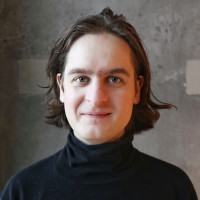
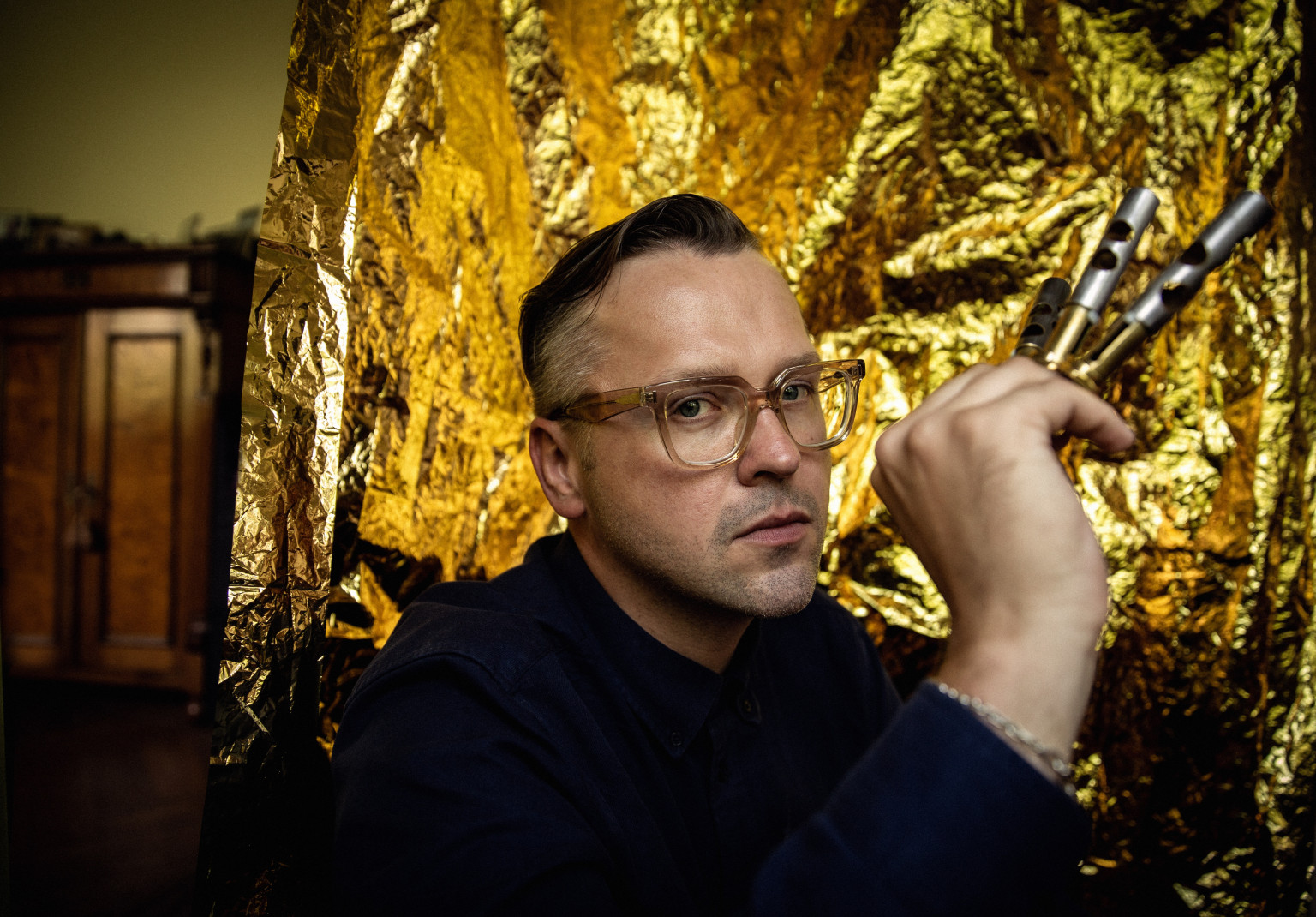
Alexander Tillegreen is a composer and artist who operates both visually, sonically and spatially. He works in a plurality of formats including multichannel sound installations & performances, interactive listening sessions, paintings, prints, light and concerts as well as exhibitions, commissioned works, and releases. In 2023, he presented a cycle of new commissioned sound works for the Darmstädter Internationale Ferienkurse für Neue Musik. Same year, he released his debut album in words on the acclaimed German electronic music label rastermedia. 

Alexander Tillegreen’s work has been the subject of numerous institutional solo and group exhibitions including: A Bruit Secret – Hearing in Art at Museum Tinguely in Basel (2023), O-Overgaden Institute for Contemporary Art in Copenhagen (2022), FuturDome Museum in Milano (2022), Kunstverein Göttingen (2022), Kunstforeningen GL Strand (2023), Museum für Moderne Kunst in Frankfurt (2017), and The National Gallery of Art in Copenhagen (2008). He has presented his music at many festivals and venues including STRØM Festival, Roskilde Festival, and CTM Festival. 

His most recent work investigates the relationship between psychoacoustic sonic phenomena and their potential to reflect and awaken the listener’s own linguistic and cultural embeddedness and co-creative embodied, interaction as a listener. 

He has been conducting artistic research at the Max Planck Institute for Empirical Aesthetics. This research centers on aspects of attention, spatial sound, voice, gender, identity, embodied co-creation, and language perception in relation to the phantom word illusion – a language-based psychoacoustic phenomenon, that triggers the illusory sensation of hearing inner streams of words that are not necessarily acoustically present.

In 2024, Alexander Tillegreen will represent Denmark at the ISCM World New Music Days on the Faroe Islands.

in briefrelease
04.07.2025

When Machines Dream: The Electronic Poetry of Oh No Noh

Oh No Noh: »As Late As Possible«
© Nikolas Fabian Kammerer

There’s something distinctly mechanical about Oh No Noh’s album As Late As Possible. Like a warped, crumpled tape, melodies bubble to the surface, and the offbeat rhythms repeat with the halting tempo of a scratched LP. It’s easy to place Oh No Noh within the esteemed German tradition of blurring the lines between human and machine, but on As Late As Possible, the machine sounds more like a distant relative than a deliberate artistic objective.

Behind Oh No Noh is Leipzig-based guitarist Markus Rom. In addition to a wealth of synthesizers and tape loops, the album’s 11 tracks are performed using guitar, drums, banjo, clarinet, and organ. The absence of vocals sets the album in a subdued, cinematic mood, and the music feels like a nostalgic inner monologue, told with a warm affection for the melancholy of outdated technologies.

Although mechanical sensibilities are prominent throughout the album, several tracks are driven by more melodic band arrangements. But to me, As Late As Possible is clearly most compelling on the less melodic pieces. The crooked and noisy »Fawn« or the hesitant closing track »Ore« are moments where the dialogue with the machine elevates the music in ways that the more melodic, band-oriented pieces don’t quite reach. These are places where the machines sigh nostalgically and form small, imperfect thought bubbles that cut off and restart again.

English translation: Andreo Michaelo Mielczarek

© Hreinn Gudlaugsson

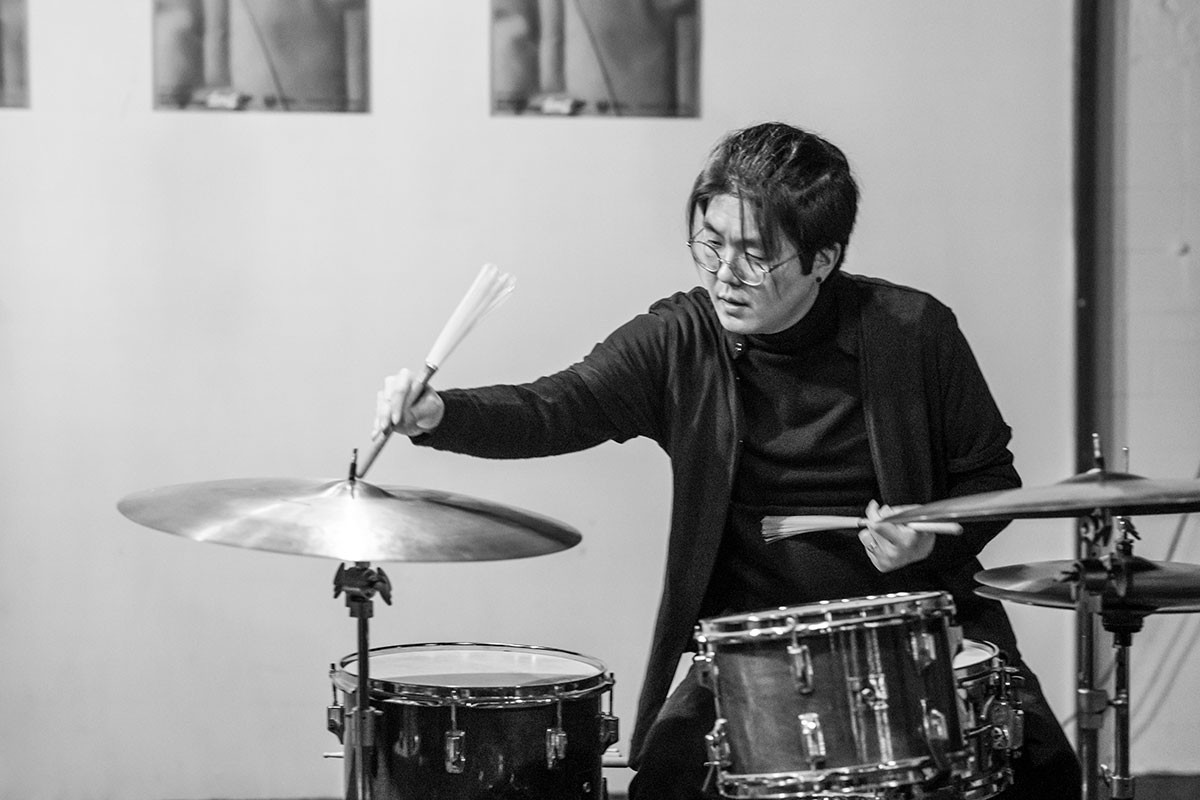
»Music for me is like a sourdough. If you don't feed it right it is going to die. If you feed it correctly a lot of people can benefit from it.« 

Halym Kim is a drummer, composer and project coordinator based in Copenhagen. His music is mainly based in free improvisation and experimental music but performs also as a traditional Korean percussionist. He has a Master and an Advanced Postgraduate Diploma in Music Performance from RMC in Copenhagen. Together with Nana Pi he organizes Impro Camp which is a music camp for free and structured improvised music that is happening every year in Fredericia, Denmark.

© DMF

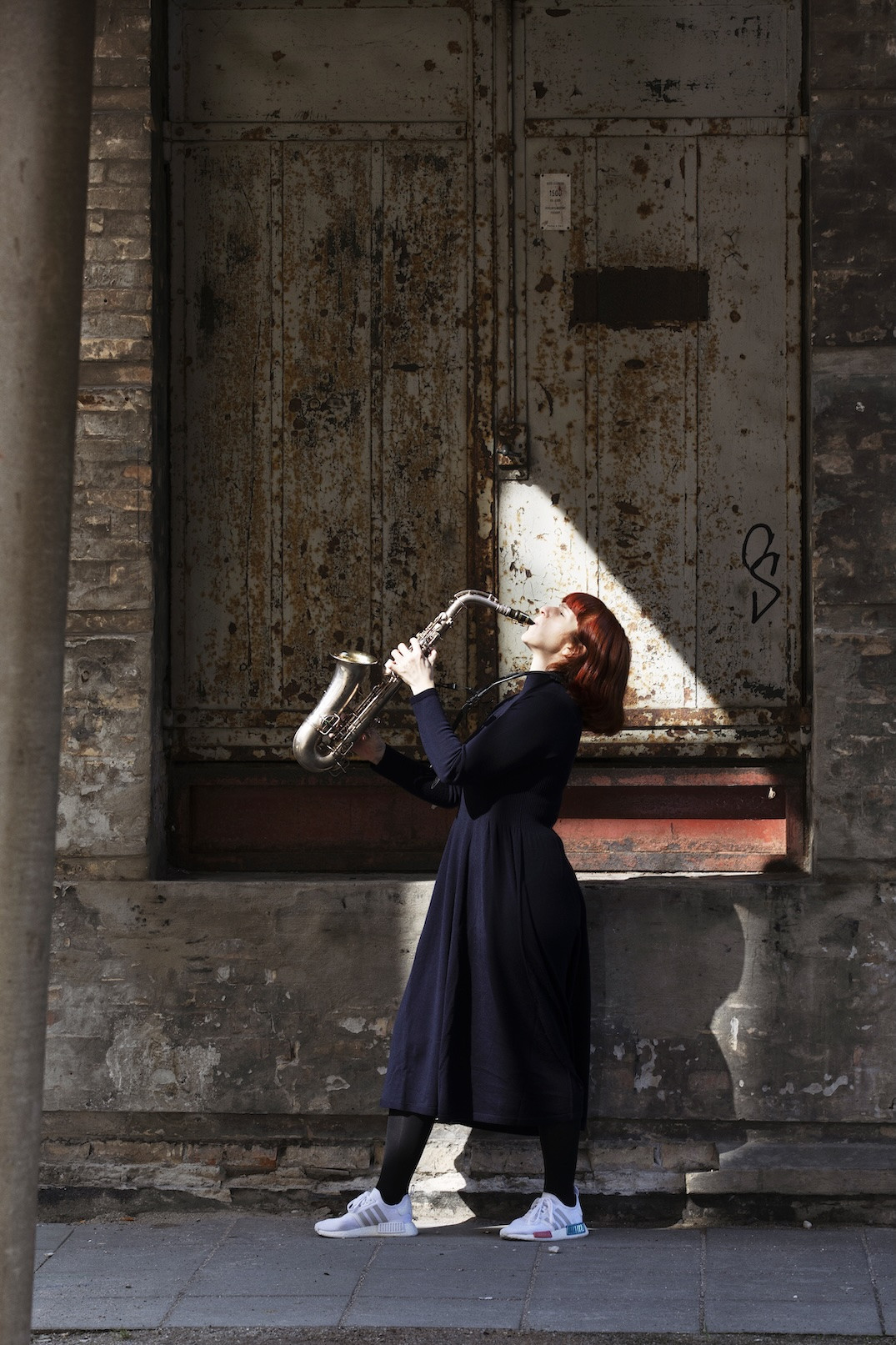
»Music for me is a tool of infinite expression. It’s where I’ve had the most complex conversations and open-minded experiences. It is the highest form of energy I know.«

Nana Pi is a saxophonist, composer and conductor working within the experimental music scene. She has developed a unique musical vocabulary on the saxophone by incorporating objects and extended techniques, pushing the boundaries of sonic expression. Beyond her work as a saxophonist, she is known for conducting improvisation using her music sign language, Extemporize, for which she received the P8 Jazz Award Årets Ildsjæl in 2020. She is a member of the well established record label Barefoot Records. In addition to her musical career, Nana Pi is organizing events such as Impro Camp and FredagsJAM that focuses on creating networks and inspiring music environments between musicians.

© PR

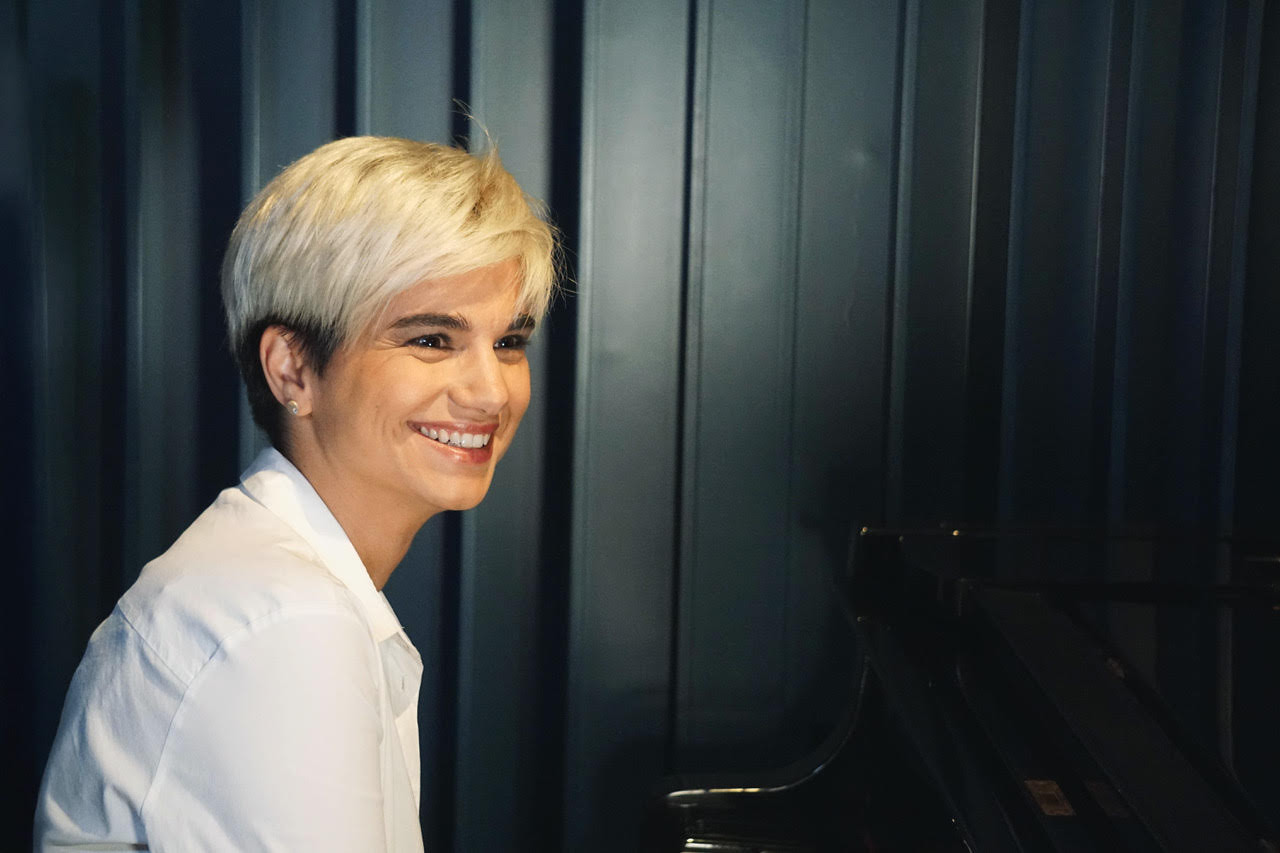
»For me, music is an emotional refuge. When I sit at the piano I feel safe, it's where I can release everything I carry inside. It's not about performing, it's about being honest, vulnerable and free.«

Samanta Yubero, known artistically as Samyula, is a composer, pianist, and neuroscientist based in Barcelona. Trained as a classical pianist and holding a PhD in her scientific field, Samyula bridges the worlds of art and science in her work. Her music – often within neoclassicism – blends both serene and intense piano melodies with vivid, dynamic string arrangements, creating emotionally resonant and immersive soundscapes. With a deep passion for both composition and performance, Samyula offers audiences a uniquely powerful and moving experience.

© PR

»Music is the ultimate gateway to presence, a true expression of the moment.«

Praised by DownBeat Magazine as one of Europe’s most versatile and inquisitive musicians, Polish-born, Scandinavian-based trumpeter and composer Tomasz Dąbrowski creates music that whispers before it screams – blending open, lyrical melodies with raw, unconventional trumpet sounds. Dąbrowski has revealed an unceasing curiosity, stretching and expanding his jazz roots in an ever-widening circle of exploration. From the beginning he’s rejected hierarchies, preferring to see creative music as a boundless practice that can accommodate ideas drawn from every spot on the stylistic map. While plenty of musicians pivot toward new directions, sometimes transforming their aesthetic wholesale, Dąbrowski has long revealed a more ruminative and holistic mindset that has allowed him to retain a clear artistic identity through countless projects, whether driven by improvisation or composition.