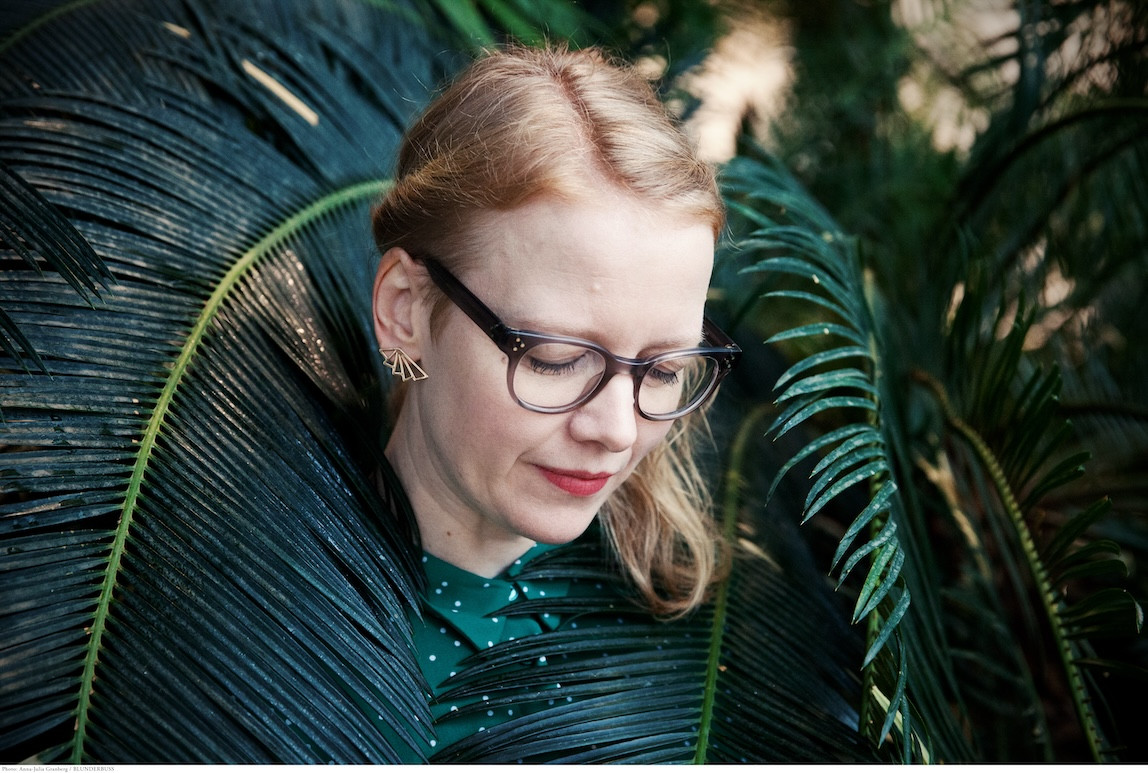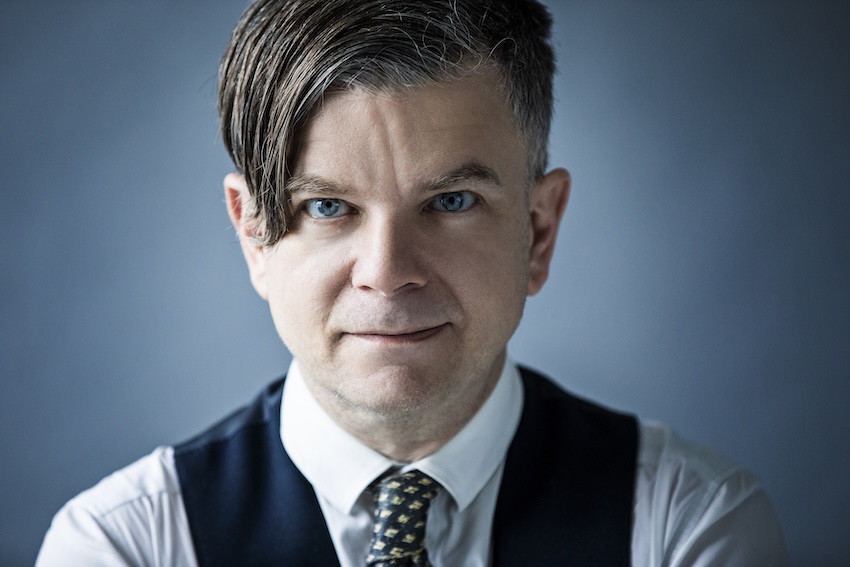
»Who ever said that music is ‘just’ music? To me, it is anything but that: an urge to understand and explain it all. A piece of jewelry I wear every single day. A joy that can, at times, run deep. An ever-changing imprint of millions of stitches in my heart. A longing to disappear.«
Henrik Marstal is a musician, author, and music researcher. He holds a PhD in musicology, is a senior lecturer at the Rhythmic Music Conservatory, and frequently appears in the media as an expert source on music. His areas of interest include contemporary music, such as electronic music. This winter, he will release both a new album with the pop group ibens and a book about Else Marie Pade, published by the British publishing house Bloomsbury.
»For me music is meditative chaos.«
Katarina Gryvul is a Ukrainian composer, violinist, music producer, and founder of Gryvul School. She emphasizes timbre as the primary element of form in her compositions. positioned between classical and electronic scenes, she has developed a unique way of composing that melds classical contemporary approaches with modern music technology. Gryvul works in the field of ambisonics and multichannel composition, utilizing live electronics for instruments and voice alongside analog modular synths. At the heart of her artistic vision lies the concept of duality, a theme intricately woven into every facet of her musical expression.
»I can’t say what music is but I can say what music does: it is an experience, it travels through all my bodily senses, it brings energy (not only power but also tranquilizing and soothing, even peaceful energy); above all, it revives the memory of frozen moments, not unlike the scent of perfume, and yet it remains in the moment, the 'now' – in a recording a 'now' conserved from the past which we can relive whenever we press 'play' – and thus my playlist is a selection of moments related to person or event that was important to me.«
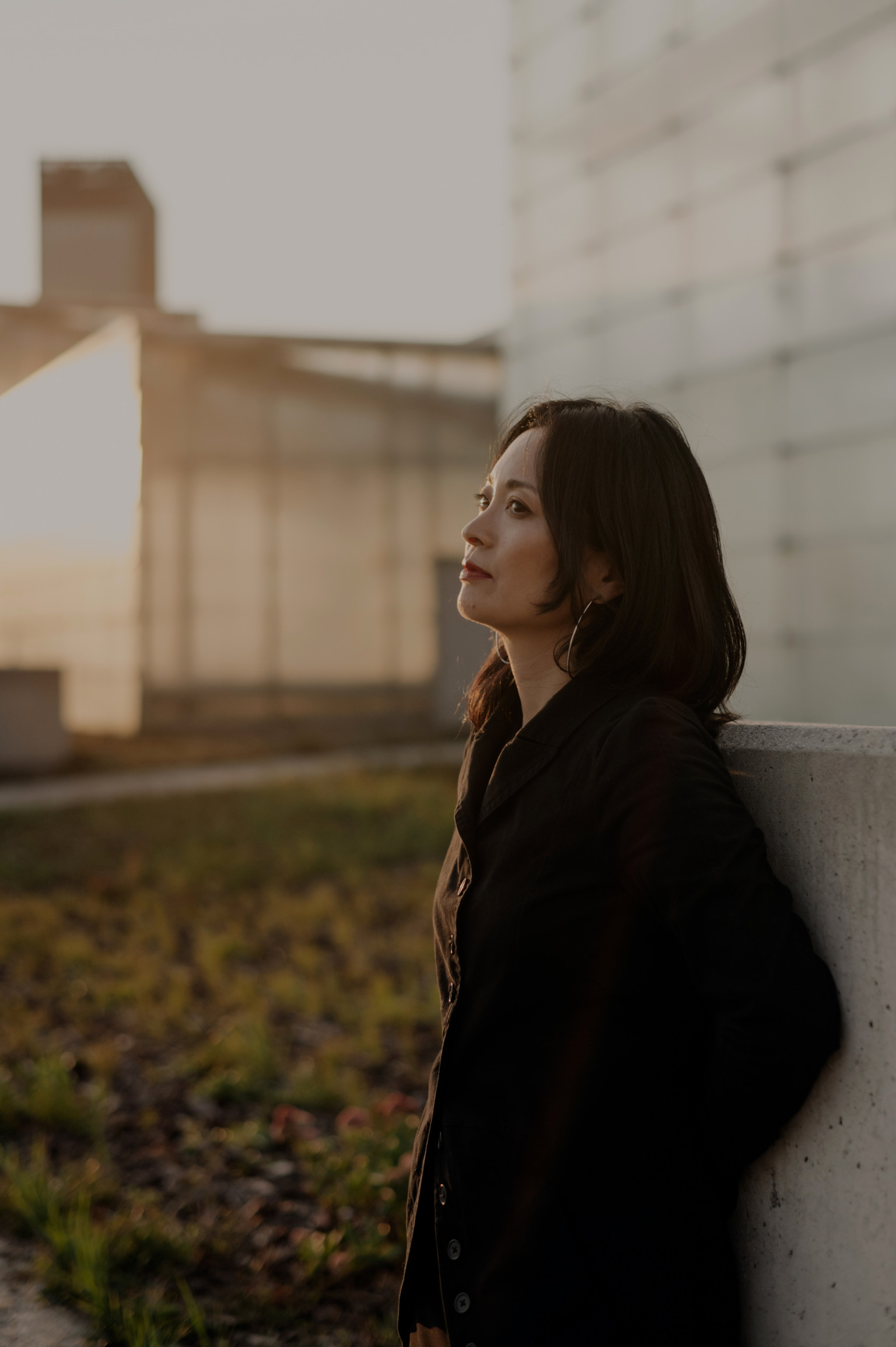
Rei Nakamura is a pianist specialized in contemporary music. Her career has a wide range as solo pianist, ensemble player, improviser as well as writer. Through her on-going project Movement to Sound, Sound to Movement for piano and multimedia, she has worked in close collaboration with composers as Annesley Black, Malin Bång, Christian Winther Christensen and Simon Steen-Andersen. Her observations and theoretical approaches are expressed in published texts in Neue Zeitschrift für Musik thematizing parallels in music, art and performance. 2021 she published the book Movement to sound, sound to Movement – Interpreting Multimedia Piano Compositions by Wolke Edition. As a Soloist she has premiered piano concertos with orchestras such as the SWR Symphonieorchester, WDR Synfonieorchester, RSO Berlin, Polish Nation Radio Symphony Orchestra and RAI National Radio Symphony Orchestra with conductor as Brad Lubman, Robert Treviño, Yaroslav Shemet, Michael Wendeberg and Bas Wiegers. She performed in Warsaw Philharmonic (Warsaw) and Arturo Toscanini Hall (Turin) and music festivals such as Eclat Festival Stuttgart, Ultraschall Berlin, Festival Acht Brücken Colon, MITO Festival (Turin), Warsaw Autumn (Poland) , Sound of Stockholm (Sweden), Monday Evening Concerts (USA). She was was born in Japan, grew up in Brazil and is based in Germany.
You Just Want to Disappear into These Cosmic Hordes of Sound
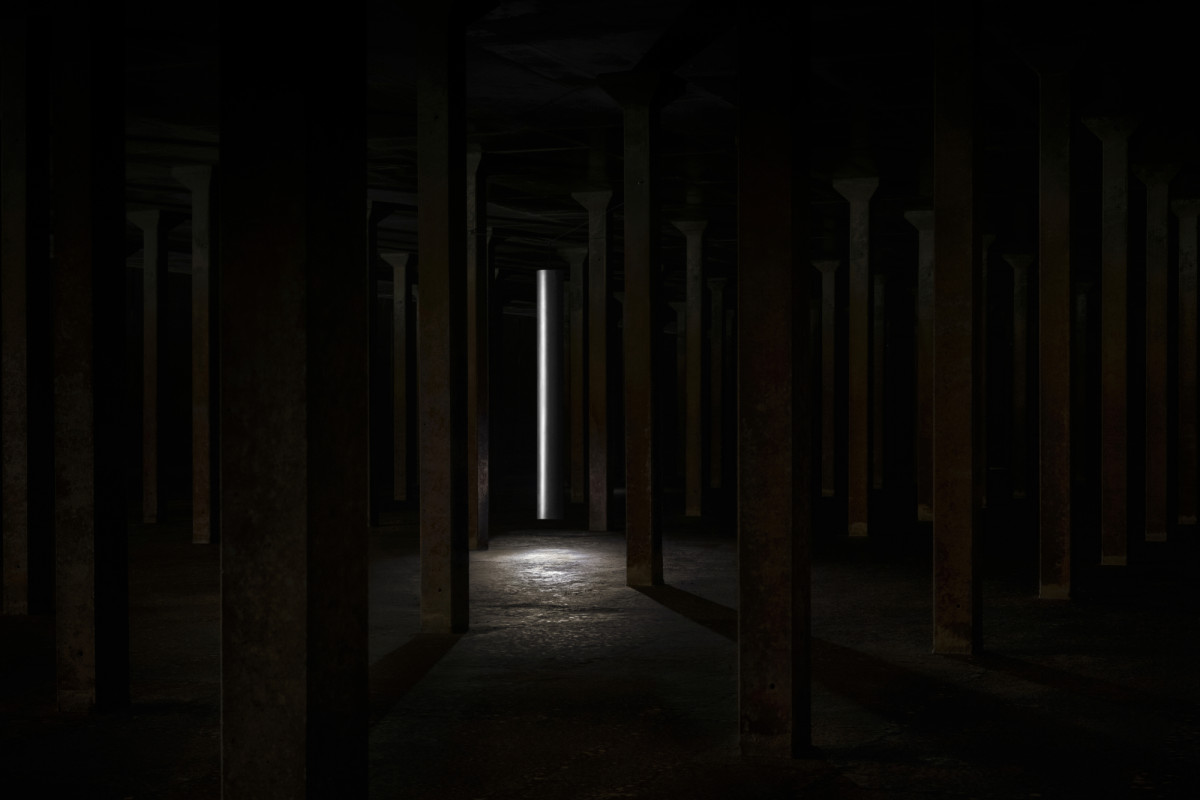
British Burial should have once said that in his music he strives to reproduce the experience of standing outside a club and feeling the rhythms on the asphalt. Distances are fascinating. The sounds in Christian Skjødt Hasselstrøm's work Myriads in an enormous water container at the Ole Rømer Observatory comes from afar. It is rain from space, cosmic radiation or high-energy particles, which are translated into sound via three detectors. They also flash with light in the pillared hall, and when you grope your way to them through the darkness, they puff softly and innocently. But when you walk around the 1,662 square meter room, the sounds still seem a little bit threatening – like artillery drums, sounds from modern wars or warning signals from ancient warlords... The sounds are always very far away and rumble at a low frequency in the room with a reverberation of 40 seconds. But they are just peaceful phenomena from distant galaxies, and they hardly want us any harm. They just make us feel so infinitely small. Hasselstrøm did the same to us in a former cereal silo in the city of Struer.
»You can get salt and minerals on your clothes. It can be washed off,« warned the guide, now ringing a bell. But what if you don't want to get rid of that sound at all and don't want to go home to Aarhus, but just want to stay deep underground for more than the given 15 minutes and disappear into the cosmic and very delicious hordes of sound? Distances are fascinating, and Myriads is better – more enriching – than any club in Aarhus’ Latin Quarter.
»For me, music is all that vibrates.«
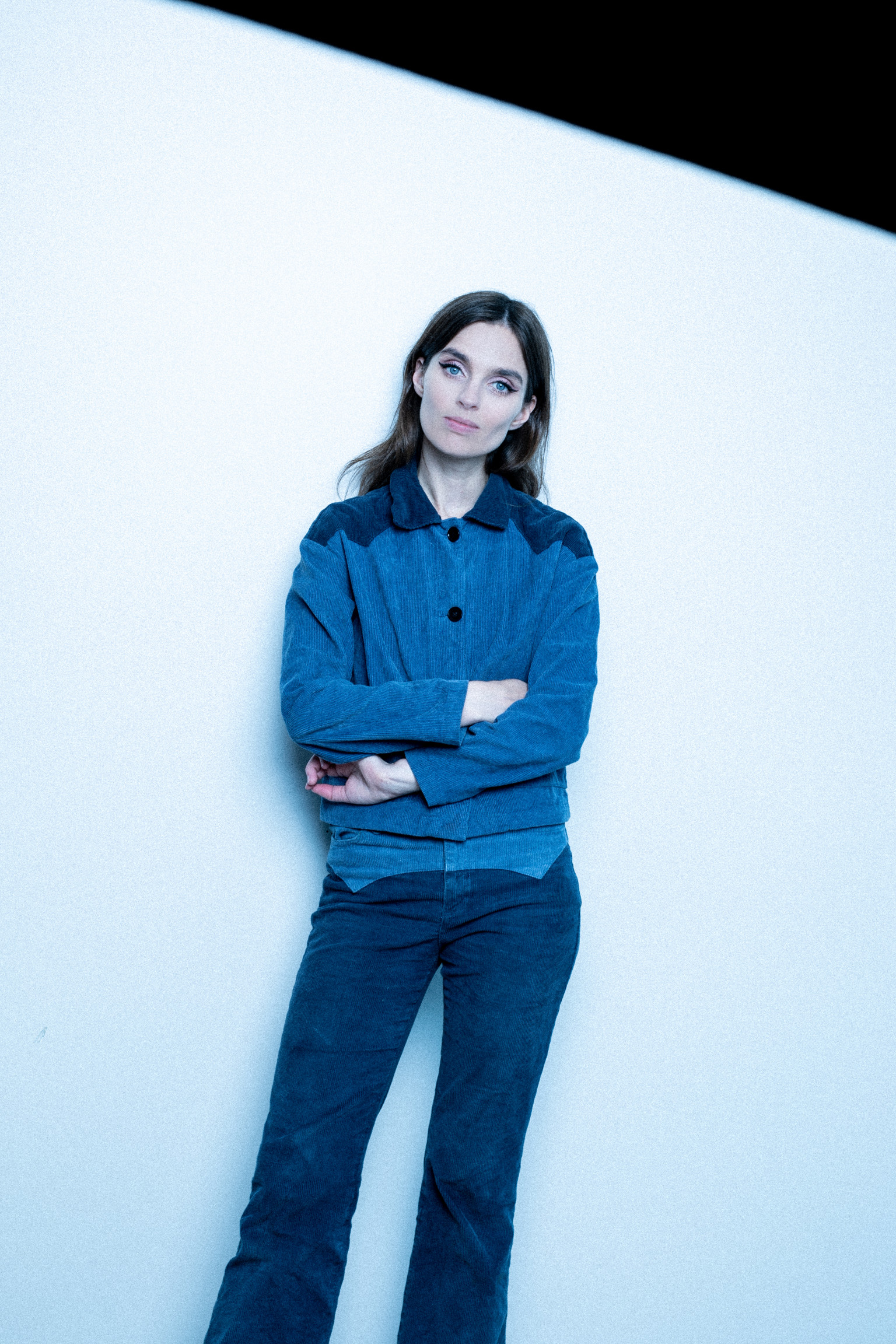
Bára Gísladóttir is an Icelandic composer and double bassist based in Copenhagen. Her work is generally based on thoughts regarding the approach and concept of sound as a living being.
»Experience with music involves contact between humans and something beyond it. With contact I believe that people are affected in a way that changes them, even though the change can be very small. You may be transformed into something you still do not know what is.«
Kristine Tjøgersen is a Norwegian composer and clarinet player living in Oslo. Her compositional practice is characterized by curiosity, imagination, humor and precision. Through her work, she creates unexpected auditory situations through playing with tradition. She has a special interest in the interplay between the visual and the auditory and how they affect each other.
Nature in motion and process is often reflected in her works, and collaboration with researchers and biologists is for her a source of new sound and scenic ideas that allows her to incorporate organic forms into the music. As Tjøgersen puts it: »By giving nature a voice in the concert hall, I want the audience to get to know valuable forms of life, and to raise awareness of what can be lost if humans continue to change nature.«
Her works have been performed by Ensemble Recherche, Klangforum Wien, Arditti Quartet, Pinquins, SWR and WDR Symphonieorchester, Rundfunk-Sinfonieorchester Berlin, BBC Scottish Symphony Orchestra, and the Bergen Philharmonic Orchestra, as well as at festivals such as ECLAT, Ultraschall, Wien Modern, Tectonics, Wittener Tage für neue Kammermusik, and Ultima.