in brieflive
14.01

All Life Has the Right to Live

Lara Tacke, Alexandra Moltke Johansen, Kirstine Fogh Vindelev, Katinka Fogh Vindelev, Freya Sif Hestnes: »Animal«
© PR
© PR

It is this violent and feral line of text that hangs like a monolith in the austere stage space at Sort/Hvid after 80 minutes of a furious, raging monologue in the performance Animal. Actress Signe Egholm Olsen is left standing like an animalistic goddess who has carried out her own ritual of purification. A ritual about motherhood and about morality for animals and humans alike – flanked by the three wordless classical singers Katinka Fogh Vindelev, Nina Smidth-Brewer, and Hávard Magnussen, who function as a chorus in a Greek tragedy. They illustrate and stage the text through precise sonorities.

Animal is based on Alexandra Moltke Johansen’s debut novel from 2022 of the same name and overflows with meaning, hurled into the audience’s face from beginning to end. Worries, anxiety, angry activism, grief, and doubt – tied to being pregnant and becoming a mother to a »useless« child with Down syndrome in a world marked by climate catastrophes, war, inhumane political cynicism, and greed. All of this flows from the mother’s inner dialogue as a long moral reckoning and outpouring, unfolding in a scenic tour de force – from the clinically clean and artificial atmosphere of a wellness spa to a material chaos of soil, branches, and sweat.

Kirstine Fogh Vindelev has composed a soundscape that makes it possible for us to breathe at all. Discreet choral tones, small electronic passages, a touch of barbershop, screams, and a pop song are wedged in between the words. It is simple and straightforward. The music is allowed to comment and converse like a shadow presence alongside the many words, but at no point is it allowed to become the protagonist or truly carve out its own space within the performance. One could easily wish for another form of sensory reflection than that which words and speech alone can provide.

© Alicja Rzepa/Sacrum Profanum
»Music helps me feel, process and regulate my emotions, giving them an outlet when I need release and bringing me calm when I need balance – it’s sort of my outsourced nervous system.«
 
Krzysztof Pietraszewski is a music journalist, editor and curator based in Kraków, Poland. Since 2016, he has served as artistic director of Sacrum Profanum, a festival dedicated to new and experimental music. He hosts Muzykoteka and the RKK Live concert rebroadcast series on Radio Kraków Kultura. He also develops listening sessions with discussions, inviting audiences to discover unfamiliar music, exchange impressions and experience listening as a shared activity. His work includes executive-producing recordings for the Sacrum Profanum Archives series. Originally from Silesia, he has made Kraków his home, sharing music through concerts, radio broadcasts, writing and, more recently, experimental DJ sets.


© PR

»For me, music is at its best when it appeals to both the head and the heart. I love music that plays with language and understands how words create images, while also possessing its own unique sonic quality and mood. It’s an added bonus if the music energizes me during a run, makes me dance in the kitchen, or makes me laugh. Or cry. Music can be like a chocolate-coated marshmallow treat with a surprise inside.« 

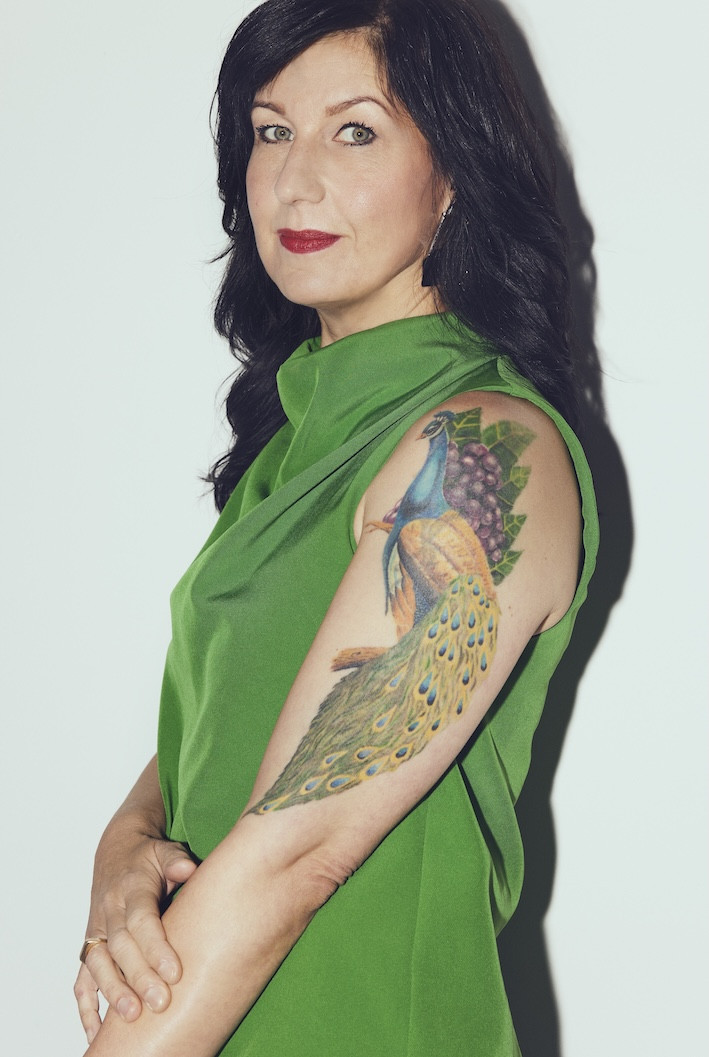
Lone Hørslev is an author of poetry, novels, and song lyrics, as well as the TV series Den gode stemning. Together with Mads Mouritz, she forms one half of the Mouritz/Hørslev Project, and she recently wrote lyrics for the musical theatre production STOLT in collaboration with Katrine Muff. The songs can be found on the album Jeg ønsker mig.

© Sam Aebi
»I think music is just the way I perceive and process the world.«
 
Raphael Loher is a pianist and composer based in Lucerne, Switzerland who combines elements of experimental electronic music, ambient, and minimalist composition. His distinct, crystalline work explores playful reduction and rhythmic abstraction, aiming to create singular resonances and aesthetic connections. His meditative style of piano playing allows shimmering rhizomatic structures to emerge, giving rise to tense narrative arcs. Loher expands his sound spectrum by preparing the piano, using effect pedals, and working with a tape recorder.
 
Loher’s new album Figuren (Präsens Editionen) is an album shaped by intuition, experimentation, and a deliberate distance from his primary instrument — the piano. Reworking intimate concert recordings made during a residency, Loher deconstructed selected melodies, tones, and resonances into new forms, transforming them further through tape manipulation. 
© PR

»For us, music is... magic? Aside from the fact that we are huge fans of silence, the closing line of one of our upcoming singles perfectly captures our relationship with music: 

'Music feels like magic to me / A superior art form in a marketplace / Trying to find an empty space'. 

That is what it can feel like as a songwriter and performing musician. We try to hold onto an almost childlike infatuation with music, yet the art form we work in – alternative-leaning pop-rock – was created and has evolved 'in a marketplace' driven by powerful economic forces. As a romantic, that can sometimes be a bit disheartening...«

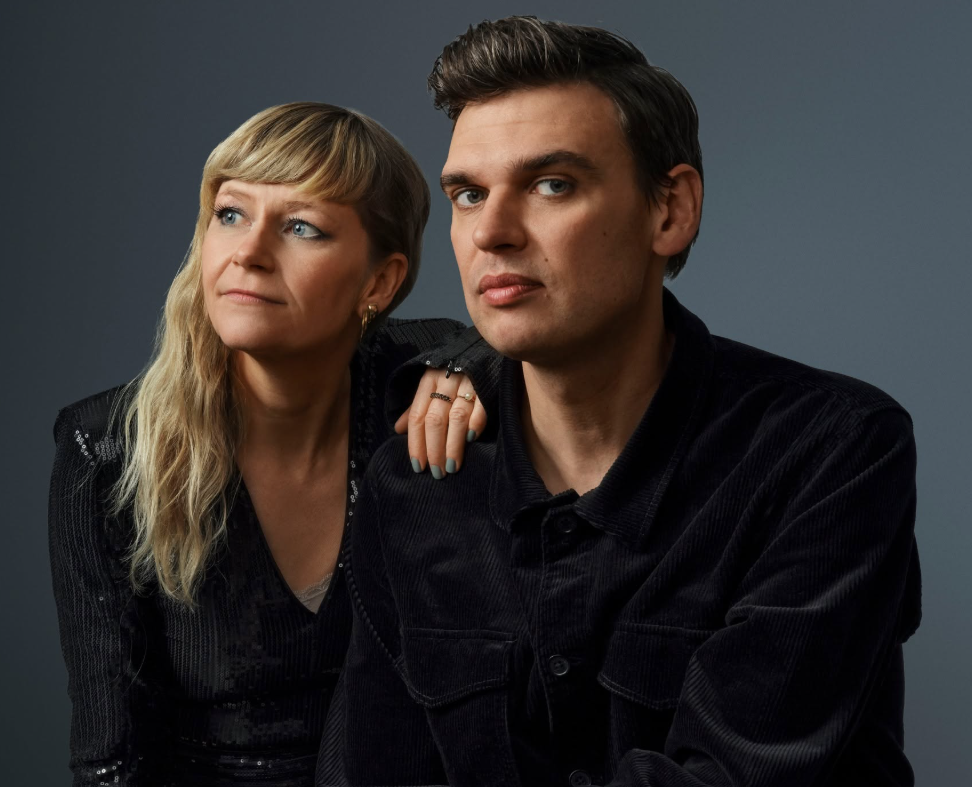
Late Runner consists of Asger Tarpgaard and Tanja Forsberg Simonsen, both formerly of the bands Superheroes and Private.

© PR
© PR

It was officially confirmed only recently that Icelandic avant-garde star Björk is visiting Bielsko-Biała today. After keeping it under wraps until the last moment, the organizers of the Wędrujący Festiwal (Wandering Festival) have revealed that Björk is the artist closing out the festival's grand finale.