in briefrelease
21.05

Artificial Intelligence on Autoplay

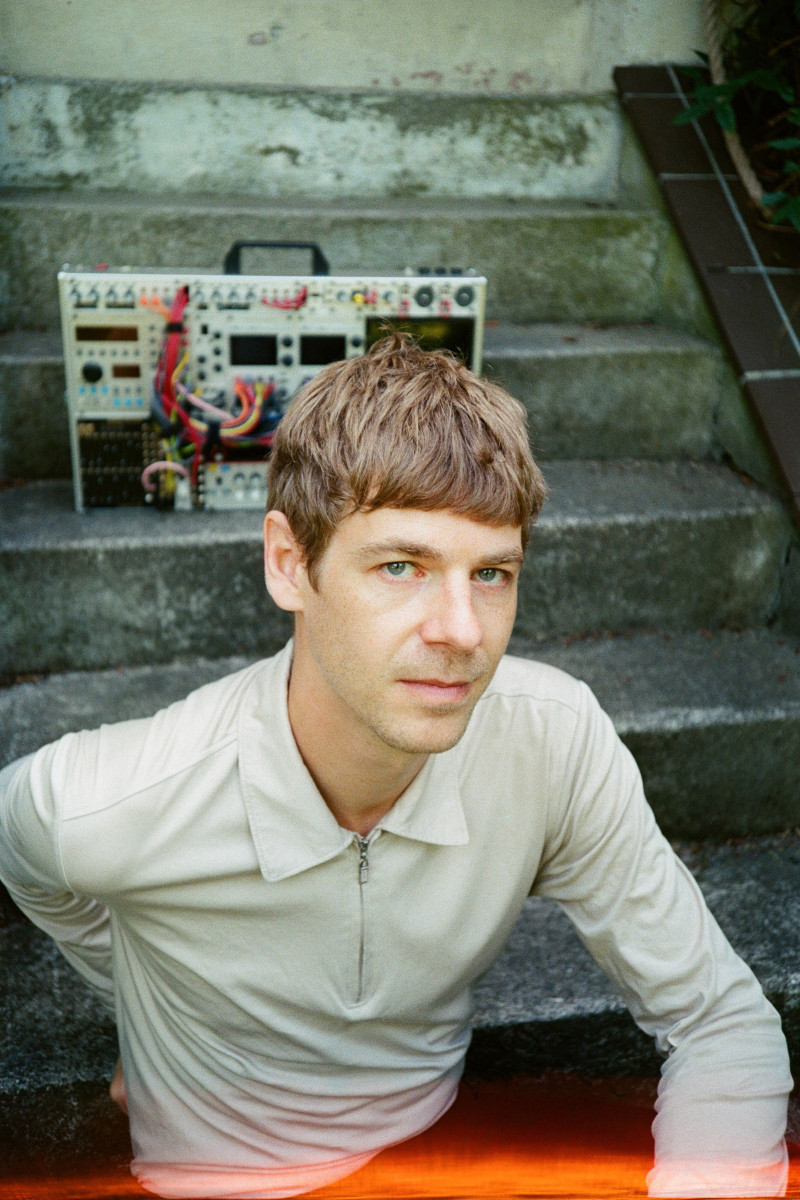
Slopcore: »Simon Littauer«
© PR
© PR

The logic of automation has long been part of modern music production. But what happens when it no longer merely assists, but takes over the creative process and artistic execution itself? Simon Littauer’s Slopcore is one of the latest attempts to answer that question. The sound of the AI-driven project is not radical as such, but it is interesting because Slopcore is several things at once: both a concrete take on an artistic practice shaped by recent developments in AI, and a symptom of the all-encompassing data models currently being debated so intensely.

Slopcore mimics the logic of a familiar streaming platform, except that the music here is generated in real time, with the audio stream continuously adapting to the listener’s behaviour, allowing users to proactively like the output or skip ahead whenever they want. The simple interface – featuring play, pause, and a heart icon – is accompanied by a pointillistic waveform that visually emphasises how Slopcore’s aesthetic winds its way through recognisable electronic terrains of house, 2000s electronica, IDM, techno, drum’n’bass, ambient synth textures, etc. etc. Most of it is rhythmically, harmonically, and melodically coherent, without being overly experimental.

As an AI-boosted extension of Littauer’s broader musical practice – which already contains strong aleatoric and algorithmic elements – the whole thing makes perfect sense. AI is not disappearing as a technology, and the parallels to Spotify’s growing AI ambitions or platforms like Suno are obvious enough. Littauer’s position as an established electronic musician becomes entangled in a deeply commercial and opaque data architecture (read: Google’s). And the title clearly references – perhaps ironically – the concept of »AI slop«, the term used to describe the generic, soulless overproduction of images and sound flooding digital platforms. Beyond being an entertaining listening experience, Slopcore can also be seen as a relevant – perhaps, in the current climate, even courageous – contribution to an ongoing and confusing debate about artistic integrity and authenticity in a cultural world that cannot decide whether it wants to resist or simply log in.

English translation: Andreo Michaelo Mielczarek

in brieflive
07.03

Sound Crusts in Slow Motion

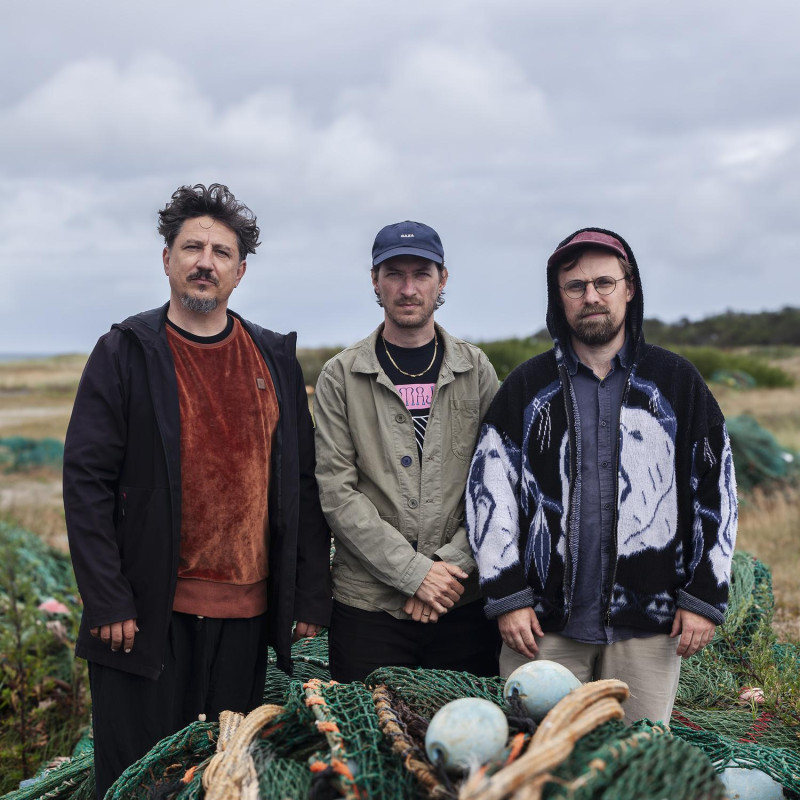
Abul Mogard
© Claudia Gschwend
© Claudia Gschwend

It has become common to describe a strain of ambient music as »cinematic«, thereby – perhaps unintentionally – dismissing it as mood-setting functional music rather than an art form in its own right. Yet the exploration of static sound fields and atmospheric drone structures long predates their use as a cinematic device. Within this tradition, stretching from Morton Feldman to Éliane Radigue and Phill Niblock, the Italian composer Guido Zen has, for the past fifteen years or so, inscribed himself under the pseudonym Abul Mogard. In the late 1990s he moved through London’s electronic underground with the duo Gamers In Exile and has since collaborated with, among others, the Danish composer Goodiepal.

At the concert at Alice, Mogard’s broad synth textures emerged like banks of fog. Behind a table densely packed with drum machines, mixers and patch cables – tendrils of wires curling between the machines – the black-clad Mogard stood illuminated by small clip lamps attached to the edges of his equipment. The tones were elongated, almost motionless. Time was not measured in bars but in intensity: bass resonating in the chest; a subtle adjustment of atmospheric pressure. Undramatic, yet unstoppable. The textures shifted so gradually that one often registered the changes only after they had passed. Harmonic modulations rarely felt like traditional chord changes, but rather like shadows moving across a surface.

Synth layers slid into one another with near-geological slowness, settling like accumulated sediment – gentle and colossal at once. Mogard lingered on the single tone long enough for it to begin revealing its inner life: tiny trembling vibrations, almost microscopic irregularities in the crust of sound. The sound pulsed from within, crossed by undulating patterns of interference.

English translation: Andreo Michaelo Mielczarek


in brieflive
06.03

Labour of Birth

Katinka Fogh Vindelev, Sankt Annæ Pigekor, Kind of Opera et al.: »Elegier over jorden«
© PR

»This pain is not only yours,« chants a choir standing in a circle around the woman in labour. »This pain is not only yours,« comes the enveloping echo from the rest of the choir, positioned along the walls of the ceremonial hall, forming a circle around the audience and inscribing us into the labour of female fertility.

Elegier over Jorden (Elegies over the Earth) is based on Sofie Isager Ahl’s reworking of the myth of Persephone, daughter of the goddess of agriculture and queen of the underworld. The Greek myth is one of those that explains the barrenness of winter by Persephone’s descent into the underworld, but in this reinterpretation she returns to earth to give birth. We follow her labour over nine months while members of the choir work in the fields, struggling for crops under pressure from the current climate collapse. Here, the regeneration of nature is not a matter for higher powers but a struggle that begins in the body and in the soil – much like that of the woman giving birth.

The ecofeminist interconnectedness of the female body and nature has been a hot topic for several years now, and I am unsure what Elegies over the Earth adds to it. My hesitation stems mainly from the harsh acoustics of the ceremonial hall at Ny Carlsberg Glyptotek which, combined with Marie Topp’s choreography – often positioning singers with their backs turned to parts of the audience – makes it difficult to hear Ahl’s words.

When Elegies over the Earth works best, it is in the dialogue and timing between the choir, the soprano and composer Katinka Fogh Vindelev in the role of the labouring Persephone, and the minimal ensemble of two violins and a cello. When the voices of Sankt Annæ Girls’ Choir curl around the cello’s dark timbre, and when the primordial woman Persephone’s lament is allowed to hang in the room for a moment before the choir resumes, the performance touches on something real. Yet the experience never quite settles in the body, and the painful struggle of birth – despite the choir’s insistent chanting – never truly becomes mine.

Performances on 5, 7 and 8 March

English translation: Andreo Michaelo Mielczarek

© PR

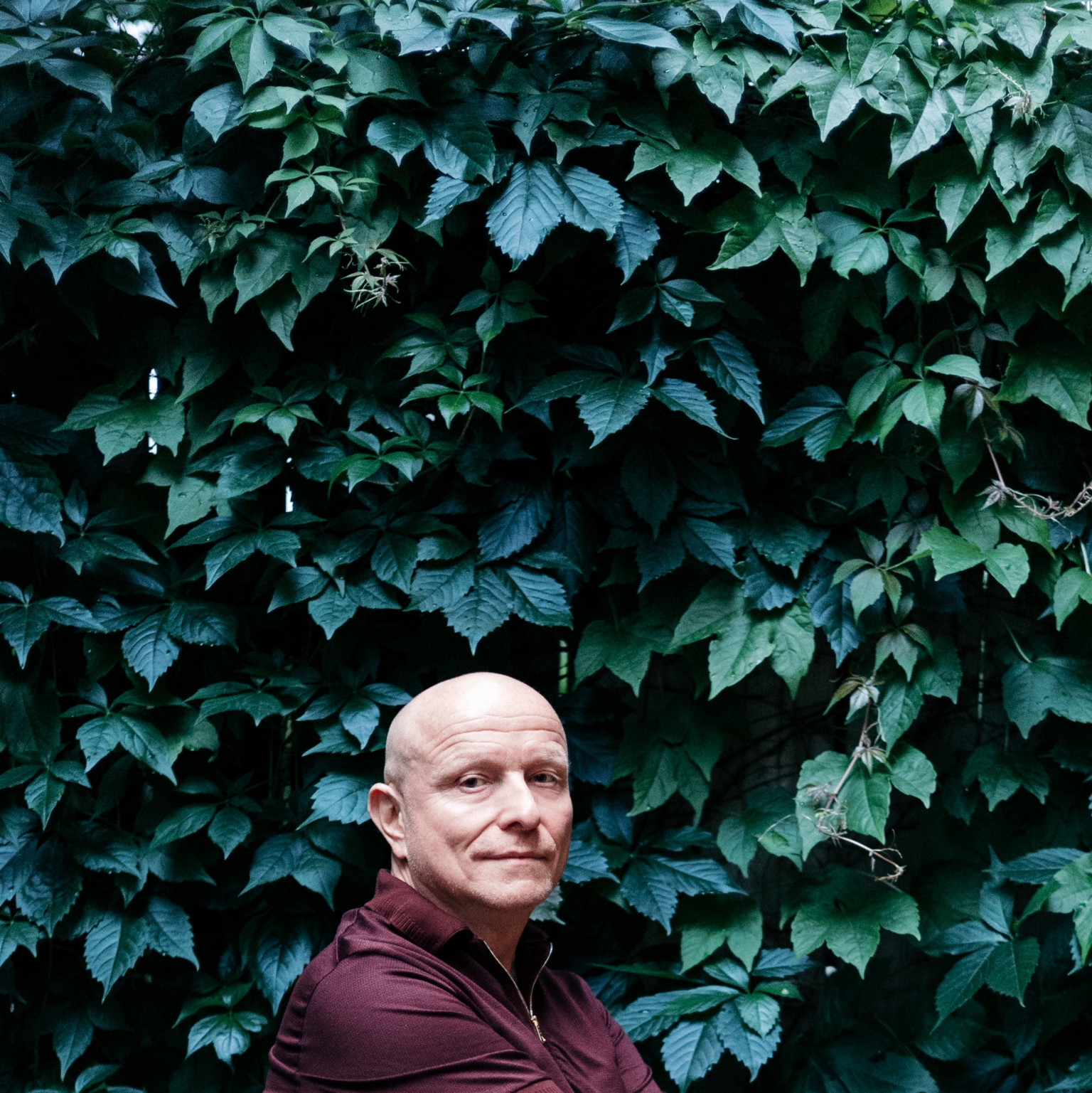
»For me, music is... I was about to say everything, but that's still an exaggeration. I'm a sensitive person, and therefore all art - but especially music - affects me in different ways. Music has both a therapeutic and an artistic meaning for me. Music affects my mood and gives me energy. It can also put me in a certain state where I see things differently and reflect in a different way than I would otherwise. I always have headphones in when I'm alone, I sleep to music, I work to music. The first thing I did as a new councilor was to set up my father-in-law's old B&O system in the councilor's office. It plays every day, and I very rarely close the door.« 

Jesper Kjeldsen is councilor for Culture and Citizen Service in Aarhus and a member of the city council for the Social Democrats. He graduated from Kaospiloterne and has a background as an entrepreneur, including with the company Postevand. Before his political career, he worked creatively with culture and music – he has released music, been a DJ and taught as a dance teacher. Jesper Kjeldsen has lived and worked in Greenland for a long period of time, which has influenced his view of community, culture, climate and society.

© PR

»Music for me is translation. Music for me is a musical score that can be released into sound in a thousand ways, depending on who picks up the instrument. Music for me is the attempt to embody the idea of sound in lines and dots and floor plans. Music for me is both a sought-after sound that does not ring, and a sought-after sound that does. Music for me is a song game, a parallel universe with its own temporality and its own rules.«

Matias Vestergård is a trained composer and pianist from the Royal Danish Academy of Music in Copenhagen. Since his debut in 2022, he has particularly distinguished himself with music-dramatic works – his first opera Murder on the Titanic will be performed for the third time this year, and his second opera Lisbon Floor won the award for Opera of the Year at the 2023 Reumert. He is currently working on orchestral works, a piano concerto and choral music, but dreams of writing more operas.

© PR

»Music for me is a way to stay curious. It can feel completely overwhelming to hear some music you don't know, or revisit something you haven't heard in a long time. Music makes my heart race, it makes me cry, laugh, and gesticulate wildly. It's a way to understand myself at different times in my life, and a way to create bonds with others around me.«

Hannah Schneider creates cinematic alternative pop with electronic soundscapes and strong melodies. She has released several critically acclaimed albums, toured Europe and the US, and has established herself as one of the country's most original voices. Her music has been used in film, television, and on major Scandinavian theater stages, and in recent years she has also composed commissioned works for leading museums and cultural institutions.

On her new album In This Room (February 27, 2026), she chooses – in an era marked by artificial intelligence – to insist on presence, intuition, and craftsmanship as driving forces. The album was written and recorded during a two-month residency at Thorvaldsens Museum.