Cosmic Resonance
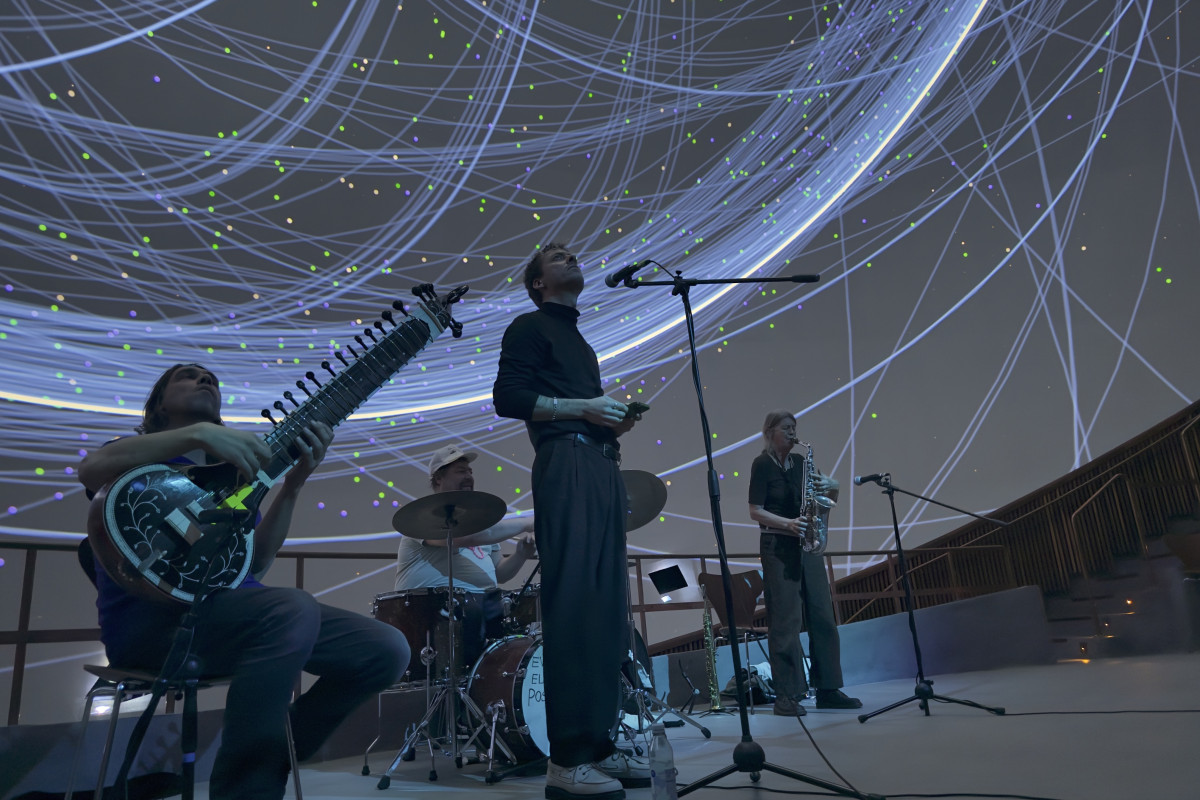
Against enemies in outer space, »music is the strongest weapon we have,« Mads Brügger recently stated here in Seismograf. Snöleopard and musical friends made this idea strikingly concrete by sending music directly from the Planetarium in Copenhagen out into space, targeting satellites between 500 and 35,000 kilometers away. The tones returned altered by delay, radio noise, and cosmic interference. On the large screen, the Earth’s surface – seen from a satellite – rolled by with all its illuminated cities, while Theis Ørntoft read from his forthcoming climate-conscious novel, delivering lines such as: »The day there is no more oil, the lights will go out in the world.« Meanwhile, we could see small green dots of confused satellites racing across the Earth’s beautiful curvature and hear Lotte Anker, Kresten Osgood, and Snöleopard free-jazzing on saxophone, drums, and sitar respectively.
The small crackling beep-sounds from the satellites’ resonance also generated music, but the most interesting moments came when the musicians received fragments of their own motifs back – thrown down from outer space – and a kind of internal interplay emerged. Is there something out there, or are we merely talking to ourselves?
Cosmic resonance filled the dome, but one could wish for more internal resonance. There is a beautiful trend in ensembles that include a poet, allowing many delightfully twisted formulations to surface, but the musicians must also interpret the words – enter into a musical exegesis, as they would with a traditional jazz singer – otherwise the music easily becomes background or secondary. As if each musician were a green satellite dot in their own orbital path. Many good ideas were in play – and music is not a weapon. But it does require internal resonance. Not only cosmic.
English translation: Andreo Michaelo Mielczarek
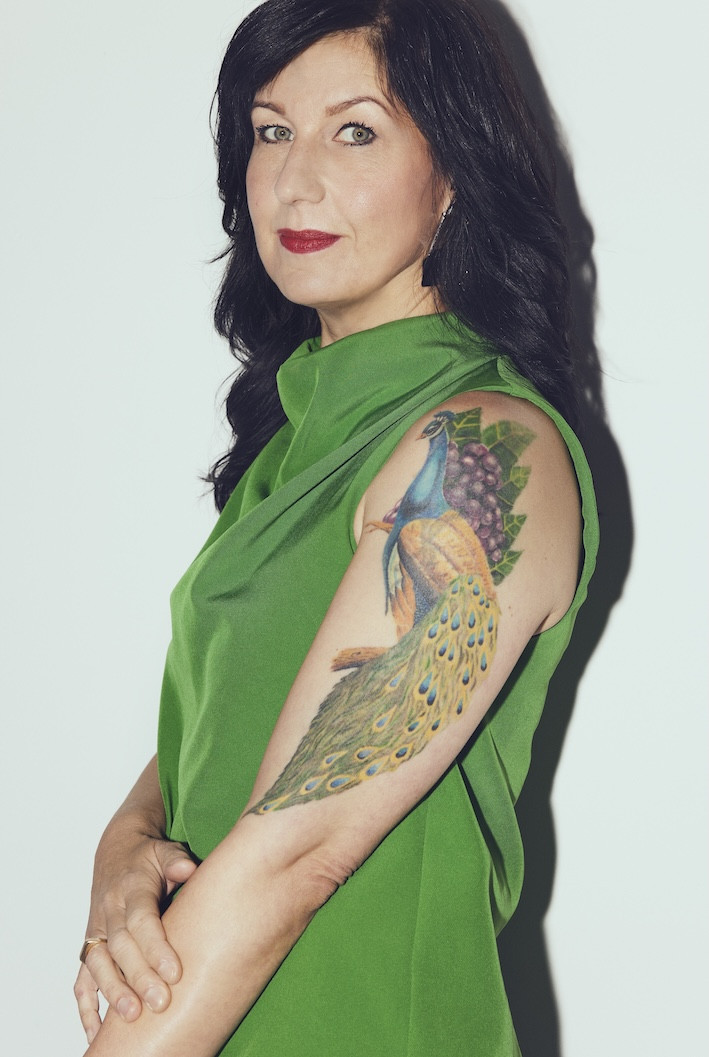
»For me, music is at its best when it appeals to both the head and the heart. I love music that plays with language and understands how words create images, while also possessing its own unique sonic quality and mood. It’s an added bonus if the music energizes me during a run, makes me dance in the kitchen, or makes me laugh. Or cry. Music can be like a chocolate-coated marshmallow treat with a surprise inside.«
Lone Hørslev is an author of poetry, novels, and song lyrics, as well as the TV series Den gode stemning. Together with Mads Mouritz, she forms one half of the Mouritz/Hørslev Project, and she recently wrote lyrics for the musical theatre production STOLT in collaboration with Katrine Muff. The songs can be found on the album Jeg ønsker mig.
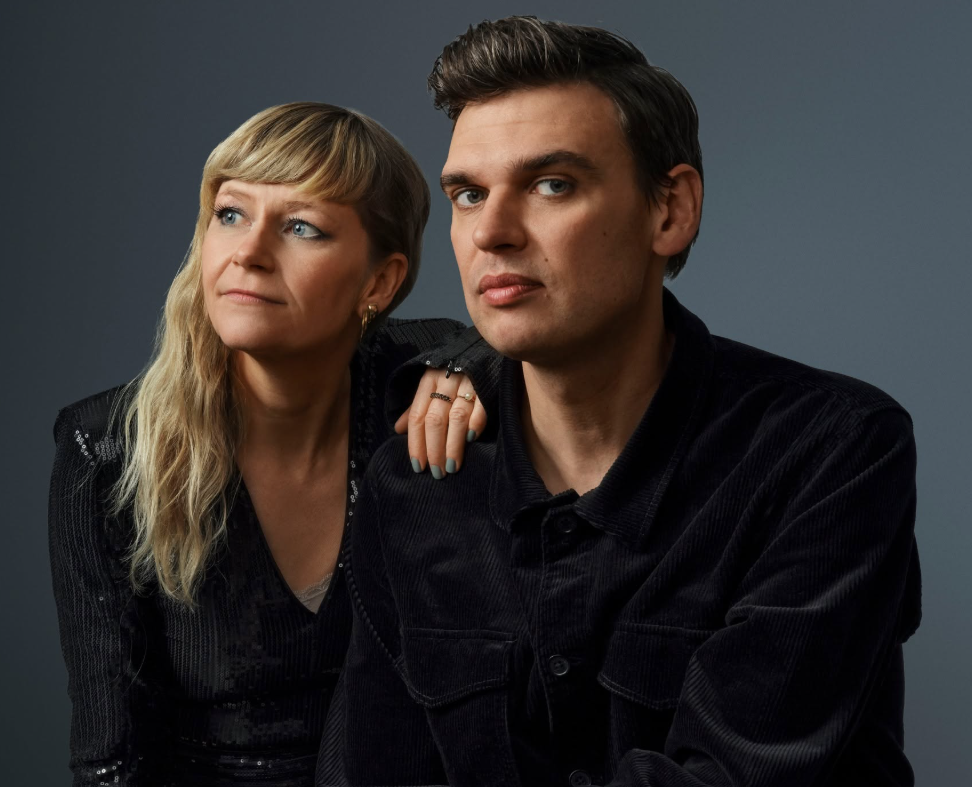
»For us, music is... magic? Aside from the fact that we are huge fans of silence, the closing line of one of our upcoming singles perfectly captures our relationship with music:
'Music feels like magic to me / A superior art form in a marketplace / Trying to find an empty space'.
That is what it can feel like as a songwriter and performing musician. We try to hold onto an almost childlike infatuation with music, yet the art form we work in – alternative-leaning pop-rock – was created and has evolved 'in a marketplace' driven by powerful economic forces. As a romantic, that can sometimes be a bit disheartening...«
Late Runner consists of Asger Tarpgaard and Tanja Forsberg Simonsen, both formerly of the bands Superheroes and Private.
It was officially confirmed only recently that Icelandic avant-garde star Björk is visiting Bielsko-Biała today. After keeping it under wraps until the last moment, the organizers of the Wędrujący Festiwal (Wandering Festival) have revealed that Björk is the artist closing out the festival's grand finale.