in brieflive
12.04

Feel Yourself Becoming Nature Again

Cecilia Fiona, Sophie Søs Meyer: »Ghost Flower Ritual« 
© Farzad Soleimani
© Farzad Soleimani

Frozen human bodies and faces shaped and painted like ceramics are meticulously carried around by flower sculptures that have abandoned their static nature. The roles are reversed. Nature becomes the living environment that grants the clay humans small, temporary lives in Ghost Flower Ritual at Copenhagen Contemporary.

The piece is a live installation with musicians and performers, where 34-year-old composer Sophie Søs Meyer has collaborated with visual artist Cecilia Fiona, who is of the same age. It’s a sensorially overwhelming, yet dramatically subdued ritual. Over the course of forty-five minutes, we sit together beneath a giant flower and sense the performers’ meticulous, slow movements. Meanwhile, soundscapes and small pulsating figures from four string players and a flute shape a landscape of colors, tones, and movements that melt together – filling the high-ceilinged room with auditory and visual presence. We are part of a whole.

I love the wild costumes that descend strangely from the sky. I love being part of the ritual that heals our forgotten connection to nature, which is the very foundation of our lives. I love the sound of stroked, plucked, and blown wood from Athelas’ musicians. Culture is nature. The human animals and the flowers are part of the greater consciousness. It’s all a hyper-complex mechanism. Cecilia Fiona possesses an extraordinary visual and creative abundance in her intricate details, and Sophie Søs Meyer is precise and intriguing in her swaying tonal figures that change slowly and meticulously. Until one flower blows into the large conch shell. Then the ritual is over.

English translation: Andreo Michaelo Mielczarek 

in brieflive
23.03

Two Voiceless Ironists vs. the 2026 General Election

The Ensemble That Loves You: »2026 Election Special Soundwalk Public Broadcast Service Municipal Event«
© PR
© PR

James Black and Connor McLean, the two composers behind the tongue-in-cheek outfit The Ensemble That Loves You, are, as newcomers, not yet eligible to vote in Tuesday’s general election. They can, however, intervene – and that is precisely what they did on Saturday with a good old-fashioned podwalk.

Over the course of three hours, you could stop by the pair, who had set up camp on the northern bank of Sortedams Sø in Copenhagen. There, you were handed a QR code, guided to the nearest campaign poster, and left with a SoundCloud link. »Alright, see you in 16 minutes,« Black said, and suddenly I was standing in front of political scientist Thomas Rohden of the Danish Social Liberal Party, confronted with his peculiar, toothless plastic smile.

»It’s important to connect with the election, so look the candidate straight in the eyes,« a synthetic female voice instructed as I pressed play. So I did. Stood still, listened, stared. Became a kind of artwork myself, I suppose – certainly looked like an idiot. And while the voiceover sent me onward to new posters, Black and McLean worked to complete the sense of alienation with brief sonic interventions.

The voice first took on a slight echo, then locked into a groove – »vote-for-me-vote-for-me-vote-for« – before dissolving into short-circuited 8-bit electronics, a faltering barrel organ, and flickering monologues over live jazz, mimicking an absurd media reality.

Gradually, the glossy, guileless eyes of the posters came to express just how artificial the election really is. »The person you are looking at is not real,« the synthetic voice concluded – remarkably agitated for a computer. »The party will replace you with a robot.«

Alright, alright. From the voiceless, one must hear the truth – wrapped in British political sarcasm and MIDI jingles: a light – and perhaps somewhat cheap – dish, but who has the energy for more after four weeks of campaigning? On my way back to Black and McLean, I saw a woman point at a poster of 26-year-old Maria Georgi Sloth, also from list B: »She gave me a piece of chewing gum down at the station.« And just like that, the election was decided.

English translation: Andreo Michaelo Mielczarek

in brieflive
20.03

Vocal Desire Between Deadpan and Renaissance

Matias Vestergård, Johan Klint Sandberg, ÆTLA: »Sex in Concert«
© PR
© PR

Eight people sit at their own office desks. One raises an elbow to their mouth and lets out a muffled groan into it; another starts lazily slapping their forearm; a third suddenly creaks like a worn-out spring mattress. But the young singers of ÆTLA don’t crack a smile – their deadpan is the main comic ingredient in Matias Vestergård’s Apollonian sketch show SEX in Concert.

They quickly move from a whore’s chorus to a Renaissance madrigal, the transition seamless, with the humor tagging along: an Italian word that sounds like »aquamarine« becomes »ah! kvamarin«, and in this way, 400-year-old works by Gesualdo and his like-minded peers are sprinkled with Vestergård’s salon-style wit. But the movement also goes the other way: Vestergård’s newly composed pieces are tastefully ornamented with moving voices and flirt with strict church modality.

The desks are constantly rearranged, the office workers shifting from tableau to tableau, while the task of writing lyrics into a Google Doc projected on a screen rotates among the singers: Amalie Smith, Marvin Gaye, outraged anti-capitalist critique, and cheerful chat language – everything tinged with desire, but above all with ambivalence toward desire. Everything flows, including Vestergård’s compositions, which in one moment test icy echo techniques, and in the next turn up the heat with perfectly crafted barbershop.

SEX in Concert is clearly an exercise, and as director, Johan Klint Sandberg has had a field day with the office comedy. But the exercise succeeds (even if the hands stay above the covers): before you know it, an hour has passed in which Vestergård, Sandberg, and ÆTLA have slipped poetry, madrigals, and new vocal music down the throat of a young audience. It can actually be quite fun!

Christianshavns Beboerhus, March 18–22

English translation: Andreo Michaelo Mielczarek
 

© Søren Fiil Vesterbak

»Music for me can do something very special. It brings people together in shared experiences, but it can also be a very personal mental tool. Personally, I use music all the time – to create energy on a run, to create concentration for work tasks, or to find peace in stressful situations, such as in the dentist's chair. And of course to create joy and a good mood. Music is always an essential ingredient in good memories.«

Rikke Andersen has been at the helm of SPOT Festival since January 2024. With a background as a venue manager and booker at Fermaten in Herning, she has solid experience from both the creative and organizational side of the music industry. She has previously worked in the record industry, been deeply involved in marketing and communication, and has had a hand in several cultural projects.

© Mike Højgaard

»Music, to me, is an open road to adventure, where anything can happen. Music, to me, is a freedom that holds all emotions. Music, to me, is the most private thing and something many can share. Music, to me, is incomprehensible, enlightening, entertaining, religious, philosophical, vibrating, magical, and the strongest force I know. Music, to me, is something that makes me aware of life. Music, to me, is a free bird.«

Gustaf Ljunggren is a Swedish musician and composer based in Copenhagen. His works are often driven by a desire for introspection and immersion in a noisy world. In 2026, Gustaf Ljunggren releases the album Along The Low Road, created in collaboration with the Icelandic musician Skúli Sverrisson. Ljunggren has contributed to hundreds of releases as an instrumentalist and arranger, and over the years he has worked closely with Emil de Waal, CV Jørgensen, Steffen Brandt, Sofia Karlsson, DR Pigekoret, Eddi Reader, Anders Matthesen, and many more. For the broader Danish public, Gustaf became a familiar face when he served as bandleader on Det nye talkshow on DR1, hosted by Anders Lund Madsen. Since 2011, Gustaf Ljunggren has been the driving force behind SPOT Festival’s concert series Naked.

© Ida Sofie Skov Larsen

»Music for us is a way to create a connection and community with other people.« 

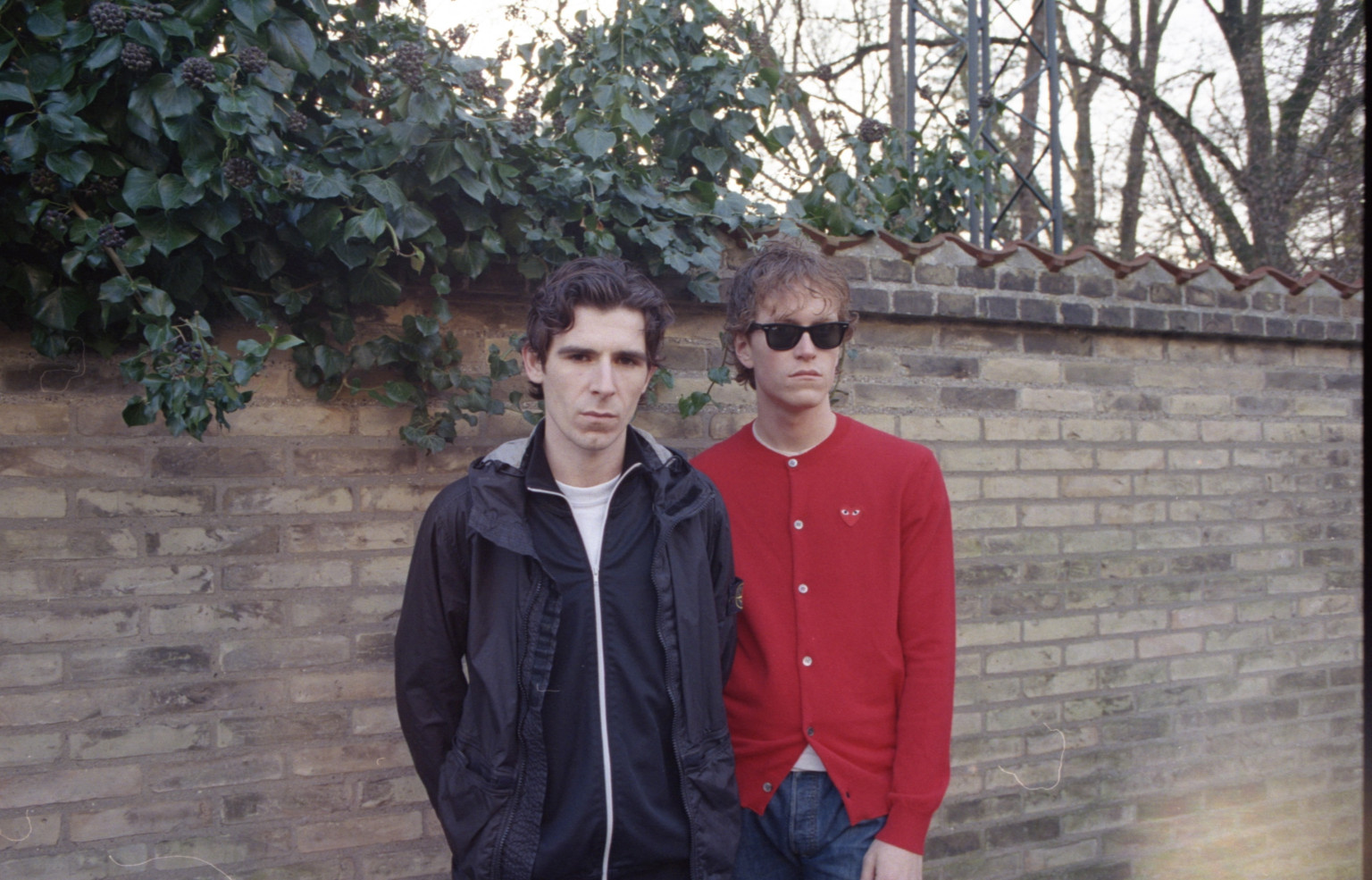
Although Schæfer has only released three singles so far, the band has already made a mark on the Danish music scene. The duo and their friends, Anna Skov (vocals) and Emil Mors (keyboards), write socially relevant, subtle and humorous songs that point fingers at both the outside world and themselves.