
in briefrelease
06.02

Small Snowflakes in a Brutal Snowstorm

Mads Emil Dreyer: »Miniatures«
© PR
© PR

As this review was being written, a snowstorm swept across Denmark, and even Østerbro was submerged in beautiful white snow. This turned out to be a remarkably fitting backdrop for the Danish composer Mads Emil Dreyer’s latest compositions, which are marked by melancholic, childlike phrases of glockenspiel and distant synths. The minimalist works are performed by the ensembles Scenatet, EKKI MINNA, and Athelas Sinfonietta, all of whom share a commitment to contemporary music, uncompromising experimentation, and a playful approach to acoustics and perspectives – qualities that are clearly audible in the works themselves.

Echoes of metallic sound surfaces blend with occasional floating pads, often tipping from the beautiful into the unsettling. The first half of the album is shaped by slightly brighter and more playful melodies, with »Miniature I–II« and »I–III« in particular delivering beautiful themes that frequently strike straight to the heart. A brief intermezzo opens the album’s second half, where abrasive keys and pads are introduced, and the ringing glockenspiels hover above the listener like eerie shadows or frightening ghosts.

The suites are short, simple, and effective, yet at the same time deeply atmospheric. In a short space of time, Miniatures has become a favored sonic space for this reviewer when there is a need to retreat into the chambers of the mind, where the blend of glockenspiel and principles of chance appears like small, glistening snowflakes in a long and brutal snowstorm.

Soli City. © Bruno Modesto Leal

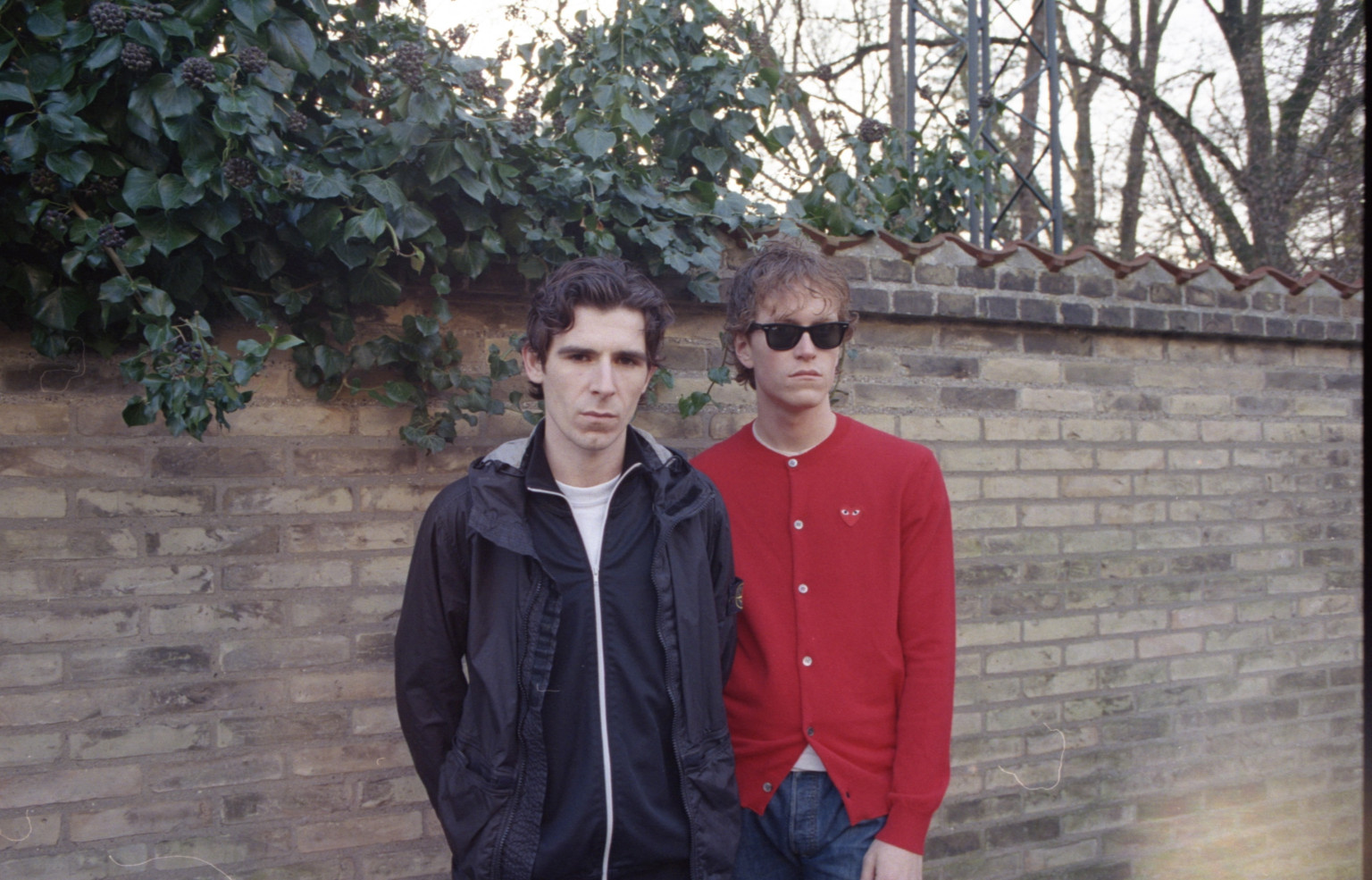
Electronic duo Vanessa Amara are riding a wave of success at the moment. Last year, their caustic take on Gudmundsen-Holmgreen’s organ music earned them credits on Rosalía’s much-hyped Duolingo album LUX, and this summer Birk Gjerlufsen and Sebastián Santillana – both former volunteers at Koncertkirken – will appear at Roskilde Festival.

But on Thursday night at Christianshavns Beboerhus, they were overshadowed by RMC alumnus Harald Bjørn, who opened under the alias Soli City. He too placed a classical instrument, the cello, at the centre of his electronic music, and his masterstroke was to make it shimmer like a beautiful, lost memory amid a restless abundance of chopped-up hyperpop aesthetics and melancholic spoken-word poetry.

The cello, played on electric keyboard, was synthetic yet human: an intentionally sloppy fragment that set the tone for half an hour of dissolution. Even when Soli City reached for life with an urgent handclap beat in a vast sonic space, it was staged like a chance pause during a flickering radio scan, while relaxed piano chords sustained an ambient sadness. Impressive.

It was refreshing when Vanessa Amara followed with a different, ecstatic take on the atomised information society. At their best – and they were at their best in the beginning – the duo combined, with Kanye West-inspired genre agnosticism, distorted pop samples and polytonal church organ until the 21st century seemed ready to come apart at the seams. It was sublime, simply put.

But instead of delving deeper into the forces they unleashed, the duo quickly moved between tracks and veered far too early into dull, therapeutic deep house, a mode they never left again. We barely had time to lose our footing before we were handed a group hug – and frankly, I’d rather do without.

in briefrelease
10.04

Squarepusher in a Straitjacket Among Strings

Squarepusher: »Kammerkonzert«
© PR
© PR

With Kammerkonzert, British electronic composer Tom Jenkinson, better known as Squarepusher, places himself within the braindance tradition of the 1990s and 2000s, when electronic artists flirted with classical music – from Aphex Twin’s collaborations with Philip Glass to Venetian Snares’ Rossz Csillag Alatt Született, where baroque patterns were folded into mechanical rhythms and the melancholy of strings torn apart by breakbeats.

Squarepusher is no stranger to the acoustic: his hyperactive bass guitar – often sounding as if in flight from its own virtuosity – has been central to his music since Music Is Rotted One Note (1998). Here, too, it takes a leading role. On »K2 Central«, a looped, faintly anxious bass figure drives the music forward while strings swell in and shift its harmonic function. The effect is not without merit, but the execution is strikingly conventional. The MIDI-generated strings move in neat chord blocks with an almost overly reverent sense of decorum. The classical tradition is not challenged but merely cited, and the arrangements are so polished that the orchestra’s presence feels barely justified.

The compositions also hover awkwardly between the slick functionality of elevator jazz and something exaggerated, almost circus-like, as if unable to decide whether they want to be serious or ironic – and end up being neither. »K4 Fairlands« stands out by pairing string quartet with the busy breakbeats that are Squarepusher’s trademark. Here, a friction emerges between the rigid and the fluid that briefly opens the album up, suggesting how two otherwise incompatible systems might coexist.

Overall, Kammerkonzert comes across as artistically cautious, marked by a peculiar restraint. What remains is the sense of something only half realised. One wishes Squarepusher had either ventured further into the orchestral realm or trusted more in what he actually excels at, giving the electronics freer rein. Preferably both.

© Mads Skarsteen, CPF

»Music for me is the fifth dimension of life, connecting all the others.«

For the past 10 years, Maja Dyrehauge Gregersen has been at the helm of the Copenhagen Photo Festival – the largest photography festival in the Nordic region. The Copenhagen Photo Festival is an international platform with over 1000 annual applicants from all over the world – and a clearly curated level that attracts world names and has lifted the festival out of its original, more local and open form.

© Aske Jørgensen

»Music for us is the perfect language that we love to speak. A language where it is the individual's feelings and imagination that determine what is right and wrong. Everyone can speak the language. You don't have to be able to write or understand, but just listen. Some music requires that you listen carefully and maybe hear it several times. A bit like when you talk to someone from Norway or Sweden, you also have to listen a little extra.«

DØGNKIOSK is a Danish punk band consisting of four middle-aged musicians with roots in the Central Jutland underground. The band plays a raw and energetic form of punk, where a naked and explosive sound is accompanied by lyrics that are significantly prominent in the soundscape. Their expression is inspired by 1980s punk and characterized by a punk poetic approach, delivered with a clear dialect. In April, DØGNKIOSK will release the album Tæt på kanten. The band's music generally revolves around challenging fixed patterns and insisting on personal freedom.

© Julie Montauk

»Music for me is a huge gift and an equally big mystery. I think it's pretty crazy to think about how much music there actually is! Imagine that as a listener you can be let in and get access to the innermost selves and feelings of so many different artists – and how many small details are in the artist's choices, so that it will sound exactly the way it does. It's mind-blowing! And really cool! I listen to a lot of different music and love when it speaks to both the head, the heart and the body – regardless of genre. It can be Radiohead's »Exit Music (For a Film)« or Peter Gabriel's »Sledgehammer«, for example. 

Anja Roar is a Danish singer and songwriter with a career that spans more than three decades. She has, among other things, sung a duet with Peter Belli, worked with DJ Aligator in the 90s band Zoom and participated as a choir singer on a long list of Danish releases. She has just debuted as a solo artist with the album Gratification. The publication thematically revolves around love in many forms – from the romantic and redemptive to the self-loving and socially critical.