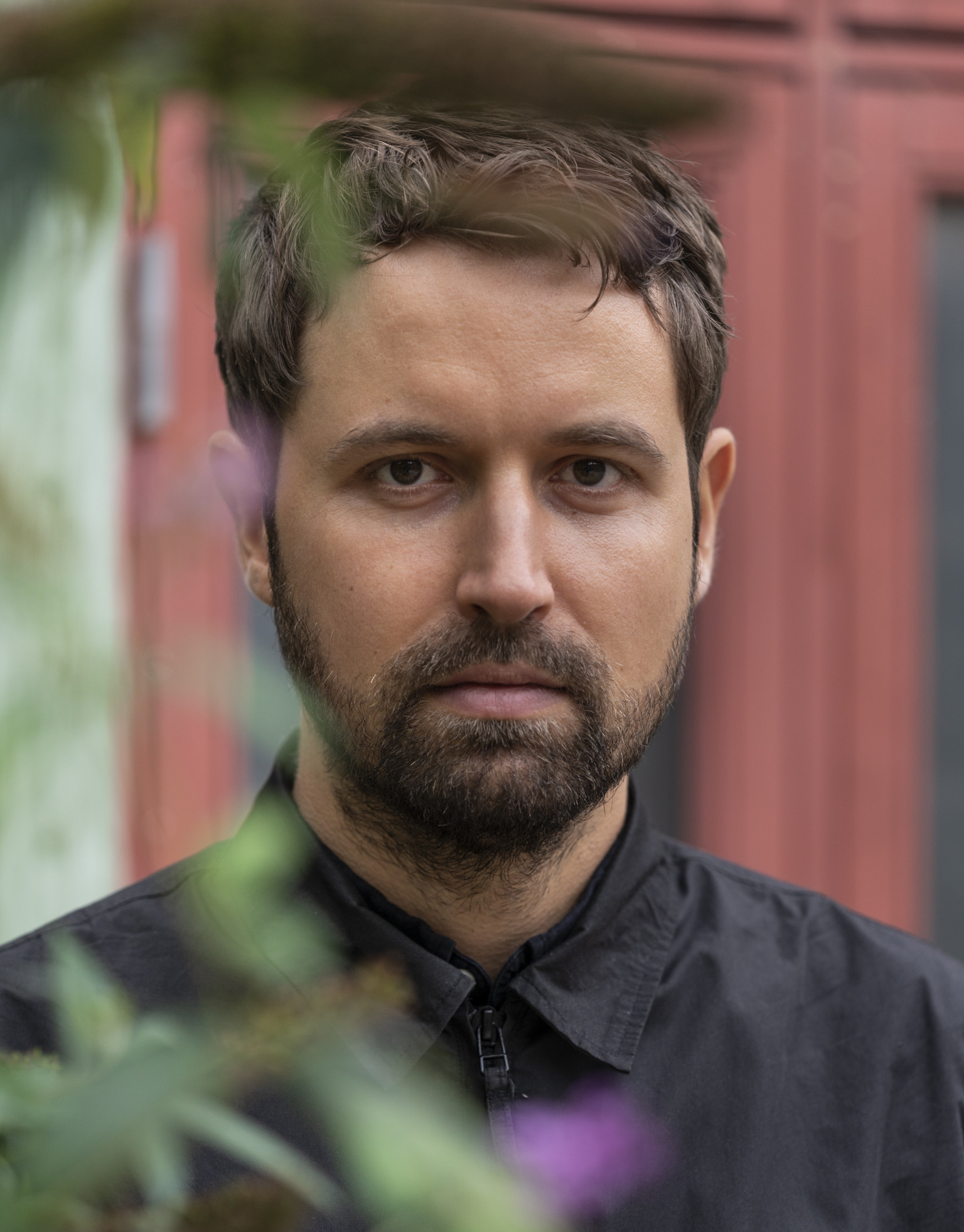
Mads Emil Dreyer
»Music to me is – having spent a lot of time listening, composing, and thinking about it – still, essentially, a mystery.«
Mads Emil Dreyer is a Danish composer working within the field of electroacoustic music.








There is something almost dogmatic about Mike Sheridan’s latest album, Touch. Everything leads back to the Cristal Baschet – a peculiar instrument from the 1950s in which sound is produced by running wet fingers over glass rods, setting metal resonators into vibration. No strings, no keys, just glass, water, skin and friction, slowly making the metal sing.
The Cristal Baschet is not merely an instrument on Touch. It is the album cover, the subject of the press photos, and almost the very argument for the album’s existence.
It recalls the material fetishism found in the American duo Matmos, whose music is often built around a single material or sound source: metal on Metallic Life Review (2025), plastic on Plastic Anniversary (2019), a washing machine on Ultimate Care II (2016). What is interesting about such constraints is that they ought to force the music somewhere it otherwise might not be able to go.
While listening to Touch, a question therefore begins to press itself forward: Which of these sounds could not have existed without a Cristal Baschet?
There are glassy tones that hang in the air and slowly change texture. Thin, cutting vibrations. Metallic surfaces that flutter, ripple, open and close. A constant sense of droning resonance; of something vibrating just on the other side of the audible.
Sheridan’s layering is meticulous. There is a precision to the mix, an almost surgical sense of the distance between the different textures. The best moments occur when the surface is disturbed: something that scratches at or short-circuits the otherwise tightly controlled resonance. On »BOW / GROUND«, for instance, deep bass pulses suddenly enter, creating a different physical quality – crackling, heavy, like something hitting the floor.
But Touch is first and foremost a well-produced ambient album. It moves through different degrees of the same state, changing nuance without ever truly changing its skin. That is not necessarily a weakness. There is something consistent, almost meditative, in Sheridan’s insistence. But the longer one remains in the same sonic state, the more one begins to miss what ought to be the Cristal Baschet’s particular possibility.
This is where the disappointment lies: in the gap between the instrument’s strangeness and the music’s conventional appearance. The sounds have been assimilated into a familiar ambient vocabulary, where the extraordinary instrument ends up producing something surprisingly familiar. You can hear that something unusual is happening at the source of the sound. But you cannot necessarily hear why it had to be this particular instrument. Had one not been told that a rare, almost otherworldly acoustic sculpture was standing in the room, one would hardly have guessed it.
»Music to me is – having spent a lot of time listening, composing, and thinking about it – still, essentially, a mystery.«
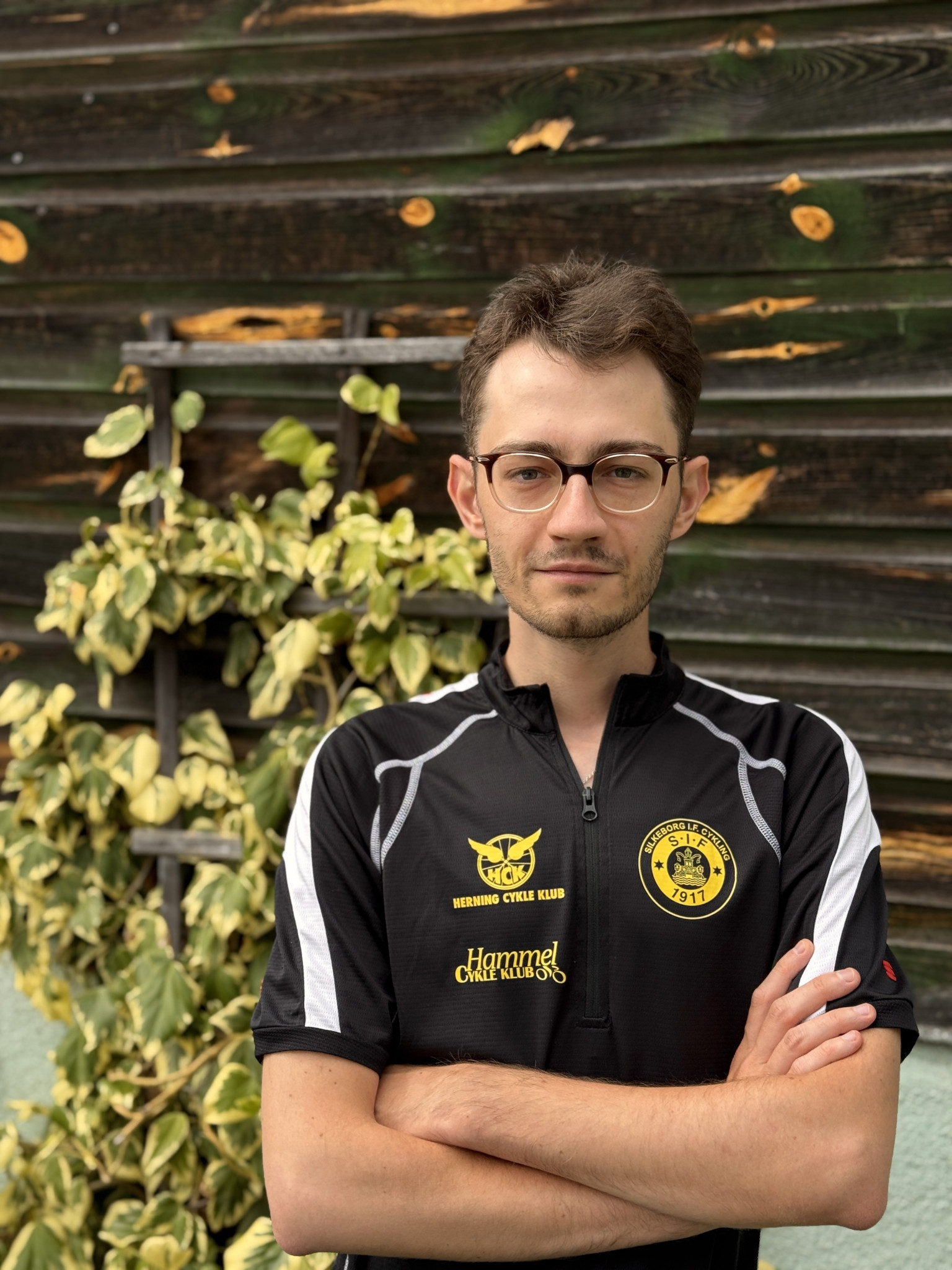
»Music for me is a universal tool for opening myself for feelings. It may be anger. It may be happiness or sadness. Music may make you wanna dance or cry. But it never leaves you indifferent to the emotional load it brings. Good music, at least. Music may tell stories. It may as well be a background, or a soundtrack for the moment, for the day, for life. That being said, music for me is a company for everyday. And I’m quite lucky that it’s my company at work as well, I guess.«
Jan Janczy is a Polish journalist and radio host at Radio Nowy Świat. His main fields of professional interest are Northern Europe, international affairs and music. He interviewed among others 3x Grammy Awards winner Fantastic Negrito, Röyksopp, Alabaster DePlume, Archive, Trentemøller and Mogwai. In 2024 together with JazzDanmark, Kultur(a) and Radio Nowy Świat he released a podcast series devoted to the history of Polish-Danish jazz connections. He is a Swedish philologist by education.
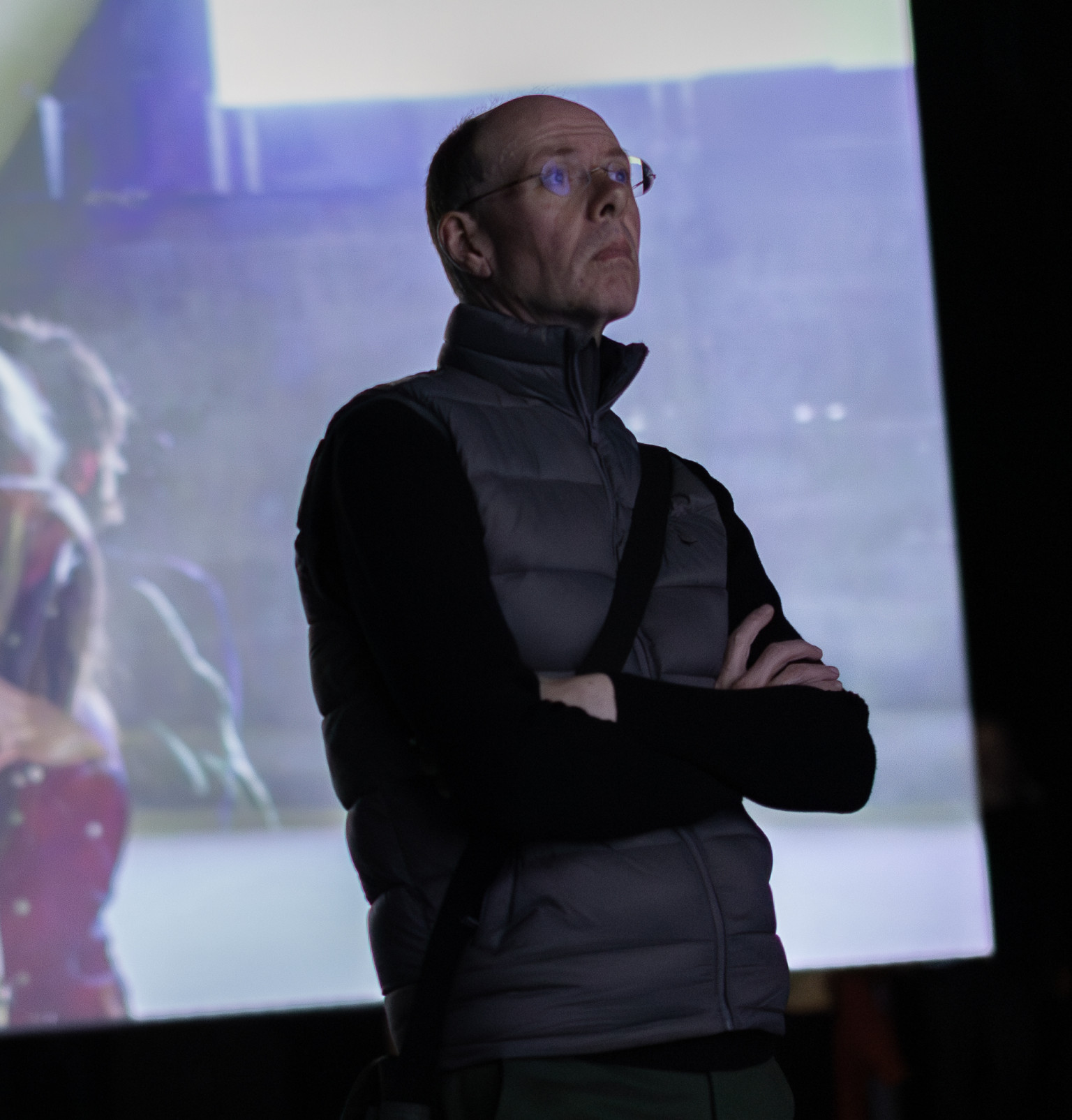
»Music is inseparable from listening: a close, attentive act. It’s not about beauty, truth or even intelligibility, but connection. This intense, focused intimacy is where meaning and everything else begins.«
Simon Cummings is a composer, writer, and researcher based in England. His music centres on two areas, both of which blur abstract and emotional impulses. The first, explored in instrumental work, involves highly intricate algorithmic processes rooted in carefully-defined behaviours, in a bespoke approach that combines stochastic and intuitive methods to realise large-scale behavioural transformations. His electronic music typically begins with visual stimuli, used to sculpt time-frequency structures investigating the boundary between noise and pitch, reappraising what defines each and their boundaries. He is currently working on a song cycle for voice and electronics for Icelandic soprano Heiða Árnadóttir, to be premièred in 2026. His research is primarily long-form critical writing on contemporary music, published on his website 5:4, as well as in assorted online and print publications.

My experience of Coexistence, Søs Gunver Ryberg’s ten-minute work for orchestra and electronics, unfolds in two stages.
At first, I am stunned. By the natural ease with which she handles the symphonic material, turning the orchestra into a potent hybrid of acoustics and synthesis. Such bite in the sound, such a sandstorm of granular texture churning on behind the instruments.
Here, I think enthusiastically, the sonic potential of the twenty-first-century orchestra is realised. But then doubt sets in during the second stage. For does something essentially similar happen here as in Swedish composer Jesper Nordin’s hour-long Emerging from Currents and Waves (2018): a technological quantum leap in symphonic sound that nevertheless freezes compositionally into a stop-and-go between thunder and silence?
The supply of drama in Coexistence is almost vulgar: unstable Icelandic dark drones, harsh brass blasts, trembling strings, thunderous timpani, abrupt brakes like those in Hollywood action trailers – and much more besides. It is a heavenly chaos. The contrast: muted alarms of bowed metal, collected noise and extended tones, like a fragile iron framework still shuddering after the storm.
The two temperaments alternate, and it sounds phenomenal under Dalia Stasevska’s direction of the BBC Symphony Orchestra. The work’s core is catastrophe – collapse and aftermath – and seen in that light, the black-and-white extremes make sense. The music is brutal, relentless. But could it have been more: more in colour, beyond the duel? Perhaps. Judge for yourself – Coexistence is without doubt the most striking symphonic statement of the year.

While Sofie Birch and Antonina Nowacka’s joint debut album Languoria, with its synth-laden sound, felt like a dream of another world, their second album comes across more as a window into a bygone time. The electronic elements have stepped into the background in favour of acoustic timbres from sitar, guitar and harp, lending the music a warmer, more grounded character. A fine example is the title track, where a gently trickling stream forms a backdrop for a relaxed dialogue between sitar, guitar and voices that shift between singing and humming. There’s a clear connection to the simple melodies of folk music and those little fragments one might find oneself humming in the kitchen while the kettle boils. It is precisely this personal and inviting tone that makes the composition so effective. The track »Nøkken« likewise testifies to the strength of Birch and Nowacka’s songwriting. With its sparse instrumentation, gentle melody and carefully balanced reverb, the piece brings out the best in their voices and appears almost weightless – transparent and ephemeral.
Together, the Danish-Polish duo create music for those who dream of another time and place – not because they necessarily wish to escape their present reality, but because the quiet moments of daydreaming are full of calm, comfort and enchantment. At times, however, the sense of security takes over slightly, and one misses something to challenge the stillness – like the more prominent synths did on their debut. But for those in the mood for unpretentious beauty and quiet reverie, Hiraeth remains a strong release from two continually compelling voices in the ambient genre.
English translation: Andreo Michaelo Mielczarek