




The Trombone Finds Its Quiet Side
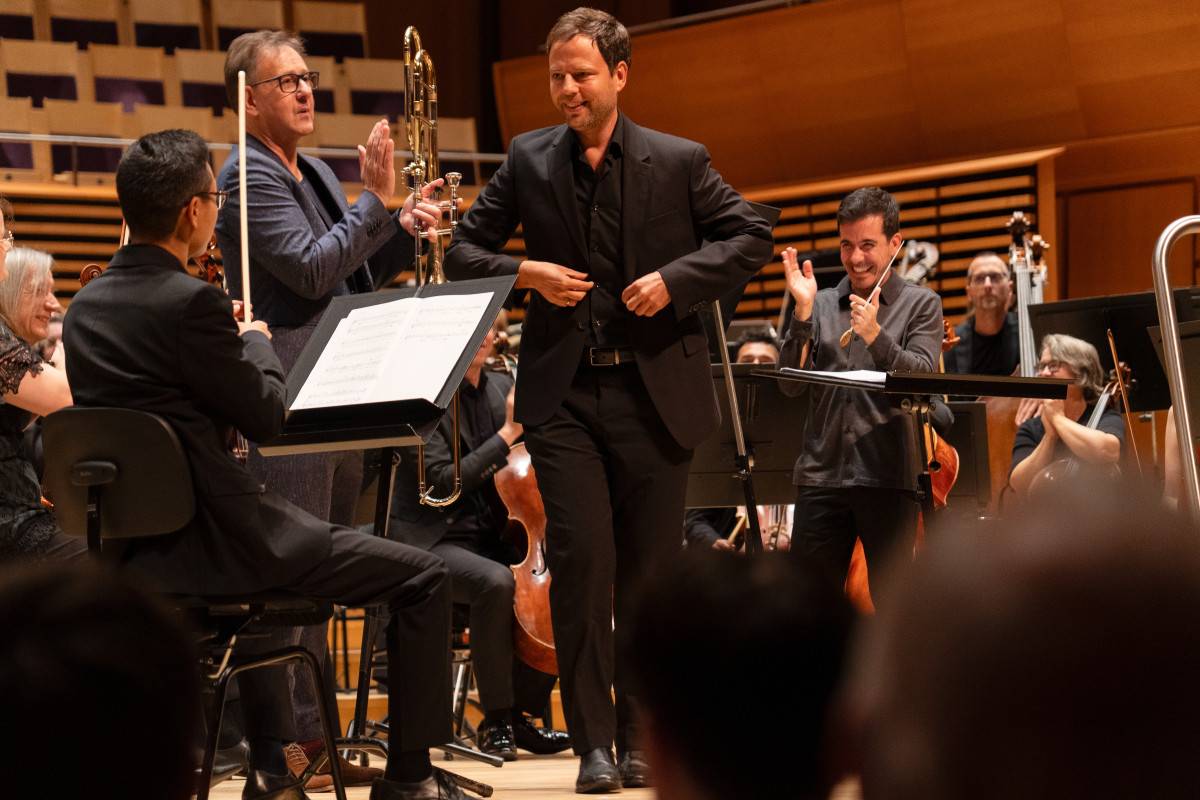

At 19, the Spanish composer (and trombonist) Francisco Coll wrote a wild-child of a trombone concerto that pushed the instrument out of its comfort zone. 22 years later he has created a new piece from some of that material. Its priorities are the opposite.
Tapias embraces the lyrical, ethereal qualities of the trombone. It is not a concerto, insists Coll. Perhaps it could be described as a set of frescoes for trombone and orchestra. Whatever the category, it’s a beguiling piece that was gorgeously birthed on Thursday by Ian Bousfield, conductor Nuno Coelho and a sumptuous-sounding Stavanger Symphony Orchestra.
Composers from Sibelius to Turnage have reacted against caricatures of the trombone as brusque and clowning by exploring its dark-hued lyricism. Coll does something more, setting his soloist’s introspective, intervallic melodies in evocative and provocative orchestral contexts. The soloist’s lines can resemble spray-canned tracings on walls already heavy with the patina of history, decoration and graffiti.
Initially the trombone appears to seek repose. The second movement draws it into more agility but the dancing is suppressed: a layered burying of all manner of rhythms from flamenco to Hiphop. Great wodges of rich harmony weigh the boogying down for good.
The trombone does find peace in the final movement – its long, soulful melodies more yielding. But not before Coll has conjured up moments of huge harmonic strain and conscious orchestral magnificence. They sat well next to Coelho’s fierce performance of Shostakovich’s Symphony No 5 after the interval. But Bousfield’s heartfelt journey through Tapias, sounding entirely at one with the orchestra, will linger longest in the mind.
In a Warm Bed of Darkness

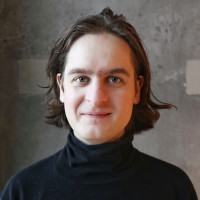
Rumor has it that the now-defunct British electronic band Coil once created a soundtrack for the cult horror film Hellraiser – so disturbing that it was rejected for being too frightening. With that story in the background, it almost felt like a natural opening to autumn’s darkness when Drew McDowall, former member of the mythical band, took the stage at Alice in Copenhagen on Wednesday evening. The Scottish musician is known for entering into striking collaborations – with Danish Puce Mary and, most recently, the American-Swedish composer Kali Malone – and it was precisely for this reason that it made sense for the evening to begin with an intense concert by Gintė Preisaitė. Like McDowall, she has the ability to transform even the simplest sounds into all-encompassing sonic landscapes.
Although both musicians clearly work from an electronic foundation, their sonic universes appeared remarkably organic, as if they were shaping living material. In her all-too-brief concert, Preisaitė created a mosaic of field recordings, voice fragments, and cassette tapes – chaotic one moment, ordered and transparent the next. With the same cool precision, McDowall unfolded his performance as if it were one long harmonium drone, slowly creeping under the skin with the inescapable logic of a horror film. For McDowall, darkness is not an alien force but a familiar companion, which he skillfully reshapes into soundscapes that are at once disturbing and reassuringly enveloping – like lying in a warm bed with the nightmare right beside you.
Both Preisaitė and McDowall moved effortlessly across the border between the acoustic and the electronic. Their music appeared as a contemporary legacy of the musique concrète tradition: an insistence that electronic music remains one of the most experimental art forms – vital, organic, and with the ability to let even the smallest sound open up an entire world in itself.
English translation: Andreo Michaelo Mielczarek
Injured Swan In a Flooded World

An injured swan lies buried in seaweed in a corner of the hall, while four lifeless bodies are scattered across the floor. More seaweed hangs from the ceiling, and the smell hits us already as we step through a bluish, latex-like curtain. The foyer was filled with heaps of seaweed and leftover plastic, and now we are inside an unfamiliar underwater landscape. The bluish light flickers on the wall, the soundscape murmurs faintly like a distant current of noise. We are underwater.
Slowly, bodies come back to life. They stretch in movements of suffering, stagger, struggle – but they rise. Subtle beats and Mads Emil Nielsen’s restless drones push the scene forward. The question of what has happened is rhetorical: everything points to climate catastrophe. Roskilde Fjord has overflowed its banks. Humans continue – despite a state of emergency, despite the flood – while the swan has succumbed.
The dystopia comes alive as the dancers, with impressively exploratory movements, search for ways to adapt to a new world. Here scenography, light and dance interact powerfully, and the senses are overwhelmed. That is precisely why it is a pity that the sound quality feels flat, when the sonic dimension plays such a role in the storytelling.
Still, Vi fortsætter... (We Continue…) succeeds in creating a universe that is at once absurd and all too recognizable. It recalls a gentler version of Ruben Östlund’s Force Majeure: the comic and tragic traits of human nature set against the inexorable forces of nature.
In the end, the dancers leave the stage and we are left in silence – with the afterthought of why we continue like this, and with the sensation of treading water long after leaving the fjord’s flooded universe.
English translation: Andreo Michaelo Mielczarek
Songs That Would Rather Be Lieder
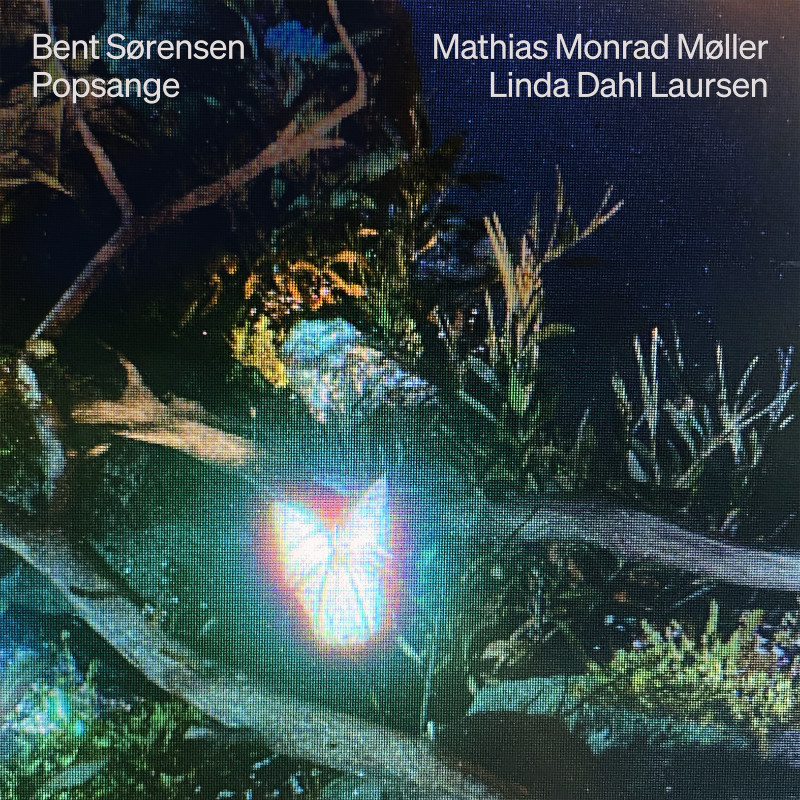
»Your eyes are in reality luminous tunnels to another reality.« So goes one of the key lines in the opening song of Bent Sørensen’s song cycle Popsange, inspired by texts by Michael Strunge. It sets the tone and points toward the recurring lyrical themes: all-consuming love, the shared journey toward another place – and the eyes, always the eyes, appearing in almost every single song.
Mathias Monrad Møller sings with great sensitivity, bringing the text to life, and his interplay with Linda Dahl Laursen is strong. Yet Popsange has much more in common with lieder than with actual songs – not least because of the text’s at times highly poetic language. The tender, almost naïve voice of the lyrics receives its most convincing counterpoint from the piano, as in »Illusion«, where it first follows and supports the words, only to break out into rapid, dissonant chords that interrupt and almost mock the singer.
Still, traces of pop music can be found here and there. »Tid og rum« builds on repetitions with small variations, much like the verses of a pop song. And in »Hjertestrøm«, Møller colors his voice with a timbre that could easily fit on a pop album – not least because the piano here is delicate and playful, giving the voice more freedom.
All in all, Popsange is a pleasant listening experience, but I miss the presence of David Bowie and Lou Reed on the musical front. The work is at its most innovative where it dares to embrace pop. Imagine if the texts had been carried by actual verses, hooks, and choruses – elements that might have turned them into true earworms.
English translation: Andreo Michaelo Mielczarek
Treen In Free Fall – And In Common Flow


On Kaikō – the trio Treen’s second release – saxophonist Amalie Dahl, pianist Gintė Preisaitė, and percussionist Jan Philipp demonstrate confidence, mutual trust, and a distinct musical adventurousness. The opening track »Hylē« unfolds with rattling percussion and strikes seemingly aimed directly at the piano strings, stumbling forward over an underlying drone. The saxophone cuts in with phrases that sound at once admonishing and bewildered. Nothing feels meticulously calculated; instead, the music is carried by a keen awareness of the three musicians’ individual voices within the shared soundscape.
The same basic formula unfolds across the album’s three other pieces, yet always in new variations. On »Kinetic«, Dahl’s saxophone emerges with much greater weight, its slowly growing crescendo mirrored and challenged by Preisaitė’s piano. Improvised music can often slip into polite holding patterns, with the musicians taking turns in the spotlight – but not here. Dahl, Preisaitė, and Philipp appear as three drifting islands without anchors, propelled by their own currents yet inexorably drawn in the same direction. The result is both sudden shifts and an organic flow that can pull the listener into a trance, if one surrenders and simply lets the sound wash over.
It is precisely the trust between them that allows the three to play freely, without fear of leaving or losing each other. In doing so, they create a momentum that is hard to resist – whether one chooses to let the islands drift past or to float along in their current.
English translation: Andreo Michaelo Mielczarek
Steel Forks and Silken Script
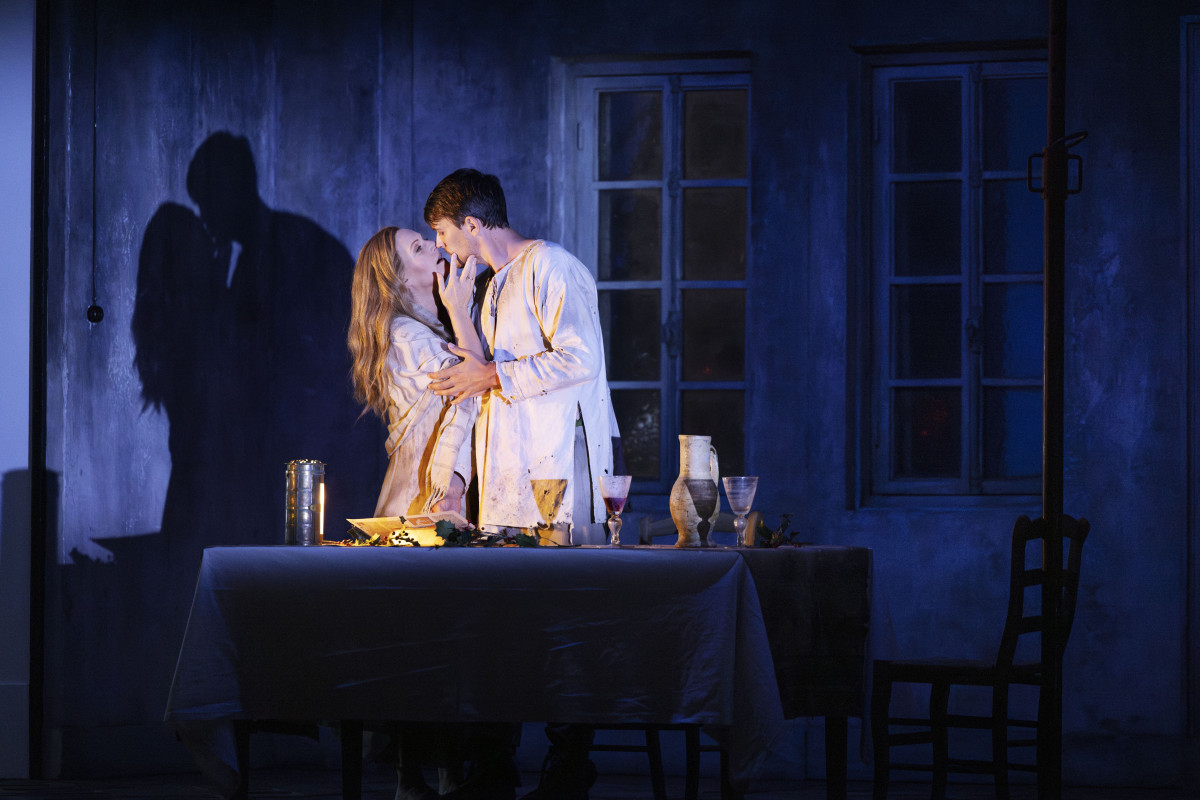
The first time I heard the title of this opera, I was reminded of Franz Kafka’s grotesque short story In the Penal Colony (1914–19), in which a prisoner is sentenced to have his punishment – a moral admonition – engraved into his skin, after which he is meant to feel what it says. In Written on Skin, which premiered in 2012 and has quickly become something of a modern classic in opera houses around the world, the writing on the skin is instead the caress of a young illustrator, who in reality (!) is an angel. The story is set in the 13th century and appeared in Boccaccio’s collective narrative The Decameron in the following century, but it could just as well take place in a dystopian future.
In a land ravaged by war, violence, and terror, the illustrator is hired to create a book for a tyrannical and ultra-violent lord who, among other things, regards his wife’s body as his own private property. The illustrator/angel, however, enters into a passionate relationship with this wife, and all hell breaks loose. Naturally, they both die, and the lord is left alone with his bitter, useless victory, while the angel is resurrected and thus becomes the true victor – and perhaps a queer figure, as the voice type (countertenor) might suggest.
The Royal Danish Theatre’s production is highly convincing. Benjamin’s music roars and crashes, yet is at the same time curiously hushed in its markedly economical use of means. It is as hard as steel forks magically bent again and again, while the often very powerful volume inscribes itself onto the skin of the eardrums in silken script.
English translation: Andreo Michaelo Mielczarek