Rune Glerup
15









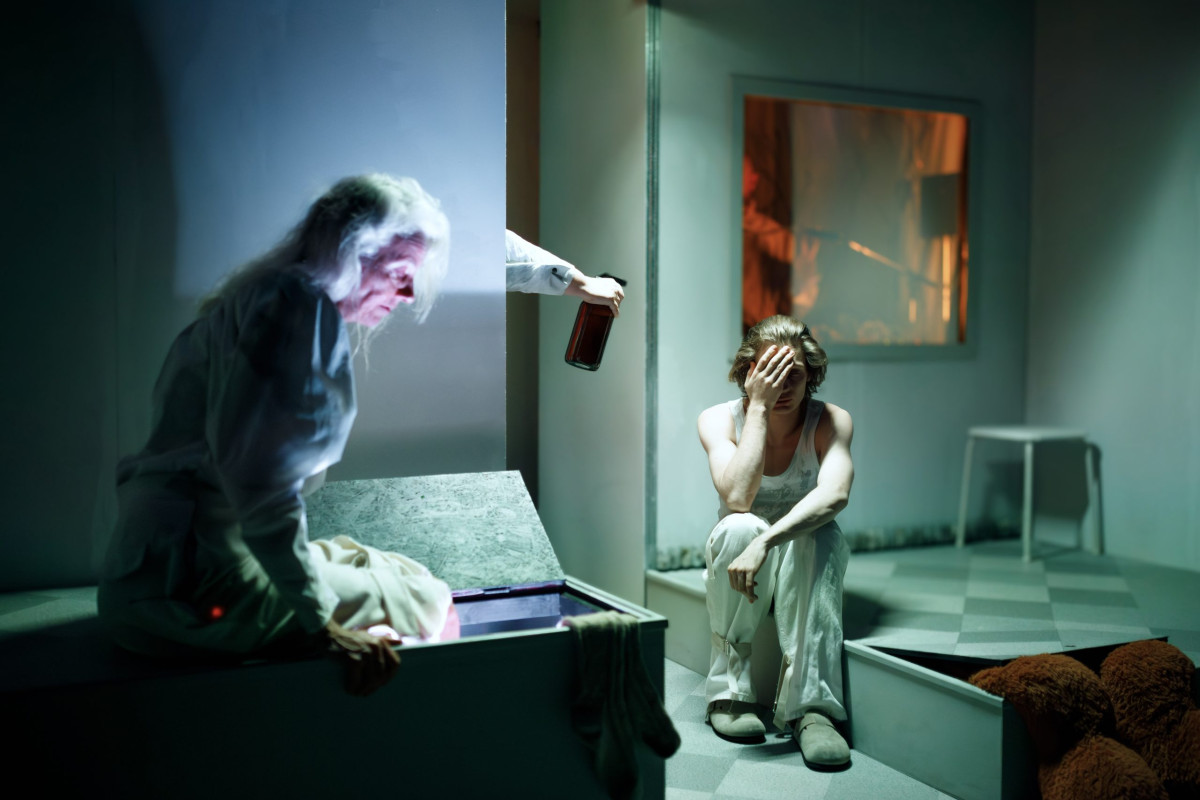
»Is your head also filled with voices that aren’t your own?« the young man asks. The question forms the central theme of Vildnis (Wilderness], a performance by the theatre group MØR collective, and most people would probably answer yes. But whose voices are they, and where do they come from?
In the introduction, Vildnis is described as »a journey into the engine room of theatre.« Playwright Abelone Koppel has written 80 short texts, and each evening a selection is activated by two performers who do not know in advance which texts they will receive through their earpieces. In a back room, a prompter reads the texts aloud, which the actors immediately translate into movement and voice on stage. It could easily have gone wrong. It doesn’t – and much of the credit goes to the two performers, whose work makes the concept function so well.
Also present on stage is composer Mika Forsling, who, through electronic means and abundant percussion, follows the mood unfolding between the performers – but unfortunately not much more than that. I actually found it somewhat difficult to hear what was going on and, at times, forgot about it altogether, as it felt relatively insignificant. It would have been an obvious choice to use the voice itself as an instrument in a performance centered on inner voices, and it is hard to understand why this opportunity is missed.
One should not see Vildnis for the music alone, even if it becomes more prominent towards the end, when the roles are reversed and Forsling’s rhythms seem to guide the performers’ movements. Nevertheless, Vildnis emerges as a cohesive and engaging experience, despite the unpredictability of the experiment.
English translation: Andreo Michaelo Mielczarek
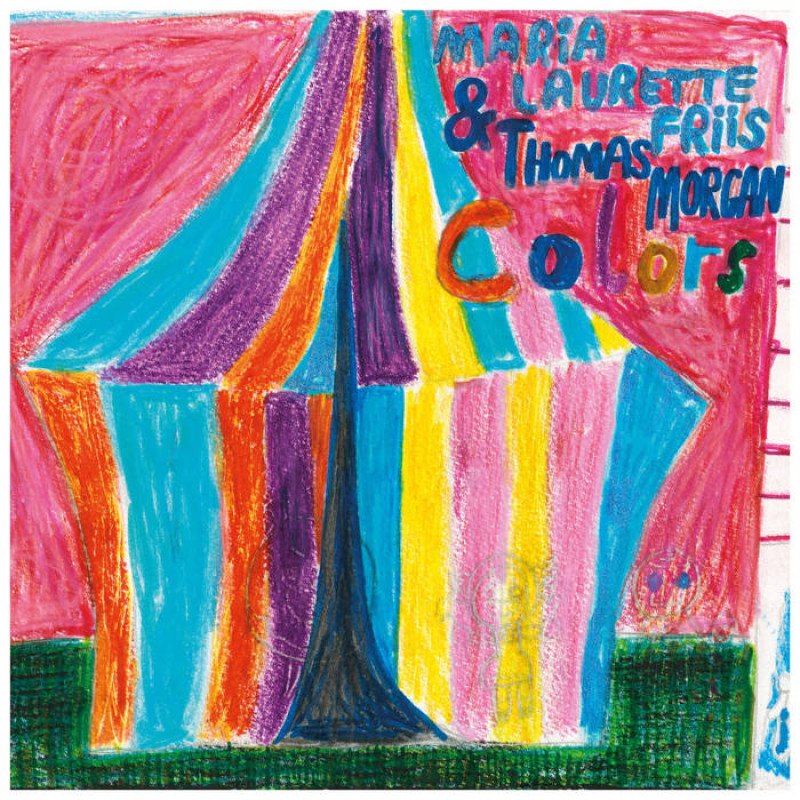
In the world of experimental music, it now takes quite a lot to be truly surprised – it’s a space where both treasures and old debts are often revisited. That’s why listening to Colors, the improvised duo album by Maria Laurette Friis and Thomas Morgan, feels like a fresh revelation. Pairing an experimental vocalist and composer (Friis) with an experienced double bassist (Morgan) and letting them improvise for three hours may not sound groundbreaking at first. Yet somehow, a rare and unique symbiosis arises between voice and double bass – a connection so special that one rarely hears anything quite like it.
Friis is a dazzling singer, and her wordless expressions draw on everything from Mongolian throat singing and jazz to Nordic darkness. She shifts effortlessly between pure singing and guttural sounds within a single improvisation. Morgan’s double bass provides an intriguing contrast, exploring the instrument’s outer edges without ever becoming unpleasant.
The three-hour recording session has been distilled into nine tracks spanning a total of 45 minutes, and the concept of using only voice and double bass is maintained throughout – despite both musicians’ backgrounds in vastly different musical expressions. The unique language that emerges is often both unsettling and deeply beautiful. When they give each other space – as in the seven-minute »Eight« – and when the bass plays alone, it’s impossible not to sway along, even without a proper beat. Colors proves that great art can still arise from nothing – in both the strange and the more familiar dialogues. That is exactly what Friis and Morgan achieve on this captivating postcard from another world.
English translation: Andreo Michaelo Mielczarek
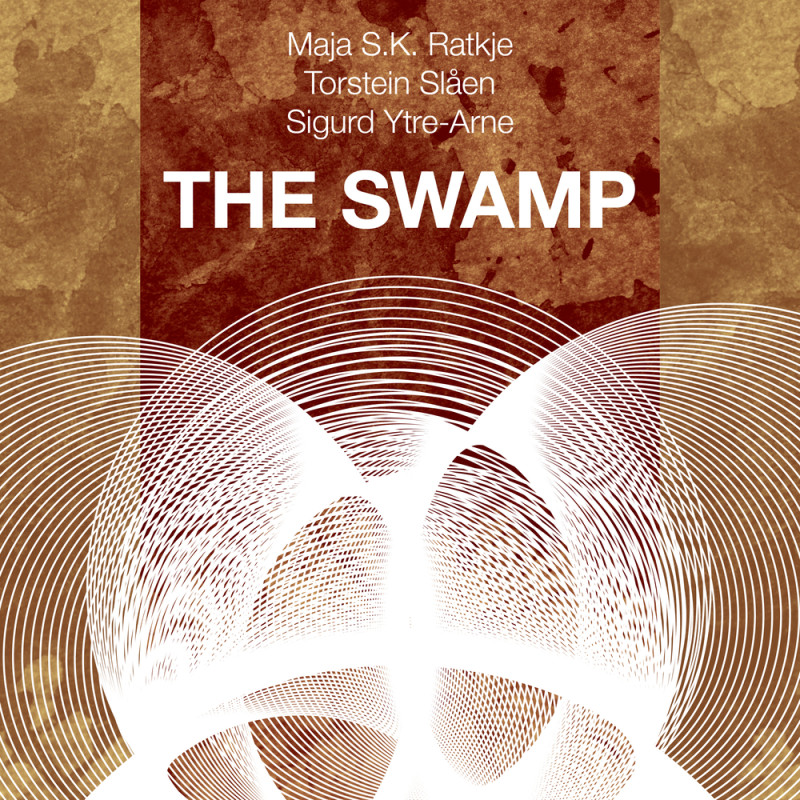
The term Dadaism must be used with caution – it easily risks becoming a cliché and trampling disrespectfully on its origins. Nevertheless, it’s hard to avoid Dada when listening to The Swamp, created by Norwegian experimental composers Maja Ratkje, Torstein Slåen, and Sigurd Ytre-Arne. The album is a 40-minute chaotic mirror of our times, shaped by merciless improvisation, noise drones, and Ratkje’s absurd vocalizations.
The music is raw, rancid, and deliberately un-beautiful – a constant stream of manipulated field recordings, reminiscent of a horror film foley studio. Bells, metallic clanks, white noise, and industrial sounds are warped together, driven by a syncopated, menacing rhythm and an underlying fuzz drone. Most fascinating is Ratkje’s voice, which appears as a riddle: is she singing in Celtic, Norwegian, or pure gibberish? The latter seems most likely and evokes the Dada poetry of Kurt Schwitters, particularly his 1932 Ursonate. At the same time, her vocal techniques dig deep into Nordic soil – conjuring the spirit of völva chants and Viking songs.
The combination of controlled noise and purposeful chaos elevates much of the album, with the opening track and the completely unhinged »Discomanic« standing out. The former is as close as the trio gets to something conventional; the latter borders on pure sound art. Only the two slower pieces – the seven-minute-long »Oligarchification« and »Lullaby for Trembling Hearts« – tend to drag a bit. Otherwise, the group manages to keep the material focused, sharp, and intensely trippy. It’s impressive how effectively it all works, even as the expression remains so relentless and challenging.
English translation: Andreo Michaelo Mielczarek
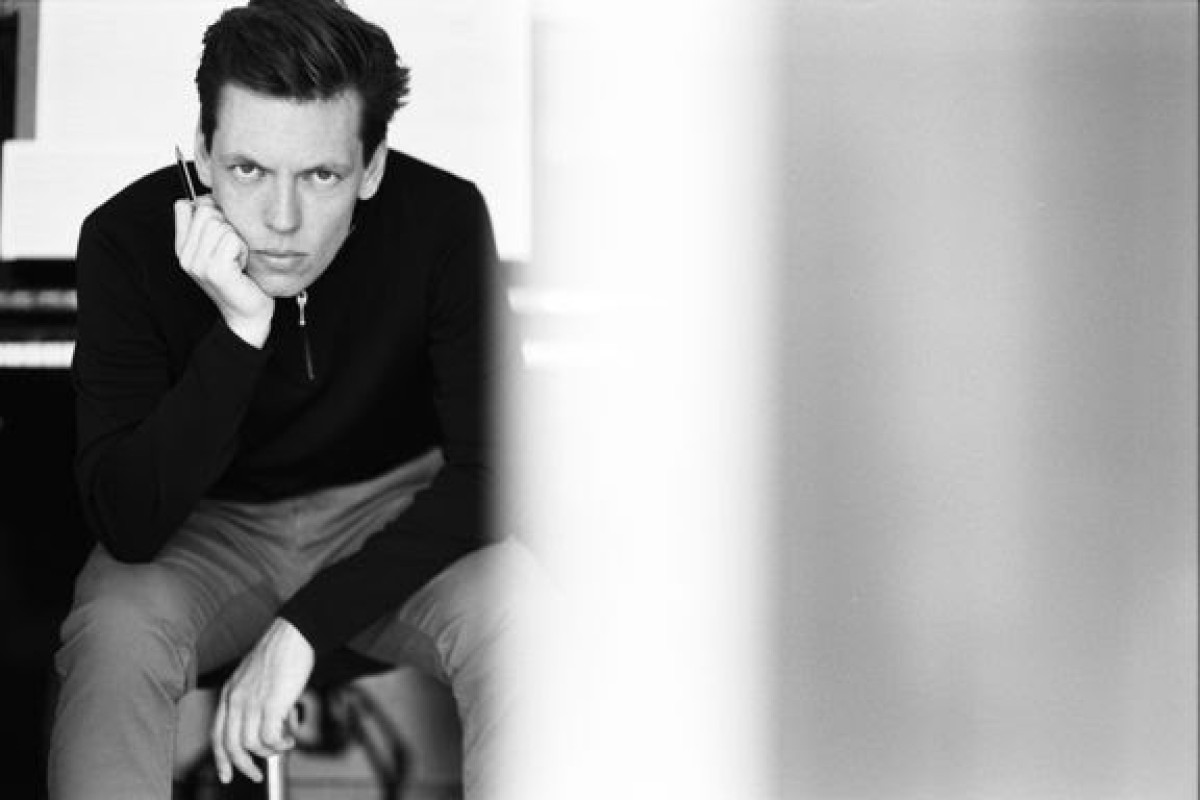
A string quartet consists of four players, and a clarinet quintet five, though the Danish composer Rune Glerup (b. 1981)’s newly recorded works for both ensembles would have you believe their ranks are vastly undercounted. The recipient of last year’s Nordic Council Music Prize for his violin concerto Om lys og lethed (About Light and Lightness), Glerup writes pieces for chamber and orchestra that are often characterized by their multidimensionality: a sonic idea will persistently recur in altered guises, for a sense that one is feeling around different facets of a physical form. Yet the two works on Perhaps Thus the End – brought to life by the impeccable Quatour Diotima and clarinetist Jonas Frølund – are just as potent a demonstration of expansive interiority as they are of surface area.
In the titular string quartet, whose seven movements are named for lines from Beckett’s late prose work Stirrings Still, long tones and galloping motives are seamlessly shuffled amongst the ensemble, generating such a sonority that the group seems to have doubled in size. The language is sometimes mechanical but never automatic, bending rather into balletic shapes. Glerup is a careful manager of texture, finding grace in unintuitive sounds through skillful layering – to speak merely of how, in a later movement, a harmonic pizzicato punctuates the string equivalent of vocal fry before the group pivots suddenly into stillness.
On the unexpectedly addictive »Still Leaning Towards this Machine«, which is surely among the few times a contemporary clarinet quintet has received that distinction, electronics magnify the ensemble through a subtle stuttering resonance. As a result, across three spunky movements, the group is occasionally transmuted into a sort of paranormal accordion. It’s a wonderfully weird effect that, just as weirdly, the score seems to deliver with a straight face – just one more satisfying surprise among many others on this excellent record.
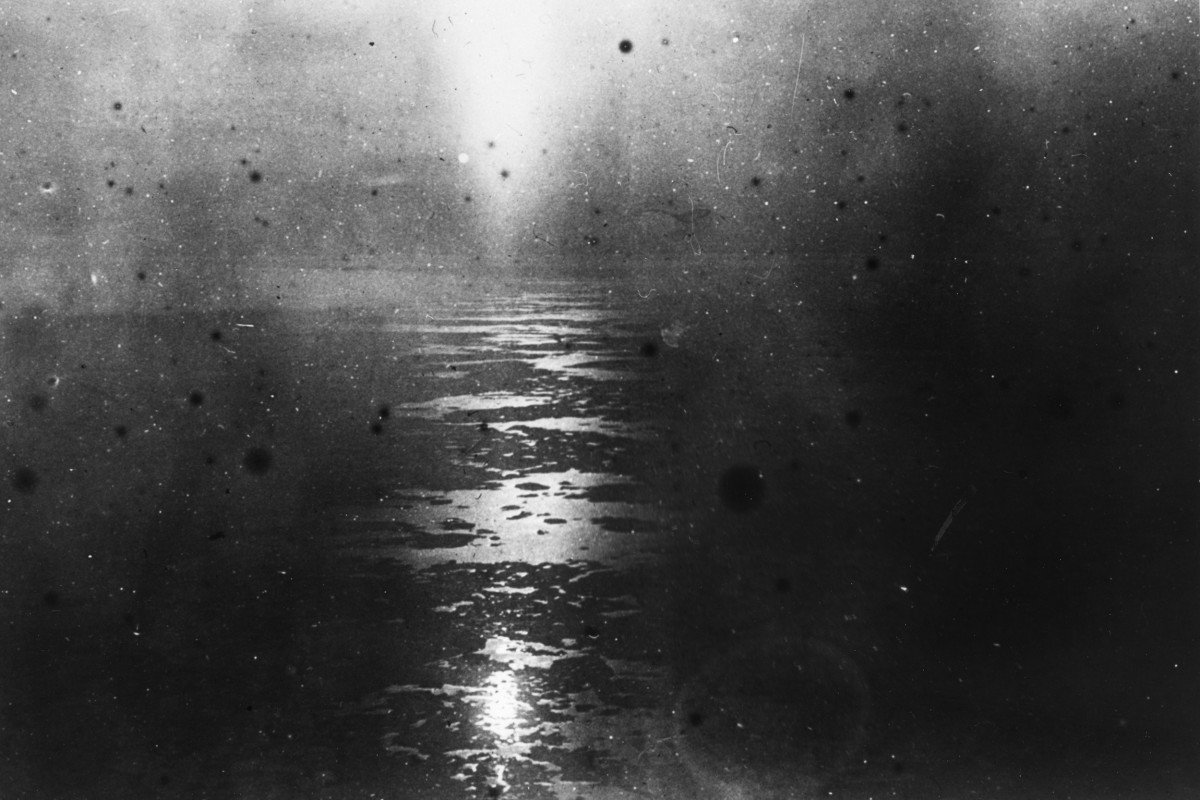
On his new album, Snowblind, Jacob Kirkegaard shifts his focus away from revealing the hidden sounds of our surroundings to instead depict a psychological drama. The inspiration: The Swedish polar explorer Salomon August Andrée, who in 1897 set course for the North Pole in a hot air balloon – a reckless journey that cost him and two others their lives, blinded by snow and the pursuit of fame.
Through 11 icy tableaus, Kirkegaard paints a portrait of the anxiety and doubt Andrée must have felt when the balloon crashed onto the pack ice east of Svalbard. For two months, the three men continued on foot until they reached the desolate island of Kvitøya – where they died a few weeks later, possibly poisoned by undercooked polar bear meat. By then, nature had long since revealed its hostility.
You hear all this on Snowblind. First, the balloon takes off in an air current that elegantly balances on the edge of suffocating dark synths and a heartbeat rhythm, while a metallic screech – reminiscent of a heroic electric guitar – subtly signals doubt: Was Andrée a hero or a villain? Shortly after, we land in a vast nothingness of scraped metal. The shockwave transforms into mischievous, squelchy synth footsteps as desperation and hallucinations grow: Was that a ship's horn I heard? A lifeline?
But no. Silence wins. The icy water rattles like a hungry beast. The hardboiled psychological drama leaves no room for hope, only a chance to stare at your end right in the face. Had Kirkegaard been a truly ruthless portraitist, we might have descended even further into darkness and disorientation, but his weightless ambience still leaves its marks in the snow.
English translation: Andreo Michaelo Mielczarek
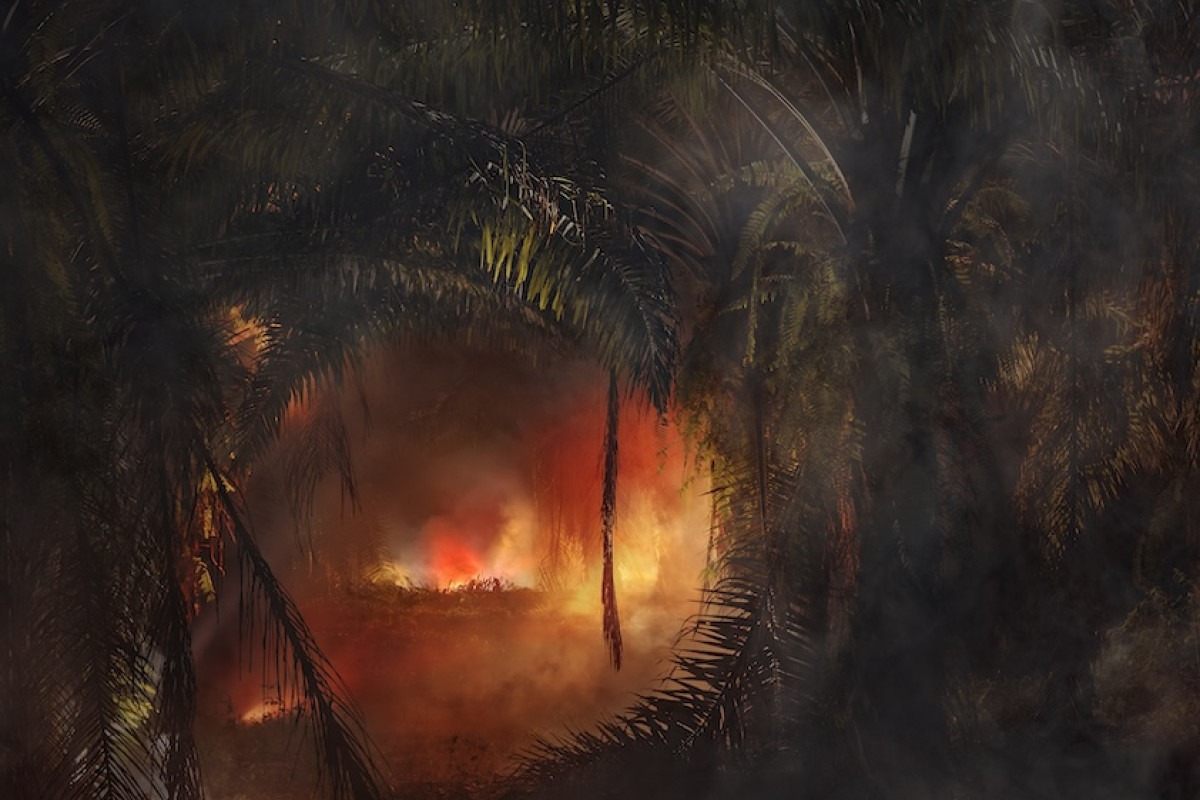
We wander through a garden: it's dark, with palms and ferns everywhere, illuminated by infrared light and equipped with sensors, causing the plants to create crackling noise. Red blinking lights above resemble drones. Welcome to the end of the world. And the beginning of the world. We’re not entirely sure. Perhaps it’s a serious rave party that has come to a halt. Just like the techno in the film An Invitation to Disappear, set in a Southeast Asian oil plantation, blurring night and day – making the senses lulled, vulnerable, and compliant.
In the '90s, Erik Satie’s sad piano music always played in broadcasts about climate disasters. Here – at the beginning of a new chaotic year – you can disappear into the exhibition Solarstalgia created by the French-Swiss artist (and Olafur Eliasson student) Julian Charrière. Experience life in an apocalyptic afterworld with all its ominous sounds, in a fully immersive and enveloping way – as this might be how we can learn a bit about the geological forces and changes in nature around us today.
At the end of Arken's long exhibition space, the eye is drawn to an onyx boulder emitting light (the work Vertigo). When approaching something with light, one becomes greedy. The pig-like sounds you hear come from volcanoes in Ethiopia and Iceland. A devouring sound. Just like the entire exhibition, it elegantly addresses both the eyes and techno-loving ears.