in brieflive
27.05.2025

When Orpheus Turns His Head

O Future: »Enter Afterlife«
© PR
© PR

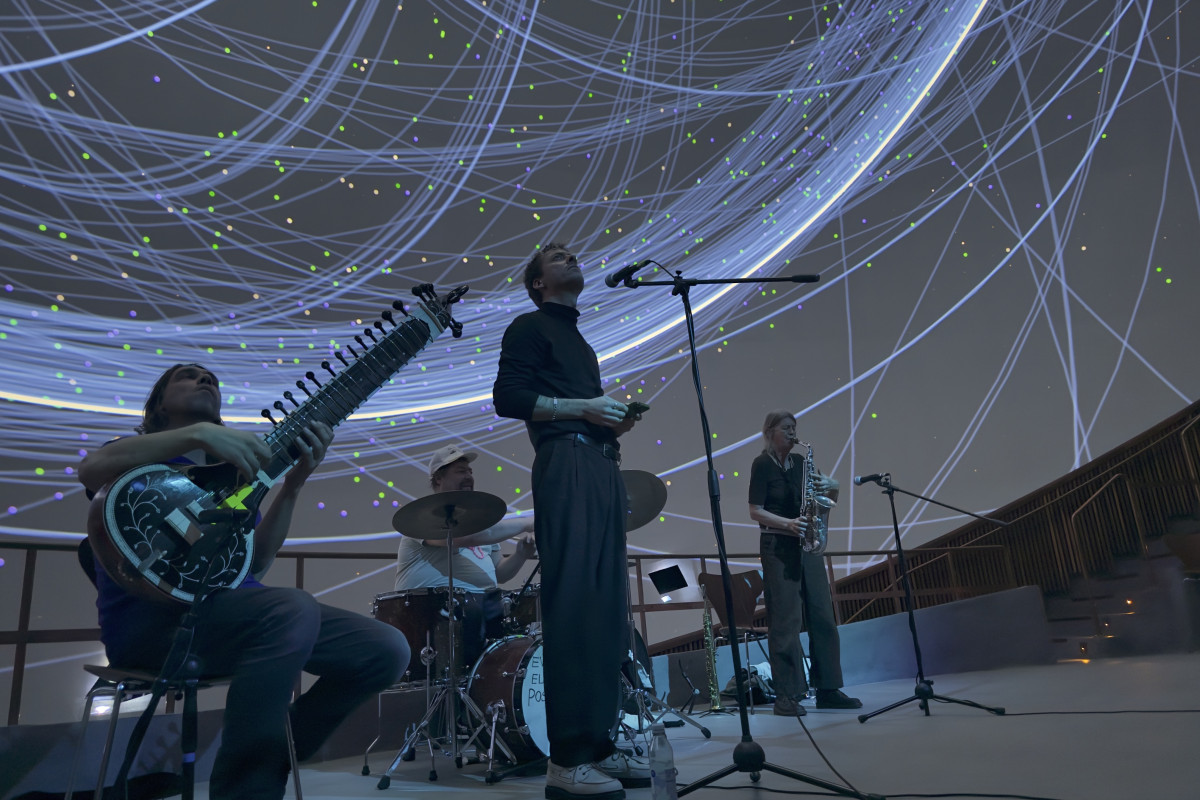
Thorvaldsens Museum is a fitting place to unfold a narrative about the soul’s journey to the underworld. Not only are the halls filled with depictions of Greek mythology, the museum itself is a kind of mausoleum, with Bertel Thorvaldsen’s grave situated at the heart of an inner courtyard. Everything should align perfectly when the multimedia duo O Future stages the descent into Hades through sound and animated video projections. But it doesn’t.

Through eight rooms and five sound works, we move from the banks of the River Styx, through the underworld, and finally to Elysium, where the blissful afterlife awaits. Along the way, we are confronted with judgment, choice, and struggle – existential themes played out on the grandest scale. The electronic soundscape, delivered through headphones, begins with a simmering, oppressive digital lament and accelerates through the rooms to a heavy electronic beat layered with symphonic undertones. We hear jazzy saxophones, looped synths, and white noise, before safely arriving in a spherical, almost sacred, digital choir.

There’s an intriguing theme in the collision between digital voices and the idea of death, but it is drowned out by the many loose ends of the exhibition. Why, for instance, is there no synchronicity between sound and visuals? Why are videos consistently projected onto sculptures that bear no relation to Greek mythology? And why the oddly synthetic color palette that evokes 1990s MTV more than it does the vast drama the story seeks to evoke? I hurriedly close my eyes and try to focus on the beat – but it’s too late. Orpheus has turned his head, and Eurydice is lost. So is this exhibition.

English translation: Andreo Michaelo Mielczarek

© Malthe Folke Ivarsson

»In his music, composer Allan Gravgaard Madsen tries to create a better version of himself.« 

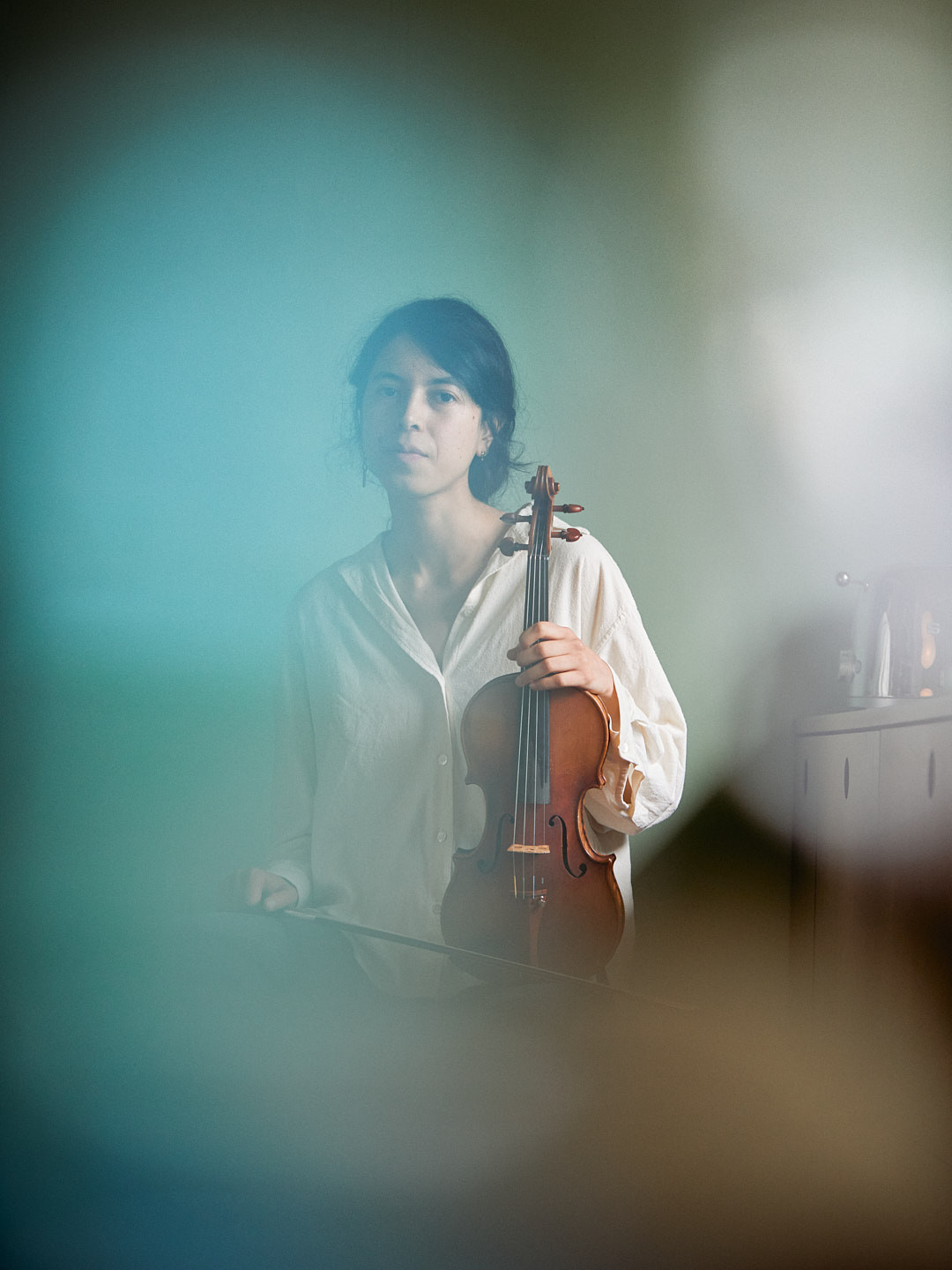
Allan Gravgaard Madsen is a Danish composer based in Copenhagen. His most recent works include Träume nicht and Nachtmusik. He tries to create a better version of himself in his music – where his personality tends to be restless, chatty and has an active inner life, his music is controlled, simple and merciless in its expression. He is the recipient of the Carl Nielsen & Anne Marie Carl-Nielsens Hæderspris 2022.

in briefrelease
23.01.2022

Finnish Space Travel

Tomutonttu: »Hoshi«
© Tomutonttu: »Hoshi«

The Finnish multimedia artist Jan Anderzén has, with the album Hoshi, released under the solo moniker Tomutonttu, created a true little star. Not only because »hoshi« literally means »star« in Japanese, but above all due to the music itself. There is something cosmic, yet infinitely minute, about the sonic worlds Anderzén conjures—like a galaxy reflected in a puddle, or a space journey in a rocket carved from a hollow tree trunk. Synths emit busy, warm blips and bloops, while ultra-short vocal and instrumental samples create a recognizable blur. At once artificial and organic – soft, rounded, jagged, crackling.

Anderzén approaches sound with a playfulness I simply adore. His music is strange in an incredibly comforting way. It places me in a kind of colorful, trance-like state, only interrupted when, several times over the course of the album, I find myself smiling in delight at a particularly great sound. The synths on »Katse osuu sähköön!« The choral samples on »Kesä oli äkkiä ohi!« Milo Linnovaara’s flute on »Malta lausua ‘AH’!« And many more. Hoshi is an album packed with microscopic moments that together form a frayed, exploding, radiant, idiosyncratic whole—a stellar moment of just under 38 minutes.