






in brief
29.09.2025

High to Fly, Ice-Cold to Crash

Jacob Kirkegaard: »Snowblind«
© Nils Strindberg
© Nils Strindberg

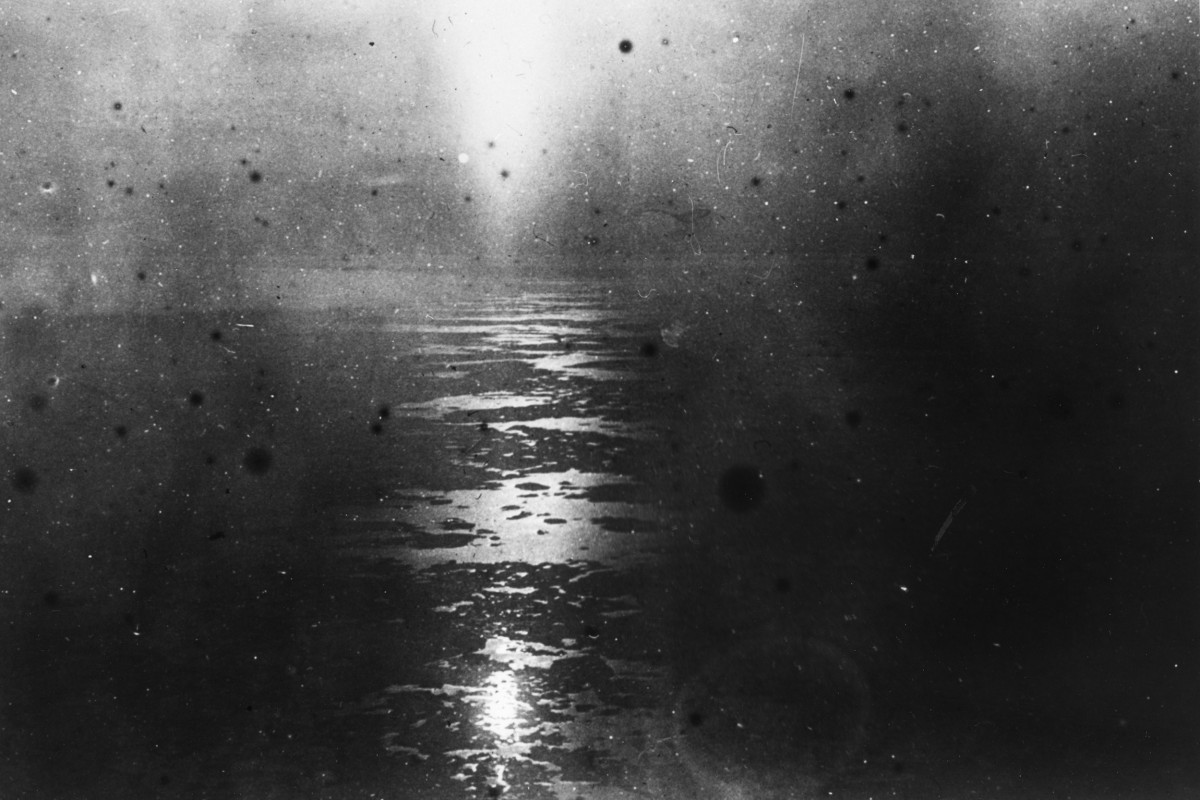
On his new album, Snowblind, Jacob Kirkegaard shifts his focus away from revealing the hidden sounds of our surroundings to instead depict a psychological drama. The inspiration: The Swedish polar explorer Salomon August Andrée, who in 1897 set course for the North Pole in a hot air balloon – a reckless journey that cost him and two others their lives, blinded by snow and the pursuit of fame.

Through 11 icy tableaus, Kirkegaard paints a portrait of the anxiety and doubt Andrée must have felt when the balloon crashed onto the pack ice east of Svalbard. For two months, the three men continued on foot until they reached the desolate island of Kvitøya – where they died a few weeks later, possibly poisoned by undercooked polar bear meat. By then, nature had long since revealed its hostility.

You hear all this on Snowblind. First, the balloon takes off in an air current that elegantly balances on the edge of suffocating dark synths and a heartbeat rhythm, while a metallic screech – reminiscent of a heroic electric guitar – subtly signals doubt: Was Andrée a hero or a villain? Shortly after, we land in a vast nothingness of scraped metal. The shockwave transforms into mischievous, squelchy synth footsteps as desperation and hallucinations grow: Was that a ship's horn I heard? A lifeline?

But no. Silence wins. The icy water rattles like a hungry beast. The hardboiled psychological drama leaves no room for hope, only a chance to stare at your end right in the face. Had Kirkegaard been a truly ruthless portraitist, we might have descended even further into darkness and disorientation, but his weightless ambience still leaves its marks in the snow.

English translation: Andreo Michaelo Mielczarek

in briefrelease
21.05

Artificial Intelligence on Autoplay

Slopcore: »Simon Littauer«
© PR
© PR

The logic of automation has long been part of modern music production. But what happens when it no longer merely assists, but takes over the creative process and artistic execution itself? Simon Littauer’s Slopcore is one of the latest attempts to answer that question. The sound of the AI-driven project is not radical as such, but it is interesting because Slopcore is several things at once: both a concrete take on an artistic practice shaped by recent developments in AI, and a symptom of the all-encompassing data models currently being debated so intensely.

Slopcore mimics the logic of a familiar streaming platform, except that the music here is generated in real time, with the audio stream continuously adapting to the listener’s behaviour, allowing users to proactively like the output or skip ahead whenever they want. The simple interface – featuring play, pause, and a heart icon – is accompanied by a pointillistic waveform that visually emphasises how Slopcore’s aesthetic winds its way through recognisable electronic terrains of house, 2000s electronica, IDM, techno, drum’n’bass, ambient synth textures, etc. etc. Most of it is rhythmically, harmonically, and melodically coherent, without being overly experimental.

As an AI-boosted extension of Littauer’s broader musical practice – which already contains strong aleatoric and algorithmic elements – the whole thing makes perfect sense. AI is not disappearing as a technology, and the parallels to Spotify’s growing AI ambitions or platforms like Suno are obvious enough. Littauer’s position as an established electronic musician becomes entangled in a deeply commercial and opaque data architecture (read: Google’s). And the title clearly references – perhaps ironically – the concept of »AI slop«, the term used to describe the generic, soulless overproduction of images and sound flooding digital platforms. Beyond being an entertaining listening experience, Slopcore can also be seen as a relevant – perhaps, in the current climate, even courageous – contribution to an ongoing and confusing debate about artistic integrity and authenticity in a cultural world that cannot decide whether it wants to resist or simply log in.

English translation: Andreo Michaelo Mielczarek

in briefrelease
18.05

Somewhere Between an Acid Dream and a Sound Garden

Kaloja: »A Body of Water«
© PR
© PR

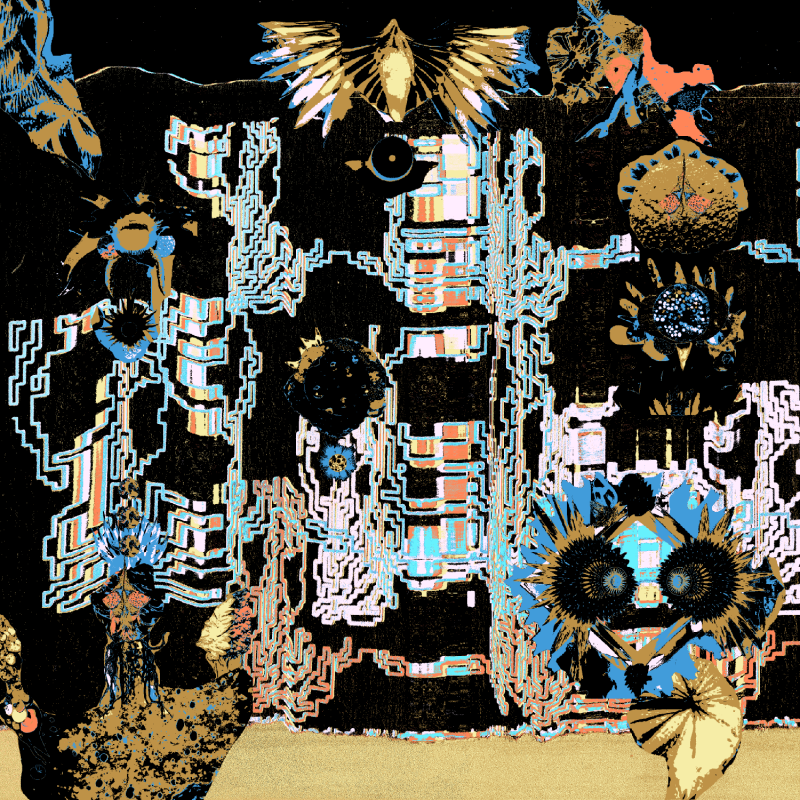
On A Body of Water, you step directly into the singular sonic universe of Finnish multimedia artist Jan Anderzén(Tomutonttu, Kemialliset Ystävät). The album unfolds as a collage of whimsical melodies created in collaboration with British musician Paul Wilson (f.ampism, Yayoba), whose contributions subtly enrich the colorful patchwork of sonic threads. Subtle, perhaps, but unmistakable. The soundscape is densely detailed: beneath the constantly shifting melodies, countless tiny sonic shoots stretch eagerly toward the eardrum. It feels like an acid dream in which everything around you – from roadside flowers to airplanes crossing the sky – has suddenly begun to sing.

Paradoxically, this flood of chaotic and rapidly changing impressions gives the music an almost ambient quality. There is great pleasure in listening closely to the miniature details bubbling beneath the surface, occasionally bursting through to dominate the frequencies for a brief moment.

Yet strong, recurring melodies capable of anchoring the listening experience remain absent in favor of mood and texture. Importantly, this is not a flaw. Heard through an ambient lens, the album – which at first can seem slightly directionless – suddenly reveals its logic. Its playful depth and lack of rigid structure encourage endless free association. It is wonderful music for drifting thought: a multicolored universe where the imagination continually discovers new pathways through a dense undergrowth of details.

English translation: Andreo Michaelo Mielczarek

© Meseguer

»To us, music is the definitive companion. As listeners, it fosters a sense of communion, bridging the gap between souls through the shared experience of sound. As creators, however, music confronts us with our own inner void, that profound solitude that nourishes the creative spirit. At the same time, it dares us to leap into the unknown to decipher the ineffable. Music anchors us to the present moment, to the 'now' shared with a live audience; yet, it also touches the eternal.«

L'arannà is an electronic folk duo. With their last project, Turmarí, the duo dives deep into the folk music traditions of the Pityusic Islands, offering – through their blend of sound exploration– a perspective on Ibiza and Formentera. Synthesizers and keyboards share the stage with traditional instruments and aesthetics inspired by the ancestral ball pagès dance. Reviving cant redoblat (a unique form of singing from these islands preserved by fewer than twenty people) the group weaves a narrative that traces the roots and lived reality of two islands that are far more than just a dreamt-of paradise. The band will be touring around Denmark and Sweden, from 27th to 31th of May, playing at venues like Turkis, Dexter, Inkonst or ALICE.

© Ana Alexandrino

»Music to me is movement, trance, transformation. The rest I won't tell you.«

Marcela Lucatelli is a vocalist and composer. Born in Brazil and based in Denmark, she has gained international recognition for her boundary-pushing performances — sensuous, politically charged, and uncompromisingly original. Described by The Wire as a composer of »scores for the limits of bodies and voice,« Lucatelli challenges conventions with her fearless vocal experimentation and bold compositions. Her works have been performed by Danish National Symphony Orchestra, Danish National Vocal Ensemble, and Neue Vocalsolisten Stuttgart. She has appeared at major festivals and venues, including Theatro Municipal de São Paulo, DR Koncerthuset, Donaueschinger Musiktage, Darmstadt Ferienkurse, IRCAM, Copenhagen Opera Festival, Ultima Festival, Borealis Festival, Copenhagen Jazz Festival, Jazzfestival Saalfelden, Cafe Oto, A L’ARME!, DMA Jazz – Danish Music Awards, WOMEX, and many more. Lucatelli's work has earned her several prestigious awards, including the Carl Nielsen and Anne Marie Carl-Nielsen Talent Prize (2019), Pelle Prize (2021), and the Danish Music Awards' 2023 Vocal Jazz Release of the Year, which shows that vocal jazz has many faces – and does not necessarily belong only to the soft end of the spectrum.

© PR

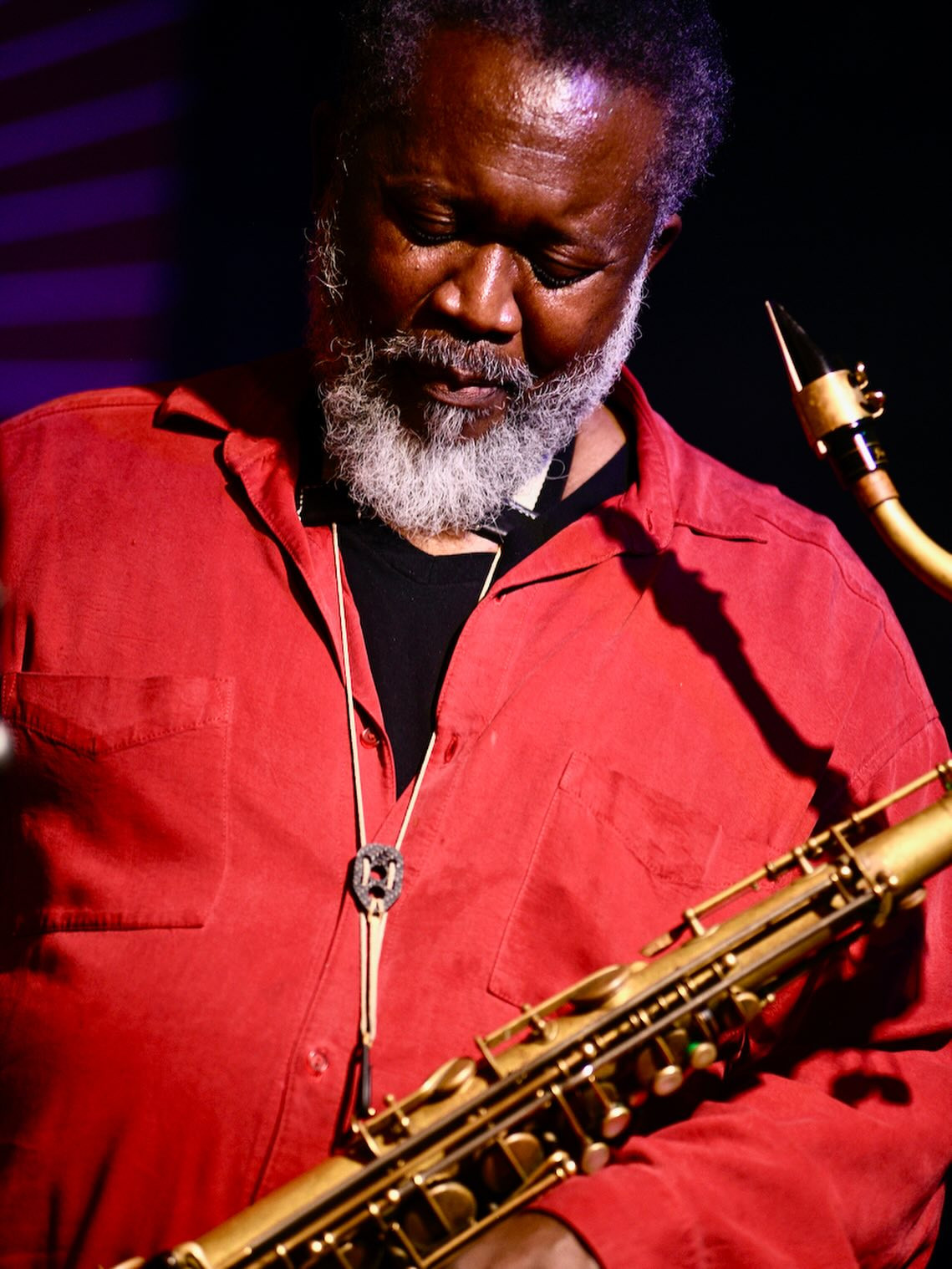
»What is music to me? Here’s a quote from Nietzsche: ‘The people dancing all seemed crazy to the people who couldn’t hear the music.’«

Salim Washington is a saxophonist, multi-instrumentalist, composer, academic, and activist from Detroit who has been highly active on the American jazz scene since the 1970s, and also in South Africa, where he became a central figure. The spirit of John Coltrane hovers over his music, which carries both spiritual and social dimensions.