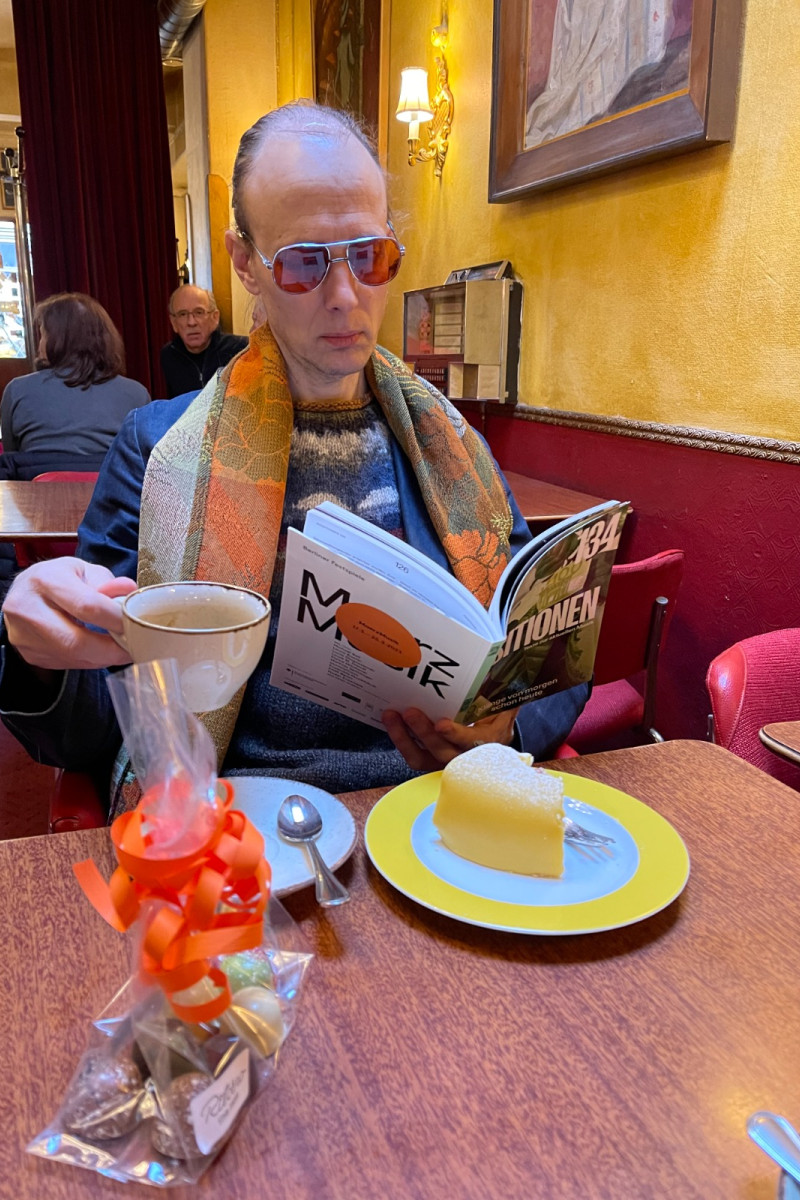
© Bastian Zimmermann

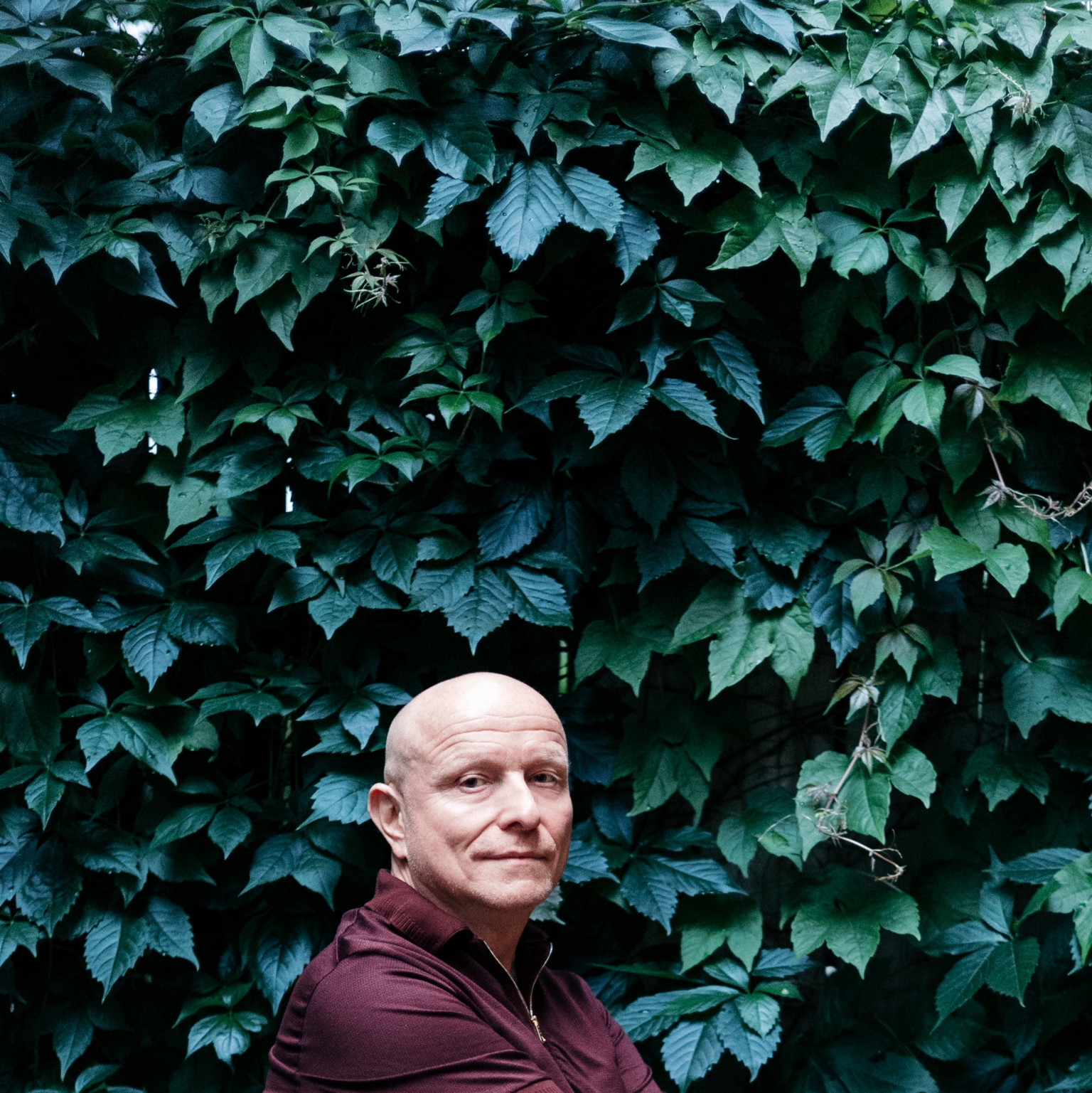
It is difficult to comprehend that Andreas Engström is no longer with us. Just a couple of months ago, he wrote – as he had done so many times before – with an ambitious proposal: he wanted to review a box set of twenty releases by Dror Feiler. In the same message, he mentioned plans to come to Aarhus for the recently concluded Spor Festival.

We often encountered Andreas at festivals. He travelled far and wide in pursuit of music – always moving forward, always searching, always attentive to what remained to be heard, understood, and shared. Some of us remember how he once came to Aarhus to review the sound artist Florian Hecker – and ended up hammering nails into a tree trunk at a German beer bar. Andreas was good company; he carried his curiosity lightly, with a sense of play.

Some of us got to know Andreas as early as twenty years ago, when he became editor of World New Music Magazine, published by the ISCM. Already then, he stood out as a young, quick and remarkably talented editor. Over the years, he would return to editorial roles in times of need – most notably at Positionen, the legendary journal founded by Gisela Nauck, which he later shaped together with Bastian Zimmermann.

Andreas was a sharp and critical thinker who consistently dug beneath the surface. A natural-born editor, he was deeply devoted to the processes of commissioning, refining, and publishing texts. He was involved in numerous publications and generously shared his knowledge of music criticism through teaching and mentorship.

Over the past five years, our three journals – Glissando, Positionen, and Seismograf – have collaborated closely, forming a network in which Andreas played a vital and inspiring role. Together, we initiated projects such as the article series Ukrainian Corridors. As recently as February, Andreas spoke enthusiastically about plans to launch a new music journal with Swedish colleagues.

Even during the series of Zoom meetings we held while he was living in Berlin, it became clear that his health was declining. Yet his commitment never faltered. He remained present, engaged, and curious. He fought his illness with courage and humour, and we remember moments when he would rejoin our meetings after treatment – refreshed, attentive, and ready to continue the conversation.

Andreas Engström was not only an exceptional music critic, but also a generous and deeply engaged human being. He never ceased to ask questions, to challenge assumptions, and to open spaces for reflection.

Fortunately, he leaves behind a substantial body of writing on sound art, music, and music theatre.

May his memory be honoured.

Andreo Mielczarek (Seismograf), Jan Topolski (Glissando), and Bastian Zimmermann (Positionen)

in briefrelease
12.03

Do Whales Actually Want to Listen to Us?

Valentin Paoli: »The Musician and The Whale / La Baleine et le Musicien«
© PR
© PR

The French electronic musician Rone finds it difficult to express emotions verbally. In Valentin Paoli’s rather touching documentary The Musician and The Whale, he reflects on music’s ability to create connections and convey moods to an audience – whether human or interspecies.

One day, Rone receives a video from a sailor who is playing his music at sea. Whales gather around the boat, seemingly drawn to the sounds, and this becomes the starting point for an exploration of whether the musician might be able to communicate with the animals through sound. Rone seeks out an expert in whale vocalizations, who points to certain high-pitched synth elements in his EDM compositions that resemble whale song. He then has a girls’ choir record the whale sounds with human voices and travels to Réunion to play the sounds back to the whales.

At first, the attempt proves futile: the whales appear indifferent to the girls’ choir. Quoting Johann Wolfgang von Goethe, Rone realizes that if one wishes to move others, one must begin with what moves oneself. It is a Disney-like insight in a slightly sentimental film that speaks to the human desire to communicate with animals.

But are we actually sure that animals want to communicate with us? As the film’s central figure, Rone briefly reflects on a few ethical questions concerning animals, yet his infectious enthusiasm for the sounds of whales prevents him from asking the most fundamental questions about the relationship between humans and animals. Instead, we get a portrait of the musician that is almost as polished and warm-hearted as his music. The whale, wisely, remains beneath the surface of the sea.

»The Musician and The Whale« / »La Baleine et le Musicien« (83 min.)
Valentin Paoli (FR), 2026. Screening at CPH:DOX, March 11, 12 and 20

© Cecilie Frost

»Music is for me a silent but powerful weapon. It is crucial for preserving identity and culture. Throughout history, dominant powers have often tried to suppress people by wiping out their language, their traditions and their art. But in places where this failed, it was precisely the survival of art that preserved the soul and pride of the people.« 

Anastasia is a Danish indie artist with glamour in her eyes and punk in her blood. Together with her all-female band, she creates a sound universe carried by raw energy, bittersweet rock melodies and cheeky, flirtatious lyrics about love, loss and everything chaotic in between. She debuted in 2022 with a series of charity concerts in support of Ukraine and has since taken over stages across the country – from Debutfest in Copenhagen to SPOT Festival in Aarhus. All songs are written and produced by Anastasia herself and take their final form in a close and intense interaction with the band, where personal expression meets collective power.


in briefrelease
09.03

Everything a Snare Drum Can Do

Ryan Scott: »21th-Century Canadian Snare Drum«
© PR
© PR

Let’s be honest: when you think of composed music for solo instruments, the snare drum is probably not the first thing that comes to mind. It may be the noisiest member of the percussion family and has been setting the volume level in everything from classical music to pop for decades. That’s why I pricked up my ears when the Canadian percussionist Ryan Scott announced an entire album of works for snare drum – written by 14 different composers. A full hour and a half of music, no less. And yes, that sounds like a lot for a record that mainly consists of a single drum. But there is definitely something to discover here.

The opening, Andrew Staniland's »ANTIGRAVITYDRUM«, blends free jazz with inspired use of percussive vibraphone, while Beka Shapps’ »Skinscape IV« sends the drum strokes through ring modulation and extensive sound processing, bringing us close to musique concrète. Christina Volpini’s »only ghost« slips into horror territory with march-drum-inspired bursts and ghostly use of the snare drum’s high register, while Amy Brandon’s »Time and Effort« almost becomes a demonstration of the instrument’s technical possibilities.

Fourteen works over ninety minutes is a substantial mouthful. The snare drum’s limited tonal vocabulary means that you occasionally lose focus, even after several listens, and the contrast between drum strokes and silence is repeated a little too often. That said, Ryan Scott and the composers get just about as much out of what is essentially a glorified marching drum as one could hope for. I was both entertained and intrigued along the way. As an experiment, the idea is strong – but in the long run also a bit too insistent for me to return to often. Still, one should not underestimate the versatility of a good old-fashioned snare drum.

English translation: Andreo Michaelo Mielczarek


in brieflive
09.03

Beauty in Decay

Thure Lindhardt, Ensemble Hermes, Sophie Haagen & Mikkel B. Grevsen: »Helvedesblomsterne«
© Anders Hede, Musikhuset

We sat in slow decay for an evening in the vestibule of Hell. It was during an ambitious, multisensory interpretation of Charles Baudelaire’s poetry collection Les Fleurs du mal (1857) – Helvedesblomsterne (The Flowers of Evil). Director Anna Schulin-Zeuthen and composer Mikkel B. Grevsen brought together mezzo-soprano Sophie Haagen and actor Thure Lindhardt with the six string players of Ensemble Hermes, adding electronic music to the mix. This Frankenstein-like staging transported modernist poetry into 2026, where the motifs stretching between beauty and decay still – despite many scientific advances – remain a fundamental condition.

In Musikhuset Aarhus, the stage was decorated with lush and withered flowers as vanitas symbols. Lindhardt opened with a recitation that shattered the fourth wall: with both humour and intensity he addressed us directly in the audience – hypocrites and future corpses.

In contrast to the almost seamless sonic unity of Haagen’s dark voice, the string players’ sustained textures and the ghostly distortions of the electronics, Lindhardt’s reading appeared as a strange but necessary disturbance. He prowled about with a folder tucked under his arm like an awkward outsider – the poet as eternal observer.

For my part, I dutifully tried to follow the printed programme sheet, but soon gave up and instead – quite in the spirit of the work – allowed myself, hypocritically, to be intoxicated and seduced. Helvedesblomsterne succeeds as a bold and grand project. Yet the performance also balances a little too cautiously between harmonic beauty and the nineteenth-century uncanniness that in Baudelaire crawls with death all the way into the bones.

English translation: Andreo Michaelo Mielczarek

© Diana Aud

»For me, music is both the beat that gets me through my run, sets the mood for everyday life, but not least my personal soundtrack that evokes past events and moods throughout my life.« 

Lasse Andersson is the museum director of Kunsten Museum of Modern Art and Utzon Center, as well as the chairman of the board of Krabbesholm Højskole and the Packness Foundation. Before museums took up all his time, he wrote his PhD thesis The City and the Creative Entrepreneurs, co-founded the art and technology house Platform4, and was behind both the LasseVegas office and the technology project Nulkommafem. He has also headed the Urban Design department at Aalborg University. Today, he works purposefully to develop cultural institutions as modern spaces for learning: places where people meet and connect through aesthetic experiences that move, challenge, and open new perspectives on the society we share. For Lasse Andersson, art and architecture are not just mirrors of the world – they help shape it. With that ambition, he has curated exhibitions such as Fatamorgana – Utzon møder Jorn (2016) I Arkitektens Verden – Reiulf Ramstad (2019), Pierre Huyghe – Offspring (2022), Tal R & Mamma Andersson – omkring Hill (2023) og Michael Kvium – Knudepunkt (2025).