In brief
16.03.2021

Doing it anyway

Mikkel Schou: Debut Concert I-II
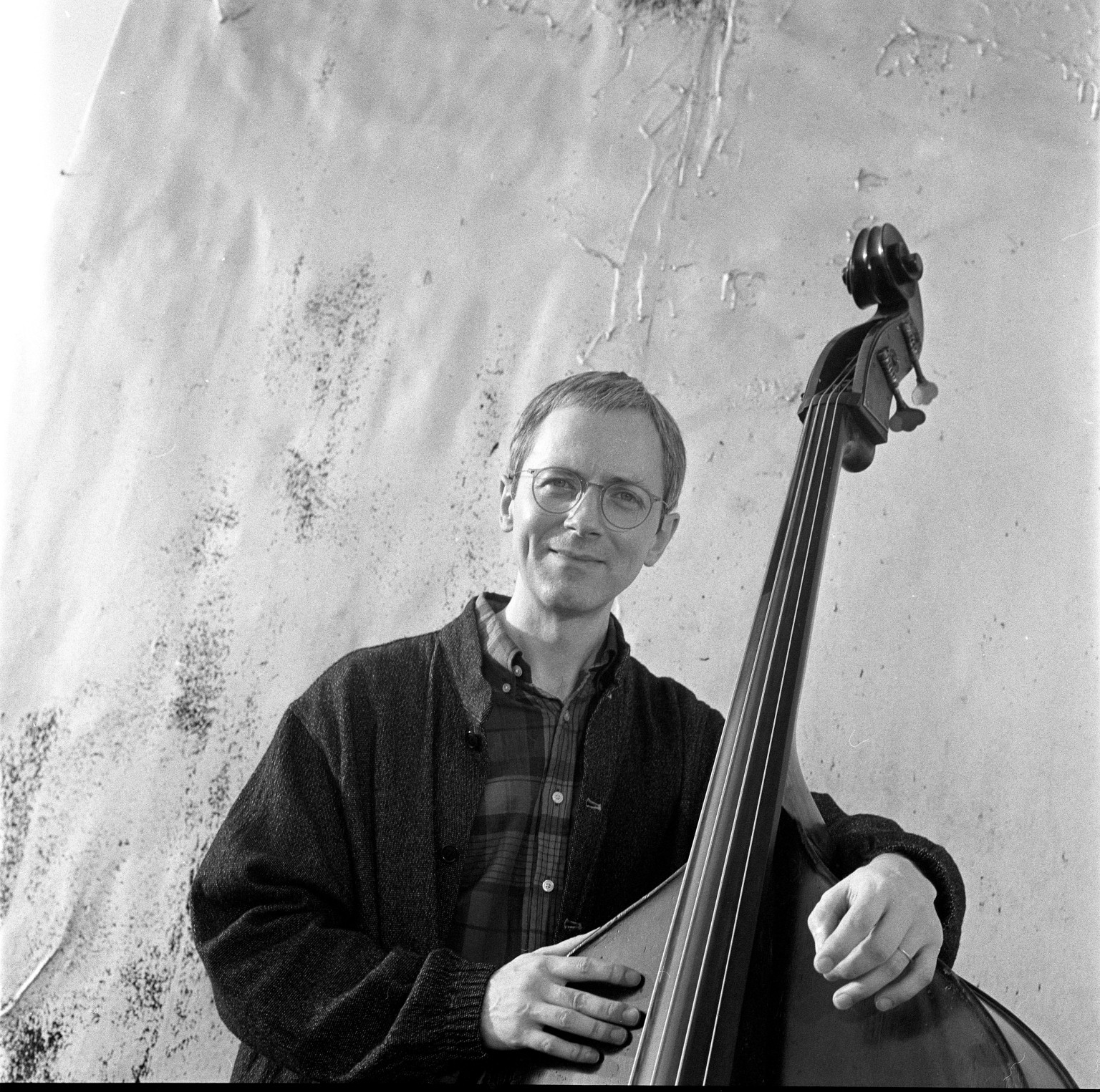
Mikkel Schou. © The Royal Danish Academy of Music
Mikkel Schou at his Debut Concert. © The Royal Danish Academy of Music

Schou is a powerhouse – unafraid to try new things, push himself in new directions, and pull us all along with him. We sorely need this energy, and we are lucky to have Schou and his do-it-anyway attitude.

But sometimes do-it-anyway needs tempering a little. Schou spoke about how he prepared this concert without guidance from his teachers. Brave, but I missed a guiding hand, a sharper focus. Both concerts were too long, and not always coherent. I sensed an artist who has defined himself by who he isn’t, but not yet by who he is.

Still, there were glimpses of a unique personality. Stefan Prins’ Generation Kill was an odd choice to start a debut concert with – Schou’s back was facing the audience, and the piece did little to highlight his skills as a performer (I also hated the piece, but that’s a personal matter). So I’m going to pretend that the concert started with Johannes Kreidler’s Guitar Piece – a vile little video-nasty to which Schou fully committed. A perfect manifesto – the absolute nerve of presenting two years of soloist class education by eating your guitar. I wish we’d had more of this playfulness.

But the energy sagged with a disparate selection of pieces that seemed more like a composer class concert than a presentation of a fresh artistic profile. Props to Schou for this – using your debut concert to focus on younger composers is bold, and should be celebrated. I just wish we’d had more Schou. My highlight was Emil Vijgen’s Photobooth Study, where Schou got to engage with his instrument in a different way, let loose a little, and be a soloist.

Schou may present himself as a force of nature, and he is, but there is an air of sensitivity (reticence, even) to his presence that does not always match up with the pieces being performed. Rob Durnin’s What, de facto could have benefitted from some more ‘fuck you’ attitude – the performance was oddly shy.

The late-night concert’s improvisation was fun: it’s always a joy to see Marcela Lucatelli and Henrik Olsson improvise (although Schou was the clear third wheel). However, the concert was overlong, and did not add much to Schou’s profile. I get that he wanted to show more sides of himself, but, again, it came at the expense of focus. Replacing Esben Nordborg Møller’s bloated Drones with Sarah Nemtsov’s lounge-jazz tinged Seven Colours from earlier would both shorten the concerts and sharpen the intention.

But these things are matters of polish. Schou is a rare and exceptional artist, and deserves accolades for his work and for these concerts. With more confidence and time to refine his vision, there is no doubt that Schou will be an essential fixture on the new music scene for years to come.


In briefrelease
12.03.2024

Music for Lovers, but Not for Me

Samuel Rohrer: »Music for Lovers« 
© PR
© PR

With Music for Lovers, the Swiss drummer and electronic musician Samuel Rohrer does many things right. The sound design and mix are luxurious, and the album overflows with an abundance of delicious synth sounds. Precisely for that reason, the absence of the most essential ingredient – the songwriting – feels all the more disappointing.

The opening track, »The Parish Bell«, exemplifies how the songwriting fails to unite the otherwise quite strong individual elements into a satisfying whole. Analog drums play interesting patterns, while synths bubble and sparkle – cold as needle points and soft as cotton swabs. Yet nothing really develops, and the track ends up feeling like a snapshot stretched over seven minutes. This is the case for nearly all seven tracks on the release, plus the eighth bonus track. It feels like a soundtrack lacking the listener’s emotional connection to the medium it is meant to underscore. Here the music stands alone, and it often struggles to carry that weight.

There are highlights: Nils Petter Molvær’s ever-compelling trumpet guesting on »The Gift«, the sublimely sounding space-ambient intro to »Celestial Body«, and the motorik drums that emerge halfway through »Schizophonia«, which, as a rare occurrence, tear the music out of its narrow comfort zone. But still, the songwriting falters, and so while it may be music for lovers, it is unfortunately not music for me.

© Ditte Capion

»For me music is an irregular yet life-long event that requires constant attention in the form of private preparation, rehearsals with others, and performances to audiences.« 

Theater of Voices' founder and artistic director Paul Hillier is originally from England and was educated there Guildhall School of Music and Drama in London. During his career, he has worked as a conductor, singer, teacher, editor and writer. In addition to being the founder of the legendary Hilliard Ensemble, he has been chief conductor for i.a. the Estonian Philharmonic Chamber Choir, is artistic director of The National Chamber Choir of Ireland, and has been chief conductor of Ars Nova Copenhagen since 2003. Paul Hillier has completed more than 200 CD/DVD releases and has won two Grammys. Honors include OBE (Order of the British Empire), The Order of the White Star from Estonia and the Knight's Cross. This week Paul Hillier turns 75. 

In briefrelease
08.02.2024

Behind the Words

Alexander Tillegreen: »In Words« 
© PR
© PR

One of the most mysterious – and at times boundary-pushing – interviews ever captured on tape is Meatball Fulton’s 1967 interview with Pink Floyd’s Syd Barrett. Filled with broken sentences, incongruous word combinations, questions and answers that seem to bear no relation to one another, and pauses that feel endless, the interview pushes the limits of what can meaningfully be called communication at all. »Your impression of me… which you must have… would you care to tell me? And be like absolutely honest… Do you have one?« the interviewer asks at one point. »In words?« Barrett replies.

In Words is also the title of multidisciplinary artist Alexander Tillegreen’s debut album, whose closing composition samples a full seven minutes of the interview. It is not difficult to understand what Tillegreen hears in this peculiar exchange. For someone who, in his artistic explorations of psychoacoustics and phantom words, has consistently probed sound’s possibilities and limitations as a carrier of meaning, the interview must appear as a rather sensational example of the illusory nature of language.

None of this would, of course, be of any interest if the music were not as strong as it is: richly atmospheric, detailed, texturally varied, emotionally potent, and filled with pleasing, warm synth tones that recall 1970s German Kosmische Musik. The fact that a large part of the compositions originate in earlier installation works often leaves me with the strange feeling that there is a dimension or context I do not fully grasp – which, of course, is entirely in keeping with Tillegreen’s spirit.

© PR

Phil Battiekh (Basel, Switzerland) has been a Mahraganat  DJ and producer for over a decade. He is one of the first to dedicate himself to Mahraganat outside of Egypt. In addition to his most popular Mahraganat mixes on Soundcloud (over 450K streams worldwide),  he released the acclaimed Cairo Concepts compilation in 2019. Featuring DJ Plead, DJ Haram, Alaa Fifty, Nustaliga and others, Cairo Concepts contextualises the impact and developments of the Mahraganat scene and examines the way certain artists have appropriated Mahraganat for club scenarios.  

Mahraganat (Egyptian Arabic: مهرجانات( , which literally means »festivals«, is a mix of Egyptian Shaabi, electronic dance music, rap and trap. It is characterized by percussion-heavy rhythms,  massive bass and loads of autotune. Phil Battiekh is curating the SWANA night – a joint event by pantropical, turkis, and Volume Village, which takes place at the latter in Aarhus. Next to his own set, Phil will  also have a role as Wezza Montaser's DJ. 

Bill Frisell. © Carole D'Inverno

Bill Frisell’s career as a guitarist and composer has spanned more than 40 years and many celebrated recordings. From Aaron Copeland and Charles Ives to Bob Dylan and Madonna. His mantra is simple: »I like when it's impossible to tell at first if something is black or white, or country or blues, or whatever«. 

Born in Baltimore, Bill Frisell played clarinet throughout his childhood in Denver, Colorado. His interest in guitar began with his exposure to pop music on the radio.