
in brief
27.11.2021

The computer has been feeling

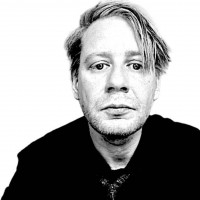
Skarv: »Haptic Feedback«
Skarv. © Maria Leth Schütze

Jeg ved ikke, om det nogensinde lykkedes at finde følelserne i maskineriet, men det lader til, at det er det, Mads Krue Bugge forsøger på sin nye ep Haptic Feedback, under navnet Skarv. En ep, der måske ikke finder nyt terræn i sin blanding af enormt minimalistisk glitch og ambient, men alligevel tager udgangspunkt i et specifikt koncept, hvor kunstneren skaber sig et scenarie, som har avlet de fem soundscapes frem på pladen.

Som et øjebliksbillede – måske af ensomheden under de sidste års ufrivillige isolation – leger Skarv med elektroniske flader og opbrudte, warpede lydforløb. Som den fremmedgjorte stemme på »Realistic Touch« eller det iturevne synth loop på »Computer Love«, der trods sin lånte titel fra genrens gudfædre, synes at søge efter en varm følelse af nærhed i de manipulerede loops, indtil den når hektiske, rytmiske tendenser i kompositionens anden halvdel.

Egentlig er det kun »Computer Love« og den ildevarslende »Lonely Again« – der lyder som en computers gråd – der fanger min opmærksomhed fuldt ud. Ellers bliver et par af sekvenserne en anelse for søgende og navlepillende. Men når Haptic Feedback er bedst, formår Skarv at få den rå maskine til at opnå store og triste følelser, hvilket er enormt bemærkelsesværdigt.

© PR

»Music has been a healing balm for me.«

John William Grant is an American singer, musician, and songwriter holding both American and Icelandic citizenship. He first came to prominence as a co-founder, lead vocalist, pianist, and primary songwriter of the alternative rock band The Czars. After releasing six albums between 1994 and 2006, the band disbanded, and Grant withdrew from music for four years before embarking on a solo career.

He returned in April 2010 with a critically acclaimed debut album recorded in collaboration with Midlake. Queen of Denmark was named Album of the Year 2010 by Mojo magazine and was also selected as one of the ten best albums of 2010 by The Guardian’s music critics and writers.

© Malthe Folke Ivarsson

»In his music, composer Allan Gravgaard Madsen tries to create a better version of himself.« 

Allan Gravgaard Madsen is a Danish composer based in Copenhagen. His most recent works include Träume nicht and Nachtmusik. He tries to create a better version of himself in his music – where his personality tends to be restless, chatty and has an active inner life, his music is controlled, simple and merciless in its expression. He is the recipient of the Carl Nielsen & Anne Marie Carl-Nielsens Hæderspris 2022.

in briefrelease
23.01.2022

Finnish Space Travel

Tomutonttu: »Hoshi«
© Tomutonttu: »Hoshi«

The Finnish multimedia artist Jan Anderzén has, with the album Hoshi, released under the solo moniker Tomutonttu, created a true little star. Not only because »hoshi« literally means »star« in Japanese, but above all due to the music itself. There is something cosmic, yet infinitely minute, about the sonic worlds Anderzén conjures—like a galaxy reflected in a puddle, or a space journey in a rocket carved from a hollow tree trunk. Synths emit busy, warm blips and bloops, while ultra-short vocal and instrumental samples create a recognizable blur. At once artificial and organic – soft, rounded, jagged, crackling.

Anderzén approaches sound with a playfulness I simply adore. His music is strange in an incredibly comforting way. It places me in a kind of colorful, trance-like state, only interrupted when, several times over the course of the album, I find myself smiling in delight at a particularly great sound. The synths on »Katse osuu sähköön!« The choral samples on »Kesä oli äkkiä ohi!« Milo Linnovaara’s flute on »Malta lausua ‘AH’!« And many more. Hoshi is an album packed with microscopic moments that together form a frayed, exploding, radiant, idiosyncratic whole—a stellar moment of just under 38 minutes.