in brief
11.04.2022

Poesien i rensdyrets bagben

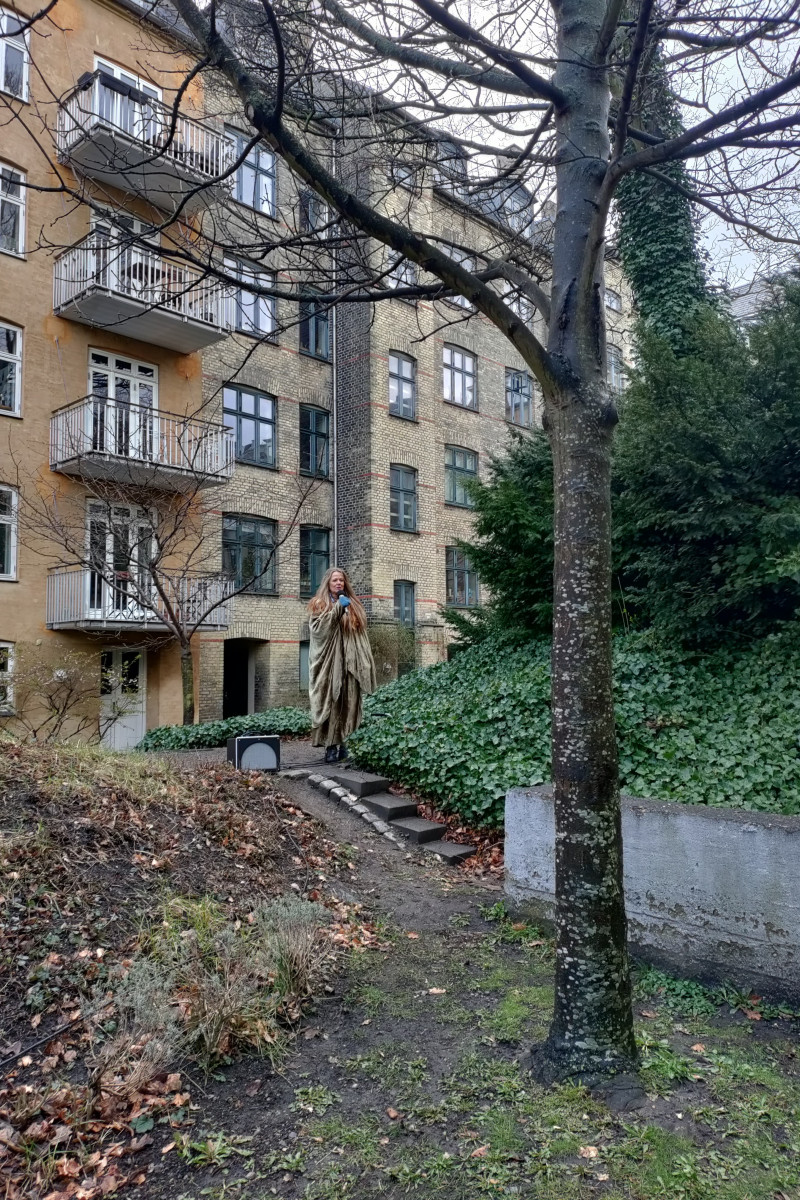
Tulle Ruth og Elfi Sverdrup: »Tracks« – udstilling/lydinstallation
© Platform Bunker
© Platform Bunker

Der må være grænser for, hvor spændende et rensdyrs klikkende bagben kan være. Jeg havde nej-hatten på på vej ned til Tulle Ruths lydinstallation Tracks i Frederiksberg-bunkeren på Rolfsvej, der blev lavet om til galleri sidste år. For indspist, var min umiddelbare tanke. 


Men jeg skulle ikke sidde længe på det bløde rensdyrskind i midten af den kolde bunker, før jeg måtte æde min skepsis. Stimulerende var det at lade sig bruse af det kildende ocean af kliklyde. Som en sort sol sværmede lyden rundt i små højttalere langs bunkerens cirkelrunding. Knipsende hvirvelvinde i 360 grader. Dér i vrimlen lød også en besynderlig ordløs korrespondance: den norske strubesanger Elfi Sverdrup i dialog med gryntende rensdyr. Man fornemmede tusinde års visdom klinge i de øffende vokallyde fra dybet i halsen, der lød som en røntgenundersøgelse af stemmens indre. 

»Som en harpestreng, der bliver slået an,« forklarede Ruth efterfølgende selv kliklyden, der opstår, når rensdyret fører knoglen over en sene i bagbenet. Ingen ved helt hvorfor, de gør det. Måske kommunikerer de? Lyden har været en del af Ruths kunstneriske arbejde i fem år, og man forstår besættelsen, når man selv har lagt øre til.  

Ruth skriver sig ind i en soundscape-tradition, som har et særligt magnetfelt i Norge, og det æstetiske greb i Tracks findes mange andre steder. Mediekunstner Gry Bagiøens syngende samtale med nordnorske pukkelhvaler i Instinkt (2017) eller Jana Winderens sprøde muslingeværk Listening with the Mussels (2021), er to nærliggende eksempler. Nyt land vindes der altså ikke. Men når mystiske lyde som rensdyrklikket har så svimlende en dybde, gør det ikke så meget. 

in briefrelease
08.02.2024

Behind the Words

Alexander Tillegreen: »In Words« 
© PR
© PR

One of the most mysterious – and at times boundary-pushing – interviews ever captured on tape is Meatball Fulton’s 1967 interview with Pink Floyd’s Syd Barrett. Filled with broken sentences, incongruous word combinations, questions and answers that seem to bear no relation to one another, and pauses that feel endless, the interview pushes the limits of what can meaningfully be called communication at all. »Your impression of me… which you must have… would you care to tell me? And be like absolutely honest… Do you have one?« the interviewer asks at one point. »In words?« Barrett replies.

In Words is also the title of multidisciplinary artist Alexander Tillegreen’s debut album, whose closing composition samples a full seven minutes of the interview. It is not difficult to understand what Tillegreen hears in this peculiar exchange. For someone who, in his artistic explorations of psychoacoustics and phantom words, has consistently probed sound’s possibilities and limitations as a carrier of meaning, the interview must appear as a rather sensational example of the illusory nature of language.

None of this would, of course, be of any interest if the music were not as strong as it is: richly atmospheric, detailed, texturally varied, emotionally potent, and filled with pleasing, warm synth tones that recall 1970s German Kosmische Musik. The fact that a large part of the compositions originate in earlier installation works often leaves me with the strange feeling that there is a dimension or context I do not fully grasp – which, of course, is entirely in keeping with Tillegreen’s spirit.

© PR

Phil Battiekh (Basel, Switzerland) has been a Mahraganat  DJ and producer for over a decade. He is one of the first to dedicate himself to Mahraganat outside of Egypt. In addition to his most popular Mahraganat mixes on Soundcloud (over 450K streams worldwide),  he released the acclaimed Cairo Concepts compilation in 2019. Featuring DJ Plead, DJ Haram, Alaa Fifty, Nustaliga and others, Cairo Concepts contextualises the impact and developments of the Mahraganat scene and examines the way certain artists have appropriated Mahraganat for club scenarios.  

Mahraganat (Egyptian Arabic: مهرجانات( , which literally means »festivals«, is a mix of Egyptian Shaabi, electronic dance music, rap and trap. It is characterized by percussion-heavy rhythms,  massive bass and loads of autotune. Phil Battiekh is curating the SWANA night – a joint event by pantropical, turkis, and Volume Village, which takes place at the latter in Aarhus. Next to his own set, Phil will  also have a role as Wezza Montaser's DJ. 

Bill Frisell. © Carole D'Inverno

»I like when it's impossible to tell at first if something is black or white, or country or blues, or whatever.«

Bill Frisell’s career as a guitarist and composer has spanned more than 40 years and many celebrated recordings. From Aaron Copeland and Charles Ives to Bob Dylan and Madonna. Born in Baltimore, Bill Frisell played clarinet throughout his childhood in Denver, Colorado. His interest in guitar began with his exposure to pop music on the radio.

© PR

»Music has been a healing balm for me.«

John William Grant is an American singer, musician, and songwriter holding both American and Icelandic citizenship. He first came to prominence as a co-founder, lead vocalist, pianist, and primary songwriter of the alternative rock band The Czars. After releasing six albums between 1994 and 2006, the band disbanded, and Grant withdrew from music for four years before embarking on a solo career.

He returned in April 2010 with a critically acclaimed debut album recorded in collaboration with Midlake. Queen of Denmark was named Album of the Year 2010 by Mojo magazine and was also selected as one of the ten best albums of 2010 by The Guardian’s music critics and writers.