Simon Steen-Andersen
66






Det er et ydmygt emne, Simon Steen-Andersen har valgt til sin performance Walk the Walk: emnet er at gå. Følgerigtigt går de fire performere fra schweiziske Ensemble This Ensemble That rundt på scenen både i almindelige og lysende sko, på stedet, på løbebånd, og bare helt normalt. Walk the Walk er en tour de force gennem forskellige vinkler på emnet, og forskellige vinkler at lave teater på. Performerne er del af en nøje timet score, hvor hvert et skridt og til tider enhver stavelse skal leveres pointeret for at gå op i en højere enhed med scenografi, lydplayback og de øvrige medspillere. Instrumenter spiller de ikke på, de spiller på og med rekvisitterne; sko eller mikrofoner for eksempel. Kun helt til sidst får perkussionist Brian Archinal lov til at røre drumsettet, indtil også det bliver taget fra ham når det bliver hevet op i luften. Trommerne spiller videre, dog, ved hjælp af en slags trommeslagsmaskine. Scenografien tager over.
Tysk teater ser ud til at have inspireret komponisten, der arbejder med kneb som meta-samtaler om værket i værket (som den tyske instruktør René Pollesch), musikalsk nonsense (i stil med noget Christoph Marthaler kunne have fundet på), eller en scenografi der bliver til et selvspillende instrument (som Heiner Goebbels tidligere har gjort). Bedst fungerer værket, når sammenhængen mellem emnet og det sceniske og musikalske bliver tydligt, som når performerne går i takt med et lydsample, der bliver kortere og kortere, og det udsnit af scenen, vi som publikum ser, bliver mindre og mindre. Mindre godt fungerer det, hvor musikerne agerer som skuespillere, eller skal lipsynche til lydklip, hvilket de desværre gør rigtig meget.
Walk the Walk er en multimediel undersøgelse af et tilsyneladende banalt tema. Men præcis hvorfor vi skal se et stykke om at gå bliver ikke helt klart. Snarere virker emnet som en undskyldning for de forskellige permuteringer af mediale konstellationer, komponisten vil lege med. Live-tale, optaget tale, samples, scenografi, rekvisitter, lys – alt dette er instrumenterne, Steen-Andersen bygger sin komposition af. Imponerende er det, og han finder på originale kombinationer. Æstetisk efterlader det et blandet indtryk. Et eller andet sted mellem sofistikeret koncept, en hjemmelavet virkende scenografi, drenget humor og lecture performance. Steen-Andersen spiller højt risiko når han vælger selv at stå for alt fra musik til scenografi, lys og instruktion. I nogle få øjeblikke bliver publikum belønnet med noget enestående. Men hvorfor ikke have tillid til et dygtigt hold skuespillere, en scenograf, lysdesigner, dramaturg eller en instruktør? Den præcision, værket forlanger, bliver ikke helt forløst.
»Music is all of life in sound.«
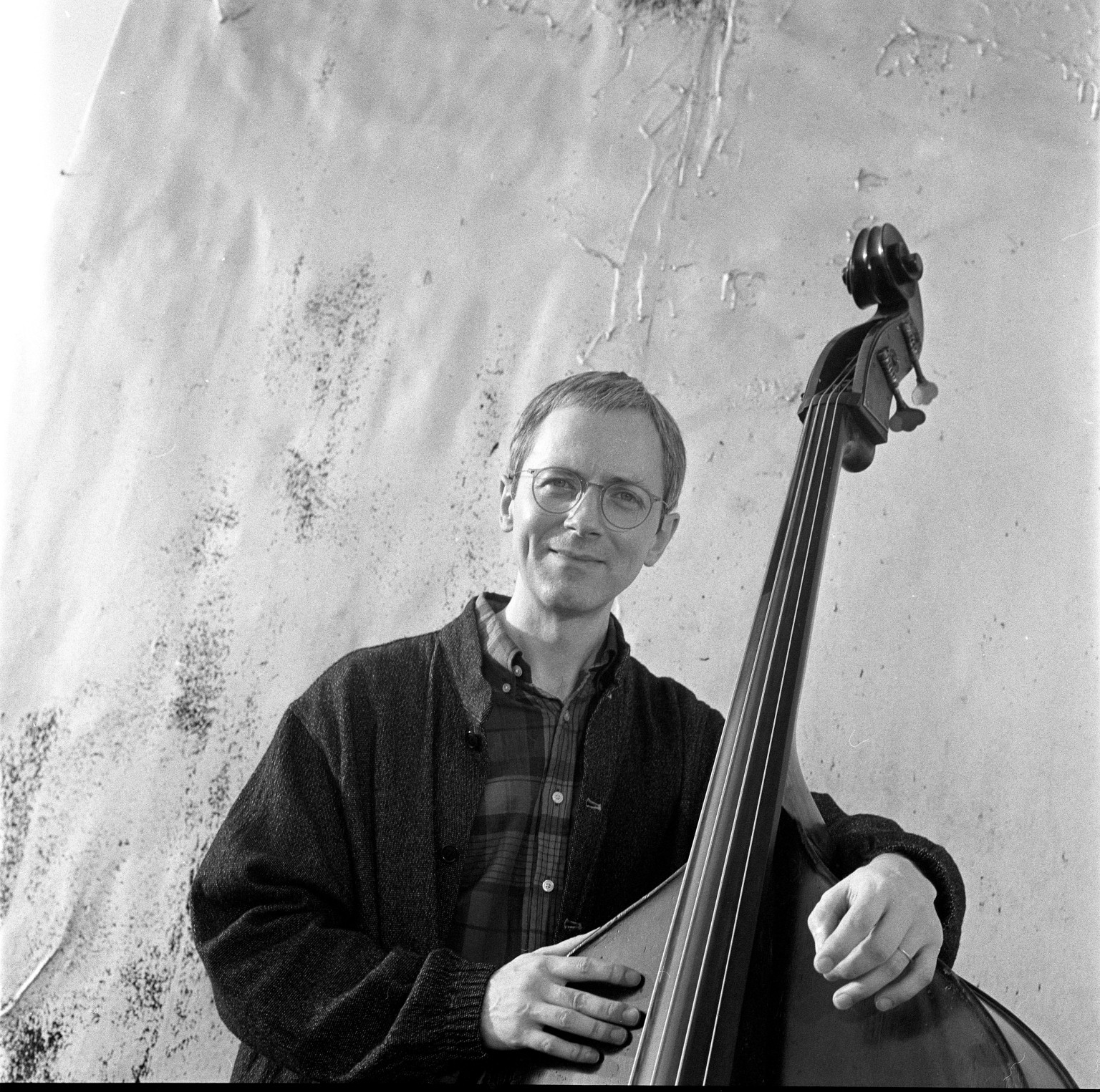
Thomas Morgan is a double bass player based in New York. He has recorded and toured all over the world as a member of Paul Motian’s bands, the John Abercrombie Quartet, Steve Coleman and Five Elements, Tomasz Stanko New York Quartet, Bill Frisell Trio, Jakob Bro Trio w. Joey Baron among many others. He has also collaborated with Dan Tepfer, Craig Taborn and Masabumi Kikuchi, and released albums with Bill Frisell, Small Town; Maria Laurette Friis, Colors, and with Jakob Bro/Joe Lovano, Once Around The Room. In November 2025 he stepped forward with his first solo project, Around You Is a Forest (Loveland Music). The record is built around WOODS, a virtual string instrument Morgan designed in SuperCollider that evokes the sound of plucked and struck string instruments – West African lute-harps, Asian zithers, the Hungarian cimbalom, marimbas – while operating according to generative code that Morgan shaped into a living, evolving instrument.
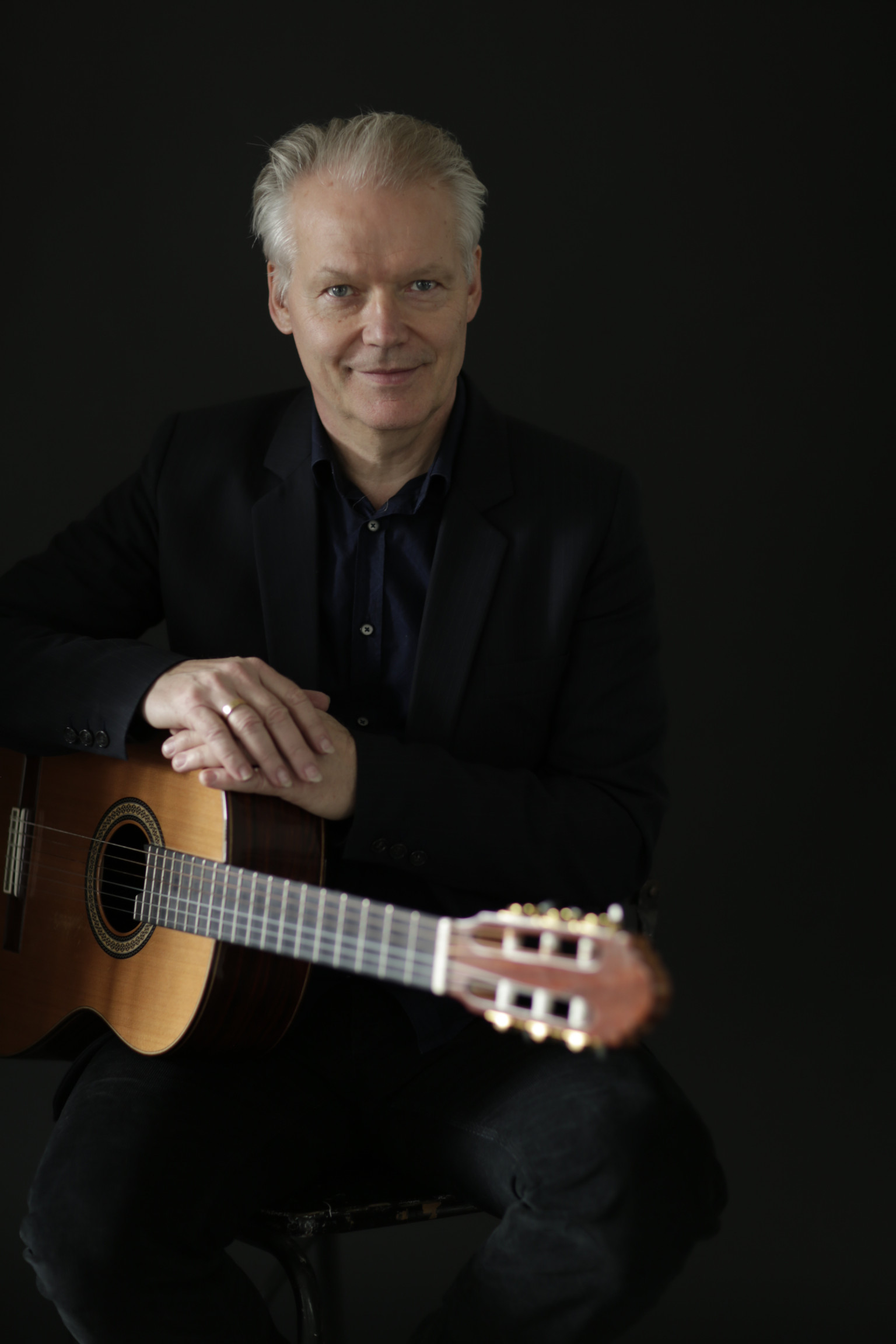
»Making a playlist is not an easy task for me. Music occupies most of my waking hours. It is a condition that began to grow when I was a teenager. If I am not playing myself, or working with the music I release or compose, music is still present, reaching out to me. I have always found it difficult to experience music in boxes or genres, so I listen very broadly and take pleasure in any music I can feel and that moves me. Music is a condition of life, and expressing oneself through music is a gift – but being able to experience music with openness is perhaps an even greater gift. I have chosen a list in which the guitar plays a part.«
Lars Hannibal began – like many others of his generation – playing folk and rock guitar at the age of fifteen. But when he heard the Spanish guitar master Andrés Segovia perform the gavotte from Bach’s Partita in E major, his musical life took a new direction, and he decided to devote himself to the classical guitar.
Since the early 1970s, Lars Hannibal has also composed songs and instrumental works. Today he performs primarily as a member of the Petri/Hannibal Duo and works alongside this as managing director of the record label OUR Recordings, which he founded together with Michala Petri in 2006, as well as a consultant for Edition Borup-Jørgensen.
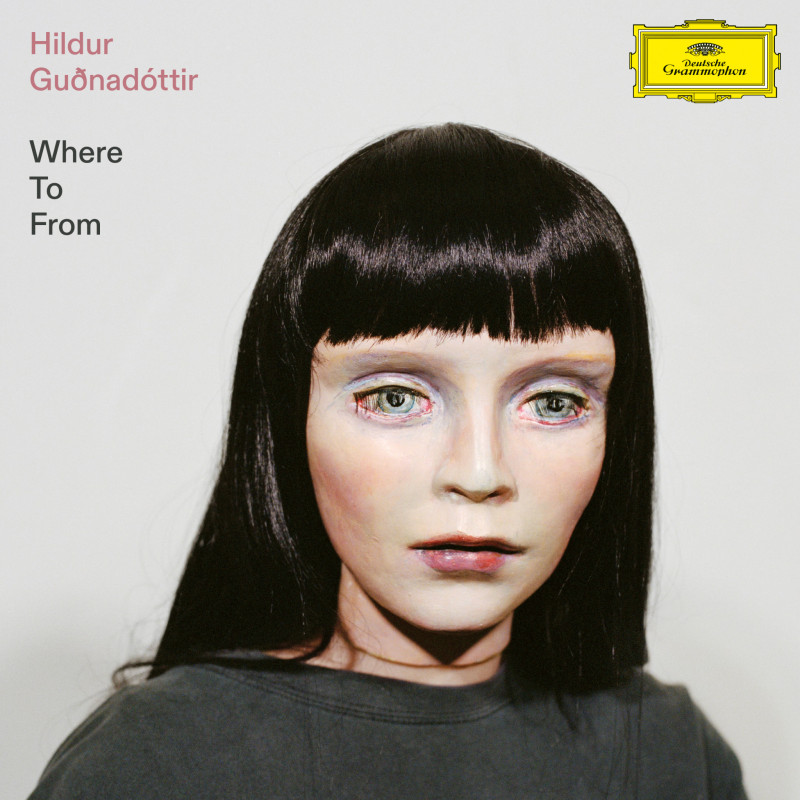
It seemed to come like a bolt from the blue when the Icelandic cellist and composer Hildur Guðnadóttir broke the sound barrier with an uncompromising, inward-looking sound situated between contemporary classical and experimental music – most widely recognised through her suffocating soundtracks for Chernobyl and Joker.
Yet on her Deutsche Grammophon debut Where to From, it is the personal spaces we are invited into. The instrumentation is pared right back to a chamber ensemble, voices, and extended passages of near-absolute silence. The result is often achingly beautiful – and deeply affecting.
The work unfolds in small vignettes, rarely lasting more than a couple of minutes, before vocals are introduced in the album’s second half – most notably in »Make Space« and the exquisite a cappella hymn »I Hold Close«. The equally beautiful »Melody of Not Knowing« explores the cello’s darkest registers, striking blue midnight tones in the echo of the heart, especially as it glides into »All Along«, where voice and strings merge.
Where to From is a powerfully mood-saturated work that moves effortlessly between chamber music and neoclassicism, finding its uncompromising character in the quietest, most intimate sighs between human and instrument. It is neither too little nor too much – always precisely measured. And for that very reason, Guðnadóttir remains such a compelling musical presence.
English translation: Andreo Michaelo Mielczarek

Varve – from the Danish varv – refers to the annual layers of sediment, a quiet geological archive of time’s passage. Lukas Lauermann’s album carries this meaning into its very sonic core. Here, organ and vocal samples taken from worn cassette tapes meet an inquisitive, almost ascetic cello that moves like fine strokes across a flickering, dust-filled soundscape.
The cello is restrained but never passive. It slips in and out of the cassette’s white noise, of fragmented voices and the organ’s gentle currents of air, until all elements ultimately merge into a single, organic texture. Lauermann himself describes the music as a depiction of irregularities, and it is precisely in these small shifts that Varve finds its quiet strength. The album’s idea of sonic sedimentation becomes an image of our longing to reconnect with nature’s tempo. The compositional motifs seem repetitive, yet they never repeat themselves entirely; they build layer upon layer, like organic growth. As a listener, one becomes witness to microscopic changes slowly unfolding – a process that can bring about an almost meditative state.
Varve is an album for those who prefer listening experiences at an unhurried pace; for those who find Hans Zimmer too grandiose and would rather follow the patient growth of grass than an orchestra’s emotional climaxes.
»Music for me is the purest transformation of any energy hiding inside. Through the sound it can become anything we need. It is a form of a bond and connection, it's subtle and it is direct at the same time. For me it was always the biggest exploration machine I could learn about myself, people and environments.«
Gintė Preisaitė is a Lithuanian artist based in Copenhagen who works across piano, electronics, composition and improvisation. Classically trained, she has moved steadily toward electronics, noise, free improvisation and jazz, performing in numerous constellations in recent years.
Working with prepared acoustic instruments, electronics and tape, she bridges her classical background with contemporary sonic experimentation. Through shifting timbres, textures, collaged melodies and percussive figures, she seeks to push acoustic and electronic sound into a space that feels both personal and deeply connected.
Last year she released the EP Spring Mass under the name Baraboro, followed this September by Kaiko, her trio release with Amalie Dahl and Jan Philipp Treen. She is currently developing a new project under her own name for release next year. Gintė performs widely as both a solo artist and a member of various ensembles in Copenhagen and abroad.