
in brief
22.10.2023

A hypnotic dollop of lava

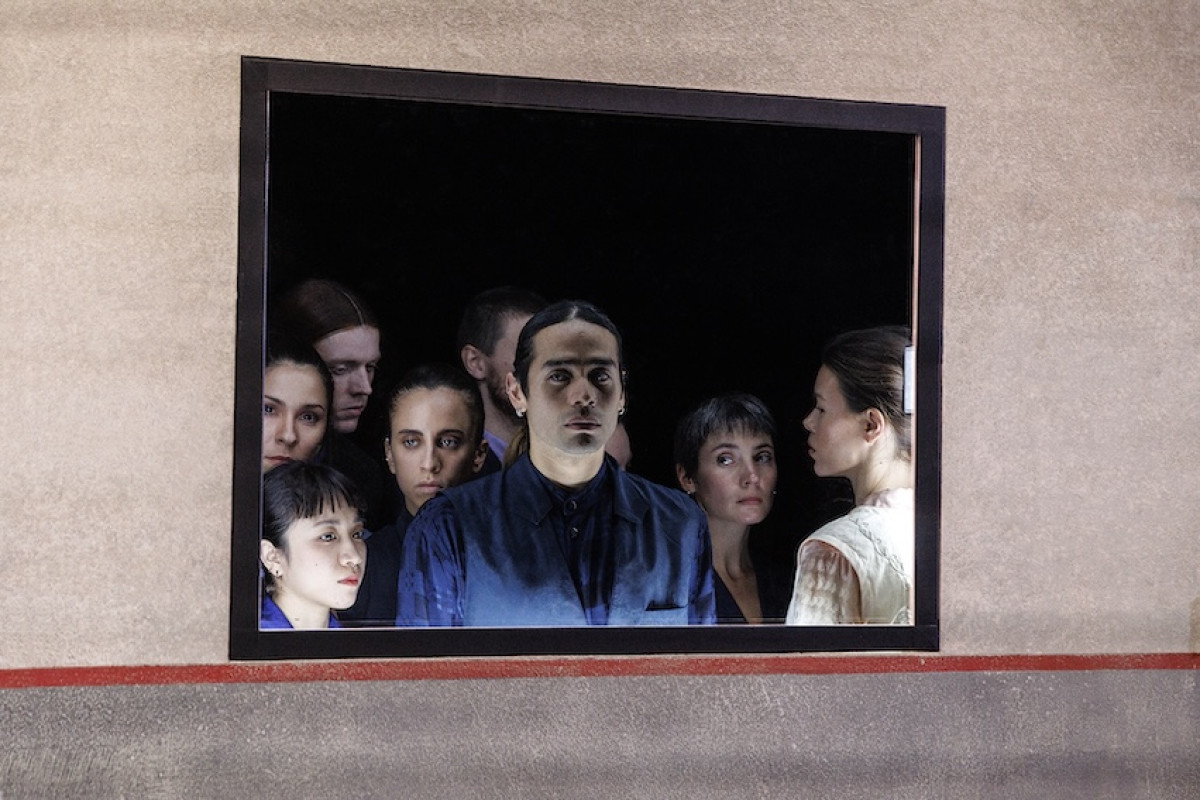
Dansk Danseteater/Copenhagen Phil: »Leaning Tree«
© Natascha Rydvald
© Natascha Rydvald

It might seem abstract, but dance is extraordinarily specific – an ultra-precise instrument of physical poetry. You shouldn’t even think about adding music unless the link is umbilical, unequivocal and clear. There are passages in Leaning Tree – a meeting of Dansk Danseteater with the Copenhagen Phil – which are utterly, mesmerizingly inspired: when the union of the aural and visual isn’t a union at all, but a single thing. Unfortunately, there aren’t enough of them. 

Choreographer Fernando Melo’s signature style is slow, legato, un-rhythmic. His group of welded human bodies often behaves like a dollop of lava, moving with a sluggish certainty. It’s hypnotic to look at but absolutely unmusical. Maybe that’s why Signe Lykke’s score for Leaning Tree so rarely channels what we’re seeing. 

Or is Melo not listening to Lykke? She speeds up or shifts gait; he can’t. Her throbbing, cooing spatial orchestral score can resemble Bent Sørensen without the fragile melodies. It livens up when congealed low brass and winds squeeze themselves into almost spectral harmonies. Tension skyrockets, but it counts for little on stage. 

Then the »leaning« – the stunningly beautiful, anti-gravitational choreographic conceit on which it all rests. It’s about 30 minutes before we see any real leaning. But gosh it’s exquisitely done, worth the wait even if it makes a lot of what went before seem like padding. 

The culmination, a vision of leaning bodies like swaying reeds, gets right into Lykke’s score. Or maybe vice versa. It’s not just glissandos we’re hearing, but elasticated harmonic movement – music composed with extraordinary delicacy of texture, harmonies built from the exacting placement and movement of individual instruments. Leaning Tree needs more of this sort of thing.

in briefrelease
23.01.2022

Finnish Space Travel

Tomutonttu: »Hoshi«
© Tomutonttu: »Hoshi«

The Finnish multimedia artist Jan Anderzén has, with the album Hoshi, released under the solo moniker Tomutonttu, created a true little star. Not only because »hoshi« literally means »star« in Japanese, but above all due to the music itself. There is something cosmic, yet infinitely minute, about the sonic worlds Anderzén conjures—like a galaxy reflected in a puddle, or a space journey in a rocket carved from a hollow tree trunk. Synths emit busy, warm blips and bloops, while ultra-short vocal and instrumental samples create a recognizable blur. At once artificial and organic – soft, rounded, jagged, crackling.

Anderzén approaches sound with a playfulness I simply adore. His music is strange in an incredibly comforting way. It places me in a kind of colorful, trance-like state, only interrupted when, several times over the course of the album, I find myself smiling in delight at a particularly great sound. The synths on »Katse osuu sähköön!« The choral samples on »Kesä oli äkkiä ohi!« Milo Linnovaara’s flute on »Malta lausua ‘AH’!« And many more. Hoshi is an album packed with microscopic moments that together form a frayed, exploding, radiant, idiosyncratic whole—a stellar moment of just under 38 minutes.