I morgen i Reykjavik uddeles Nordisk Råds Musikpris, der samtidig kan holde 50 års jubilæum. Prisen uddeles sammen med Nordisk Råds priser i børne- og ungdomslitteratur, litteratur, musik, film, samt natur og miljø i Kulturhuset Harpa i Reykjavik.

Prisen blev uddelt første gang i 1965, i første omgang kun hvert tredje og siden hvert andet år. Siden 1990 er prisen, der desuden kommer med en check på 350.000 kr., blevet uddelt årligt. Hvert andet år gives prisen til et værk af en nulevende komponist, og hvert andet år går prisen til en solist eller et ensemble. Tidligere er prisen gået til danskere som Per Nørgård, Pelle Gudmundsen-Holmgreen, Niels-Henning Ørsted Pedersen, Palle Mikkelborg, og sidste år var det komponisten Simon Steen-Andersen, der løb med prisen for værket ”Black Box Music”.

Blandt de nominerede i år finder man den norske mezzosopran Tora Augestad, det islandske kammerorkester Kammersveit Reykjavíkur, den svenske bassist og cellist Svante Henryson, den finske akkordeonist Kimmo Pohjonen og den færøske doom metal-gruppe Hamferð.

Blandt de to danske nomineringer finder man - som det også var tilfældet i 1997 - den klassiske blokfløjtespiller Michala Petri. Læs mere om Petris vej mod Nordisk Råds Musikpris i Sune Anderbergs dugfriske anmeldelse af hendes seneste to udgivelser.

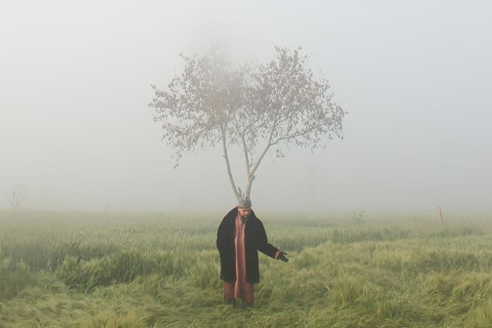
Den anden danske nominering er faldet på den elektroniske musiker HVAD. Bag navnet gemmer sig 31-årige Hari Shankar Kishore, der gennem det seneste tiår har tittet frem fra den københavnske undergrund under forskellige aliasser som DJ HVAD eller Kid Kishore eller som en del af samarbejderne Faderhuset eller Albertslund Terrorkorps, der i en slags hyldest til Rotterdam Terror Corps har indoptaget den hollandske 90’er-gabber-techno i sin lyd side om side med indiske bhangra beats, rituelle tempelklokker, alverdens glitch-lyde og hyppige vokalsamples af ord som ”perker” og ”hvad?”.

Kishore er heller ikke bleg for at køre den danske kulturarv gennem sin situationistiske dekonstruktionsmaskine af nydanskerslang og ”perker tech”, som det er blevet døbt. Hans tidlige dj-sæt indeholdt ofte brudstykker af John Mogensens ”Danmarks jord for de danske” (oprindeligt en EF-kritisk sang) og Kim Larsen, der pludselig med mussestemme sang "de kylede gas mellem hinduerne" indover helt knækkede beats og guitarfigurer fra ”Midt om natten”.

I 2007 lånte han navnet Trentemøller fra den på det tidspunkt måske mest efterspurgte danske dj, Anders Trentemøller, og fik via det sociale medie MySpace tilbudt dj-jobs i både Berlin og Rungsted, hvor man altså troede, man havde booket hitliste-housemusik.

Til daglig holder Kishore til på Kommunal Dubplate Service på Nørrebro i København, hvorfra han driver pladeselskabet Syg Nok Records og med kommunal støtte servicerer lokalbefolkningen med muligheden for at få produceret vinylplader på studiets nærmest antikke pladeskærer. Indtil videre har maskinen spyttet plader ud med Kishores egne projekter samt andre musikalske hackere som Teppop, Goodiepal eller Nørrebro-rapperen Kidd.

Og snart vil det altså vise sig, om Kishore også er vinder af Nordisk Råds Musikpris på 50-årsdagen. Den uddeles i morgen i Kulturhuset Harpa i Reykjavik. Læs mere om de nominerede og om prisen på dens officielle hjemmeside.


© Diana Aud

»For me, music is both the beat that gets me through my run, sets the mood for everyday life, but not least my personal soundtrack that evokes past events and moods throughout my life.« 

Lasse Andersson is the museum director of Kunsten Museum of Modern Art and Utzon Center, as well as the chairman of the board of Krabbesholm Højskole and the Packness Foundation. Before museums took up all his time, he wrote his PhD thesis The City and the Creative Entrepreneurs, co-founded the art and technology house Platform4, and was behind both the LasseVegas office and the technology project Nulkommafem. He has also headed the Urban Design department at Aalborg University. Today, he works purposefully to develop cultural institutions as modern spaces for learning: places where people meet and connect through aesthetic experiences that move, challenge, and open new perspectives on the society we share. For Lasse Andersson, art and architecture are not just mirrors of the world – they help shape it. With that ambition, he has curated exhibitions such as Fatamorgana – Utzon møder Jorn (2016) I Arkitektens Verden – Reiulf Ramstad (2019), Pierre Huyghe – Offspring (2022), Tal R & Mamma Andersson – omkring Hill (2023) og Michael Kvium – Knudepunkt (2025).

in brieflive
07.03

Sound Crusts in Slow Motion

Abul Mogard
© Claudia Gschwend
© Claudia Gschwend

It has become common to describe a strain of ambient music as »cinematic«, thereby – perhaps unintentionally – dismissing it as mood-setting functional music rather than an art form in its own right. Yet the exploration of static sound fields and atmospheric drone structures long predates their use as a cinematic device. Within this tradition, stretching from Morton Feldman to Éliane Radigue and Phill Niblock, the Italian composer Guido Zen has, for the past fifteen years or so, inscribed himself under the pseudonym Abul Mogard. In the late 1990s he moved through London’s electronic underground with the duo Gamers In Exile and has since collaborated with, among others, the Danish composer Goodiepal.

At the concert at Alice, Mogard’s broad synth textures emerged like banks of fog. Behind a table densely packed with drum machines, mixers and patch cables – tendrils of wires curling between the machines – the black-clad Mogard stood illuminated by small clip lamps attached to the edges of his equipment. The tones were elongated, almost motionless. Time was not measured in bars but in intensity: bass resonating in the chest; a subtle adjustment of atmospheric pressure. Undramatic, yet unstoppable. The textures shifted so gradually that one often registered the changes only after they had passed. Harmonic modulations rarely felt like traditional chord changes, but rather like shadows moving across a surface.

Synth layers slid into one another with near-geological slowness, settling like accumulated sediment – gentle and colossal at once. Mogard lingered on the single tone long enough for it to begin revealing its inner life: tiny trembling vibrations, almost microscopic irregularities in the crust of sound. The sound pulsed from within, crossed by undulating patterns of interference.

English translation: Andreo Michaelo Mielczarek


in brieflive
06.03

Labour of Birth

Katinka Fogh Vindelev, Sankt Annæ Pigekor, Kind of Opera et al.: »Elegier over jorden«
© PR

»This pain is not only yours,« chants a choir standing in a circle around the woman in labour. »This pain is not only yours,« comes the enveloping echo from the rest of the choir, positioned along the walls of the ceremonial hall, forming a circle around the audience and inscribing us into the labour of female fertility.

Elegier over Jorden (Elegies over the Earth) is based on Sofie Isager Ahl’s reworking of the myth of Persephone, daughter of the goddess of agriculture and queen of the underworld. The Greek myth is one of those that explains the barrenness of winter by Persephone’s descent into the underworld, but in this reinterpretation she returns to earth to give birth. We follow her labour over nine months while members of the choir work in the fields, struggling for crops under pressure from the current climate collapse. Here, the regeneration of nature is not a matter for higher powers but a struggle that begins in the body and in the soil – much like that of the woman giving birth.

The ecofeminist interconnectedness of the female body and nature has been a hot topic for several years now, and I am unsure what Elegies over the Earth adds to it. My hesitation stems mainly from the harsh acoustics of the ceremonial hall at Ny Carlsberg Glyptotek which, combined with Marie Topp’s choreography – often positioning singers with their backs turned to parts of the audience – makes it difficult to hear Ahl’s words.

When Elegies over the Earth works best, it is in the dialogue and timing between the choir, the soprano and composer Katinka Fogh Vindelev in the role of the labouring Persephone, and the minimal ensemble of two violins and a cello. When the voices of Sankt Annæ Girls’ Choir curl around the cello’s dark timbre, and when the primordial woman Persephone’s lament is allowed to hang in the room for a moment before the choir resumes, the performance touches on something real. Yet the experience never quite settles in the body, and the painful struggle of birth – despite the choir’s insistent chanting – never truly becomes mine.

Performances on 5, 7 and 8 March

English translation: Andreo Michaelo Mielczarek

© PR

»For me, music is... I was about to say everything, but that's still an exaggeration. I'm a sensitive person, and therefore all art - but especially music - affects me in different ways. Music has both a therapeutic and an artistic meaning for me. Music affects my mood and gives me energy. It can also put me in a certain state where I see things differently and reflect in a different way than I would otherwise. I always have headphones in when I'm alone, I sleep to music, I work to music. The first thing I did as a new councilor was to set up my father-in-law's old B&O system in the councilor's office. It plays every day, and I very rarely close the door.« 

Jesper Kjeldsen is councilor for Culture and Citizen Service in Aarhus and a member of the city council for the Social Democrats. He graduated from Kaospiloterne and has a background as an entrepreneur, including with the company Postevand. Before his political career, he worked creatively with culture and music – he has released music, been a DJ and taught as a dance teacher. Jesper Kjeldsen has lived and worked in Greenland for a long period of time, which has influenced his view of community, culture, climate and society.

© PR

»Music for me is translation. Music for me is a musical score that can be released into sound in a thousand ways, depending on who picks up the instrument. Music for me is the attempt to embody the idea of sound in lines and dots and floor plans. Music for me is both a sought-after sound that does not ring, and a sought-after sound that does. Music for me is a song game, a parallel universe with its own temporality and its own rules.«

Matias Vestergård is a trained composer and pianist from the Royal Danish Academy of Music in Copenhagen. Since his debut in 2022, he has particularly distinguished himself with music-dramatic works – his first opera Murder on the Titanic will be performed for the third time this year, and his second opera Lisbon Floor won the award for Opera of the Year at the 2023 Reumert. He is currently working on orchestral works, a piano concerto and choral music, but dreams of writing more operas.