I samarbejde Goethe-Institut Dänemark, Københavns og Roskilde Universitet inviterer Seismograf/DMT til seminar tirsdag den 3. juni kl 16-18 Teater Repulique i forbindelse med Klangfestivalen 2014.

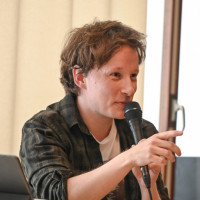
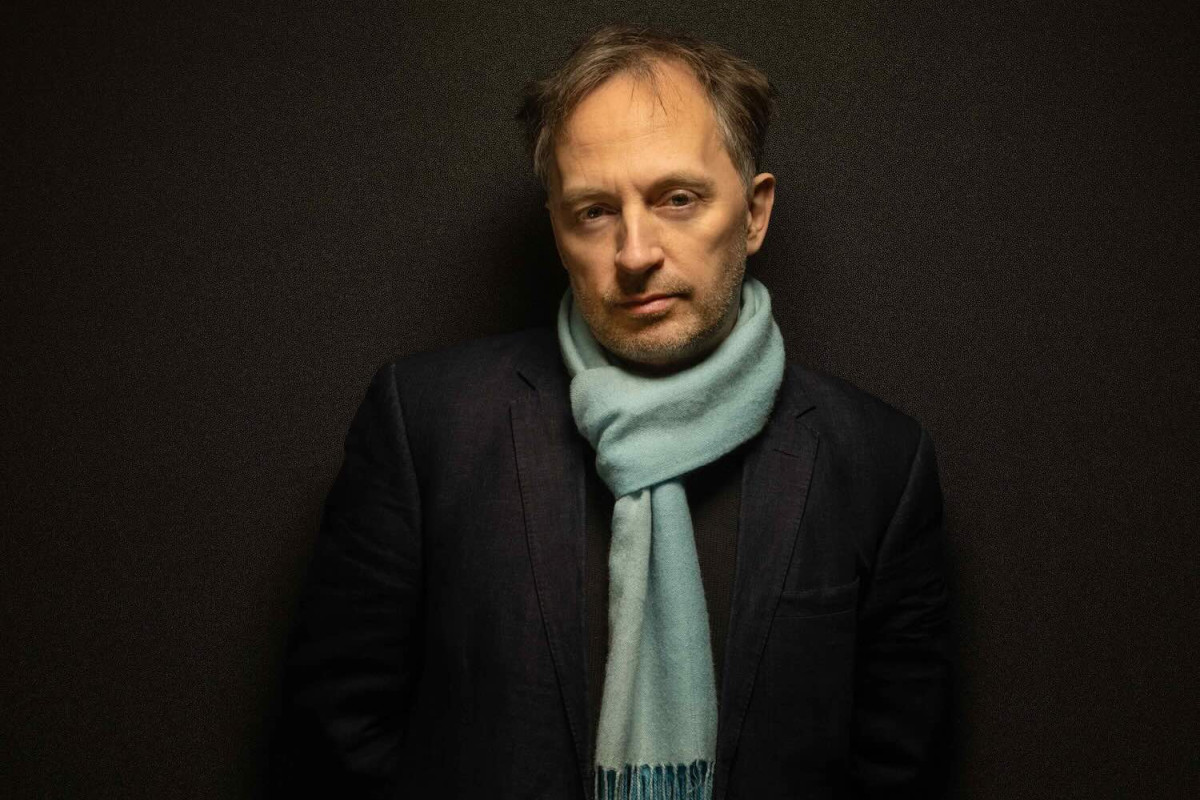
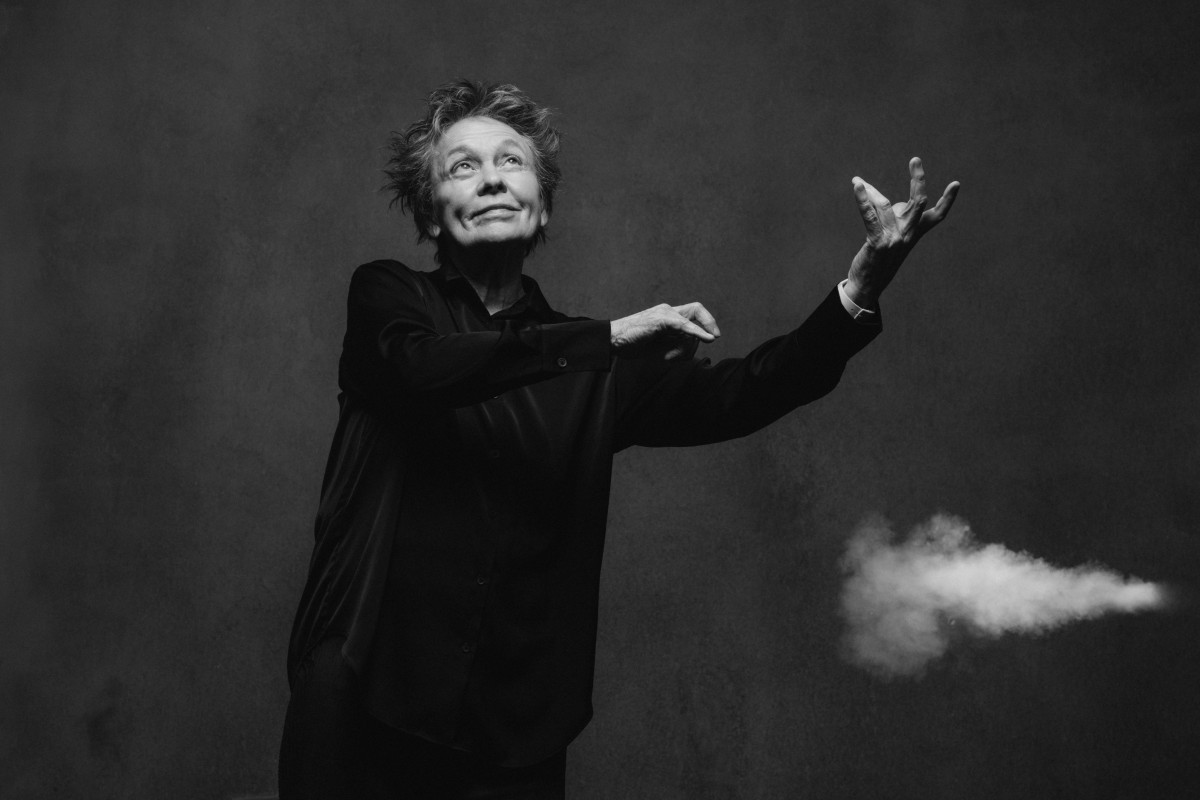
Ved seminaret " Modernisme, politik og det stedsspecifikke" har vi inviteret Dr. Kersten Glandien, Musikkritikeren Henrik Friis og komponisten Johannes Kreidler. Dr. Kersten Glandien fortæller om lydkunstscenerne i Berlin fra 1970erne og frem til i dag. Musikkritikeren Henrik Friis spørger, hvad der skete den radikale tyske modenisme efter Lachenmann og Spahlinger. Svarene søges bl.a. gennem en analyse af Spahlingers betydning for den danske komponist Simon Steen-Andersen. Den tyske komponist Johannes Kreidler taler om de sidste 15 års udvikling i tysk ny musik og præsenterer sin analyse af periodens æstetiske, tekniske og diskursive forandringer. 

Seminaret er arrangeret og ledes af Sanne Krogh Groth (RUC, Seismograf/DMT) og Søren Møller Sørensen (KU). Det afholdes på engelsk og er blevet til i samarbejde med Goethe-Institut Dänemark.

Abstracts:

Dr. Kersten Glandien (Senior Lecturer, University of Brighton, UK):
"… too wide a field - SoundArt in Berlin"

This comment on the human condition by Theodor Fontane came frequently to my mind while researching the various facets of SoundArt in Berlin. Far from encountering ‘a scene’, I found myself facing a vast labyrinth of activities, artists, works, places, events, organisers and institutions, stretching back several decades.

In my paper I will attempt to give an insight into the extent and hybridity of Berlin Sound Art - from its beginnings in the 1970s under the special conditions of cold-war West Berlin, through the landmark-festivals and lively activities of the post-Wall period, down to its ubiquity and acceptance today. I will examine the main players, institutions, organisers and initiatives, trace the unusual political and cultural conditions that set the agenda in both parts of the city, outline the exciting process of fusion that followed - and examine the very different approaches taken to SoundArt in the city today and the aesthetic clusters they form.

Henrik Friis (Music critique, Politiken, DK):
"What happened to modernism?"

What happened to the strong modernist position in German music after Lachenmann and Spahlinger? Well, maybe it is alive and kicking – living on, for instance, as impossible timbre made by young Danish composers. With a strong advocate in the Berlin resident and Spahlinger student Simon Steen-Andersen.

A place to start is the search for a useful framework for the term modernism. The Spanish philosopher Ortega Y Gasset addresses the modernist position in European Art and Music in 1925 in his essay ‘The Dehumanization of the Arts’. He claims that, opposed to earlier epochs in the history of the arts, modern music is not unpopular, as in ‘not popular yet, but outspoken anti-popular. A search for modernism is in that sense a search for traces of thoughts of intellectual anti-popularism and dehumanization. Helmut Lachenman and Matthias Spahlingers music from the early 1970’s and onwards show some of the same alienating and non-popular characteristics. For instance the ‘Musique Concrete Instrumentale’ focuses the ear at the noise of the music production and continuously stops the listener from forgetting that the musical experience is in fact a musical construction. Or the Spahlinger concept of the endless beginnings. These intellectual traces are pursued in the recent music of Simon Steen-Andersen, i.e. the cd of 2010 ‘Pretty Sound’.

Johannes Kreidler (Composer, DE):
"New Music in Germany in the last 15 years."

Having started to become a professional composer towards the end of the 1990s, not only personally I've made my artistic development, but also in general I can draw an overview now on a period of time of which I think has made quite a shift, aesthetically, technically, discursively.

Fakta
Seminar. Klangfestivalen
Tirsdag den 3. juni kl 16-18
Teater Repulique, Østerfælled Torv 37, 2100 København Ø


in briefrelease
14.01

In the Ruins of Old Organs, Builder Finds His Own Sonic Universe

Calum Builder: »Poor_in_Spirit – the (Re)constructed Pipe Organ« 
© PR
© PR

On his previous album, Renewal Manifestation, Calum Builder let the organ of Mariendal Church roar forth as an imposing protagonist. Now he returns with a work in which the same instrument not only carries the narrative but is the entire narrative – in the form of »the (Re)constructed Pipe Organ«, an organ he has assembled himself from discarded pipes and mechanics salvaged from Danish churches.

It’s a fascinating project, but what about the music? It’s a mixed experience. The three opening tracks, which together form the title piece, as well as »sometimes, I wonder«, are the highlights. The homemade organ surges beneath Builder’s touch on the keys, its frequencies rising and falling like hills and valleys in constant flux. The instrument howls like an autumn wind in the trees, while under- and overtones stand tall like runestones before crashing into each other. Builder’s talent for dramatic songwriting emerges in these miniature pieces – despite the instrument’s audible limitations.

Unfortunately, things unfold differently in several of the other tracks, such as »cicadas_nighttimesound« and »Pacific«. They appear more like sketches – demonstrations of the organ’s possibilities – than fully realised compositions. Ideas remain static and repeated, with very little development. The expected shifts and resolutions never arrive. On Poor_in_Spirit, Builder is clearly experimenting with form and function, and that in itself is interesting. But I miss the vitality and dramaturgy that are otherwise the core of his music.

English translation: Andreo Michaelo Mielczarek

in briefrelease
14.01

70 Minutes Confined to a Creaking Construction Site

Gayle Young & Robert Wheeler: »From Grimsby to Milan«
© PR
© PR

The Amranthen is a peculiar string instrument, invented and built by Canadian instrument maker Gayle Young. It consists of a wooden box fitted with 21 steel strings and three bass strings, and its unique, organic timbre unfolds on From Grimsby to Milan, where Young improvises alongside American musician Robert Wheeler on synthesizer. The recordings from Grant Avenue Studios capture the encounter between the acoustic and the electronic in a loosely shaped, raw musical flow.

Across nearly 70 minutes divided into six parts, the listener is kept in a state of constant uncertainty. The sonic landscape resembles a noisy, dystopian construction site: on »Seaweed Slowly Shifting«, bows are drawn with a saw-like rasp, fingers scratch, machines whirr, and sharp electronic zaps flash like warning lights. Later, bells and pulse-like rhythms enter on »Mariana Trench«, while »Consonant Harmony« slows the pace, settling into a subdued, crackling atmosphere where sparse melodic gestures suggest a momentary lull in the turmoil.

The construction-site metaphor fits well, for the most compelling version of this project would likely be to experience Young’s handmade instruments live, in direct dialogue with Wheeler’s electronics. As an audio recording, however, the project remains closed-off and somewhat insular. And although From Grimsby to Milan contains a wealth of fine detail, the journey – from Grimsby in Canada to Milan in Ohio – ultimately feels long and monotonous, without ever offering the listener the key to unlock its dystopian worksite.

English translation: Andreo Michaelo Mielczarek

© Hal Stucker

»Music is all of life in sound.«

Thomas Morgan is a double bass player based in New York. He has recorded and toured all over the world as a member of Paul Motian’s bands, the John Abercrombie Quartet, Steve Coleman and Five Elements, Tomasz Stanko New York Quartet, Bill Frisell Trio, Jakob Bro Trio w. Joey Baron among many others. He has also collaborated with Dan Tepfer, Craig Taborn and Masabumi Kikuchi, and released albums with Bill Frisell, Small Town; Maria Laurette Friis, Colors, and with Jakob Bro/Joe Lovano, Once Around The Room. In November 2025 he stepped forward with his first solo project, Around You Is a Forest (Loveland Music). The record is built around WOODS, a virtual string instrument Morgan designed in SuperCollider that evokes the sound of plucked and struck string instruments – West African lute-harps, Asian zithers, the Hungarian cimbalom, marimbas – while operating according to generative code that Morgan shaped into a living, evolving instrument. 

Lars Hannibal. © Søren Solkær

»Making a playlist is not an easy task for me. Music occupies most of my waking hours. It is a condition that began to grow when I was a teenager. If I am not playing myself, or working with the music I release or compose, music is still present, reaching out to me. I have always found it difficult to experience music in boxes or genres, so I listen very broadly and take pleasure in any music I can feel and that moves me. Music is a condition of life, and expressing oneself through music is a gift – but being able to experience music with openness is perhaps an even greater gift. I have chosen a list in which the guitar plays a part.«

Lars Hannibal began – like many others of his generation – playing folk and rock guitar at the age of fifteen. But when he heard the Spanish guitar master Andrés Segovia perform the gavotte from Bach’s Partita in E major, his musical life took a new direction, and he decided to devote himself to the classical guitar.

Since the early 1970s, Lars Hannibal has also composed songs and instrumental works. Today he performs primarily as a member of the Petri/Hannibal Duo and works alongside this as managing director of the record label OUR Recordings, which he founded together with Michala Petri in 2006, as well as a consultant for Edition Borup-Jørgensen.

in briefrelease
15.12

Uncompromising Vignettes of Silence and Sighs

Hildur Guðnadóttir: »Where to From«
© PR
© PR

It seemed to come like a bolt from the blue when the Icelandic cellist and composer Hildur Guðnadóttir broke the sound barrier with an uncompromising, inward-looking sound situated between contemporary classical and experimental music – most widely recognised through her suffocating soundtracks for Chernobyl and Joker.

Yet on her Deutsche Grammophon debut Where to From, it is the personal spaces we are invited into. The instrumentation is pared right back to a chamber ensemble, voices, and extended passages of near-absolute silence. The result is often achingly beautiful – and deeply affecting.

The work unfolds in small vignettes, rarely lasting more than a couple of minutes, before vocals are introduced in the album’s second half – most notably in »Make Space« and the exquisite a cappella hymn »I Hold Close«. The equally beautiful »Melody of Not Knowing« explores the cello’s darkest registers, striking blue midnight tones in the echo of the heart, especially as it glides into »All Along«, where voice and strings merge.

Where to From is a powerfully mood-saturated work that moves effortlessly between chamber music and neoclassicism, finding its uncompromising character in the quietest, most intimate sighs between human and instrument. It is neither too little nor too much – always precisely measured. And for that very reason, Guðnadóttir remains such a compelling musical presence.

English translation: Andreo Michaelo Mielczarek