Niels Rønsholdt
49







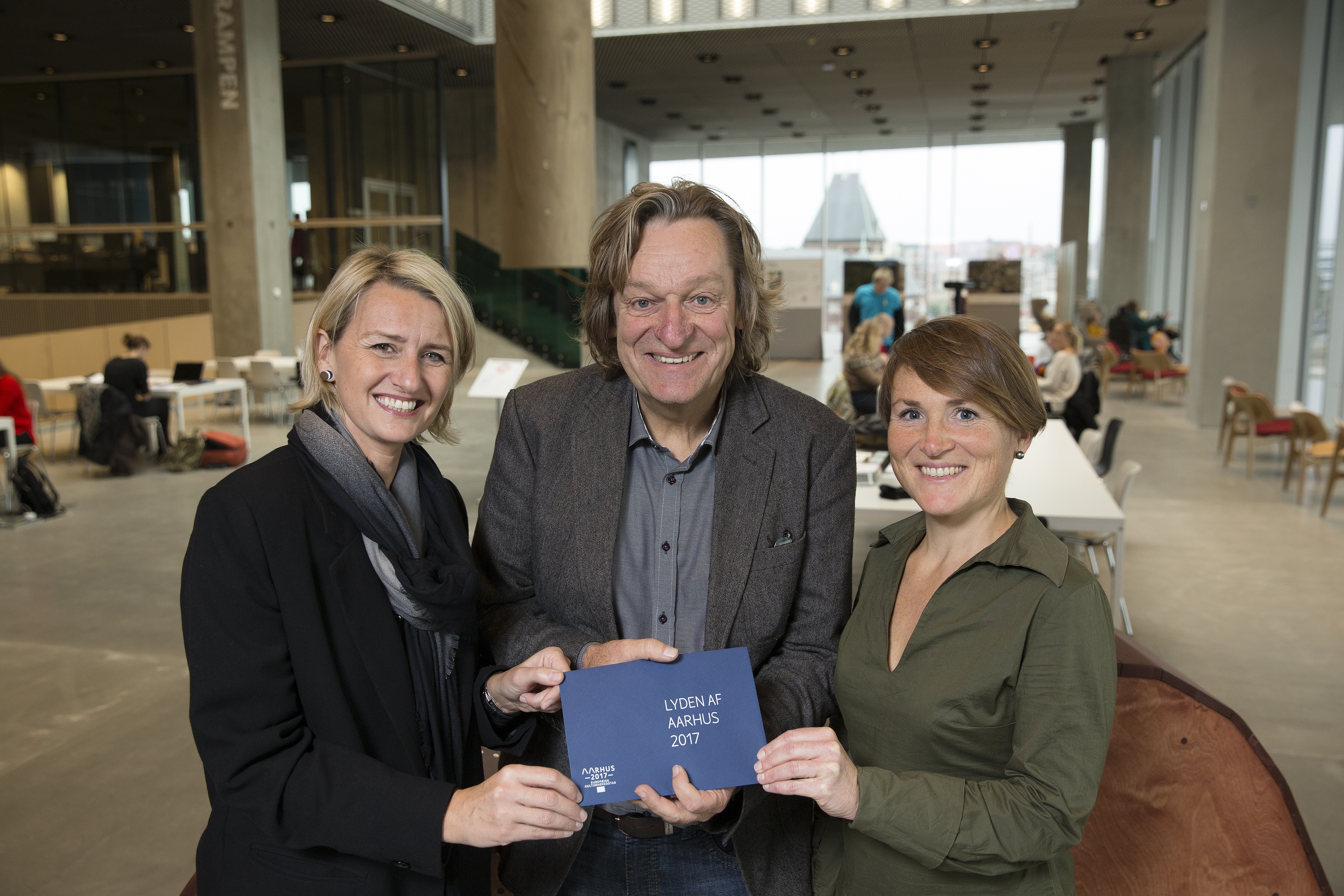
I 2017 er Aarhus som bekendt europæisk kulturhovedstad og sådan en skal naturligvis have lydkunst! Derfor blev der sidste år udskrevet en konkurrence, Lyden af Aarhus 2017. Blandt de 31 indsendte projekter fra hele verden har en fagjury udvalgt schweizeren Andres Bosshard med projektet Sonic Ark. Seismograf/DMT talte med Bosshard umiddelbart efter offentliggørelsen.
”Sonic Ark er et dramaturgisk koncept, der består at en række installationer, som flytter sig igennem det offentlige rum, og som helt bogstaveligt tager udgangspunkt i lyden af Aarhus”, fortæller Bosshard.
”Lydmæssigt sover Aarhus, men den er en sovende skønhed og jeg kan høre et stort potentiale i byens lyde, som bare trænger til at blive vækket. Jeg er ikke pessimist i forhold til byens støjende miljø. Med mine værker er jeg mere interesseret i at give bedre betingelser for kvaliteten i lytningen, for derigennem at kunne arbejde mod et bedre lydmiljø. Og her har Aarhus meget at byde på. Jeg har allerede været her to gange og gennem det næste år vil jeg i tæt samarbejde med byens borgere undersøge og lytte til forskellige steder i byen for at indsamle de lyde, som kommer til at indgå i værkerne. For eksempel arbejder et af værkerne med en kombination af mikroskopiske plantelyde, lyden af det århusianske sprog og den makroskopiske arkitektur i Botanisk Have. Her er borgerne vigtige det talte århusianske sprog er helt centralt.”
Der er klare lydøkologiske undertoner i projektet, men Bosshard mener ikke, at verden er ved at blive oversvømmet af dårlig lyd. Derimod mener han, at kan vi blive bedre til at lytte til de lyde, der allerede er her, og projekttitlens bibelske reference skal derfor heller ikke tages helt bogstaveligt.
”Jeg ser nærmere Arken som en metafor for at kunne lære at sætte pris på at sejle rundt, flyde ind og ud af eller drive gennem byens akustiske landskab. Det handler ikke så meget om, at vi skal beskyttes mod støjen, men jeg kunne godt tænke mig at folk kommer til at kende byen bedre, får lyst til at udforske dens lyde og måske endda kan lære at spille på den som et instrument,” forklarer han.
I sit arbejde sammenligner han også sig selv med en sømand, der er afhængig af vind og bølger for at kunne få skibet til at sejle – en tilgang der præger hans måde at interagere med lydmiljøet på.
”Hele byens lydbillede er på en måde med i værket og især lyden af menneskene i byen. På den måde handler det økologiske ikke kun om natur, men også om det sociale, om interaktion og kommunikation. Gennem øret kan vi opnå en betydelig større livskvalitet, og jeg håber at folk i Aarhus efter 2017 vil ’tro’ mere på deres egen lyd. Jeg er mest interesseret i at ændre bevidstheden om og stoltheden over hvilken lydkvalitet Aarhus har som by. Og jeg tror ikke der skal så meget til, for at vække den sovende skønhed”, slutter Andres Bosshard.
Det er Europæisk Kulturhovedstad Aarhus 2017 og de tre komponistforeninger Danske Jazz, Beat og Folkemusik Autorer (DJBFA), Dansk Komponist Forening (DKF) og Danske Populære Autorer (DPA), der har stået bag konkurrencen Lyden af Aarhus 2017. Foruden værkbestillingen, mortager Andres Bosshard en pris på 200.000 kr.
Andres Bosshard, f. 1955, bor og arbejder i Zürich i Schweiz. Han er uddannet kunstmaler, og begyndte tidligt at arbejde med eksperimenterende musik og teater. Han har udviklet roterende lydobjekter, interaktiv computermusik, programmer og lydinstallationer. Blandt andre “Sound Tower” ved Expo.02 ved Bieler-søen i Schweiz.
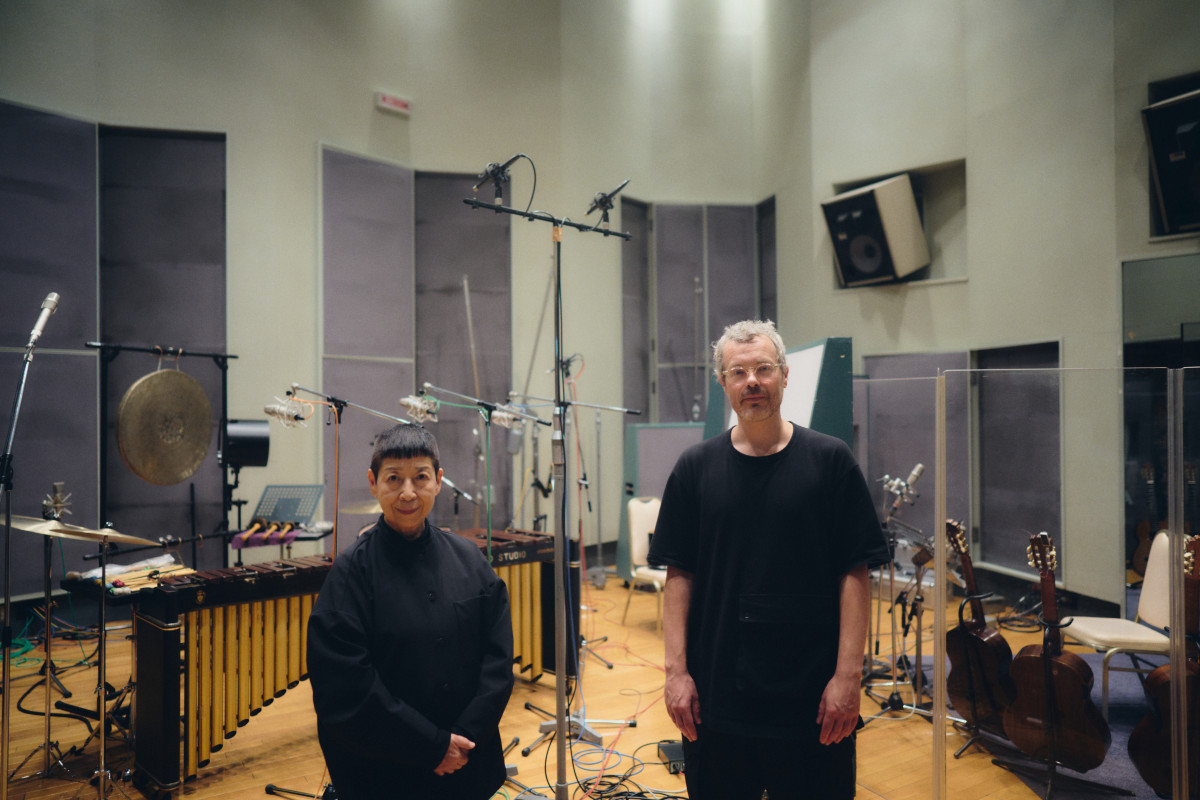
At last, three years after their concert at the Black Diamond, the collaboration between Danish guitarist Jakob Bro and Japanese percussionist Midori Takada has been released in album format – and it does not disappoint.
Their friendship may seem surprising at first, given their differences, but あなたに出会うまで / Until I Met You reveals how it rests on a shared ability to close their eyes and listen. They give each other space to do what they each do best: Bro’s simple yet refined melodies and Takada’s magical soundscapes. On the title track, Bro sketches the outlines with acoustic guitar and sparse notes, which Takada fills in with shimmering marimba and gong. On A Brief Rest of Sisyphosthe roles are reversed – here Takada sets the frame while Bro adds the details.
The sublime sister pieces Landscape II, Simplicity and Landscape I, Austerity are more abstract than the earlier works. Landscape II breathes hope and longing with resonant chimes and percussion, while a middle section unfolds in melodic harmony between guitar and piano. Landscape I carries the same sense of yearning, but with a more melancholic tone; a gently undulating marimba supports a beautifully moving guitar part. Both pieces radiate a clear sense of respect and tenderness between the musicians: Bro and Takada listen to each other with rare intimacy, and together they have created something truly unique.
English translation: Andreo Michaelo Mielczarek
The forest lake is a cradle of life in more than one sense. The forest’s myriad forms of life depend on its waters, but its trickling branches, intense stillness, and soft reflections also hold powerful musical potential. It is precisely this life-giving energy that forms the basis of Swedish composer Filip Leyman’s solo debut album, Soft Light. From the very first track, »Beyond the Sea«, one senses how Leyman manages to create an organic universe where every sound nourishes the soil for the next. It is difficult to find either beginning or end as the many synthesizers and strings grow into and out of one another – you simply have to surrender and sink into this spherical universe of reverberations and deep, steady bass.
Filip Leyman’s work cannot be described without mentioning Swedish artist Anna von Hausswolff. Her music is like a force of nature, carried by long, sacred organ passages – and what is Hausswolff and what is Leyman is never entirely possible to determine. Soft Light gathers together compositions written over decades and appears as a natural extension of the many albums and soundtracks the two have created together. The album contains a strong cinematic dimension: in a track like »Shapes«, the layered sounds culminate in a dazzling climax that feels like slow motion in sound.
Here, Leyman appears as a musical botanist, patiently letting his synthesizers grow, sprout, and bloom. Although Soft Light has developed over many years, it sounds remarkably cohesive – like one long breath. The album seems more cultivated than composed. Let us hope that Soft Light is only the beginning, and that Leyman will allow more solo albums to grow in the same light.
English translation: Andreo Michaelo Mielczarek
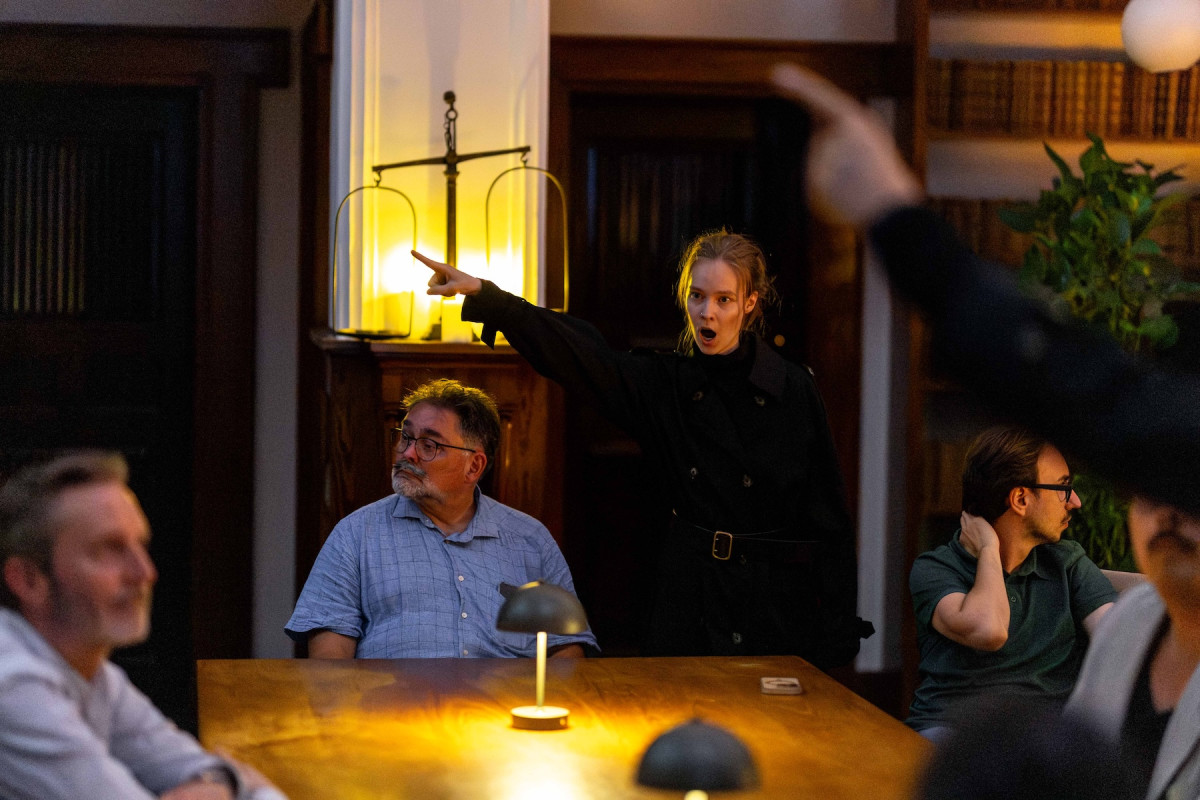
A newly composed opera staged in a courtroom may sound like a banal trick. But as I step into the waiting hall of the Aarhus Courthouse for Niels Rønsholdt and Louise Beck’s Den Stærkes Ret – Den Svages Pligt (The Right of the Strong – The Duty of the Weak), I wonder for a moment if I’ve come to the wrong place. An oblong room, tables scattered about, a balcony above – and then a sheet of music in a glass display case that normally would hold old legal documents. The scenography is discreet, but the legal framework immediately sparks reflections on law, power, and justice.
Soon, nearly 20 singers appear on the balcony. The music is tonal, carried by resonance and repeated phrases that gradually shift like a canon. You sense borrowings from minimalism, but also a near-folklike simplicity that makes the choir both enchanting and unsettling. The plot – a daughter confronting her father’s ghost to claim his weapon – emerges only in fragments. It is the atmosphere that drives the work, and it changes radically when the singers leave the balcony and place themselves among the audience, while three dancers move through the hall.
A pivotal moment comes when the choir suddenly strikes tuning forks and places them on the tables, sending a vibrating »wuu-uu« through the room. Goosebumps arrive instantly. Moments later, the singers address us directly, holding intense eye contact. It feels both intimate and transgressive, like being spoken to in court with no chance to reply. I wanted to look away, but felt compelled to hold their gaze. Here, the title became physical: the duty of the weak to submit.
As the work fades out, all the singers turn against the father and side with the daughter. Books are torn from the shelves, pages ripped out, and as »Listen and learn« is sung, Orwell’s 1984 flickers in the back of my mind. It is both disturbing and uncannily timely in an era where obedience to authority and manipulation again shape public discourse.
Den Stærkes Ret is one of the most intense musical experiences I have had in years. It unites aesthetics, body, and social commentary in a way that makes you shudder. I am already waiting for acts two and three.
English translation: Andreo Michaelo Mielczarek

Rumor has it that the now-defunct British electronic band Coil once created a soundtrack for the cult horror film Hellraiser – so disturbing that it was rejected for being too frightening. With that story in the background, it almost felt like a natural opening to autumn’s darkness when Drew McDowall, former member of the mythical band, took the stage at Alice in Copenhagen on Wednesday evening. The Scottish musician is known for entering into striking collaborations – with Danish Puce Mary and, most recently, the American-Swedish composer Kali Malone – and it was precisely for this reason that it made sense for the evening to begin with an intense concert by Gintė Preisaitė. Like McDowall, she has the ability to transform even the simplest sounds into all-encompassing sonic landscapes.
Although both musicians clearly work from an electronic foundation, their sonic universes appeared remarkably organic, as if they were shaping living material. In her all-too-brief concert, Preisaitė created a mosaic of field recordings, voice fragments, and cassette tapes – chaotic one moment, ordered and transparent the next. With the same cool precision, McDowall unfolded his performance as if it were one long harmonium drone, slowly creeping under the skin with the inescapable logic of a horror film. For McDowall, darkness is not an alien force but a familiar companion, which he skillfully reshapes into soundscapes that are at once disturbing and reassuringly enveloping – like lying in a warm bed with the nightmare right beside you.
Both Preisaitė and McDowall moved effortlessly across the border between the acoustic and the electronic. Their music appeared as a contemporary legacy of the musique concrète tradition: an insistence that electronic music remains one of the most experimental art forms – vital, organic, and with the ability to let even the smallest sound open up an entire world in itself.
English translation: Andreo Michaelo Mielczarek

An injured swan lies buried in seaweed in a corner of the hall, while four lifeless bodies are scattered across the floor. More seaweed hangs from the ceiling, and the smell hits us already as we step through a bluish, latex-like curtain. The foyer was filled with heaps of seaweed and leftover plastic, and now we are inside an unfamiliar underwater landscape. The bluish light flickers on the wall, the soundscape murmurs faintly like a distant current of noise. We are underwater.
Slowly, bodies come back to life. They stretch in movements of suffering, stagger, struggle – but they rise. Subtle beats and Mads Emil Nielsen’s restless drones push the scene forward. The question of what has happened is rhetorical: everything points to climate catastrophe. Roskilde Fjord has overflowed its banks. Humans continue – despite a state of emergency, despite the flood – while the swan has succumbed.
The dystopia comes alive as the dancers, with impressively exploratory movements, search for ways to adapt to a new world. Here scenography, light and dance interact powerfully, and the senses are overwhelmed. That is precisely why it is a pity that the sound quality feels flat, when the sonic dimension plays such a role in the storytelling.
Still, Vi fortsætter... (We Continue…) succeeds in creating a universe that is at once absurd and all too recognizable. It recalls a gentler version of Ruben Östlund’s Force Majeure: the comic and tragic traits of human nature set against the inexorable forces of nature.
In the end, the dancers leave the stage and we are left in silence – with the afterthought of why we continue like this, and with the sensation of treading water long after leaving the fjord’s flooded universe.
English translation: Andreo Michaelo Mielczarek