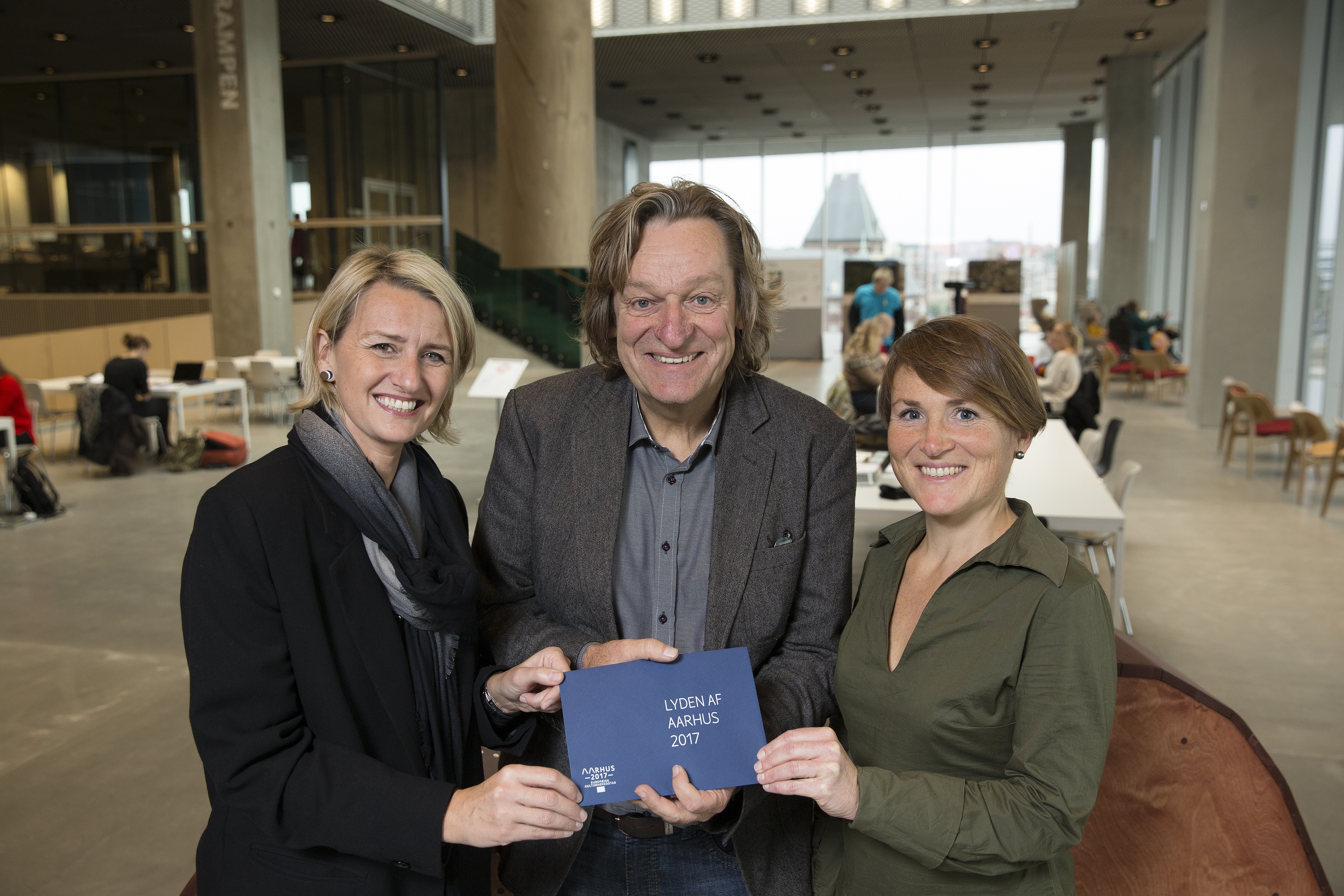
I 2017 er Aarhus som bekendt europæisk kulturhovedstad og sådan en skal naturligvis have lydkunst! Derfor blev der sidste år udskrevet en konkurrence, Lyden af Aarhus 2017. Blandt de 31 indsendte projekter fra hele verden har en fagjury udvalgt schweizeren Andres Bosshard med projektet Sonic Ark. Seismograf/DMT talte med Bosshard umiddelbart efter offentliggørelsen.

Sonic Ark er et dramaturgisk koncept, der består at en række installationer, som flytter sig igennem det offentlige rum, og som helt bogstaveligt tager udgangspunkt i lyden af Aarhus”, fortæller Bosshard.

”Lydmæssigt sover Aarhus, men den er en sovende skønhed og jeg kan høre et stort potentiale i byens lyde, som bare trænger til at blive vækket. Jeg er ikke pessimist i forhold til byens støjende miljø. Med mine værker er jeg mere interesseret i at give bedre betingelser for kvaliteten i lytningen, for derigennem at kunne arbejde mod et bedre lydmiljø. Og her har Aarhus meget at byde på. Jeg har allerede været her to gange og gennem det næste år vil jeg i tæt samarbejde med byens borgere undersøge og lytte til forskellige steder i byen for at indsamle de lyde, som kommer til at indgå i værkerne. For eksempel arbejder et af værkerne med en kombination af mikroskopiske plantelyde, lyden af det århusianske sprog og den makroskopiske arkitektur i Botanisk Have. Her er borgerne vigtige det talte århusianske sprog er helt centralt.”

Der er klare lydøkologiske undertoner i projektet, men Bosshard mener ikke, at verden er ved at blive oversvømmet af dårlig lyd. Derimod mener han, at kan vi blive bedre til at lytte til de lyde, der allerede er her, og projekttitlens bibelske reference skal derfor heller ikke tages helt bogstaveligt.

”Jeg ser nærmere Arken som en metafor for at kunne lære at sætte pris på at sejle rundt, flyde ind og ud af eller drive gennem byens akustiske landskab. Det handler ikke så meget om, at vi skal beskyttes mod støjen, men jeg kunne godt tænke mig at folk kommer til at kende byen bedre, får lyst til at udforske dens lyde og måske endda kan lære at spille på den som et instrument,” forklarer han.

I sit arbejde sammenligner han også sig selv med en sømand, der er afhængig af vind og bølger for at kunne få skibet til at sejle – en tilgang der præger hans måde at interagere med lydmiljøet på.

”Hele byens lydbillede er på en måde med i værket og især lyden af menneskene i byen. På den måde handler det økologiske ikke kun om natur, men også om det sociale, om interaktion og kommunikation. Gennem øret kan vi opnå en betydelig større livskvalitet, og jeg håber at folk i Aarhus efter 2017 vil ’tro’ mere på deres egen lyd. Jeg er mest interesseret i at ændre bevidstheden om og stoltheden over hvilken lydkvalitet Aarhus har som by. Og jeg tror ikke der skal så meget til, for at vække den sovende skønhed”, slutter Andres Bosshard.

Det er Europæisk Kulturhovedstad Aarhus 2017 og de tre komponistforeninger Danske Jazz, Beat og Folkemusik Autorer (DJBFA), Dansk Komponist Forening (DKF) og Danske Populære Autorer (DPA), der har stået bag konkurrencen Lyden af Aarhus 2017. Foruden værkbestillingen, mortager Andres Bosshard en pris på 200.000 kr.

Andres Bosshard, f. 1955, bor og arbejder i Zürich i Schweiz. Han er uddannet kunstmaler, og begyndte tidligt at arbejde med eksperimenterende musik og teater. Han har udviklet roterende lydobjekter, interaktiv computermusik, programmer og lydinstallationer. Blandt andre “Sound Tower” ved Expo.02 ved Bieler-søen i Schweiz.


in brief
11.07

Fata Morgana Between Two Continents

Niels Lyhne Løkkegaard & Michael Pisaro-Liu: »Fata Morgana«
© PR
© PR

Back in the day, people watched Beverly Hills 90210 simply because it filled the flow-TV schedule. Artist Niels Lyhne Løkkegaard, too, spent his youth wandering through those virtual Californian landscapes. In the project Fata Morgana, Løkkegaard and American composer Michael Pisaro-Liu explore this strange experience between place and fiction. With the alto recorder as their weapon, they invite us both home and away. And, as a nostalgic homage to bygone media realities, the project comes with an A-side and a B-side. It begins with »Visit«: the crackle of forest floor near Løkkegaard’s childhood home in western Jutland, recorded in 2021. The microphone is placed somewhere, a few steps are taken – and then silence... Far away, the alto recorder begins a melody surrounded by birdsong. This homely soundscape is woven into the listener’s own sense of place. Was that a car driving by – here? Or there?

On the B-side, »Visitation«, Pisaro-Liu repositions the flute piece in California in 2024. The tension rises; the melody is visited and haunted from the other side of the globe. It is disturbed and distorted by electric signals, siren tones, interfering noise, and fragments of American voices murmuring things about »fever dream« and »not anything in particular.«

For indeed, there isn’t really anything. It’s classic Løkkegaard: an imagined world unfolding in the listener’s mind. It could have been done in less than 2x22 minutes, but the idea is strong, simple, and well executed. Like the sonic version of a cartoon mirage shimmering falsely in the sharp Californian sunlight.

English translation: Andreo Michaelo Mielczarek

© Malthe Ivarsson

»For me, music is the light that streams in through our windows and touches the human mind. Music is community – something we create together. Music is the other language – the one that can be spoken when all words and conversations have been worn to pieces.«

Mark Solborg is a Danish-Argentinian guitarist, composer, and improviser, educated at institutions including the Rhythmic Music Conservatory and New School University in New York. He has released 28 albums of his own works and collaborated with figures such as Evan Parker, Susana Santos Silva, and Herb Robertson – often on the artist-run label ILK, which he co-founded. His music has been performed in 23 countries and involves musicians from 15 nations. Projects such as TUNGEMÅL and BABEL explore the role of the electric guitar in acoustic spaces, and his practice also includes collaborations with theatre, film, and visual art. Solborg is a recipient of a Reumert Award, has been honored by the Danish Arts Foundation, and in 2024 was nominated for a Danish Music Award as Composer of the Year. He is currently releasing the album Confluencia.

in briefrelease
04.07

When Machines Dream: The Electronic Poetry of Oh No Noh

Oh No Noh: »As Late As Possible«
© Nikolas Fabian Kammerer

There’s something distinctly mechanical about Oh No Noh’s album As Late As Possible. Like a warped, crumpled tape, melodies bubble to the surface, and the offbeat rhythms repeat with the halting tempo of a scratched LP. It’s easy to place Oh No Noh within the esteemed German tradition of blurring the lines between human and machine, but on As Late As Possible, the machine sounds more like a distant relative than a deliberate artistic objective.

Behind Oh No Noh is Leipzig-based guitarist Markus Rom. In addition to a wealth of synthesizers and tape loops, the album’s 11 tracks are performed using guitar, drums, banjo, clarinet, and organ. The absence of vocals sets the album in a subdued, cinematic mood, and the music feels like a nostalgic inner monologue, told with a warm affection for the melancholy of outdated technologies.

Although mechanical sensibilities are prominent throughout the album, several tracks are driven by more melodic band arrangements. But to me, As Late As Possible is clearly most compelling on the less melodic pieces. The crooked and noisy »Fawn« or the hesitant closing track »Ore« are moments where the dialogue with the machine elevates the music in ways that the more melodic, band-oriented pieces don’t quite reach. These are places where the machines sigh nostalgically and form small, imperfect thought bubbles that cut off and restart again.

English translation: Andreo Michaelo Mielczarek

© Hreinn Gudlaugsson

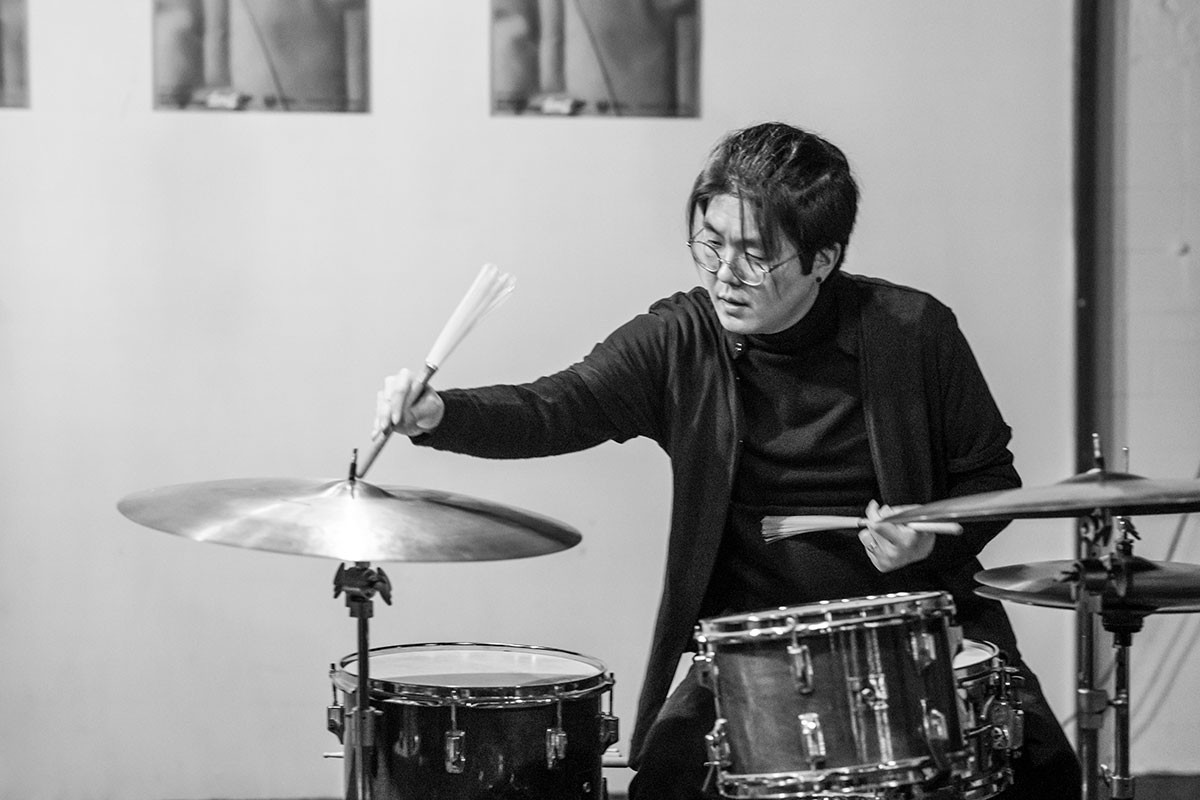
»Music for me is like a sourdough. If you don't feed it right it is going to die. If you feed it correctly a lot of people can benefit from it.« 

Halym Kim is a drummer, composer and project coordinator based in Copenhagen. His music is mainly based in free improvisation and experimental music but performs also as a traditional Korean percussionist. He has a Master and an Advanced Postgraduate Diploma in Music Performance from RMC in Copenhagen. Together with Nana Pi he organizes Impro Camp which is a music camp for free and structured improvised music that is happening every year in Fredericia, Denmark.

© DMF

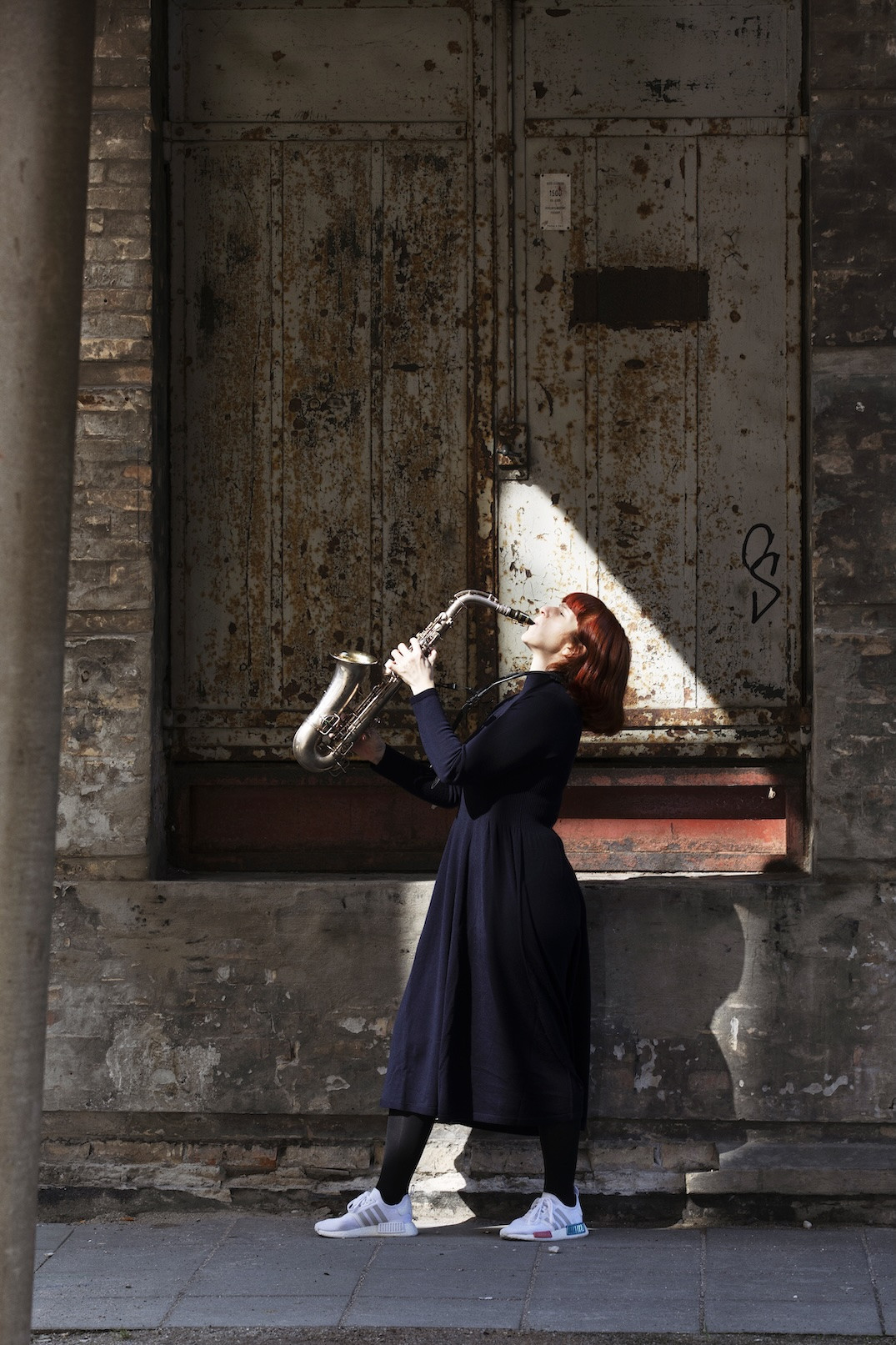
»Music for me is a tool of infinite expression. It’s where I’ve had the most complex conversations and open-minded experiences. It is the highest form of energy I know.«

Nana Pi is a saxophonist, composer and conductor working within the experimental music scene. She has developed a unique musical vocabulary on the saxophone by incorporating objects and extended techniques, pushing the boundaries of sonic expression. Beyond her work as a saxophonist, she is known for conducting improvisation using her music sign language, Extemporize, for which she received the P8 Jazz Award Årets Ildsjæl in 2020. She is a member of the well established record label Barefoot Records. In addition to her musical career, Nana Pi is organizing events such as Impro Camp and FredagsJAM that focuses on creating networks and inspiring music environments between musicians.