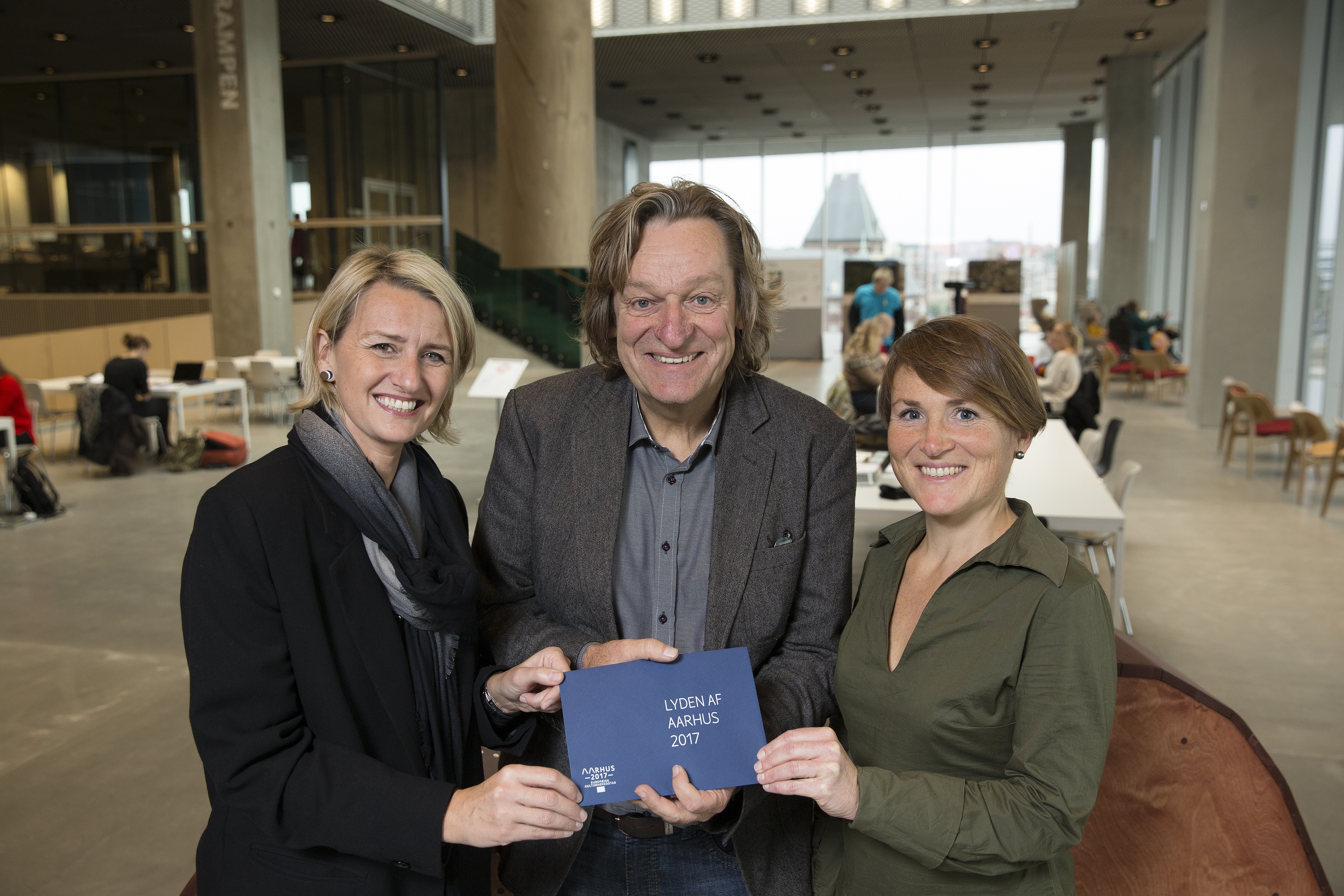
I 2017 er Aarhus som bekendt europæisk kulturhovedstad og sådan en skal naturligvis have lydkunst! Derfor blev der sidste år udskrevet en konkurrence, Lyden af Aarhus 2017. Blandt de 31 indsendte projekter fra hele verden har en fagjury udvalgt schweizeren Andres Bosshard med projektet Sonic Ark. Seismograf/DMT talte med Bosshard umiddelbart efter offentliggørelsen.

Sonic Ark er et dramaturgisk koncept, der består at en række installationer, som flytter sig igennem det offentlige rum, og som helt bogstaveligt tager udgangspunkt i lyden af Aarhus”, fortæller Bosshard.

”Lydmæssigt sover Aarhus, men den er en sovende skønhed og jeg kan høre et stort potentiale i byens lyde, som bare trænger til at blive vækket. Jeg er ikke pessimist i forhold til byens støjende miljø. Med mine værker er jeg mere interesseret i at give bedre betingelser for kvaliteten i lytningen, for derigennem at kunne arbejde mod et bedre lydmiljø. Og her har Aarhus meget at byde på. Jeg har allerede været her to gange og gennem det næste år vil jeg i tæt samarbejde med byens borgere undersøge og lytte til forskellige steder i byen for at indsamle de lyde, som kommer til at indgå i værkerne. For eksempel arbejder et af værkerne med en kombination af mikroskopiske plantelyde, lyden af det århusianske sprog og den makroskopiske arkitektur i Botanisk Have. Her er borgerne vigtige det talte århusianske sprog er helt centralt.”

Der er klare lydøkologiske undertoner i projektet, men Bosshard mener ikke, at verden er ved at blive oversvømmet af dårlig lyd. Derimod mener han, at kan vi blive bedre til at lytte til de lyde, der allerede er her, og projekttitlens bibelske reference skal derfor heller ikke tages helt bogstaveligt.

”Jeg ser nærmere Arken som en metafor for at kunne lære at sætte pris på at sejle rundt, flyde ind og ud af eller drive gennem byens akustiske landskab. Det handler ikke så meget om, at vi skal beskyttes mod støjen, men jeg kunne godt tænke mig at folk kommer til at kende byen bedre, får lyst til at udforske dens lyde og måske endda kan lære at spille på den som et instrument,” forklarer han.

I sit arbejde sammenligner han også sig selv med en sømand, der er afhængig af vind og bølger for at kunne få skibet til at sejle – en tilgang der præger hans måde at interagere med lydmiljøet på.

”Hele byens lydbillede er på en måde med i værket og især lyden af menneskene i byen. På den måde handler det økologiske ikke kun om natur, men også om det sociale, om interaktion og kommunikation. Gennem øret kan vi opnå en betydelig større livskvalitet, og jeg håber at folk i Aarhus efter 2017 vil ’tro’ mere på deres egen lyd. Jeg er mest interesseret i at ændre bevidstheden om og stoltheden over hvilken lydkvalitet Aarhus har som by. Og jeg tror ikke der skal så meget til, for at vække den sovende skønhed”, slutter Andres Bosshard.

Det er Europæisk Kulturhovedstad Aarhus 2017 og de tre komponistforeninger Danske Jazz, Beat og Folkemusik Autorer (DJBFA), Dansk Komponist Forening (DKF) og Danske Populære Autorer (DPA), der har stået bag konkurrencen Lyden af Aarhus 2017. Foruden værkbestillingen, mortager Andres Bosshard en pris på 200.000 kr.

Andres Bosshard, f. 1955, bor og arbejder i Zürich i Schweiz. Han er uddannet kunstmaler, og begyndte tidligt at arbejde med eksperimenterende musik og teater. Han har udviklet roterende lydobjekter, interaktiv computermusik, programmer og lydinstallationer. Blandt andre “Sound Tower” ved Expo.02 ved Bieler-søen i Schweiz.


in brief
08.01.2025

Love and Poetry under Black Streetlights

Jørgensen/Botes: »Dråberne 5, 7, 8 og 11«
Marina Botes og Steen Jørgensen. © Isak Hoffmeyer

While many still sigh at the thought of seeing a full Sort Sol once again illuminate the dark grey Danish sky, the band’s eternal crooner Steen Jørgensen, together with his equally strong other half, pianist Marina Botes, has created music that is something entirely different – something deeper. And yes, I have seen words like »pretentious« and »boring« hurled at the duo, but none of that sticks to their new release, which consists of a series of intimate suites where Jørgensen’s spoken word is woven together with Botes’ magnificent piano playing. If the ambition is to build a bridge between the classical and the electronic, it succeeds convincingly.

As a lyricist who moves through the same pitch-black landscape as Jørgensen, I tip my hat to the strong poetic imagery that characterizes Dråberne 5, 7, 8, and 11 – especially on the album’s longest track, the dramatic »Hul – Dråberne 7«. As Jørgensen muses on the luminous melancholy of the inner city, the music becomes a transformation, a sphere of change made of ambient surfaces, muted strings, and a female vocal that slips in like a shadow—until the song rises in dramatic momentum, centering on the line »En nat i indre kvarter«.

The music is primarily grounded in piano-heavy terrain, where Botes’ keys find repose in muted pedal strikes and light strings. Only in rare moments do the compositions break free, as on the opener »Glemsel – Dråberne 5«, where chamber orchestra and jazzy breakbeats create a compelling and almost cinematic atmosphere.

Dråberne 5, 7, 8, and 11 is a seductive, inspiring, and downright sumptuous experiment in which the love between the two artists can be felt in every tone. If this is Jørgensen’s career winter, I will gladly accept more dark, warm moments.

in briefrelease
16.12.2024

A Riddle I Am Not the Right One to Solve

Abdullah Miniawy: »Nigma Enigma«
© PR
© PR

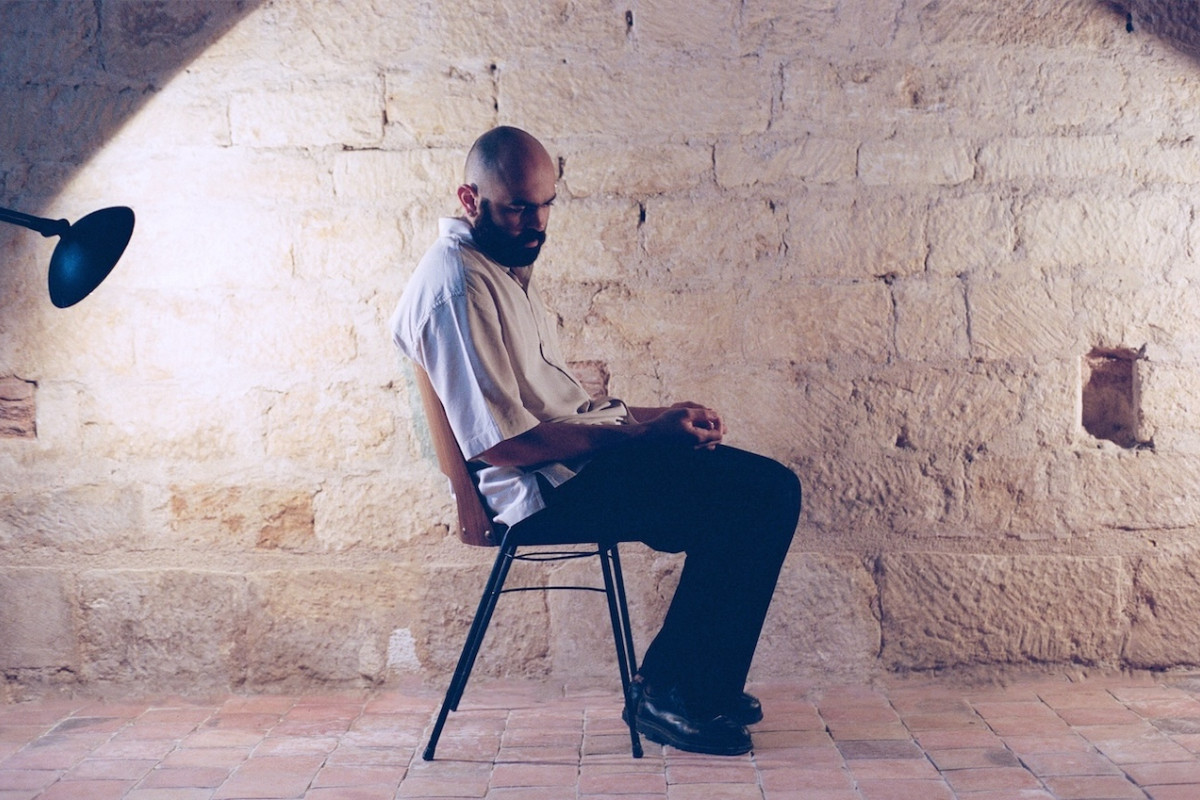
I believe I am not the right person to grapple with all the existential questions of faith and culture that the multidisciplinary artist and political experimentalist Abdullah Miniawy grapples with on his latest album, Nigma Enigma. The record is equal parts Arabic chant, folk music, and sound art, based on modular synths and field recordings. The Egyptian composer uses the album’s eleven abstractions as the soundtrack to what he himself calls »an Arabic opera of doubt and faith«. But as a non-Arab, lifelong atheist, it is difficult for this reviewer to fully engage with the big questions Miniawy poses in his mother tongue, while samples of crackling fires and layers of filtering create an otherwise enigmatic atmosphere that resonates well with the album’s title. As the music also functions as the soundtrack to an immersive video game, we are taken even further from familiar territory, given that the reviewer has not touched such things since Quakein 1992.

If one sets aside the search for meaning and allows oneself to be colored by the music’s immediacy, what emerges is a strongly conceptual, sonically accomplished work, in which Miniawy’s voice – most often chanting Arabic phrases from old folk songs – is interwoven with electronic noise. In particular, the transition from the beautiful two-part chanting on »Jayhano Al Kawahi« – with strong religious undertones – to the deeply anarchic noise vignette »Half a Year II«, featuring filtered sine tones and pounding bursts of bass noise, serves as an apt characterization of a minimalist piece of sound art.

Yet without being able to share Miniawy’s cultural and spiritual context, the album feels like a riddle I cannot solve. Like drinking an Irish coffee without the whiskey: the real praise is withheld. Nigma Enigma will speak to those who can relate to the spiritual and philosophical questions Miniawy raises, while others may experience it as a musical journey without fully understanding its destination.

English translation: Andreo Michaelo Mielczarek

in brieflive
14.12.2024

The Dust Would Not Settle on the Organs

Organ Sound Art Festival: Mads Emil Dreyer, Gamut inc., Aron Dahl & Mija Milovic
© www.francoadams.com

These days, Organ Sound Art Festival is taking place in its familiar setting at KoncertKirken, and yesterday marked the festival’s second day. The concert opened with revivals of Mads Emil Dreyer’s Vidder 1 and 4, along with a newly composed interlude for pump organ, house organ, keys, and bass flute – all instruments amplified. In this way, Dreyer obscured the sources of the sounds and created a beautiful interplay between the acoustic, the amplified, and the played-back. Was it the flute or the organ I was hearing? And did the sound come from an instrument or a loudspeaker? The music bore the mark of drone music, with beautiful dissonances and a tonal development that occasionally peeked through. Enchanting and compelling.

In the next performance, the German duo Gamut inc. had fitted the church organ with two robots, allowing a computer to control the instrument. Unfortunately, I was left wondering whether the robots were properly calibrated, or whether the music had been composed for a church space with significantly more reverberation. In any case, it sounded »MIDI-dead« – a bit like a silly »piano roll« video of an obscure serial work.

The duo Aron Dahl & Mija Milovic concluded the evening with music whose tenderness and honesty might recall The xx – if the British indie rock group were playing on out-of-tune house organs. Still, the music became somewhat monotonous, and their setup appeared underutilized.

The slightly mixed experience of the evening’s program does not change the fact that Organ Sound Art Festival is an atmospheric and ambitious festival that dares to take chances when presenting us with new works for an instrument that many still associate with bygone days. This Copenhagen-based festival is anything but dusty.

in brieflive
08.12.2024

The Perfect Conception of Perfect Love

toaspern-moeller: »Liebe«
© Kirsten Nijhof
© Kirsten Nijhof

Liebe is a performance in which everythingcomes together in a higher unity in a way one only rarely encounters. Even the ripples in the stage carpet, created by the performers’ imprints, are tender and electric to behold. The music is sparse and austere, like modernized Renaissance vocal music, while the dance is rooted in the traditional and is just as restrained and measured.

The two performers, Alma Toaspern and Mathias Monrad Møller – who also serve respectively as choreographer and composer – sing and dance alone on stage, while excerpts from the French writer Annie Ernaux’s recollections of an all-consuming infatuation and the desire for »perfect love« are projected onto the backdrop.

If I were to describe Liebe in a single word, it would be contrapuntal – a strict way of writing music with particular attention to how melodies in polyphony affect one another. It is astonishing how this otherwise old idea has been revitalized so convincingly. The material is carefully selected and thoroughly worked through – the music, scenography, lighting, and costumes felt like both the softest surprise and the most natural inevitability.

Møller’s and Toaspern’s meticulous synchronization, with no support beyond each other, is equally astonishing. The duo’s rigorous compositional strategy and uncompromising choreography are more than mere tools in a toolbox. They are part of an investigation of the erotic and the amorous: to be subjected, examined, and desired. Liebe is one of those performances one feels grateful to have experienced.

Katarina Gryvul. © Sam Clarke

»For me music is meditative chaos.«

Katarina Gryvul is a Ukrainian composer, violinist, music producer, and founder of Gryvul School. She emphasizes timbre as the primary element of form in her compositions. positioned between classical and electronic scenes, she has developed a unique way of composing that melds classical contemporary approaches with modern music technology. Gryvul works in the field of ambisonics and multichannel composition, utilizing live electronics for instruments and voice alongside analog modular synths. At the heart of her artistic vision lies the concept of duality, a theme intricately woven into every facet of her musical expression.