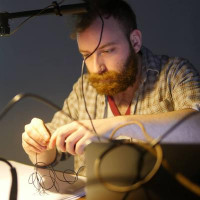
• Mikkel Schou at his Debut Concert. © The Royal Danish Academy of Music
    16/3/2021

    Doing it anyway

    Mikkel Schou: Debut Concert I-II

    Schou is a powerhouse – unafraid to try new things, push himself in new directions, and pull us all along with him. We sorely need this energy, and we are lucky to have Schou and his do-it-anyway attitude.

    But sometimes do-it-anyway needs tempering a little. Schou spoke about how he prepared this concert without guidance from his teachers. Brave, but I missed a guiding hand, a sharper focus. Both concerts were too long, and not always coherent. I sensed an artist who has defined himself by who he isn’t, but not yet by who he is.

    Still, there were glimpses of a unique personality. Stefan Prins’ Generation Kill was an odd choice to start a debut concert with – Schou’s back was facing the audience, and the piece did little to highlight his skills as a performer (I also hated the piece, but that’s a personal matter). So I’m going to pretend that the concert started with Johannes Kreidler’s Guitar Piece – a vile little video-nasty to which Schou fully committed. A perfect manifesto – the absolute nerve of presenting two years of soloist class education by eating your guitar. I wish we’d had more of this playfulness.

    But the energy sagged with a disparate selection of pieces that seemed more like a composer class concert than a presentation of a fresh artistic profile. Props to Schou for this – using your debut concert to focus on younger composers is bold, and should be celebrated. I just wish we’d had more Schou. My highlight was Emil Vijgen’s Photobooth Study, where Schou got to engage with his instrument in a different way, let loose a little, and be a soloist.

    Schou may present himself as a force of nature, and he is, but there is an air of sensitivity (reticence, even) to his presence that does not always match up with the pieces being performed. Rob Durnin’s What, de facto could have benefitted from some more ‘fuck you’ attitude – the performance was oddly shy.

    The late-night concert’s improvisation was fun: it’s always a joy to see Marcela Lucatelli and Henrik Olsson improvise (although Schou was the clear third wheel). However, the concert was overlong, and did not add much to Schou’s profile. I get that he wanted to show more sides of himself, but, again, it came at the expense of focus. Replacing Esben Nordborg Møller’s bloated Drones with Sarah Nemtsov’s lounge-jazz tinged Seven Colours from earlier would both shorten the concerts and sharpen the intention.

    But these things are matters of polish. Schou is a rare and exceptional artist, and deserves accolades for his work and for these concerts. With more confidence and time to refine his vision, there is no doubt that Schou will be an essential fixture on the new music scene for years to come.


  • 15/12/2025

    Uncompromising Vignettes of Silence and Sighs

    Hildur Guðnadóttir: »Where to From«

    It seemed to come like a bolt from the blue when the Icelandic cellist and composer Hildur Guðnadóttir broke the sound barrier with an uncompromising, inward-looking sound situated between contemporary classical and experimental music – most widely recognised through her suffocating soundtracks for Chernobyl and Joker.

    Yet on her Deutsche Grammophon debut Where to From, it is the personal spaces we are invited into. The instrumentation is pared right back to a chamber ensemble, voices, and extended passages of near-absolute silence. The result is often achingly beautiful – and deeply affecting.

    The work unfolds in small vignettes, rarely lasting more than a couple of minutes, before vocals are introduced in the album’s second half – most notably in »Make Space« and the exquisite a cappella hymn »I Hold Close«. The equally beautiful »Melody of Not Knowing« explores the cello’s darkest registers, striking blue midnight tones in the echo of the heart, especially as it glides into »All Along«, where voice and strings merge.

    Where to From is a powerfully mood-saturated work that moves effortlessly between chamber music and neoclassicism, finding its uncompromising character in the quietest, most intimate sighs between human and instrument. It is neither too little nor too much – always precisely measured. And for that very reason, Guðnadóttir remains such a compelling musical presence.

    English translation: Andreo Michaelo Mielczarek


  • © PR
    15/12/2025

    Kompromisløse vignetter af stilhed og suk

    Hildur Guðnadóttir: »Where to From«

    Det syntes at komme som et lyn fra en klar himmel, da den islandske cellist og komponist Hildur Guðnadóttir brød lydmuren med en kompromisløs, indadvendt lyd i spændingsfeltet mellem moderne klassisk og eksperimentel musik – særligt kendt for sine knugende soundtracks til Chernobyl og Joker.

    Men på sin Deutsche Grammophon-debut Where to From er det snarere de personlige rum, vi inviteres ind i. Instrumentationen er skrabet helt ned til kammerensemble, stemmer og lange passager med decideret stilhed. Og det er ofte gudesmukt og vedkommende.

    Værket består af små vignetter, der sjældent varer mere end et par minutter, før vokalerne introduceres på pladens anden halvdel – blandt andet i »Make Space« og den underskønne a cappella-hymne »I Hold Close«. Den ligeledes skønne »Melody of Not Knowing« udforsker celloens mørke klange og rammer de blå midnatstoner i hjertets ekko, ikke mindst når den glider over i »All Along«, hvor stemme og strygere forenes.

    Where to From er et stærkt stemningsmættet værk, der bevæger sig ubesværet mellem kammermusik og neoklassicisme og finder sin kompromisløshed i de helt stille, fortrolige suk mellem menneske og instrument. Det bliver hverken for lidt eller for meget – altid helt tilpas. Og netop derfor forbliver Guðnadóttir et så vedkommende musikalsk bekendtskab.


  • © Julia Haimburger
    6/12/2025

    Minimalism for Patient Ears

    Lukas Lauermann: »Varve«

    Varve – from the Danish varv – refers to the annual layers of sediment, a quiet geological archive of time’s passage. Lukas Lauermann’s album carries this meaning into its very sonic core. Here, organ and vocal samples taken from worn cassette tapes meet an inquisitive, almost ascetic cello that moves like fine strokes across a flickering, dust-filled soundscape.

    The cello is restrained but never passive. It slips in and out of the cassette’s white noise, of fragmented voices and the organ’s gentle currents of air, until all elements ultimately merge into a single, organic texture. Lauermann himself describes the music as a depiction of irregularities, and it is precisely in these small shifts that Varve finds its quiet strength. The album’s idea of sonic sedimentation becomes an image of our longing to reconnect with nature’s tempo. The compositional motifs seem repetitive, yet they never repeat themselves entirely; they build layer upon layer, like organic growth. As a listener, one becomes witness to microscopic changes slowly unfolding – a process that can bring about an almost meditative state.

    Varve is an album for those who prefer listening experiences at an unhurried pace; for those who find Hans Zimmer too grandiose and would rather follow the patient growth of grass than an orchestra’s emotional climaxes.

  • © Julia Haimburger
    6/12/2025

    Minimalisme for tålmodige ører

    Lukas Lauermann: »Varve«

    Varve – på dansk varv – betegner de årlige lag aflejringer af sediment, et stille geologisk arkiv over tidens passage. Lukas Lauermanns album bærer denne betydning med sig helt ind i sin lydlige kerne. Her mødes orgel- og stemmesamples fra slidte kassettebånd med en undersøgende, næsten asketisk cello, der bevæger sig som fine streger i et ellers flimrende og støvfyldt klangrum.

    Celloen er tilbageholdt, men aldrig passiv. Den glider ind og ud af kassettens whitenoise, af fragmenterede stemmer og orglets lette luftstrømme, så alle elementer til sidst fremstår som én samlet, organisk tekstur. Laurmann beskriver selv musikken som en skildring af uregelmæssigheder, og det er netop i de små forskydninger, at Varve finder sin særlige styrke. Albummets idé om lydlige aflejringer bliver et billede på vores længsel efter forbindelse til naturens tempo. De kompositoriske motiver virker repetetive, men de gentager sig aldrig helt; de bygger lag på lag, som organisk vækst. Som lytter bliver man vidne til mikroskopiske forandringer, der langsomt folder sig ud – en proces, der kan føre til en næsten meditativ tilstand.

    Varve er et album for dem, der foretrækker lytteoplevelser i langsomt tempo; for dem, der finder Hans Zimmer for storladen, og som hellere vil følge græssets tålmodige vækst end et orkesters følelsesmæssige kulminationer.


  • © PR
    5/12/2025

    Anna von Hausswolff: The Path to the Organ’s Modern Resurrection

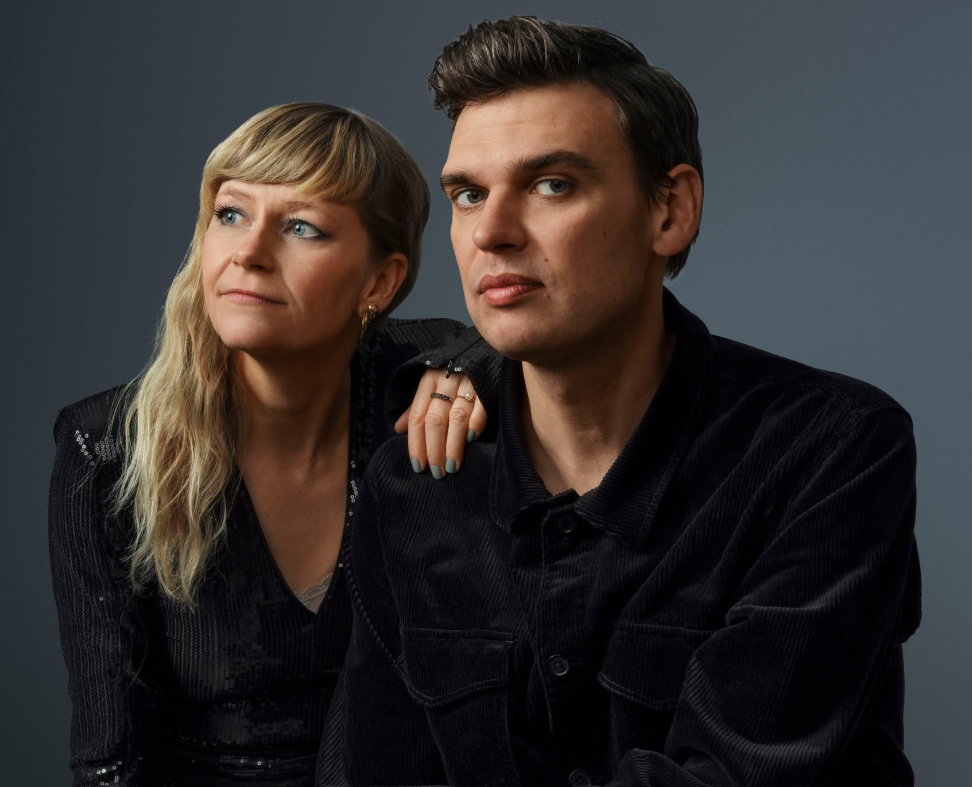
    Klara Lewis, Anna von Hausswolff

    The organ, one of Christianity’s most powerful liturgical markers, runs like a red thread through Swedish artist Anna von Hausswolff’s work. But on her latest album Iconoclasts, the long, piercing drones are toned down in favour of a sharper, driving energy. It was an energy that came through strongly at Hausswolff’s concert in Vega last night, where she was, as usual, joined by a large band. The evening opened with Swedish noise musician Klara Lewis, whose mumbling cassette-loop textures set a brutally atmospheric tone from the start.

    Hausswolff’s band was this time expanded with saxophone and percussion, both central on Iconoclasts and both contributing to the slight eurodance tinge that colours several tracks. Unfortunately, the saxophone was at times swallowed by the dense soundscape. Fortunately, Hausswolff’s radiant voice cut through clearly. So did the small organetto – a kind of bellows-driven organ with long pipes. It stood like a totem at the centre of the stage and was almost embraced by Hausswolff whenever she played it. A piece like »The Whole Woman« (a waltzing duet with Iggy Pop on the album) became, in concert, a touching love ode, carried by the organ’s gentle breath as its pulse.

    In recent years, a number of musicians have used the organ’s distinctive resonances to wrest it free from the weight of Christian liturgy, giving the instrument an almost iconoclastic status. Despite a slightly muddy sound mix, Hausswolff’s concert was a clear example of this contrast – still deeply rooted in ecclesiastical connotations, yet now an accomplice in large-scale modern productions and a central instrument on major stages.