in brieflive
14.01

All Life Has the Right to Live

Lara Tacke, Alexandra Moltke Johansen, Kirstine Fogh Vindelev, Katinka Fogh Vindelev, Freya Sif Hestnes: »Animal«
© PR
© PR

It is this violent and feral line of text that hangs like a monolith in the austere stage space at Sort/Hvid after 80 minutes of a furious, raging monologue in the performance Animal. Actress Signe Egholm Olsen is left standing like an animalistic goddess who has carried out her own ritual of purification. A ritual about motherhood and about morality for animals and humans alike – flanked by the three wordless classical singers Katinka Fogh Vindelev, Nina Smidth-Brewer, and Hávard Magnussen, who function as a chorus in a Greek tragedy. They illustrate and stage the text through precise sonorities.

Animal is based on Alexandra Moltke Johansen’s debut novel from 2022 of the same name and overflows with meaning, hurled into the audience’s face from beginning to end. Worries, anxiety, angry activism, grief, and doubt – tied to being pregnant and becoming a mother to a »useless« child with Down syndrome in a world marked by climate catastrophes, war, inhumane political cynicism, and greed. All of this flows from the mother’s inner dialogue as a long moral reckoning and outpouring, unfolding in a scenic tour de force – from the clinically clean and artificial atmosphere of a wellness spa to a material chaos of soil, branches, and sweat.

Kirstine Fogh Vindelev has composed a soundscape that makes it possible for us to breathe at all. Discreet choral tones, small electronic passages, a touch of barbershop, screams, and a pop song are wedged in between the words. It is simple and straightforward. The music is allowed to comment and converse like a shadow presence alongside the many words, but at no point is it allowed to become the protagonist or truly carve out its own space within the performance. One could easily wish for another form of sensory reflection than that which words and speech alone can provide.

in brieflive
24.05.2025

The Electronic Altar

 Fascia, Soli City, Nagaver
© PR
© PR

The table is a practical prop at most electronic music concerts. It has almost become a symbol of how electronic music is denied the same expressive, physical gestural language as acoustic music. This rigid symbolism was thankfully broken when the concert network Up Node hosted a showcase evening at Alice, featuring three emerging experimental electronic artists from Norway, Sweden, and Denmark.

The MacBook stood enthroned like an altar as Swedish artist Fascia opened the evening, holding a blinking flashlight above her head – each flash triggering brutal bursts of noise. When she placed a webcam in her mouth and projected the table’s mysterious objects onto the screen behind her, the boundary between stage and audience dissolved through simple yet cunning technology.

Next to his MIDI keyboard, Danish artist Soli City had his trademark moving-head lamp. Like a robotic head, the lamp lit up and rotated in sync with epic crescendos and computerized voices. Soli City’s music is built around field recordings and classical instrumentation – strings and piano – forming a universe that exposes the tension between human and technology. The animated lamp and dramatic light show took centre stage, while composer Harald Bjørn stood like a hidden puppeteer, gently guiding the futuristic narrative forward.

The table in front of Norwegian artist Nagaver had been laid flat on the stage floor, forming a low wall. Behind it knelt Ilavenil Vasuky Jayapalan, who unleashed hard-hitting, dark rhythms from a DJ mixer, enveloping Alice in a transcendent haze. The concert evolved from driving trance into a kind of karaoke performance, with Jayapalan singing over dusty tracks—and unfortunately the music felt more like a run-through than a fully realized concert.

Behind the table lie untapped potentials for auditory innovation, but practical constraints often limit performative expression. The concerts by Fascia and Soli City succeeded in breaking the boundary between mere execution and true performance, reminding us that not all music needs to be presented with the same gestures – and that sometimes all it takes is a webcam and a laser lamp to make that clear.


in briefrelease
21.05.2025

Emergent Music

Lauri Supponen: »Dwell«
© Tuomas Tenkanen
© Tuomas Tenkanen

As an abstract micro manifesto Lauri Supponen describes his interest in »music that inhabits a second space and lingers there«, an invitation for us to dwell in the moment and discover music in its quiet emergence. 

»Gaz aux étages«, the first composition on Supponen’s breathtaking album, seems to test this idea as it unfolds with whispered bow strokes devoid of pitch. It is as if the piece itself is an entity wondering if it will prove to be music as it tentatively investigates its own constituent components. A subtle opening to an album that answers this question with clarity in its eponymous second work »Dwell« (tracks 2–5), exploring a fascinating microtonal realm. In virtuoso performances of astonishing accuracy, guitarist Petri Kumela and vocalist Tuuli Lindeberg bring Supponen’s demanding four-movement duo to life. The guitar writing in Dwell recalls Norwegian composer Martin Rane Bauck’s Fretted with Golden Fire with its drone-like microtonal strumming – a connection substantiated by the album notes, which reveal both composers know each other and have collaborated with bass clarinetist Madison Greenstone. 

The dwelling-space Supponen offers in »Eau & gaz à tous les étages« and »Opus Nen«, return the listener to a more remote sonic space, reminiscent of the album’s opening albeit with tighter compositional sense. Performed with intensity by Madison Greenstone and baritone saxophonist Sikri Lehko, they consolidate the pervasive feeling that Dwell is a uniquely inspired collaboration.

© PR

»Every moment is nothing but the uttermost end of the past. Music makes this edge wide and beautiful.«

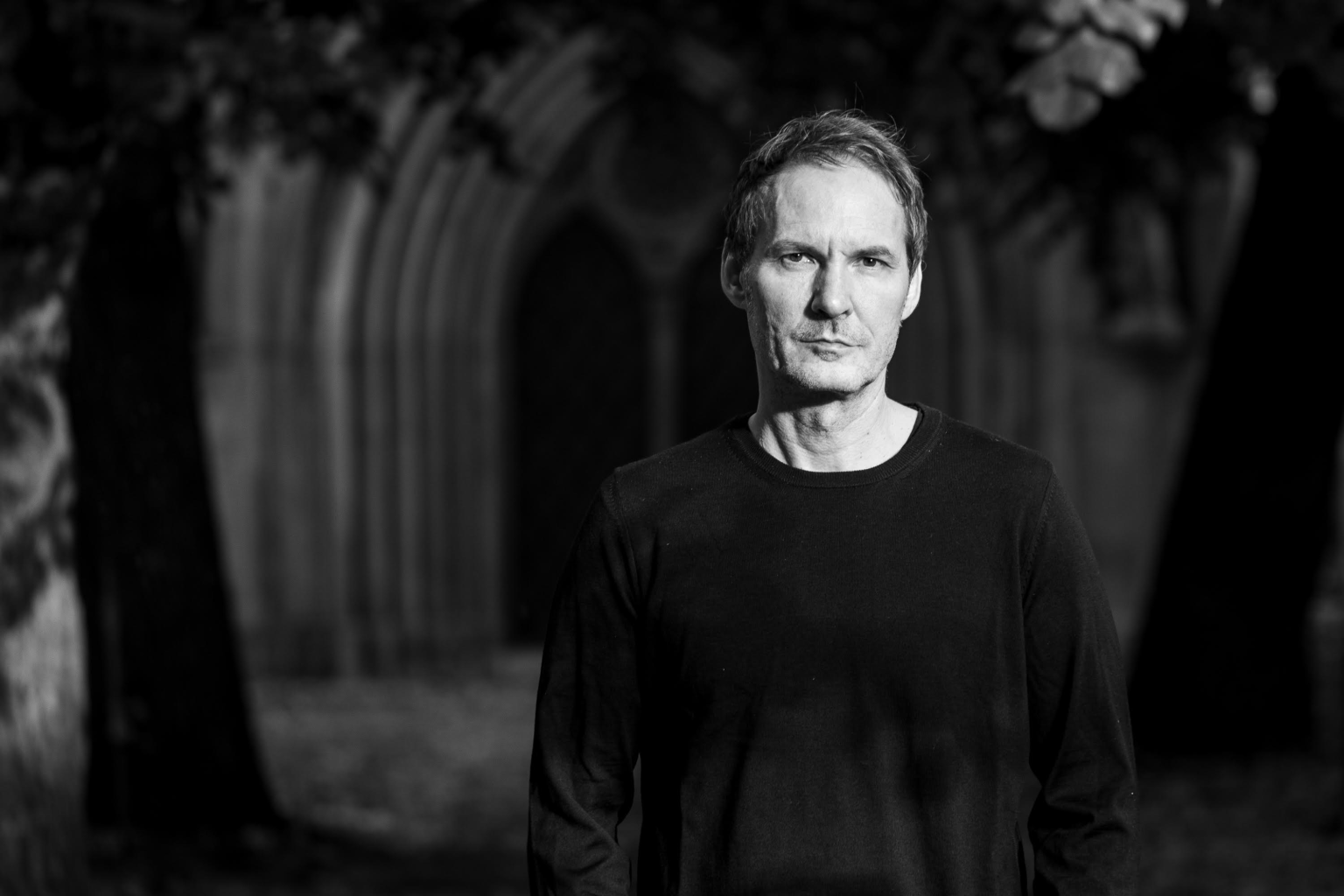
Sven Helbig is a German composer and producer known for combining orchestral and choral music with electronic elements and a strong poetic sensibility. A self-taught musician raised in Eisenhüttenstadt, he released his debut album Pocket Symphonies on Deutsche Grammophon to critical acclaim for its emotional depth and formal precision. Helbig has collaborated with ensembles such as the BBC Singers, Fauré Quartett, and Staatskapelle Dresden, as well as with artists like Rammstein and the Pet Shop Boys. He just released REQUIEM A on Deutsche Grammophon. It is a deeply personal and reflective composition, intertwining classical Latin liturgical texts with new ones written by Helbig himself. The work revolves around themes of loss, memory, and the possibility of renewal – with the »A« in the title symbolizing Anfang (beginning) and the belief in a new start after devastation.

© PR

»A lot is projected onto music and making music – I'm careful, singing doesn't make you more intelligent and certainly doesn't make you a better person. It's like in sexuality. A lot of things go very consciously wrong for some people. Music like sex are means of communication, people come into contact and negotiate with each other and their instruments/tools and meet themselves in it. This is also the case when I listen to music – from every conceivable genre and context, even if I always notice that as a teenager I used to play a lot of jazz guitar.«

Bastian Zimmermann lives in Munich and works freelance in the areas of music and performance. As a dramaturge, he works with artists such as the soloist ensemble Kaleidoskop, Yael Ronen and Neo Hülcker. He is editor of the German speaking magazine Positionen – Texts on Current Music and curates projects such as »Music for Hotel Bars« and the festival Music Installations Nuremberg festival. His focus is on social aspects of making music, experimental music concepts and the questioning of bourgeois structures in contemporary music. In Spring 2025 he will take over the Wolke Verlag publishing house for books on music with Patrick Becker.