Allan Gravgaard Madsen
27




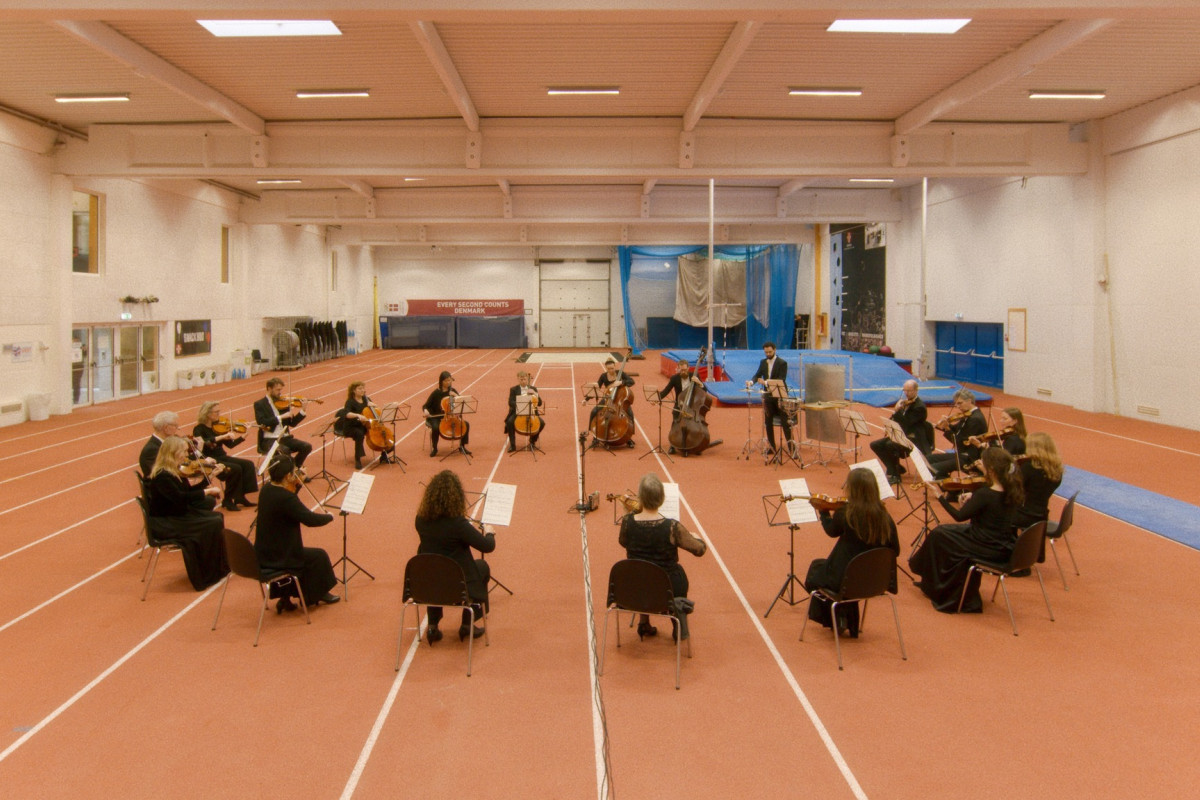
Allan Gravgaard Madsen’s and Morten Riis’s Away is a »mixed media« orchestral work. The physical orchestra is supplemented by sound and video recordings from the basement of Aarhus Theatre (woodwind quintet), Aarhus Cathedral (brass quintet), and Marselisborghallen (string orchestra). All of these locations have, at various points over the past 90 years, housed the Aarhus Symphony Orchestra.
Away opens with the final two chords of the overture to Rossini’s William Tell (1829), which are explored throughout the orchestra. Gradually, musicians leave the ensemble, only to reappear later in smaller constellations in recordings from the aforementioned locations. Through technology, the orchestra plays across time and space in a highly successful manner.
The work explores stasis and movement, with air as a central device: the wind players often blow into their instruments without producing tones, while the string players imitate the sound of wind using plastic bags. For me, Away has three highlights. Trumpets and percussion play phrases that turn out to anticipate a video of a flutist walking through the city. The trumpets mimic the sound of a truck – »beep-bop-beep-bop« – and the percussion becomes the flutist’s stilettos. Musique concrète turned on its head! At one point, half of the string players are seen sitting in a circle, playing intensely dissonant chords, only to kill them again – the physical shock activated my ears. The third highlight comes when the entire orchestra plays together again while all three projections are running simultaneously. Here, the work can truly begin, and one clearly senses the energy rising in the room. But – unfortunately – as soon as this climax is reached, the intensity drops again.
At just under 45 minutes, Away is, unfortunately, slightly too long and static for my taste. The effect of the aforementioned ruptures might not have been as strong in a shorter format, but I would have wished for just a bit more of the intensity the work so clearly was capable of delivering. I was left with a somewhat flat feeling. The piece also ended so quietly that several people were unsure whether it had actually finished and whether we could applaud.
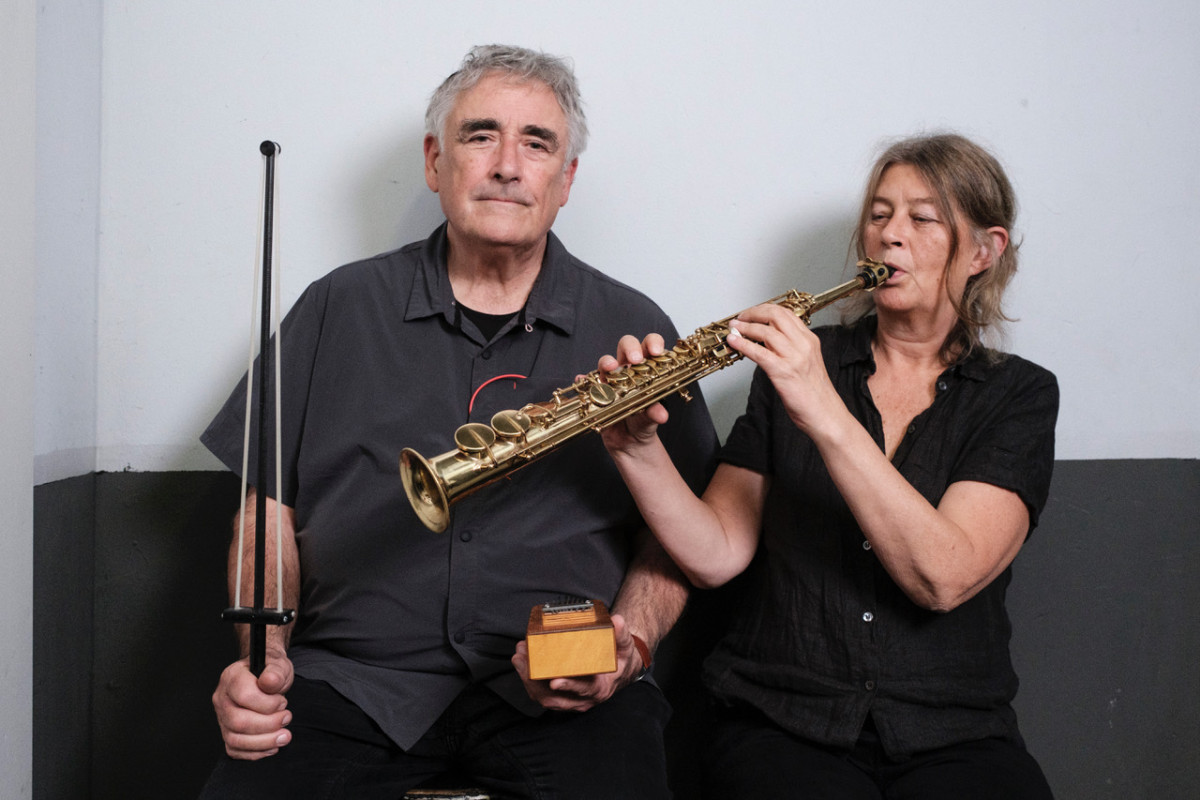
On Wednesday evening at 5e, the audience witnessed a meeting between two musicians who, in terms of stage presence, did not immediately seem to have much in common. Lotte Anker sat upright in her chair with either alto or soprano saxophone resting on her lap, while Fred Frith leaned forward over his guitar, pedals and the many small objects he used to force all manner of sounds out of his instrument. Stoic calm versus frenetic tinkering. Outwardly, they seemed like opposites. Musically, however, they were closely connected.
They hardly looked at each other during the set, yet seemed completely absorbed in the sound they were creating together. At times, the music was knotty and difficult to penetrate: un-guitar-like tones, percussive attacks, almost rock-like passages, rapid saxophone runs, long sustained notes, noise and overtones. Like a riddle that had no desire to be solved. At other moments, Frith created clear drones over which Anker moved with melancholy grace, sensuous and beautiful. It sounded like a wordless tale of darkness, fear and uncertainty, but also of light, hope and togetherness. The essence of life distilled to the meeting point between two of jazz’s great singular voices.
The concert ended with the evening’s most direct gesture between the two. A gentle tone from Frith’s guitar rang out continuously until he suddenly brought his hand down on the fretboard with a resounding thud and sent Anker a mischievous smile. A brief acknowledgement of the intense ride they had just taken the audience through.
English translation: Andreo Michaelo Mielczarek
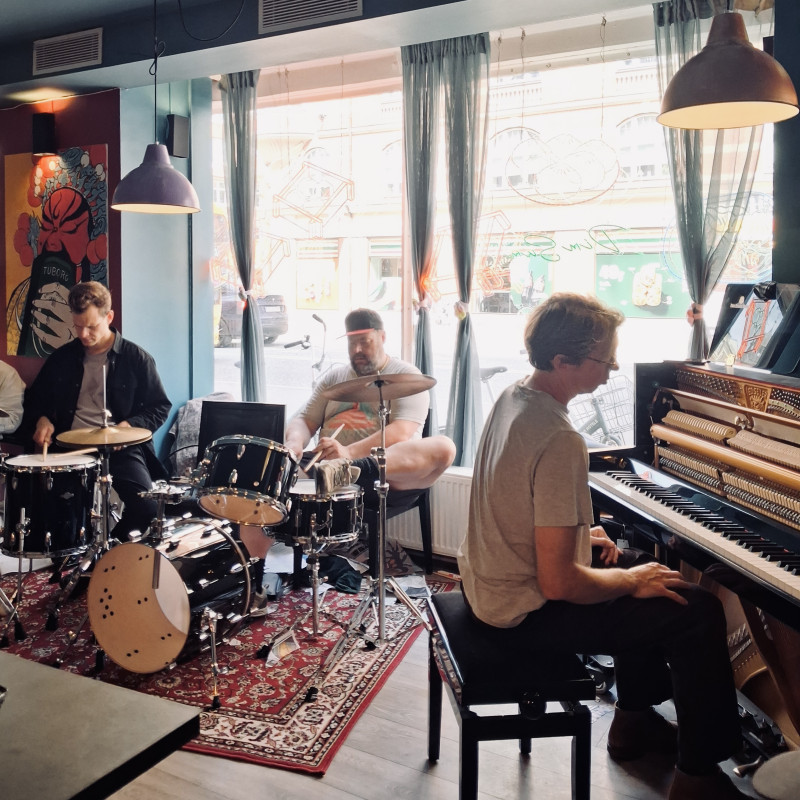
Søren Kjærgaard at the piano, Kresten Osgood and Christian Lillinger each at half a drum kit, pak choi with shiitake mushrooms and rice. Free jazz and Chinese cuisine may not be the most obvious combination, but on Wednesday afternoon at CC Taste it proved its worth.
The French composer Erik Satie was reportedly frustrated that Parisian café audiences did not ignore his so-called furniture music to a sufficient degree. Kjærgaard, Osgood and Lillinger seemed unlikely to share such concerns on the second night of their five-day residency at the Chinese restaurant on Amagerbrogade. On the contrary, with pronounced showmanship they played not only drums and piano, but also a ceiling lamp, a radiator and Osgood’s shoes. There was shouting, laughter, and newspaper pages being torn to pieces.
Osgood and Kjærgaard, who are cousins, have played together all their lives, and it showed in the ease with which they threw themselves into the music. Together with Lillinger, they needed only seconds to find a shared level of intensity. It swayed, crashed and creaked in every direction. The music thundered ahead until it suddenly stopped and Kjærgaard’s piano stepped forward in calmer, more indeterminate passages. Then the surroundings reasserted themselves: cutlery against plates, the number 5C bus passing the windows on Amagerbrogade, an egg timer ringing in the kitchen.
Good food and good music have a great deal in common, but fortunately they did not dissolve into some mythical, rather uninteresting higher unity. Instead, the evening thrived on the friction between two separate sensory spaces: the concert and the restaurant, listening and eating, free improvisation and the everyday dinner scene. Satie might well have turned in his grave. I loved it.
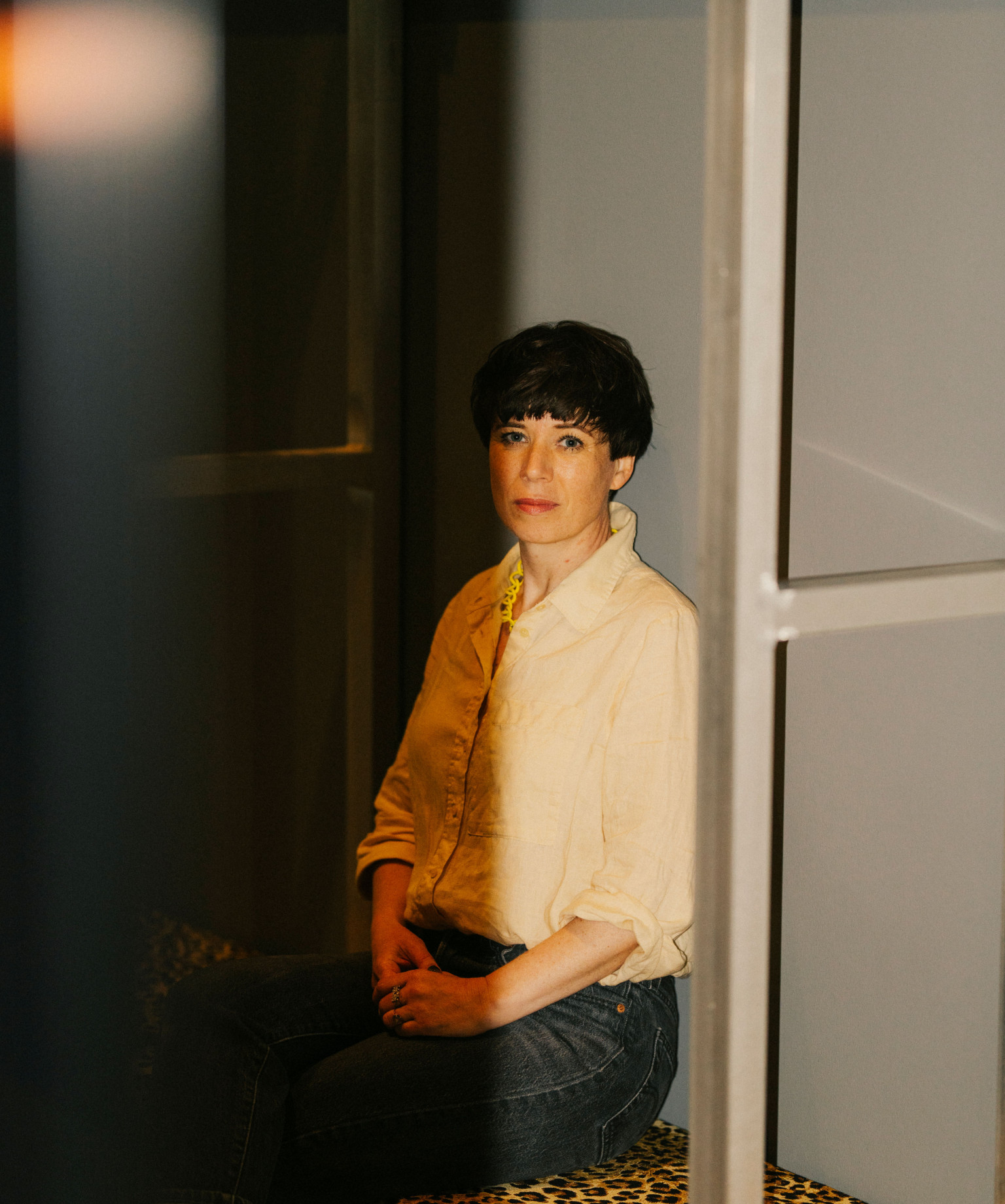
»Music for me is medicine, comfort and a kick in the ass. Community, joy, a vent. Poetic political compass. And over the years, music has also become a kind of life chapter, linked to specific places, times and people.«
Marie Arleth Skov is a Danish art historian who has lived in Berlin since 1999. She works at the intersection of art, sexuality and music, with a primary historical focus on surrealism and the punk movement in the 1970s and 1980s. Her book Punk Art History was published by Intellect Books (UK) in 2023. Most recently, she has curated the exhibition UNRULY. The Body in Punk, which can be seen at Aros Kunstmuseum in Aarhus in the autumn of 2026. The catalogue for the exhibition is published by Marrow Press.

自由即兴创作比性爱更好! – »Free improvisation is better than sex.« According to drummer Kresten Osgood, the saying is attributed to Confucius. Whether the ancient Chinese philosopher ever uttered those words is doubtful. But the quote perfectly captures the spirit of one of the most unusual events at this year's Copenhagen Jazz Festival.
From 7–11 July, pianist Søren Kjærgaard and drummer Kresten Osgood will take over CC Taste on Amagerbrogade, performing daily from 2–4 pm among diners, dim sum and steaming hot pots.
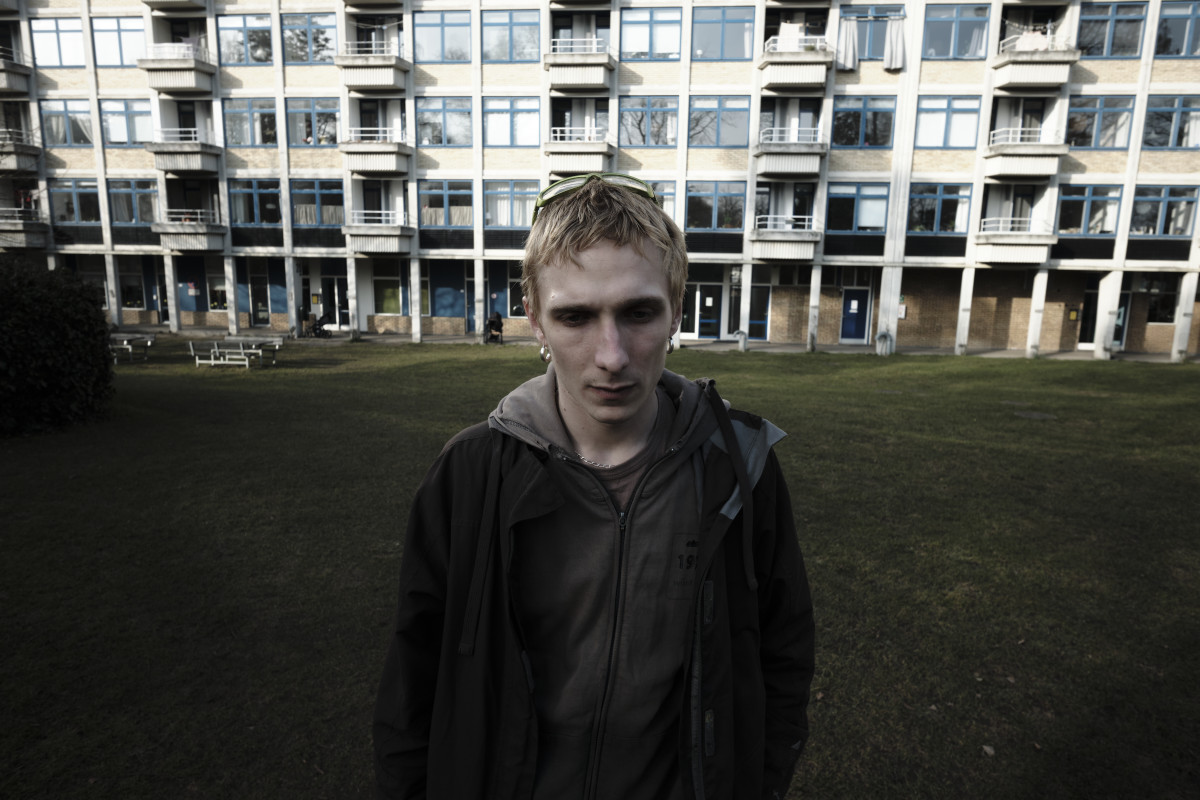
With Soli City, the boundary between the organic and the synthetic is almost impossible to discern. What first appears to be an ordinary piano suddenly slips into a dizzying glissando. Soli City resembles a cyborg – half cello, half computer – fusing strings and voices into a seamless digital synthesis. The result is a science-fiction dream interrupted by surreal monologues and abruptly punctuated by the shrill click of a camera shutter.
That percussive camera-flash motif runs throughout both PARADOXE (2024) and the new album Poetics of a New Estate. Here, Harald Bjørn, the composer behind Soli City, further develops the sonic language introduced on its predecessor. Whereas PARADOXE staged the encounter between acoustic and digital sounds as an explicit confrontation, the two worlds now feel far more deeply integrated. Even the album's abrupt shifts seem entirely natural, as on »Rooms & Walls«, where a slurred vocoder and delicate string textures give way to an insistent drum groove.
Soli City's music embodies a distinctive form of self-reflection. As acoustic sounds bend, fracture and are interrupted by those recurring electronic flashes, we are reminded of Bjørn's remarkable ability to compose genuinely innovative music. Just as the most visionary science fiction remains rooted in the realities of its own time, every musical breakthrough carries echoes of the past. Soli City embraces these nostalgic resonances only to twist them into unfamiliar shapes.
With deceptively simple means, Poetics of a New Estate dissolves the boundary between nostalgia and contemporaneity. Like a true cyborg, Soli City reveals the divide between the digital and the acoustic to be less a fundamental opposition than an oddly arbitrary construction.