







in briefrelease
04.07

When Machines Dream: The Electronic Poetry of Oh No Noh

Oh No Noh: »As Late As Possible«
© Nikolas Fabian Kammerer

There’s something distinctly mechanical about Oh No Noh’s album As Late As Possible. Like a warped, crumpled tape, melodies bubble to the surface, and the offbeat rhythms repeat with the halting tempo of a scratched LP. It’s easy to place Oh No Noh within the esteemed German tradition of blurring the lines between human and machine, but on As Late As Possible, the machine sounds more like a distant relative than a deliberate artistic objective.

Behind Oh No Noh is Leipzig-based guitarist Markus Rom. In addition to a wealth of synthesizers and tape loops, the album’s 11 tracks are performed using guitar, drums, banjo, clarinet, and organ. The absence of vocals sets the album in a subdued, cinematic mood, and the music feels like a nostalgic inner monologue, told with a warm affection for the melancholy of outdated technologies.

Although mechanical sensibilities are prominent throughout the album, several tracks are driven by more melodic band arrangements. But to me, As Late As Possible is clearly most compelling on the less melodic pieces. The crooked and noisy »Fawn« or the hesitant closing track »Ore« are moments where the dialogue with the machine elevates the music in ways that the more melodic, band-oriented pieces don’t quite reach. These are places where the machines sigh nostalgically and form small, imperfect thought bubbles that cut off and restart again.

English translation: Andreo Michaelo Mielczarek

© PR

»Music has been a healing balm for me.«

John William Grant is an American singer, musician, and songwriter holding both American and Icelandic citizenship. He first came to prominence as a co-founder, lead vocalist, pianist, and primary songwriter of the alternative rock band The Czars. After releasing six albums between 1994 and 2006, the band disbanded, and Grant withdrew from music for four years before embarking on a solo career.

He returned in April 2010 with a critically acclaimed debut album recorded in collaboration with Midlake. Queen of Denmark was named Album of the Year 2010 by Mojo magazine and was also selected as one of the ten best albums of 2010 by The Guardian’s music critics and writers.

© Malthe Folke Ivarsson

»In his music, composer Allan Gravgaard Madsen tries to create a better version of himself.« 

Allan Gravgaard Madsen is a Danish composer based in Copenhagen. His most recent works include Träume nicht and Nachtmusik. He tries to create a better version of himself in his music – where his personality tends to be restless, chatty and has an active inner life, his music is controlled, simple and merciless in its expression. He is the recipient of the Carl Nielsen & Anne Marie Carl-Nielsens Hæderspris 2022.

in briefrelease
23.01.2022

Finnish Space Travel

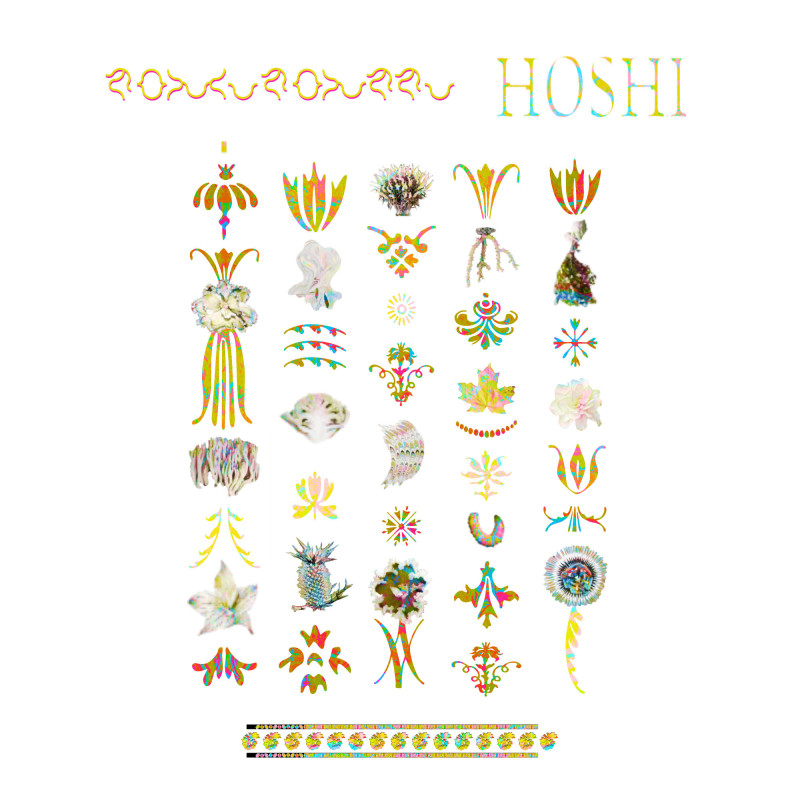
Tomutonttu: »Hoshi«
© Tomutonttu: »Hoshi«

The Finnish multimedia artist Jan Anderzén has, with the album Hoshi, released under the solo moniker Tomutonttu, created a true little star. Not only because »hoshi« literally means »star« in Japanese, but above all due to the music itself. There is something cosmic, yet infinitely minute, about the sonic worlds Anderzén conjures—like a galaxy reflected in a puddle, or a space journey in a rocket carved from a hollow tree trunk. Synths emit busy, warm blips and bloops, while ultra-short vocal and instrumental samples create a recognizable blur. At once artificial and organic – soft, rounded, jagged, crackling.

Anderzén approaches sound with a playfulness I simply adore. His music is strange in an incredibly comforting way. It places me in a kind of colorful, trance-like state, only interrupted when, several times over the course of the album, I find myself smiling in delight at a particularly great sound. The synths on »Katse osuu sähköön!« The choral samples on »Kesä oli äkkiä ohi!« Milo Linnovaara’s flute on »Malta lausua ‘AH’!« And many more. Hoshi is an album packed with microscopic moments that together form a frayed, exploding, radiant, idiosyncratic whole—a stellar moment of just under 38 minutes.
