© Ultima
© Ultima

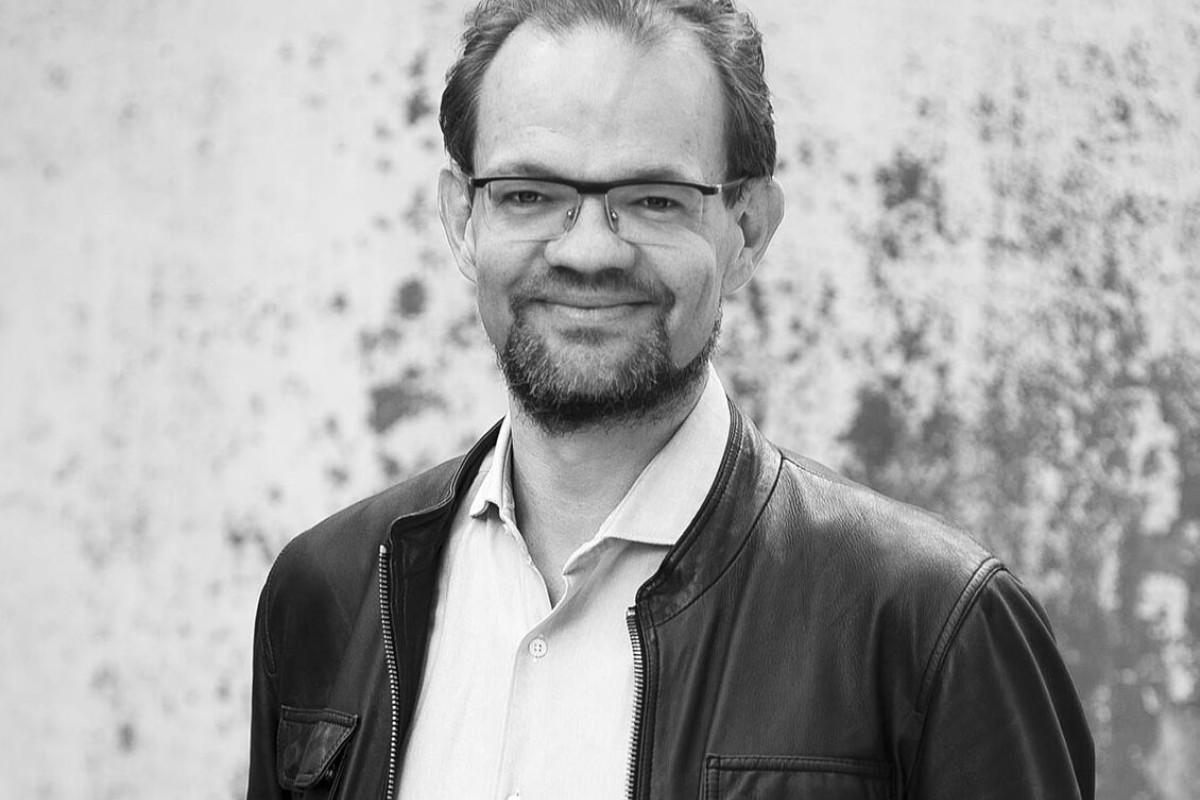
Thorbjørn Tønder Hansen has died. With Thorbjørn’s passing, the art music community has lost one of the Nordic region’s most significant producers, curators and cultural leaders.

For more than two decades, Thorbjørn worked at the intersection of contemporary music, sound art, festival management and Danish-Norwegian cultural cooperation. From 2000 to 2006, Thorbjørn was manager of the Norwegian Cikada Ensemble. In 2009, he became director of Art Music Denmark (then Snyk), a position he held until 2017, when he returned to the Norwegian cultural scene as director of the Ultima Festival. In the final years of his life, Thorbjørn served as a board member of the Foundation for Danish-Norwegian Cooperation.

Thorbjørn was a well-liked and visionary cultural leader who left an indelible mark on the music scene. I, like many other Danish artists, probably remember Thorbjørn best for his inspiring and courageous projects, such as the G((o))ng Tomorrow Festival (formerly Wundergrund). Thorbjørn was never afraid to give young and emerging artists a chance to perform, and I do not think it is an exaggeration to say that, for this reason alone, Thorbjørn had an impact on an entire generation of Danish artists.

I was still a young composition student when I first met Thorbjørn. It must have been around 2008. At the time, Thorbjørn was a project manager at Art Music Denmark, which was in the midst of developing G((o))ng Tomorrow. A festival that mixed genres and crossed artistic communities, Thorbjørn explained – a radical concept in Denmark at the time. The next thing I knew, I was standing on the G((o))ng stage at Råhuset with a group of wild young artists – musicians and composers, from both classical and rhythmic traditions, with vastly different artistic expressions and working methods. The concert that followed was hardly an artistic revelation, but the conversations, friendships and nights at the bar with a group of artists I would otherwise never have encountered opened my eyes to an entirely new way of collaborating – both artistically and in terms of cultural production.

Over the years, Thorbjørn developed many international friendships with artists and institutions from near and far. Thorbjørn and G((o))ng Tomorrow introduced countless exciting artists to Denmark while also opening new doors abroad for Danish artists. For many years, Thorbjørn was almost synonymous with Danish art music abroad and an exceptionally important link between artists, venues and festivals.

This is how I believe many people remember Thorbjørn: as an inspiring figure with forward-looking ideas, curious and courageous, and with a strong understanding of the value of international musical exchange.

The Danish music scene would not be the same without Thorbjørn. The same can be said of Art Music Denmark. Our small genre organisation has changed considerably since Thorbjørn was its director. Nevertheless, I am proud of the organisation I myself took over, and where the fundamental values from that time are still very much alive. An organisation that works to create new opportunities for artists. An organisation with a strong international network and a focus on international musical exchange. I do not believe this would have been possible without Thorbjørn’s immense and tireless groundwork.

Thorbjørn Tønder Hansen has died. He will be deeply missed, not only by artists and the cultural community across the Nordic region, but also by his many friends and collaborators around the world. Thorbjørn created connections, ideas and visions that continue to shape today’s cultural landscape. I have no doubt that his impact on the cultural life of the Nordic region will live on.

My warmest thoughts go out to Thorbjørn’s family and loved ones at this difficult time.

May Thorbjørn’s memory be honoured.

Regin Petersen
Director, Art Music Denmark

© Carlos H. Juica

»Music is inseparable from listening: a close, attentive act. It’s not about beauty, truth or even intelligibility, but connection. This intense, focused intimacy is where meaning and everything else begins.«

Simon Cummings is a composer, writer, and researcher based in England. His music centres on two areas, both of which blur abstract and emotional impulses. The first, explored in instrumental work, involves highly intricate algorithmic processes rooted in carefully-defined behaviours, in a bespoke approach that combines stochastic and intuitive methods to realise large-scale behavioural transformations. His electronic music typically begins with visual stimuli, used to sculpt time-frequency structures investigating the boundary between noise and pitch, reappraising what defines each and their boundaries. He is currently working on a song cycle for voice and electronics for Icelandic soprano Heiða Árnadóttir, to be premièred in 2026. His research is primarily long-form critical writing on contemporary music, published on his website 5:4, as well as in assorted online and print publications.

in briefrelease
16.08.2025

The Symphonic Statement of the Year

Søs Gunver Ryberg: »Coexistence«
© PR
© PR

My experience of Coexistence, Søs Gunver Ryberg’s ten-minute work for orchestra and electronics, unfolds in two stages.

At first, I am stunned. By the natural ease with which she handles the symphonic material, turning the orchestra into a potent hybrid of acoustics and synthesis. Such bite in the sound, such a sandstorm of granular texture churning on behind the instruments.

Here, I think enthusiastically, the sonic potential of the twenty-first-century orchestra is realised. But then doubt sets in during the second stage. For does something essentially similar happen here as in Swedish composer Jesper Nordin’s hour-long Emerging from Currents and Waves (2018): a technological quantum leap in symphonic sound that nevertheless freezes compositionally into a stop-and-go between thunder and silence?

The supply of drama in Coexistence is almost vulgar: unstable Icelandic dark drones, harsh brass blasts, trembling strings, thunderous timpani, abrupt brakes like those in Hollywood action trailers – and much more besides. It is a heavenly chaos. The contrast: muted alarms of bowed metal, collected noise and extended tones, like a fragile iron framework still shuddering after the storm.

The two temperaments alternate, and it sounds phenomenal under Dalia Stasevska’s direction of the BBC Symphony Orchestra. The work’s core is catastrophe – collapse and aftermath – and seen in that light, the black-and-white extremes make sense. The music is brutal, relentless. But could it have been more: more in colour, beyond the duel? Perhaps. Judge for yourself – Coexistence is without doubt the most striking symphonic statement of the year.

in briefrelease
11.08.2025

Voices From a Bygone Era

Sofie Birch & Antonina Nowacka: »Hiraeth«
© PR
© PR

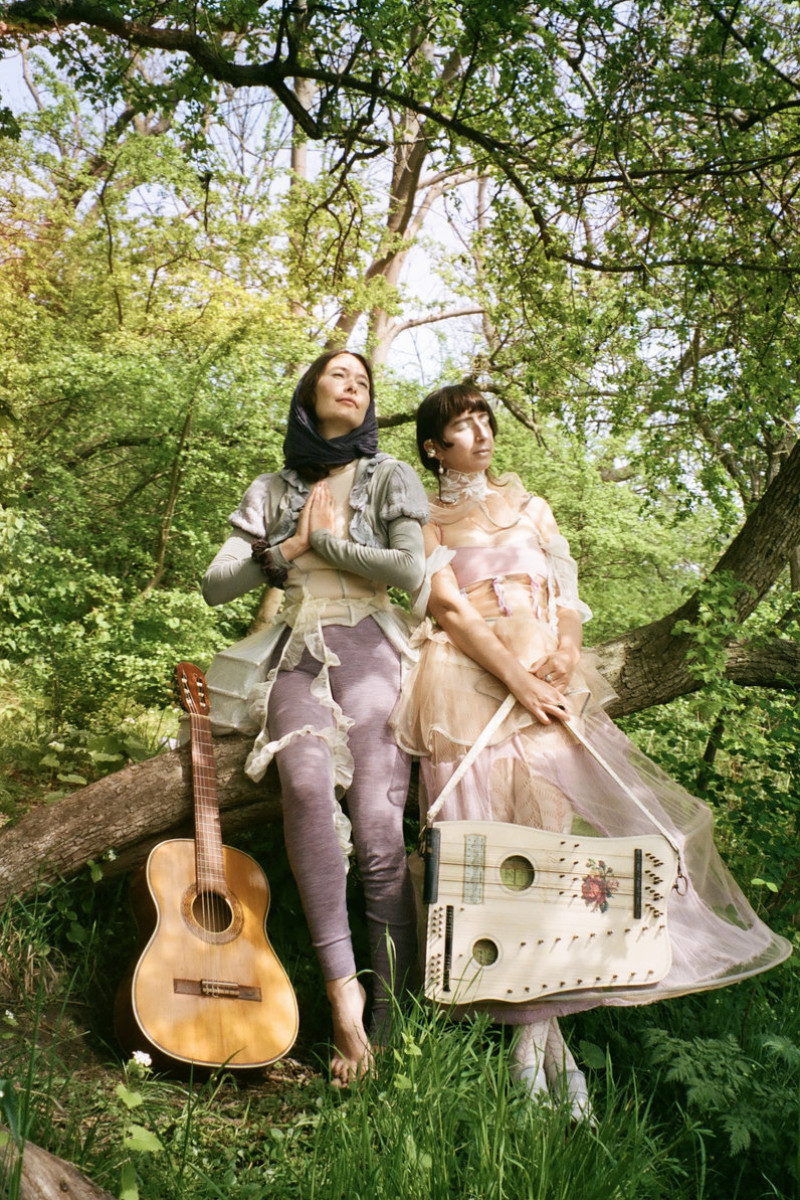
While Sofie Birch and Antonina Nowacka’s joint debut album Languoria, with its synth-laden sound, felt like a dream of another world, their second album comes across more as a window into a bygone time. The electronic elements have stepped into the background in favour of acoustic timbres from sitar, guitar and harp, lending the music a warmer, more grounded character. A fine example is the title track, where a gently trickling stream forms a backdrop for a relaxed dialogue between sitar, guitar and voices that shift between singing and humming. There’s a clear connection to the simple melodies of folk music and those little fragments one might find oneself humming in the kitchen while the kettle boils. It is precisely this personal and inviting tone that makes the composition so effective. The track »Nøkken« likewise testifies to the strength of Birch and Nowacka’s songwriting. With its sparse instrumentation, gentle melody and carefully balanced reverb, the piece brings out the best in their voices and appears almost weightless – transparent and ephemeral.

Together, the Danish-Polish duo create music for those who dream of another time and place – not because they necessarily wish to escape their present reality, but because the quiet moments of daydreaming are full of calm, comfort and enchantment. At times, however, the sense of security takes over slightly, and one misses something to challenge the stillness – like the more prominent synths did on their debut. But for those in the mood for unpretentious beauty and quiet reverie, Hiraeth remains a strong release from two continually compelling voices in the ambient genre.

English translation: Andreo Michaelo Mielczarek

»Music is the infinite sound of humanity, in all of its manifestations. It is the essence of who we are, what we fear and what we hope for. Nobody owns music, and yet it is absolutely who you are, the very DNA of your soul.«

Seb Doubinsky is a bilingual French dystopian fiction author and academic. His »city-states cycle« has put him on the map of notable authors of the genre. He has been long-listed for an Arthur C Clarke award, won the Foreword Reviews bronze award for Missing Signal and his latest novel is short-listed for the 2025 Foreword Reviews award. He lives in Aarhus, Denmark, where he teaches French history, literature and culture at the university.

© Mateusz Szota

»For me, music is a particular engine for diversity, identity, individuality, and community. Music has an immediate ability both to create and strengthen safe spaces and to expand and tear apart the boundaries of existence.«

Artist, curator, and educator Jacob Eriksen works between Struer and Berlin. He is head of Sound Art Lab, festival director of Struer Tracks, director of studies at 89 Sound Art School, and teaches Sound Studies and Sonic Arts at UdK Berlin.