
In brief
26.04.2021

Ambient som tragedie

CPH:DOX: »Disintegration Loops«
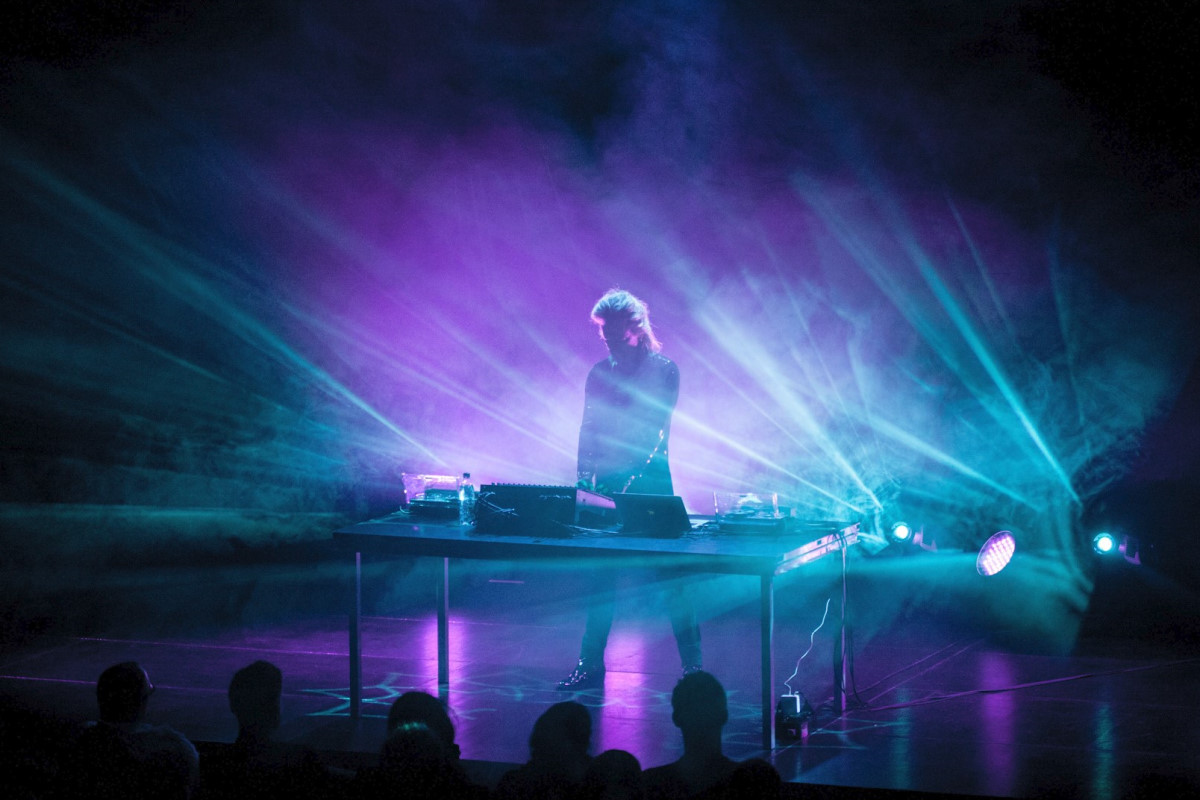
William Basinski i David Wexlers »Disintegration Loops«. © Cinéma 59 Productions

Musik er i sin essens en form for historiefortælling, og sjældent er baghistorien for et værk vigtigere, end den er for William Basinskis famøse albumrække The Disintegration Loops. Derfor var det da også med en vis overraskelse, at jeg kunne konstatere, at David Wexlers dokumentar i virkeligheden ikke handlede synderligt meget om musikken, men snarere om musikeren bag.

I realiteten er filmen et gennemgribende menneskeligt portræt af en af de mest mytiske figurer inden for ambientmusikken. En personlig fortælling om at være søn af en Nasa-videnskabsmand, den mærkelige dreng i skolen, homoseksuel, om at flytte til New York med kæresten, ægte bohemetilværelse. Nu sidder han der, Billy Basinski, foran computeren i hjemmet og lader sig interviewe i intet andet end et par underbukser.

Dokumentaren er dog også i høj grad centreret omkring tragedie. Terrorangrebet på World Trade Centers tvillingetårne for næsten 20 år siden. Den igangværende coronapandemi. Dækbilleder fra et nedlukket New York, interviews via videoopkald afbrudt af dårlige internetforbindelser. Der er noget sørgeligt poetisk over det faktum, at Basinski og hans musik igen kædes sammen med katastrofe.

Men filmens grundstemning er trodsigt opløftende. Basinski er et ovenud charmerende væsen, og begejstringen for selve musikken skinner stærkt igennem. The Disintegration Loops er et skoleeksempel på, hvordan vi som mennesker finder mening i tragedien gennem kunsten, og dokumentaren er en kærkommen påmindelse.

In brieflive
08.12.2024

The Perfect Conception of Perfect Love

toaspern-moeller: »Liebe«
© Kirsten Nijhof
© Kirsten Nijhof

Liebe is a performance in which everythingcomes together in a higher unity in a way one only rarely encounters. Even the ripples in the stage carpet, created by the performers’ imprints, are tender and electric to behold. The music is sparse and austere, like modernized Renaissance vocal music, while the dance is rooted in the traditional and is just as restrained and measured.

The two performers, Alma Toaspern and Mathias Monrad Møller – who also serve respectively as choreographer and composer – sing and dance alone on stage, while excerpts from the French writer Annie Ernaux’s recollections of an all-consuming infatuation and the desire for »perfect love« are projected onto the backdrop.

If I were to describe Liebe in a single word, it would be contrapuntal – a strict way of writing music with particular attention to how melodies in polyphony affect one another. It is astonishing how this otherwise old idea has been revitalized so convincingly. The material is carefully selected and thoroughly worked through – the music, scenography, lighting, and costumes felt like both the softest surprise and the most natural inevitability.

Møller’s and Toaspern’s meticulous synchronization, with no support beyond each other, is equally astonishing. The duo’s rigorous compositional strategy and uncompromising choreography are more than mere tools in a toolbox. They are part of an investigation of the erotic and the amorous: to be subjected, examined, and desired. Liebe is one of those performances one feels grateful to have experienced.

Katarina Gryvul. © Sam Clarke

»For me music is meditative chaos.«

Katarina Gryvul is a Ukrainian composer, violinist, music producer, and founder of Gryvul School. She emphasizes timbre as the primary element of form in her compositions. positioned between classical and electronic scenes, she has developed a unique way of composing that melds classical contemporary approaches with modern music technology. Gryvul works in the field of ambisonics and multichannel composition, utilizing live electronics for instruments and voice alongside analog modular synths. At the heart of her artistic vision lies the concept of duality, a theme intricately woven into every facet of her musical expression.


© Klaudia Krupa

»I can’t say what music is but I can say what music does: it is an experience, it travels through all my bodily senses, it brings energy (not only power but also tranquilizing and soothing, even peaceful energy); above all, it revives the memory of frozen moments, not unlike the scent of perfume, and yet it remains in the moment, the 'now' – in a recording a 'now' conserved from the past which we can relive whenever we press 'play' – and thus my playlist is a selection of moments related to person or event that was important to me.« 

Rei Nakamura is a pianist specialized in contemporary music. Her career has a wide range as solo pianist, ensemble player, improviser as well as writer. Through her on-going project Movement to Sound, Sound to Movement for piano and multimedia, she has worked in close collaboration with  composers as Annesley Black, Malin Bång, Christian Winther Christensen and Simon Steen-Andersen. Her observations and theoretical approaches are expressed in published texts in Neue Zeitschrift für Musik thematizing parallels in music, art and performance. 2021 she published the book Movement to sound, sound to Movement – Interpreting Multimedia Piano Compositions by Wolke Edition. As a Soloist she has premiered piano concertos with orchestras such as the SWR Symphonieorchester, WDR Synfonieorchester, RSO Berlin, Polish Nation Radio Symphony Orchestra and RAI National Radio Symphony Orchestra with conductor as Brad Lubman, Robert Treviño, Yaroslav Shemet, Michael Wendeberg and Bas Wiegers. She performed in Warsaw Philharmonic (Warsaw) and Arturo Toscanini Hall (Turin) and music festivals such as Eclat Festival Stuttgart, Ultraschall Berlin, Festival Acht Brücken Colon, MITO Festival (Turin), Warsaw Autumn (Poland) , Sound of Stockholm (Sweden), Monday Evening Concerts (USA).  She was was born in Japan, grew up in Brazil and is based in Germany.

In brieflive
12.10.2024

You Just Want to Disappear into These Cosmic Hordes of Sound

Christian Skjødt Hasselstrøm: »Myriader«
© Niels Nygaard
© Niels Nygaard

British Burial should have once said that in his music he strives to reproduce the experience of standing outside a club and feeling the rhythms on the asphalt. Distances are fascinating. The sounds in Christian Skjødt Hasselstrøm's work Myriads in an enormous water container at the Ole Rømer Observatory comes from afar. It is rain from space, cosmic radiation or high-energy particles, which are translated into sound via three detectors. They also flash with light in the pillared hall, and when you grope your way to them through the darkness, they puff softly and innocently. But when you walk around the 1,662 square meter room, the sounds still seem a little bit threatening – like artillery drums, sounds from modern wars or warning signals from ancient warlords... The sounds are always very far away and rumble at a low frequency in the room with a reverberation of 40 seconds. But they are just peaceful phenomena from distant galaxies, and they hardly want us any harm. They just make us feel so infinitely small. Hasselstrøm did the same to us in a former cereal silo in the city of Struer.

»You can get salt and minerals on your clothes. It can be washed off,« warned the guide, now ringing a bell. But what if you don't want to get rid of that sound at all and don't want to go home to Aarhus, but just want to stay deep underground for more than the given 15 minutes and disappear into the cosmic and very delicious hordes of sound? Distances are fascinating, and Myriads is better – more enriching – than any club in Aarhus’ Latin Quarter.