




Frossen musik på museet

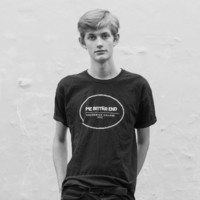
»Musik er flydende arkitektur; arkitektur er frossen musik«. Sådan lyder et berømt citat, der typisk tilskrives den tyske forfatter Johann Wolfgang von Goethe. På Thorvaldsens Museum fik vi et unikt indblik i relationen mellem de to kunstformer, da percussionisten Ying-Hsueh Chen bød på en arkitektonisk koncert-vandring: Gennem de smalle gange, forbi Thorvaldsens gipsmodeller og marmorstatuer, fra rum til rum ledte hun publikum, mens hun udforskede forskellige slagtøjsinstrumenters muligheder.
Vandringen var en nysgerrig undersøgelse af lydens materialitet; en undersøgelse, der demonstrerede, hvordan slagtøjsinstrumenter af forskellige materialer interagerede med rummene på vidt forskellig vis. Det var fascinerende at bevidne, hvordan et for mig ukendt, kugleformet instrument af træ producerede en lyd, der blev kastet ud i rummet med en sådan smertefuld voldsomhed, at man kunne høre selve murene skælve, mens lyden af et andet instrument – denne gang af metal – blev spaltet i det intrikate klangrum, sådan at den mindede om kvidrende fuglesang.
Højdepunktet var uden sammenligning Chens fortolkning af græske Iannis Xenakis' værk, Rebonds, der blev opført med så storslået en sans for drama, at det til fulde kunne konkurrere med den kolossale rytterstatue af den tysk-romerske kejser Maximillian I, som det blev opført foran. Xenakis, der i sit virke som både komponist og arkitekt netop var interesseret i lydens og rummets indbyrdes relation, ville have været stolt.
When the Trumpet Says Farewell – Mikkelborg’s Most Beautiful Moment
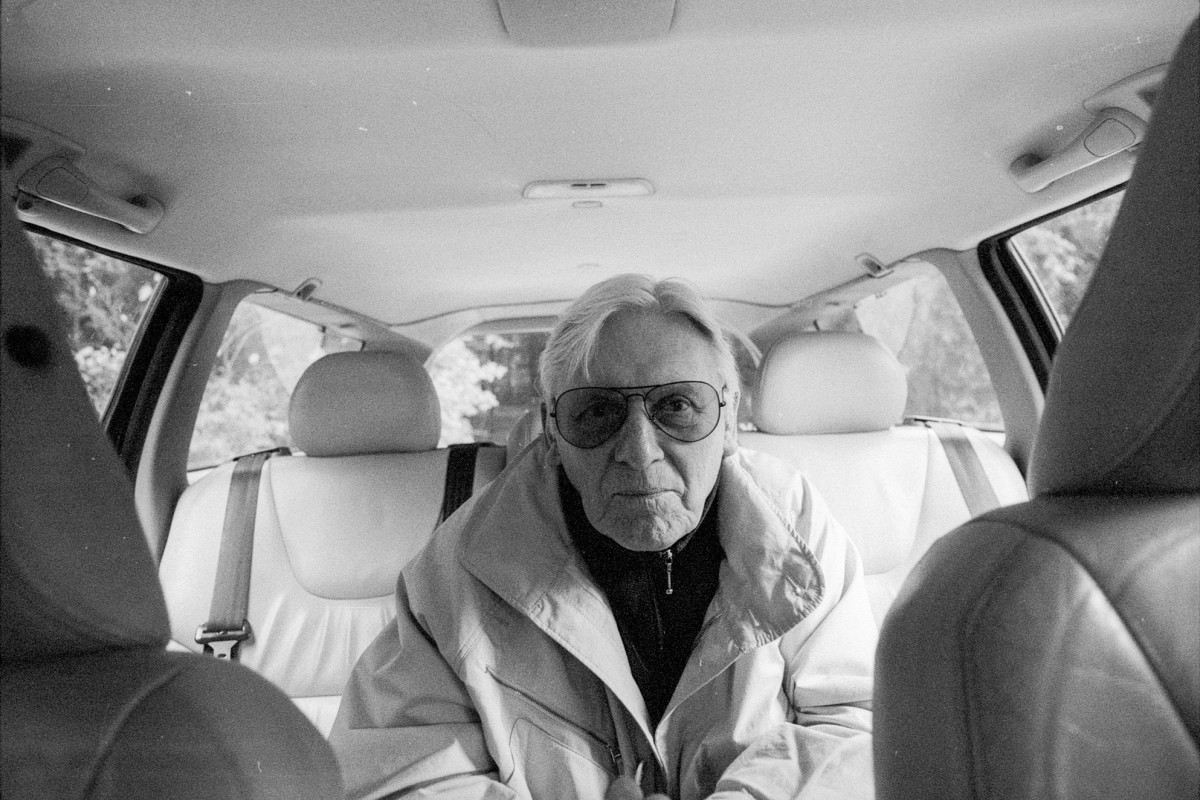
It is difficult not to read a great deal into trumpeter, composer and all-round musical visionary Palle Mikkelborg’s new solo album Light. He has long since passed retirement age, withdrew from touring in 2024, and with this release has presented something that very much feels like a kind of farewell.
The opening track, Per Nørgård’s »At tænde lys« (»To Light a Candle«), is pure Mikkelborg: his lyrical, elevated and elegiac solo trumpet, in both form and expression, speaks directly to the listener’s heart. Elsewhere, he draws on old soundscape recordings, combining them with piano and trumpet. The interplay between the old and the new creates a compelling mystique and casts a subtle, unsettling shadow over the music.
»Capricorn« perhaps stands out most strongly: a tender and romantic reimagining for solo piano of one of his own pieces, like a loving glance back at bygone times and former triumphs. And then, of course, the closing track, Thomas Laub’s »Stille, hjerte, sol går ned« (»Be Still, Heart, the Sun is Setting«), where Mikkelborg’s melancholic trumpet is joined by Jakob Bro’s guitar, Helen Davies’ harp and Thomas Lis’s choral soundscape. Together they create a piece of music that truly feels like a farewell, marked by both uncertainty and sorrow, but also acceptance and gratitude.
All in all, Light is the perfect distillation of Mikkelborg’s musical life – a cavalcade of the qualities that have always defined him as a musician: light, colour, life, mysticism, love. Whether this will be the final release from Mikkelborg’s hand, I do not know, but if it should prove to be the case, few swan songs have ever sounded so beautiful.
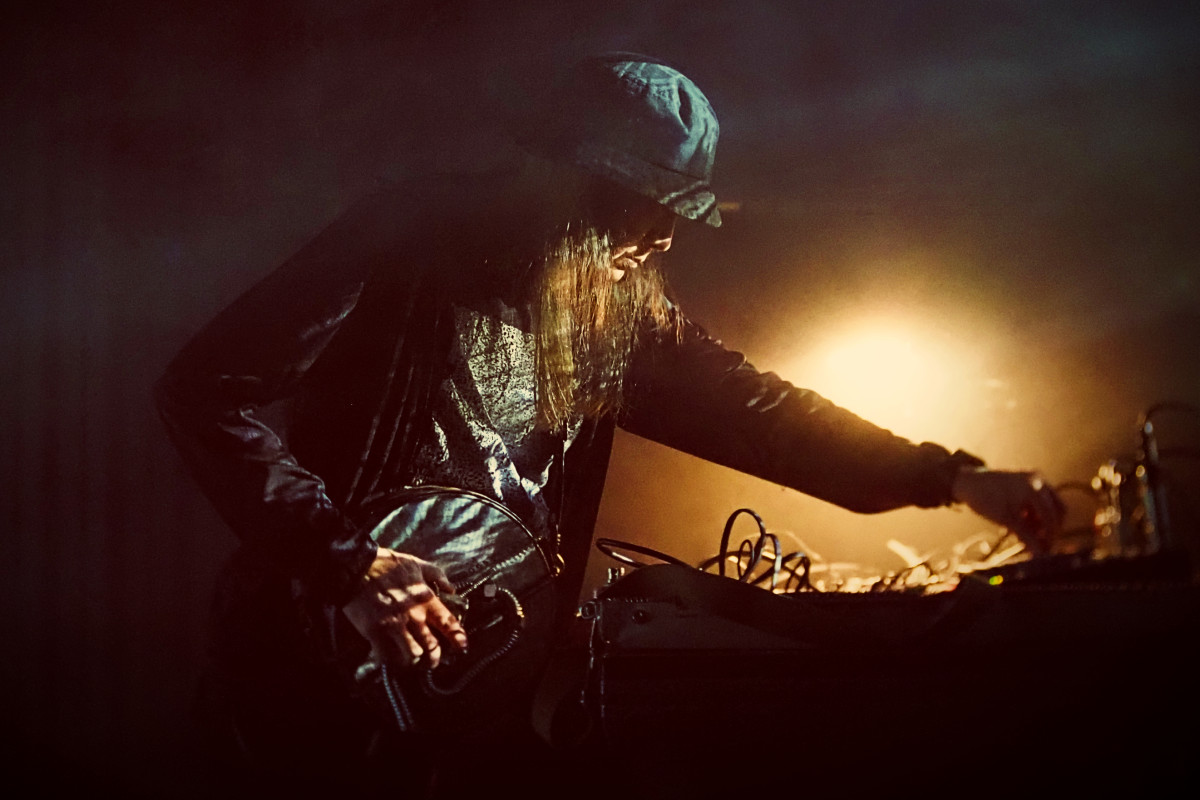
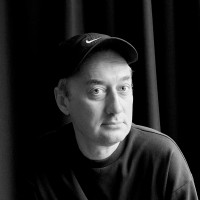
It is difficult to keep pace with Masami Akita. The 69-year-old Japanese noise artist, who since 1979 under the name Merzbow has helped shape the genre, released no fewer than a dozen albums in 2025 alone. On a rare mini-tour with stops in Helsinki, Stockholm and Aarhus, he showed that his energy remains intact. At Radar he gathered an audience that had travelled far to experience the godfather of noise – an artist who has consistently insisted on noise as a physical, almost tactile experience. Wearing a bucket hat, Akita constructed his trajectories with clear architectural precision. Layer upon layer of distortion and feedback took shape and struck like a brush of metal: hard, cutting, physical – uncompromising, yet at the same time remarkably nuanced.
Akita worked not only with electronics, but also with homemade metal instruments – first a banjo-shaped device, then a square musical saw – lending the sound a raw, tangible materiality. Everywhere, microscopic shifts in texture emerged, small fissures of tone within the massive pressure.
The opening set by frã (Francisco Moura) began the evening with a more fragile, yet persistent electronic texture, a precise counterpoint to Merzbow’s compact blocks of sound. Some might have wished for a gentler entry into the musical year 2026, but the concert underscored the ambitions Radar is currently pursuing.
English translation: Andreo Michaelo Mielczarek
The Excess of Attention

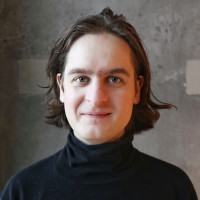
A steady stream of musicians enters the Xenon stage on Wednesday night at Vinterjazz. No fewer than 33 musicians take part in the mosaic of instruments assembled by the label Aar & Dag to celebrate the release of their cassette A MAJOR CELEBRATION. A release consisting of no less than three concerts, performed according to special composition cards, then mixed on top of one another and now issued on cassette. A major release calls for a major celebration, and rarely have I seen a more ambitious and idiosyncratic release concert.
The concert unfolded at a calm, unhurried pace – patient and attentive, the many musicians gave one another space to open up the broad soundscape. Double bass and electric bass, guitars, saxophones, synthesizers, percussion, cassette tapes, piano, and cello are just a selection of the orchestra’s many voices. Like a kaleidoscope, the ensemble shifted again and again, drifting between crooked, meandering passages and bubbling harmonies that only just brushed against a peculiar sense of tempo.
The word »soundscape« truly comes into its own in this context. For much like Hieronymus Bosch’s surreal monumental paintings or Sven Nordqvist’s Pettson and Findus illustrations, the concert – with its many people on stage – was filled with an impressive level of detail and a multitude of small scenes unfolding across one another. Each time my attention settled on a particular point in the music, I missed a new development elsewhere in the orchestra. An excess of attention, and a fine demonstration of a boundary-disrupting musical expression that one can only hope to encounter more of.
All Life Has the Right to Live

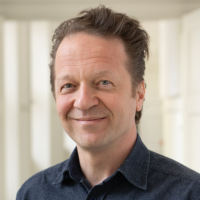
It is this violent and feral line of text that hangs like a monolith in the austere stage space at Sort/Hvid after 80 minutes of a furious, raging monologue in the performance Animal. Actress Signe Egholm Olsen is left standing like an animalistic goddess who has carried out her own ritual of purification. A ritual about motherhood and about morality for animals and humans alike – flanked by the three wordless classical singers Katinka Fogh Vindelev, Nina Smidth-Brewer, and Hávard Magnussen, who function as a chorus in a Greek tragedy. They illustrate and stage the text through precise sonorities.
Animal is based on Alexandra Moltke Johansen’s debut novel from 2022 of the same name and overflows with meaning, hurled into the audience’s face from beginning to end. Worries, anxiety, angry activism, grief, and doubt – tied to being pregnant and becoming a mother to a »useless« child with Down syndrome in a world marked by climate catastrophes, war, inhumane political cynicism, and greed. All of this flows from the mother’s inner dialogue as a long moral reckoning and outpouring, unfolding in a scenic tour de force – from the clinically clean and artificial atmosphere of a wellness spa to a material chaos of soil, branches, and sweat.
Kirstine Fogh Vindelev has composed a soundscape that makes it possible for us to breathe at all. Discreet choral tones, small electronic passages, a touch of barbershop, screams, and a pop song are wedged in between the words. It is simple and straightforward. The music is allowed to comment and converse like a shadow presence alongside the many words, but at no point is it allowed to become the protagonist or truly carve out its own space within the performance. One could easily wish for another form of sensory reflection than that which words and speech alone can provide.
14 Meters of Wave Swells from History’s Anonymous Depths

Sound artist Jacob Kirkegaard records sounds to connect with the world – to endure what is happening. This time, it's a commissioned work for the Museum of Copenhagen, created to accompany the exhibition of an excavated shipwreck from the harbor. The result is Naufragium (Latin for shipwreck) – gently lapping, quiveringly simple, and almost self-effacingly discreet. And in this way, everything aligns: the story of life in the harbor during the late Middle Ages is only known through rare, major events, while the bustling everyday life, connecting it to the larger world, has drowned in anonymous oblivion.
The shipwreck itself is barely recognizable. A series of ship planks – up to 14 meters in length – suspended on mirrors and supplemented by 11 crossbeams. That’s it. The light in the museum’s narrow room is dimmed, and the windows are covered with film. We are submerged into the depths of the water.
The sound loop lasts 39 minutes if one wishes to listen to it in full. Small sounds are distributed across seven speakers – four in the ceiling, three beneath the wreck. Carefully placed, the gentle lapping, dripping inserts, a trembling rustling like a nerve pathway above, and muffled sounds of wood shifting in water are heard. A kind of foghorn also makes an appearance. All of it is subtly arranged as a soundscape for a silent protagonist, staged through sound. There were likely very few storms, cannons, or other forms of grand drama in the ship’s perhaps 300 years as a cargo vessel in the Copenhagen Harbor before it sank in the 18th century. But if one looks closely – and opens their ears – it bears tangible and truthful witness to the kind of history most of us inherit: the ordinary one.