in brief
02.07.2023

Trance Thursday

© Sanne Krogh Groth
© Sanne Krogh Groth

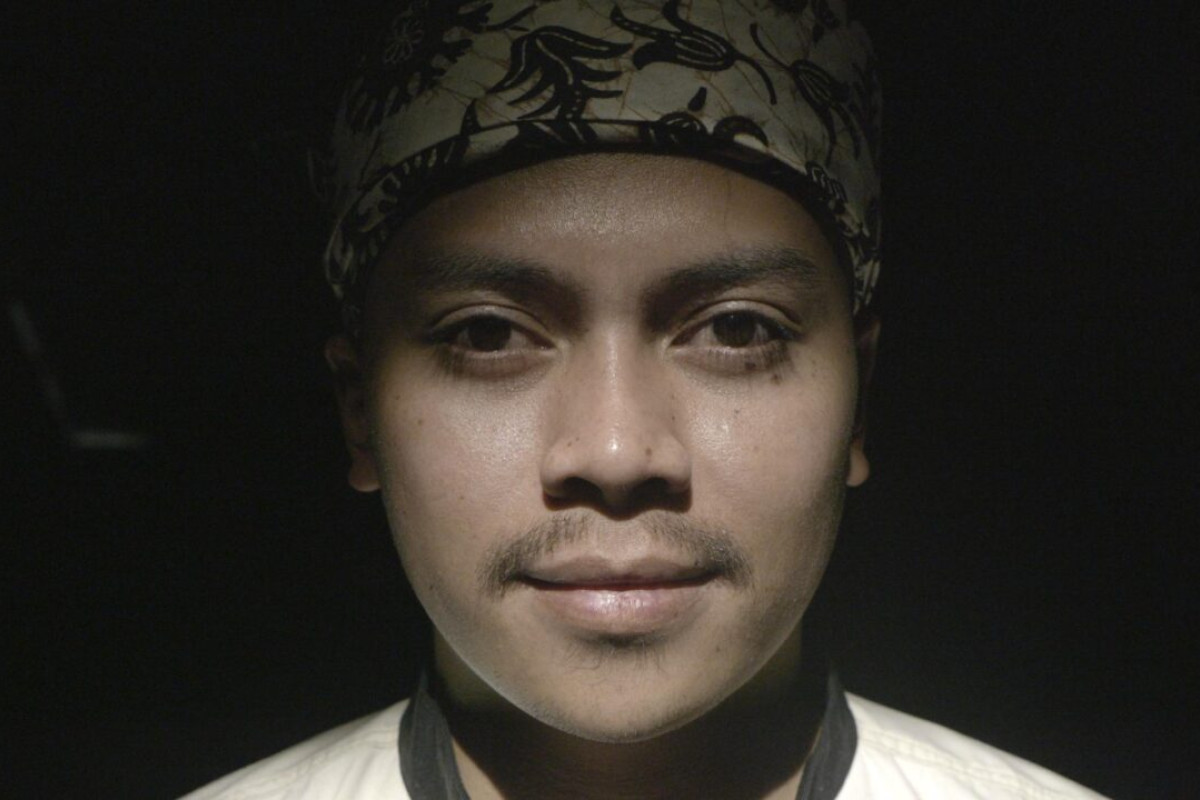
Why Gabber Modus Operandi from Bali was booked for Roskilde's »avant-garde scene« Platform, which my 20-year-old son called the »boomer« scene, is a mystery. In 2018, when they made their European debut, it was at the seminal Berliner festival CTM at the club Berghain. Since then, they have traveled around the world and were featured on Björk's new album in autumn 2022.

The music and the trance party, on the other hand, went straight in – a mix of new and previously released tracks, all produced by Kasimyn and spiced up by Ican Harem with his wild performance. The tracks provide the foundation to the trance, but it is Harem who controls it with song, recitation and growl and with an insistent audience address primarily in Indonesian. 

It was loud and intense, and the trance-happy festival audience, who had turned up in large numbers, had plenty of opportunity to dance. The individual character of the tracks is found in characteristic and slower pentatonic themes played by samples that sound like slompret (Javanese wind instrument, as in the track Sandikala), bonang (small gong) and synth (Genduwuro), and Indonesian song/speech (Hey Nafsu). A local Indonesian jumble woven into a global borderless music machine.

Jathilan is the name of an Indonesian ritual dance in which knights on reed horses travel out to defend the sultan, but along the way are possessed by the spirits of the forest. Jathilan is currently particularly popular in Java in local contexts in city and countryside, where both dancers and the audience can get in trance, which is led by a "fusion gamelan" consisting of Indonesian gamelan, drum set, synthesizer and whatever else is in the neighborhood. Everything is electrically amplified and blown out through distorting speaker towers – preferably with over 110 DB. The aesthetics are breathtaking and something quite unique.

Gabber Modus Operandi precisely finds, among many other on- and off-line curiosities, inspiration in jathilan. They too have travelled out, however, without reed horses, classic Indonesian dance costumes and instruments. Instead, they have brought us high-tempo electronic dance music (EDM). Hard pumping metallic noisy beats here reaching 120 DB. Towards the end, they invited us to sit on the floor. The trance now took form as a call to prayer, meditation and contemplation.

© Roberto Bordiga

»Music for me is bumping, rubbing, colliding, sliding and sculpting... in space-time. AKA the gift that keeps giving <3 .«  

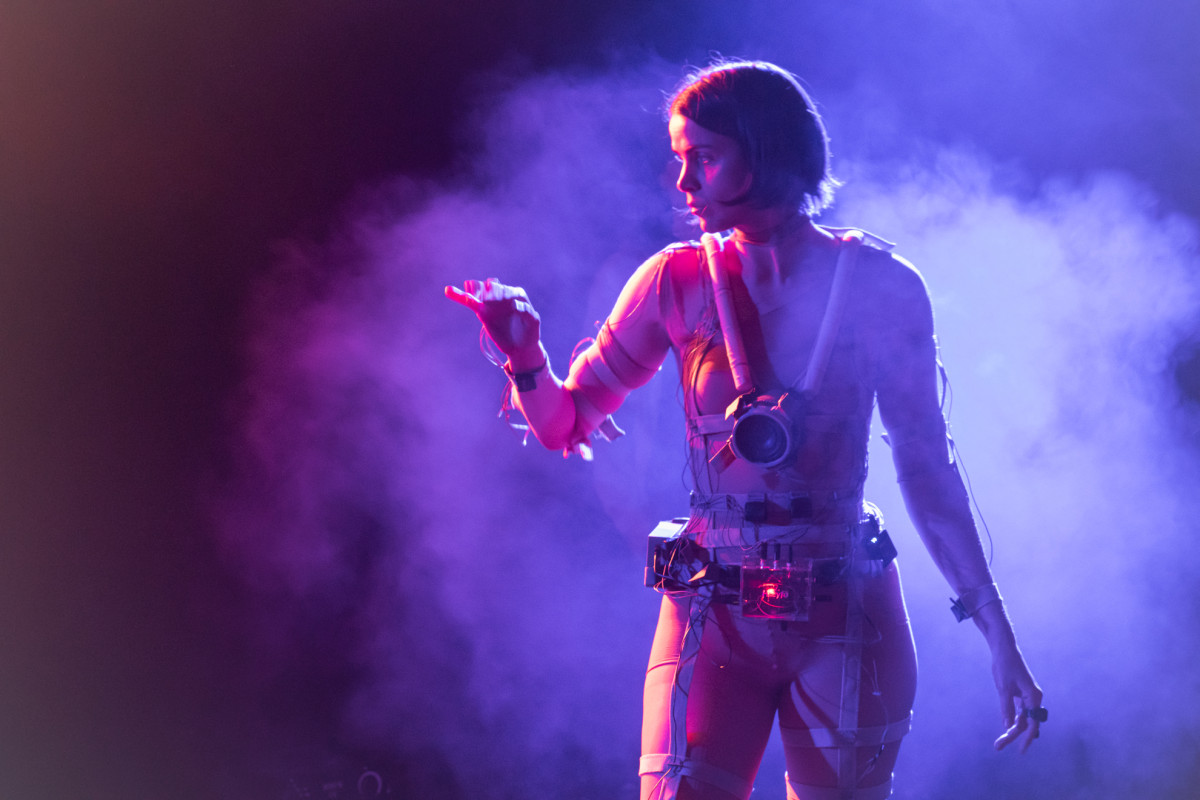
Greta Eacott is a critically acclaimed British/Swedish composer based in Copenhagen, Denmark. She is primarily known for her boundary pushing experimental percussion works and her »sans-disciplinary« approach to music composition; which incorporates spatial aesthetics, design theory and physical movements as integral elements in the musical compositions. This manifests in a unique and modern musical aesthetic which is both playful and refined, agitating and welcoming, sensual and synthetic. Since 2014 she has been running the DIY record label One Take Records.

in brieflive
26.08.2024

Hooray! The Big Questions Are Still Alive in Opera

Copenhagen Opera Festival: Rolf Hind, Dante Micheaux and Jalal al-Din Rumi, Frederic Wake-Walker, Elaine Mitchener, James Hall, Yannis François, Loré Lixenberg a.o.: »Sky in a Small Cage«
© Ida Guldbæk Arentsen

If one had come to believe that new opera could only be starkly realistic portrayals of the world’s decay, Sky in a Small Cage at the Copenhagen Opera Festival would quickly prompt a rethink. The festival’s final work pointed in a completely different direction: mysticism, hope, love. All clichés, perhaps – but absolutely not in the hands of composer Rolf Hind and librettist Dante Micheaux. Together they have spun a truly astonishing opera about the Sufi poet Jalal al-Din Rumi.

It was as much the enchantment of Rumi’s poetry as the myth of the poet himself that drove the work. In fact, it was exhilaratingly difficult to distinguish between poetry and reality: the character Rumi became the object of his own grand poetic art. »It might as well be called a death: the gate you must go through to enter yourself or beloved,« sang a narrator-like figure at the outset. Love, one understood, is a self-annihilating transgression – a threshold phenomenon that at times demands its sacrifices.

This dreamlike doubleness served as a guiding principle throughout the performance. It was a pleasure to hear mysticism unfold in the music, which was phenomenally orchestrated with dripping gamelan bells and singing bowls, double harps, celebratory piano, and more pounding toms than Lars Ulrich would dare to dream of.

And what about the bird, the cage, and the idea of freedom? In Sky in a Small Cage, freedom was not a matter of opening the cage and setting the bird free. It was located in the very act of calling – in song, music, and poetry – as a reaching out toward the other in a kind of intoxication of love. Oh yes, the big questions are still alive in opera. Thank God.

English translation: Andreo Michaelo Mielczarek

© PR

»Music has always provided me with a clear pathway on which to navigate a meaningful life. It is imbued with a set of noble intentions that have taught me important lessons: the art of giving and receiving, how to grapple with the ever-shifting forces of tension and peace, what it is to trust the people who surround you, and the ability to let go.«

The Irish-born, Denmark-based composer-musician Carolyn Goodwin is a clarinetist and saxophonist, and the founder of Copenhagen Clarinet Choir. Her compositional work is driven by a desire to explore new frontiers in ensemble playing, bringing body and movement to the forefront, and combining the freedom of improvised music with her foundation in classical music. Goodwin's 2022 release with the Copenhagen Clarinet Choir, Organism, on the År & Dag label, has been described as »cranio-sacral therapy for the ear« and »a perfect cross between intelligent and sensory music.« It is these sound and performance parameters that have inspired composers like Marcela Lucatelli, Greta Eacott, and Anders Lauge Meldgaard to compose music for Goodwin’s ensemble.

Goodwin is a member of the trio Coriolis, alongside fellow saxophonists Maria Dybbroe and Nana-Pi Aabo Kim, as well as Jason Dungan’s Blue Lake project. She is also part of the musician collective Barefoot Records.


© Beowulf Sheehan

»Music is limitless, and its potential for meaning is infinite. This is neither good nor bad, but simply an acknowledgement that music is one kind of expression of any given culture (with many other inputs, of which I am mostly ignorant). From that perspective, I suppose then that music is just another medium through which I try to understand another human and/or the culture that they exist(ed) in, and more deeply feel the interconnectedness of the world that we live in, that we have inherited, and that we will pass on.«

Currently the only musician ever to receive two Avery Fisher Career Grants – in 2016 as a soloist and in 2019 as a member of the JACK Quartet – cellist Jay Campbell has brought his eclectic artistic interests both as a performer and curator to the New York Philharmonic, Deutsche-Symphonie Orchester, Los Angeles Philharmonic, Seattle Symphony, Ojai Festival, Lucerne Festival and many others. Deeply committed to collaborative music, Jay is a member of the JACK Quartet, as well as the Junction Triowith violinist Stefan Jackiw and composer/pianist Conrad Tao, multidisciplinary artist collective AMOC, and frequently works with composers and performers like Helmut Lachenmann, Patricia Kopatchinskaja, Barbara Hannigan, John Zorn, Tyshawn Sorey, and many more from his own generation. 

in brieflive
05.07.2024

A World of Contrasts – and a Touch of Smurf Vocals

Roskilde Festival: Slauson Malone 1
© PR

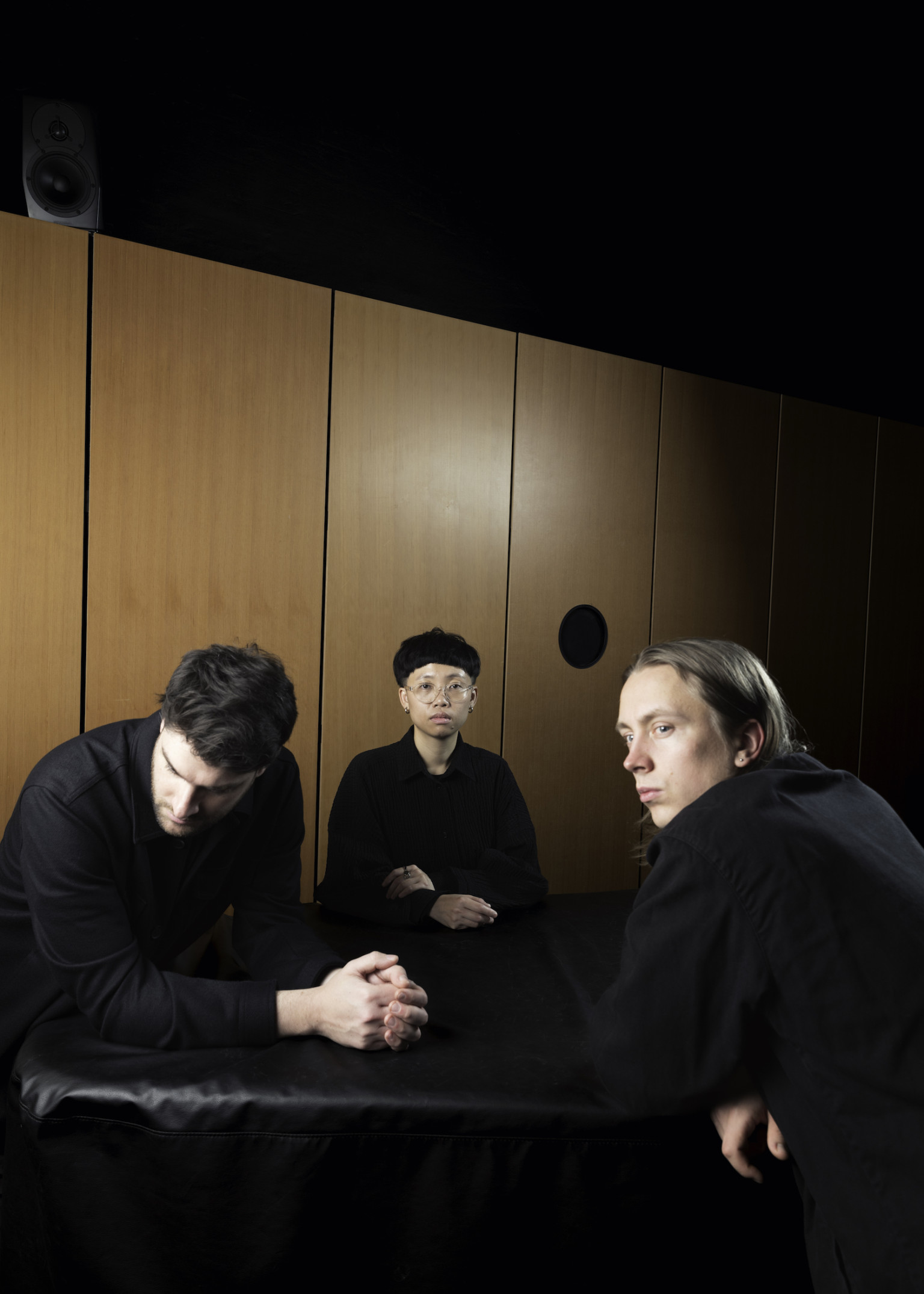
The cello is everywhere at this year’s Roskilde Festival. Some use it as just about anything else – hey, now it’s an electric bass, or how about a keyboard drowned in effects – but in American Jasper Marsalis’ Marcela Lucatelli-worthy bomb project Slauson Malone 1, the cello was actually used as, well, a cello.

Marsalis himself handled vocals and electric guitar on the open Platform stage, while Nicholas Wetherell opened the concert with a motor-race assault on his amplified cello, then pivoted into plucked meditations, to which Marsalis contributed overtone playing on guitar. Sensitive jazz guys? Nope – suddenly: synchronized noise sprints, intimacy splintered, and before long Marsalis threw himself into the seated audience with a somersault – and a scream.

Meanwhile, Wetherell played tender vibratos. Because contrasts thrive at Roskilde – and, after all, seem to be driving the world forward these days. And so it was the world itself that came into focus in the music: through violent shifts between 8-bit Smurf vocals, ambient gnawing solo cello, intimate indie layered over a one-second sample of Cher – culminating in a wistful lullaby veiled in digital theremin.

In many ways, it was peak hipster era. But it was also intensely moving – something like following Mahler out on the edge of the abyss as he tried to sketch the whole world into his scores. The only difference: the easel looks a bit different today.