

in brief
22.10.2023

A hypnotic dollop of lava

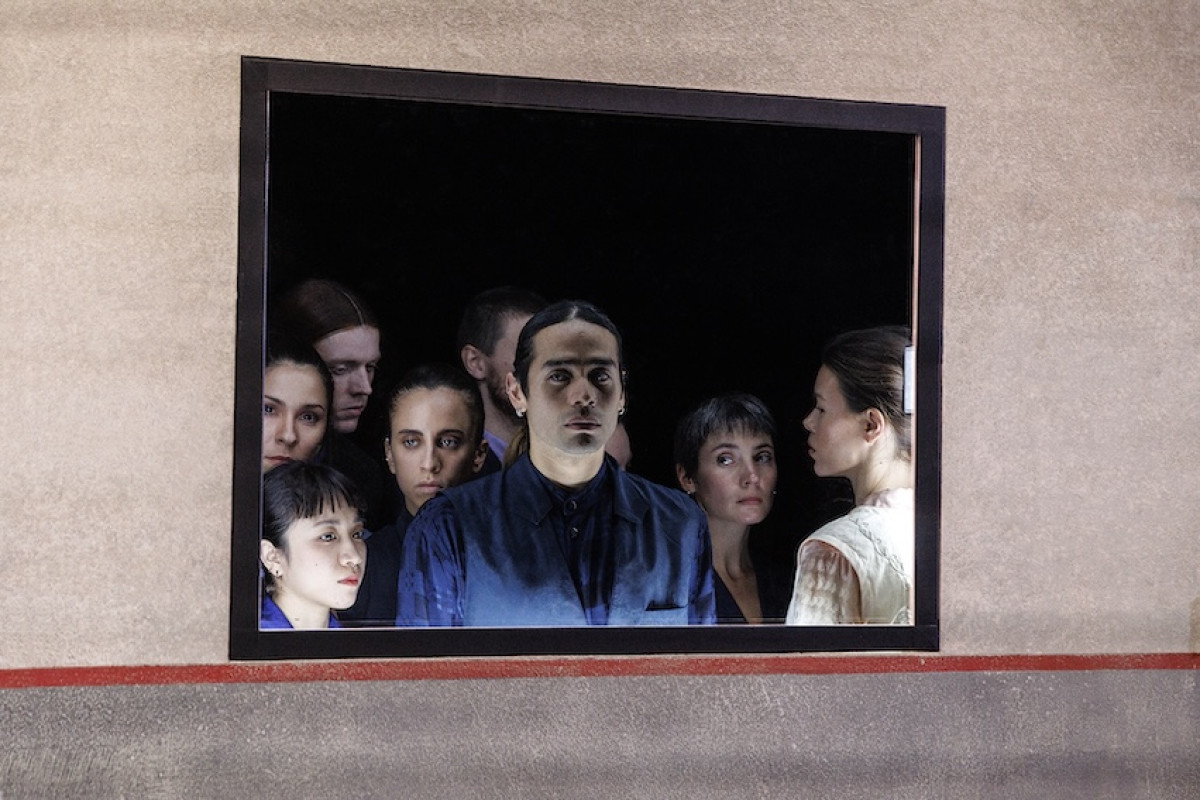
Dansk Danseteater/Copenhagen Phil: »Leaning Tree«
© Natascha Rydvald
© Natascha Rydvald

It might seem abstract, but dance is extraordinarily specific – an ultra-precise instrument of physical poetry. You shouldn’t even think about adding music unless the link is umbilical, unequivocal and clear. There are passages in Leaning Tree – a meeting of Dansk Danseteater with the Copenhagen Phil – which are utterly, mesmerizingly inspired: when the union of the aural and visual isn’t a union at all, but a single thing. Unfortunately, there aren’t enough of them. 

Choreographer Fernando Melo’s signature style is slow, legato, un-rhythmic. His group of welded human bodies often behaves like a dollop of lava, moving with a sluggish certainty. It’s hypnotic to look at but absolutely unmusical. Maybe that’s why Signe Lykke’s score for Leaning Tree so rarely channels what we’re seeing. 

Or is Melo not listening to Lykke? She speeds up or shifts gait; he can’t. Her throbbing, cooing spatial orchestral score can resemble Bent Sørensen without the fragile melodies. It livens up when congealed low brass and winds squeeze themselves into almost spectral harmonies. Tension skyrockets, but it counts for little on stage. 

Then the »leaning« – the stunningly beautiful, anti-gravitational choreographic conceit on which it all rests. It’s about 30 minutes before we see any real leaning. But gosh it’s exquisitely done, worth the wait even if it makes a lot of what went before seem like padding. 

The culmination, a vision of leaning bodies like swaying reeds, gets right into Lykke’s score. Or maybe vice versa. It’s not just glissandos we’re hearing, but elasticated harmonic movement – music composed with extraordinary delicacy of texture, harmonies built from the exacting placement and movement of individual instruments. Leaning Tree needs more of this sort of thing.

© Hreinn Gudlaugsson

»Music for me is like a sourdough. If you don't feed it right it is going to die. If you feed it correctly a lot of people can benefit from it.« 

Halym Kim is a drummer, composer and project coordinator based in Copenhagen. His music is mainly based in free improvisation and experimental music but performs also as a traditional Korean percussionist. He has a Master and an Advanced Postgraduate Diploma in Music Performance from RMC in Copenhagen. Together with Nana Pi he organizes Impro Camp which is a music camp for free and structured improvised music that is happening every year in Fredericia, Denmark.

© DMF

»Music for me is a tool of infinite expression. It’s where I’ve had the most complex conversations and open-minded experiences. It is the highest form of energy I know.«

Nana Pi is a saxophonist, composer and conductor working within the experimental music scene. She has developed a unique musical vocabulary on the saxophone by incorporating objects and extended techniques, pushing the boundaries of sonic expression. Beyond her work as a saxophonist, she is known for conducting improvisation using her music sign language, Extemporize, for which she received the P8 Jazz Award Årets Ildsjæl in 2020. She is a member of the well established record label Barefoot Records. In addition to her musical career, Nana Pi is organizing events such as Impro Camp and FredagsJAM that focuses on creating networks and inspiring music environments between musicians.

© PR

»For me, music is an emotional refuge. When I sit at the piano I feel safe, it's where I can release everything I carry inside. It's not about performing, it's about being honest, vulnerable and free.«

Samanta Yubero, known artistically as Samyula, is a composer, pianist, and neuroscientist based in Barcelona. Trained as a classical pianist and holding a PhD in her scientific field, Samyula bridges the worlds of art and science in her work. Her music – often within neoclassicism – blends both serene and intense piano melodies with vivid, dynamic string arrangements, creating emotionally resonant and immersive soundscapes. With a deep passion for both composition and performance, Samyula offers audiences a uniquely powerful and moving experience.

© PR

»Music is the ultimate gateway to presence, a true expression of the moment.«

Praised by DownBeat Magazine as one of Europe’s most versatile and inquisitive musicians, Polish-born, Scandinavian-based trumpeter and composer Tomasz Dąbrowski creates music that whispers before it screams – blending open, lyrical melodies with raw, unconventional trumpet sounds. Dąbrowski has revealed an unceasing curiosity, stretching and expanding his jazz roots in an ever-widening circle of exploration. From the beginning he’s rejected hierarchies, preferring to see creative music as a boundless practice that can accommodate ideas drawn from every spot on the stylistic map. While plenty of musicians pivot toward new directions, sometimes transforming their aesthetic wholesale, Dąbrowski has long revealed a more ruminative and holistic mindset that has allowed him to retain a clear artistic identity through countless projects, whether driven by improvisation or composition. 

© Malthe Ivarsson

»Music is where my heart is. The place where I feel the most freedom and possibility to express myself. It's also the place I seek to when I need to calm down.«

Anna Roemer is a Danish guitarist and composer from South Zealand, now based in Copenhagen. She has performed with artists like Hannah Schneider, Jacob Bellens, and Guldimund. Together with saxophonist Cecilie Strange, she forms the acclaimed duo K A L E II D O, known for music that constantly evolves. The duo has received national and international praise and won the Carl Prize for »Jazz Composer of the Year« for their albums Elements and Places (2024).