In brieflive
23.05.2024

En sorg der ikke kan spejles i verden

Faun Vium, Amanda Drew, Freja Højland Høj, Hávard Magnussen, Amanda Drew, Karoline Banke, SORT/HVID Teater, Noisy Beehive m.fl.: »Dronning Annabel«
© Rumle Tornhøj Skafte

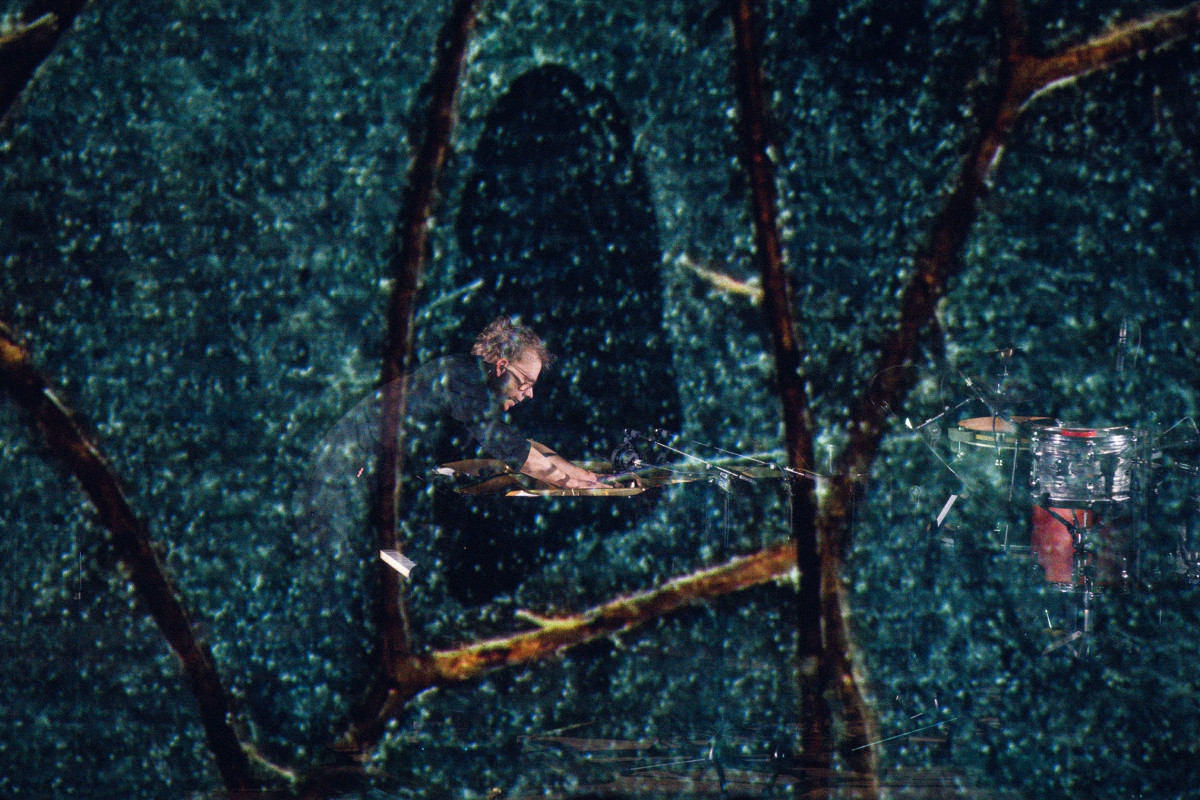
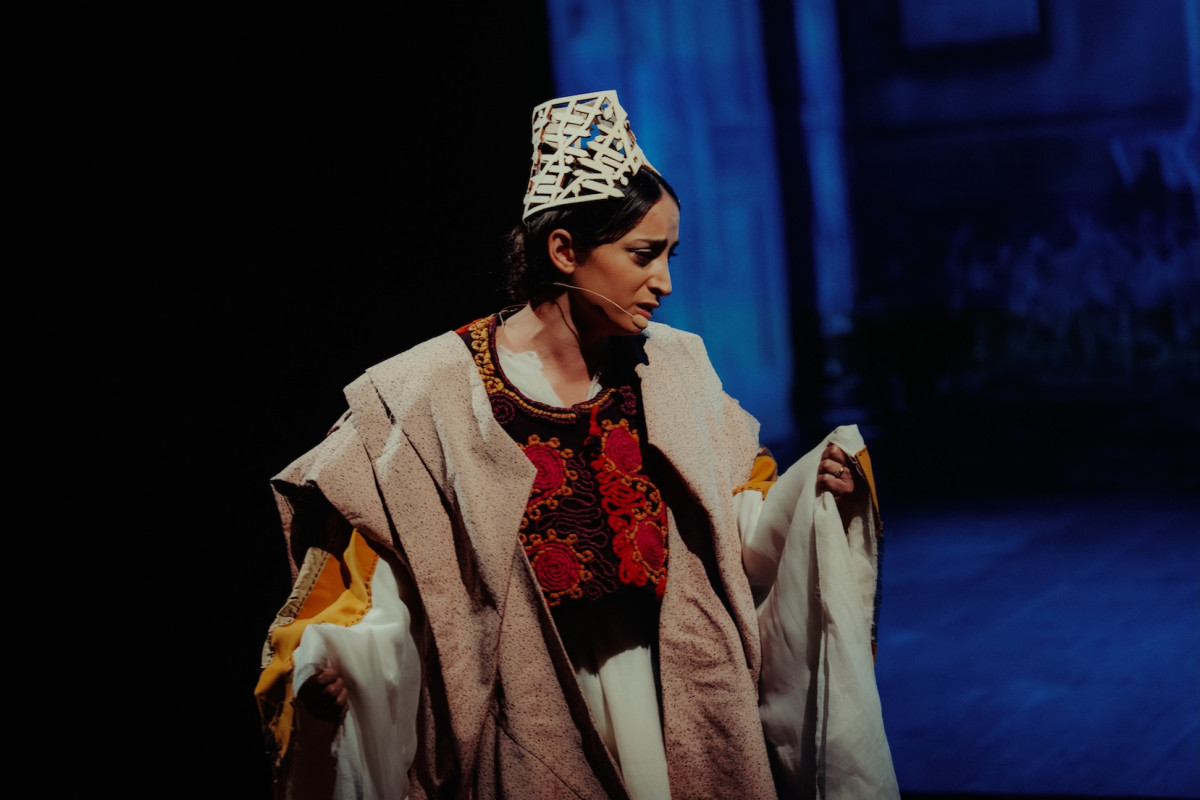
»Jeg er ikke slettet«, oplæste kunstneren Faun Vium. Et brev fra hendes søster indledte operaperformancen Dronning Annabel, der tager afsæt i søsterens indlæggelse. Vi stod foran Brønshøj Vandtårn. Med champagne i hånden, sang vi sammen en mol-dunkel sang, som havde startet hele processen. »Vi forsøger at forvandle psykosens poesi fra en ensom til en delt oplevelse«, stod der i programmet. En champagneprop sprang på vej ind i tårnet. Stemningen var premiere-let og tungsindig på samme tid. 

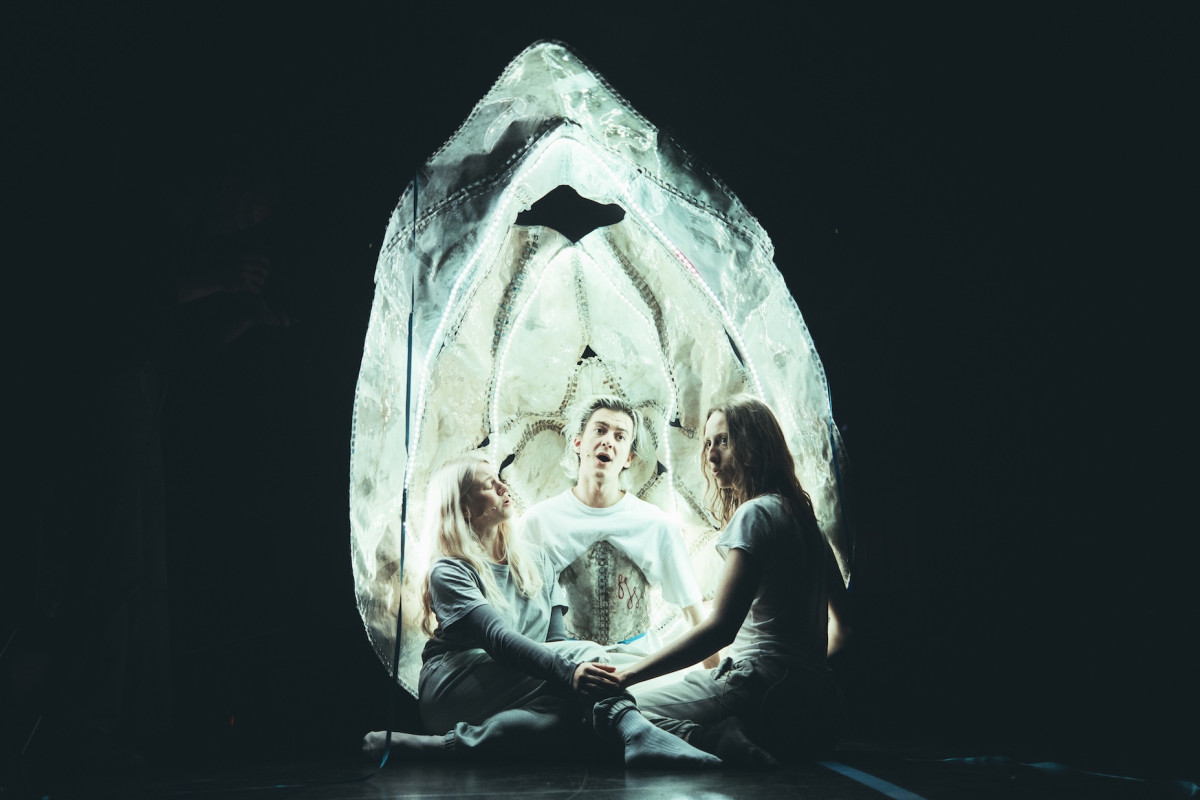
Brønshøj Vandtårn er med sine svimlende betonsøjler nærmest et værk i sig selv. De mest uskadelige lyde bider fra sig i tårnets kolossale rumklang. Mellem søjlerne blev vi bænket og oplevede, hvordan værket byttede en båndet samtale mellem Vium og søsteren med performance i rummet. Tre sangere – to af dem spillede også cello og kontrabas – bevægede sig rundt i det kølige rum med skulpturelle skaller, som de udklækkede fra og forpuppede sig i. Men på grund af den anti-sceniske arkitektur, var det frustrerende svært at tage deres energi ind. Alting foregik i øjenkrogen, delvist hengemt bag en søjle. Derfor fik jeg – til trods for det inkluderende oplæg – en ærgerlig følelse af en halv oplevelse. 

Måske var det pointen: Som publikum var man, ligesom den tvangsindlagte, låst i sin stol. I stedet gav jeg mig hen til klangen. Det var betagende at høre, hvordan samtalerne om »en sorg, der ikke kan spejles i verden« og sprogets utilstrækkelighed blev forlænget i sangernes fraser, hvor ordene blev opløst i den umådelige klang. Nogle gange sang sopranen, så det hvinede i ørene. Til sidst voksede en optagelse af de to søskendes fælles sang fra den personlige relation og ud i rummets sfære. Poesien forplantede sig i tårnets potentiale og satte et smukt klingende punktum for værket.

© Samantha Riott
© Samantha Riott

So dextrous a musician is the flutist Laura Cocks that, at shows, their instrument occurs to the eye as merely another limb. A powerhouse New York-based collaborator and interpreter within new classical and experimental music, notably as director of the leading-edge new music group TAK Ensemble, Cocks now releases their first solo statement of improvised compositions with FATHM, an acrobatic intertwining of flute and voice that nods to strange and fleeting visions: among them, birds, string, seeds between the teeth. On FATHM, Cocks applies all the facility of their work as an interpreter of commissioned works – on extensive display in their last solo venture, 2022’s field anatomies – towards the development of an uninhibited, yet highly focused musical language. 

If the album’s mysterious tracklist reads as a sort of cryptogram, then listening to FATHM evokes a process of decoding, parsing the bounds between vocalization and instrument. The album’s opening track, »A thread held between your fingers«, finds Cocks as their own flickering shadow, simultaneously playing the flute and squealing in tones just slightly removed in pitch. »Illinois« is then reclaimed from Sufjan Stevens’ relentless grip as a furious mumble of half-blown notes with underlying trickles of voice. Cocks experiments further with these hoarse timbres on the three infinitive tracks: »To beget« and its later variations »To outstretch« and concluding track »To fly«, which trace the evolution of a dancelike triplet motif. »FAVN«, apparently a faithful depiction of an elephant with severe sleep apnea, may reconcile itself to the sensitive listener through its sheer commitment to the grotesque, while »A seed sucked between your teeth«, orbiting languidly around a major ninth, invites more celestial considerations. »A marsh wren« might take the titular bird as a point of departure, but it quickly imagines a species of its own, singing a song of bustle and snaps and smacks. On »YARN«, Cocks suggests another sort of animal song by making a counterpoint of mews and growls. The flutist’s skill with balancing these peculiar hybrids ultimately distinguishes FATHM as much as Cocks’ ferocious energy; this is an album as happy to shout as it is to slither. 

In brieflive
03.03

Cosmic Resonance

Satellite Synthesizer – Ørntoft/Anker/Osgood/Snöleoparden
© Mia Mathilde Andersson

Against enemies in outer space, »music is the strongest weapon we have,« Mads Brügger recently stated here in Seismograf. Snöleopard and musical friends made this idea strikingly concrete by sending music directly from the Planetarium in Copenhagen out into space, targeting satellites between 500 and 35,000 kilometers away. The tones returned altered by delay, radio noise, and cosmic interference. On the large screen, the Earth’s surface – seen from a satellite – rolled by with all its illuminated cities, while Theis Ørntoft read from his forthcoming climate-conscious novel, delivering lines such as: »The day there is no more oil, the lights will go out in the world.« Meanwhile, we could see small green dots of confused satellites racing across the Earth’s beautiful curvature and hear Lotte Anker, Kresten Osgood, and Snöleopard free-jazzing on saxophone, drums, and sitar respectively.

The small crackling beep-sounds from the satellites’ resonance also generated music, but the most interesting moments came when the musicians received fragments of their own motifs back – thrown down from outer space – and a kind of internal interplay emerged. Is there something out there, or are we merely talking to ourselves?

Cosmic resonance filled the dome, but one could wish for more internal resonance. There is a beautiful trend in ensembles that include a poet, allowing many delightfully twisted formulations to surface, but the musicians must also interpret the words – enter into a musical exegesis, as they would with a traditional jazz singer – otherwise the music easily becomes background or secondary. As if each musician were a green satellite dot in their own orbital path. Many good ideas were in play – and music is not a weapon. But it does require internal resonance. Not only cosmic.

English translation: Andreo Michaelo Mielczarek
In briefrelease
28.02

A Clammy Kawaii Crescendo

Keiichiro Shibuya: »ANDROID OPERA MIRROR«
© PR

If the Japanese composer and musician Keiichiro Shibuya’s new album ANDROID OPERA MIRROR were to be summed up in a single word, that word would be »bombastic«. From the very first track, »MIRROR«, the listener is bombarded with gliding synth violins, brass, and a robotic voice intoning existential questions – ironically written by an AI.

There is something charmingly awkward about Shibuya’s pop-oriented, over-the-top compositions and the android vocal’s cloying kawaii factor. But before the album is halfway through, the constant pomposity begins to wear thin. »On Certainty«, with its ever-present strings and densely packed arrangements, rarely gives the music – or the listener – room to breathe. Shibuya and his android voice are saying an awful lot all the time, and it is so overwhelming that very little of it actually carries weight. When everything feels like an epic crescendo or the expected release from one, the effect is lost.

Taken individually, several of the tracks are otherwise quite compelling: »Midnight Swan (Android Opera ver.)«, which sounds like the opening theme to a dark and romantic anime, and the closing track »Scary Beauty (Vocal and Piano ver.)«, which shines precisely by trimming away the excess and focusing on the emotional core of the composition – an impact made far stronger by the simpler instrumentation. When the listener is not constantly overwhelmed, the romance, melancholy, and existential questions are allowed to make an impression. Unfortunately, ANDROID OPERA MIRROR is a listening experience that frustrates through its lack of subtlety – something it would otherwise have benefited greatly from.

English translation: Andreo Michaelo Mielczarek

In brieflive
24.02

Dido and Doom

Vinterjazz: Alice: Slim0
© Slim0

Doom was in the air when Slim0 took the stage on Saturday night at a sold-out Alice. In October, the band released the 17-track album FORGIVENESS—an album that takes a slow step into the riff-laden terrain of stoner rock. For this evening’s occasion, the Slim0 trio had been expanded with a lineup featuring Agnete Hannibal on cello, Aase Nielsen on saxophone, and Johan Polder on bass.

The sound exists somewhere between the English singer Dido, the drone-metal band Earth, and the drill trio Shooter Gang from Trillegården – an abstract comparison that hardly does justice to the uniqueness of the songs, as Slim0’s long referential tentacles stretch far beyond the music’s sharp contrasts. With its sacral-sounding choir and heavy drum passages, the single »Trenches« fit perfectly into the live setting. The darkness and the shifts between the three vocalists – from shared harmonies to growl – intensified the theatrical metal expression.

In a similar way, a nostalgic sigh arose when Dido’s catchy vocal lines from the hit »Thank You« emerged in the double cover »I Have But One Heart.« The perhaps lesser-known instrumental part, consisting of Earth’s »Coda Maestro in F Flat Minor«, turned the piece into a prime example of Slim0’s referential swamp brew. Although the many contrasts made for a rather epic concert, they also left me feeling somewhat conflicted. Conflicted because I genuinely enjoy Slim0’s heavy and fragmented universe, yet the lack of voluminous weight left me craving a more bone-rattling sound that could carve the sharp contrasts even more deeply. Hunger for more doom is certainly not a bad feeling, and I look forward to hearing the epic expression grow louder and even heavier.

In brief
13.02

Jeppe's Soundtrack

Christian Lollike: »Jeppe på bjerget«
© Rumle Skafte
© Rumle Skafte

During the opening blowjob – before anyone even says a word in the concrete ghetto—opera is heard. And when Jeppe (Thure Lindhardt), in dramatic fashion, settles accounts at the end during the Royal Couple’s Awards 2025, soprano Lina Valantiejute once again sings Purcell’s Dido’s Lament. Because a lament from around 1688 is about as authentic as it gets. Christian Lollike’s Holberg classic portrays the search for the genuine in a mendacious age. The PTSD-stricken war veteran Jeppe falls into the clutches of the Baron, a contemporary artist who subjects him to an art project – a »mental time journey« meant to transcend/heal him.

Sonically, Lollike is precise. The sounds amplify the reality-show-like ride Jeppe is trapped in: Mozart, Kingo, heavy metal, video-game sounds, hotel ambient music, and Aarhus Theatre’s Choir singing »I Danmark er jeg født« with emotions worn on their sleeves. The country songs in the final part of the play – set in a Western town in the 19th century – lend weight to the story of loser Jeppe. Lollike knows his reality-TV tricks (camera crews even film Jeppe leaving the theatre and heading to the nearest bar), and in a time when everything chimes and clamours, nothing feels more authentic than a real opera singer on stage and true songs from the prairie sung by genuine people in cowboy gear. It happens right before our eyes, live.

The sound design is sharp, just as in Lollike’s Orfeo (2023), where Monteverdi contributed to the atmosphere of doom. Jeppe on the Mountain is such a high (it also contains a good deal of humour) that one ends up thinking: if I woke up in a golden bed with a crowd of strangers around me, I would love to listen to the same soundtrack as Jeppe.