Til de der ikke kender Bergen festspillene, hvordan vil du kort karakterisere dens særpræg i forhold til andre festivaler? 
Beyer: Festspillene er stor og med 232 produktioner i 2013 større end de fleste festivaler, som har fokus på musik, teater, dans med mere. Det interessante for mig ved at arbejde med denne festival er, at den både er bred og smal, båret af stolte traditioner og samtidig vildt eksperimenterende. En undersøgelse fra 2008 viser, at 86% af Norges befolkning kender Festspillene, og en undersøgelse fra 2010 viser, at 97% af befolkningen i Bergen/Hordaland kender festivalen. Arkivet for Festspillene i Bergen er netop blevet optaget i det nyoprettede og eksklusive register «Norges Dokumentarv». 

Vi taler med andre ord om en festival, som i nordmændenes egen selvforståelse har betydet noget for Norge som nation. Hele byen er i undtagelsestilstand i 15 dage, og du er nødt til at være her, hvis du vil opleve det nye fødes og det gamle tolket af verdens bedste udøvere. Med et generøst budget og en række fantastiske støttespillere, kan vi gennemføre omfattende og komplicerede projekter, som andre ikke har administrative og økonomiske muskler til at realisere. Hvis du f.eks. samler alle vores ny musikaktiviteter i år, vil du se, at der er tale om ikke så få produktioner, faktisk en hel festival i festivalen.

Hvad ser du frem til som festivalens højdepunkter? 
Beyer: Jeg synes, at alle vores produktioner er interessante. Mens jeg skriver disse linjer (tirsdag den 21. red.), lyder en flot musik fra Festpladsen, hvor Phase7 prøver på den spektakulære event i morgen aften, hvor nye electronica beats, 300 syngende børn og unge, lurspillere og 35 lysende helikoptere svæver over byen. Før dette har vi haft premiere i Grieghallen på operaen Marco Polo af Tan Dun, som bliver en billedstorm og vokal og musikalsk eksotisme og ekvilibrisme. Det nyskabende sker ikke mindst på teaterområdet, og der har vi bl.a. verdenspremiere på Coelacanth af Alan Lucien Øyen. Det er en fem timer lang forestilling, som på alle måder er stort tænkt. Listen er lang over produktioner, jeg gerne vil nævne, måske det er bedre at invitere læserne inden for på www.fib.no – så kan de selv gå på opdagelse i vores tre indgange til programmet: Fornøjelser, forbindelser og forstyrrelser.

Hvad er årets kunstneriske sats? 
Beyer: Festspillene har tradition for at satse på unge talenter. Det er på denne festival, at Leif Ove Andsnes, Vilde Frang, Christian Ihle Hadland har fået deres kunstneriske kickstart. Vi har en nordisk solistkonkurrence for unge talenter, og vi har fokus på talentudvikling i bredeste forstand. Bergen er en ung by, en tiendedel af befolkningen er studerende på universitetet. Det er vildt spændende at tænke nye projekter med dem. Fremtidens publikum vil vi gerne nå, derfor har vi et omfattende børn- og ungeprogram. Vi har et stort, loyalt kernepublikum, som forventer klassisk musik i verdensklasse, og dette publikumssegment skal vi ikke skuffe. Festivalen er såkaldt ”knudepunktsfestival”, dvs. vi skal være motor i hele regionen og gerne i hele landet i forhold til at dele ud af vores kompetencer og netværk, vi skal arbejde mangfoldigt, med publikumsudvikling og vise Bergen som ledende kulturby. Vi arbejder i festivalen med stor virkelyst og energi for at fastholde og udbygge denne position som ledende festival i Norden på musik- og teaterområdet.

Hvordan differentierer festivalen sig fra sidste års festspil? 
Beyer: Vi har gennemført en institutionel turn-around, og er flyttet til nye lokaler. Vi har en ny strategi, nyt visuel profil og grafisk design. Vi arbejder målrettet med nye former for markedsføring, inkludering og udnyttelse af ny teknologi. Når din ambition er at rebrande en så tung og betydningsfuld institution med 61 års historie, er du nødt til at tage nogle tydelige greb i forhold til form, indhold og formidling. Du kan ikke nøjes med at flytte en lille brik i et hjørne. Du skal ville chokere.

I hvilken retning ønsker du Bergen Festspillene bevæger sig i løbet af de næste fem år?  
Beyer: Den 61-årige dame skal blive endnu mere ungdommelig, farlig og uforudsigelig.

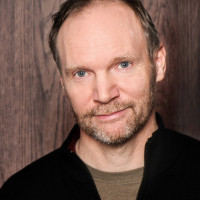
På billede er Annar Follesø, taget af fotografen: Dag Thorenfeldt

in briefrelease
14.01

Echoes from a Forgotten Time

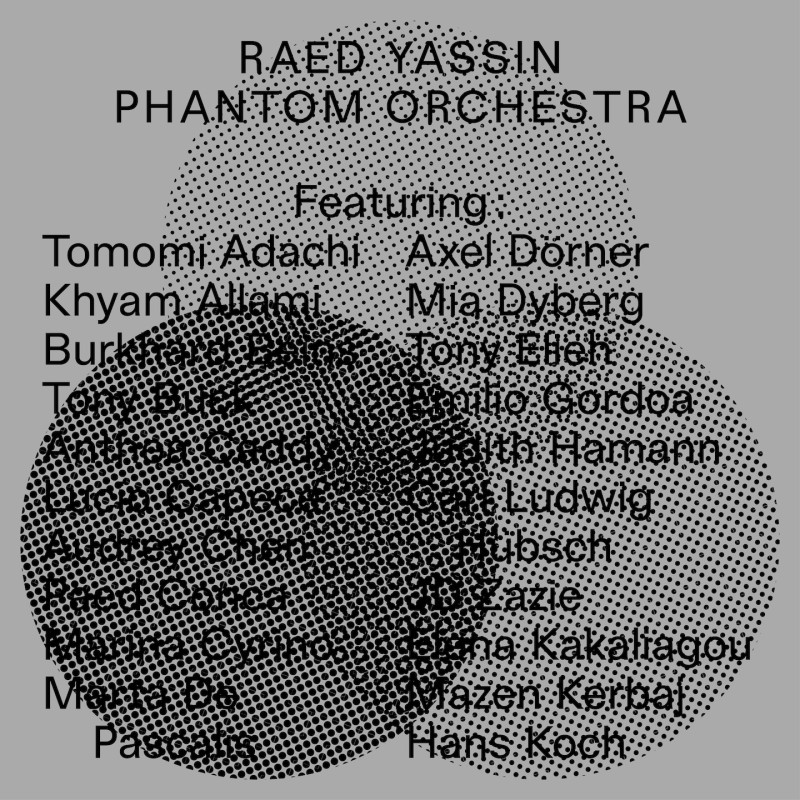
Raed Yassin: »Phantom Orchestra«
© PR
© PR

The abstract, collage-like »Movements« on Lebanese artist Raed Yassin's Phantom Orchestra are yet another piece of contemporary art born out of the COVID-19 crisis. Like a distant echo from a time most have already repressed, the experimental artist has assembled a series of recordings performed by a motley group of Berlin musicians – all united by a single premise: improvisation.

Over nearly an hour, Yassin weaves these recordings into seven progressive suites, ranging from approximately nine to twenty minutes. And while the sonic chaos at times reaches such heights that one struggles to find a common auditory anchor, the result is a creatively stimulating listening experience, as hand-played percussion, Baltic folk singing, and the Japanese koto (harp) seamlessly merge – despite the musicians never having been in the same room together.

At its core lies an immensely inspiring concept, one that draws equally from sampling aesthetics and contemporary art. This is particularly evident considering that the pieces were reportedly created using no fewer than twelve turntables, introducing an element of chance. One can only assume that this required a remarkable degree of planning – which makes it all the more astonishing when, for instance, the interplay between modular synths and drums on »Movement III« unfolds, or when the almost horror-like contrast between happy jazz trumpet, frantic vocals, and demonically prepared piano emerges on »Movement IV«.

At times, the idea behind the work is more fascinating than the sound itself, but all in all, Phantom Orchestra is a dazzling, slightly mad experiment, driven by a will to create harmony in chaos. A final echo of the pandemic – of standing together while apart.

English translation: Andreo Michaelo Mielczarek

© PR
© PR

The theme has been revisited countless times in music history, but ELECTRIO (Francesco Rista, Simone Giordano and Sandra Lind Þorsteinsdóttir) attempt to give Stabat Mater a new expression, combining guitar, vocals and electronics with Latin texts, Monteverdi fragments and songs by Dowland. The ambition is clear, yet the result is uneven.

There are, however, two striking exceptions. The opening of Stabat Mater – recorded at the Royal Danish Academy of Music – is captivating in itself: a four-minute build-up that establishes a muted, hovering sense of expectation. But it lies so close to Pink Floyd’s »Shine On You Crazy Diamond« that one can almost hear the quotation shimmering underneath. The characteristic three guitar notes fall at exactly the same place, just before Sandra Þorsteinsdóttir’s voice enters. »Fac me Cruce« is shaped with attractive energy and dynamic form, making strong use of electronics, but ends abruptly before the music has truly begun to unfold. If only ELECTRIO had continued in this direction.

The harmonic foundations of the eight pieces are often predictable, as in »Sancta Mater«, in which the Holy Mother prays that the wounds of the crucified be imprinted upon her heart. The harshness of the text is entirely absent from the underlying feel-good guitar fingerpicking, which moves shamelessly through familiar chord progressions. No wounds. No suffering.

More generally, Þorsteinsdóttir rarely strays from conventional baroque phrasing or genuinely experiments with the genre. The result resembles a mirror version of Sting’s Dowland project from 2006: only inverted – here a classically oriented singer who keeps too respectful a distance to let the songs truly enter an experimental universe.

Why did the trio not instead draw inspiration from Pergolesi’s music for the same text and theme? His score brims with wild dissonances that a new interpretation could have explored to powerful effect – revealing more anguish and outward-turning sorrow.

English translation: Andreo Michaelo Mielczarek

in briefrelease
14.01

In the Ruins of Old Organs, Builder Finds His Own Sonic Universe

Calum Builder: »Poor_in_Spirit – the (Re)constructed Pipe Organ« 
© PR
© PR

On his previous album, Renewal Manifestation, Calum Builder let the organ of Mariendal Church roar forth as an imposing protagonist. Now he returns with a work in which the same instrument not only carries the narrative but is the entire narrative – in the form of »the (Re)constructed Pipe Organ«, an organ he has assembled himself from discarded pipes and mechanics salvaged from Danish churches.

It’s a fascinating project, but what about the music? It’s a mixed experience. The three opening tracks, which together form the title piece, as well as »sometimes, I wonder«, are the highlights. The homemade organ surges beneath Builder’s touch on the keys, its frequencies rising and falling like hills and valleys in constant flux. The instrument howls like an autumn wind in the trees, while under- and overtones stand tall like runestones before crashing into each other. Builder’s talent for dramatic songwriting emerges in these miniature pieces – despite the instrument’s audible limitations.

Unfortunately, things unfold differently in several of the other tracks, such as »cicadas_nighttimesound« and »Pacific«. They appear more like sketches – demonstrations of the organ’s possibilities – than fully realised compositions. Ideas remain static and repeated, with very little development. The expected shifts and resolutions never arrive. On Poor_in_Spirit, Builder is clearly experimenting with form and function, and that in itself is interesting. But I miss the vitality and dramaturgy that are otherwise the core of his music.

English translation: Andreo Michaelo Mielczarek

in briefrelease
14.01

70 Minutes Confined to a Creaking Construction Site

Gayle Young & Robert Wheeler: »From Grimsby to Milan«
© PR
© PR

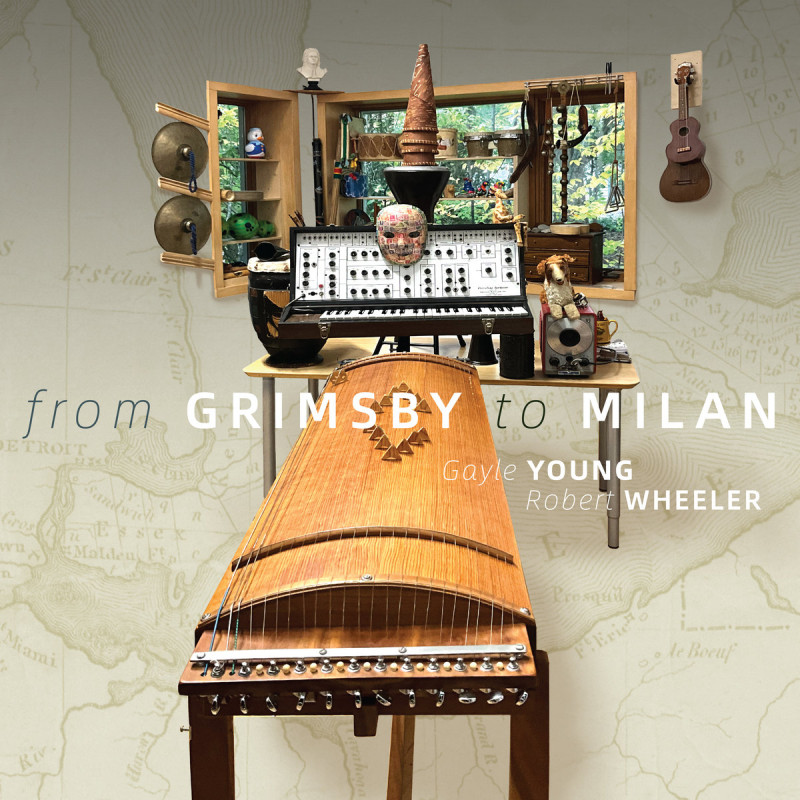
The Amranthen is a peculiar string instrument, invented and built by Canadian instrument maker Gayle Young. It consists of a wooden box fitted with 21 steel strings and three bass strings, and its unique, organic timbre unfolds on From Grimsby to Milan, where Young improvises alongside American musician Robert Wheeler on synthesizer. The recordings from Grant Avenue Studios capture the encounter between the acoustic and the electronic in a loosely shaped, raw musical flow.

Across nearly 70 minutes divided into six parts, the listener is kept in a state of constant uncertainty. The sonic landscape resembles a noisy, dystopian construction site: on »Seaweed Slowly Shifting«, bows are drawn with a saw-like rasp, fingers scratch, machines whirr, and sharp electronic zaps flash like warning lights. Later, bells and pulse-like rhythms enter on »Mariana Trench«, while »Consonant Harmony« slows the pace, settling into a subdued, crackling atmosphere where sparse melodic gestures suggest a momentary lull in the turmoil.

The construction-site metaphor fits well, for the most compelling version of this project would likely be to experience Young’s handmade instruments live, in direct dialogue with Wheeler’s electronics. As an audio recording, however, the project remains closed-off and somewhat insular. And although From Grimsby to Milan contains a wealth of fine detail, the journey – from Grimsby in Canada to Milan in Ohio – ultimately feels long and monotonous, without ever offering the listener the key to unlock its dystopian worksite.

English translation: Andreo Michaelo Mielczarek

© Hal Stucker

»Music is all of life in sound.«

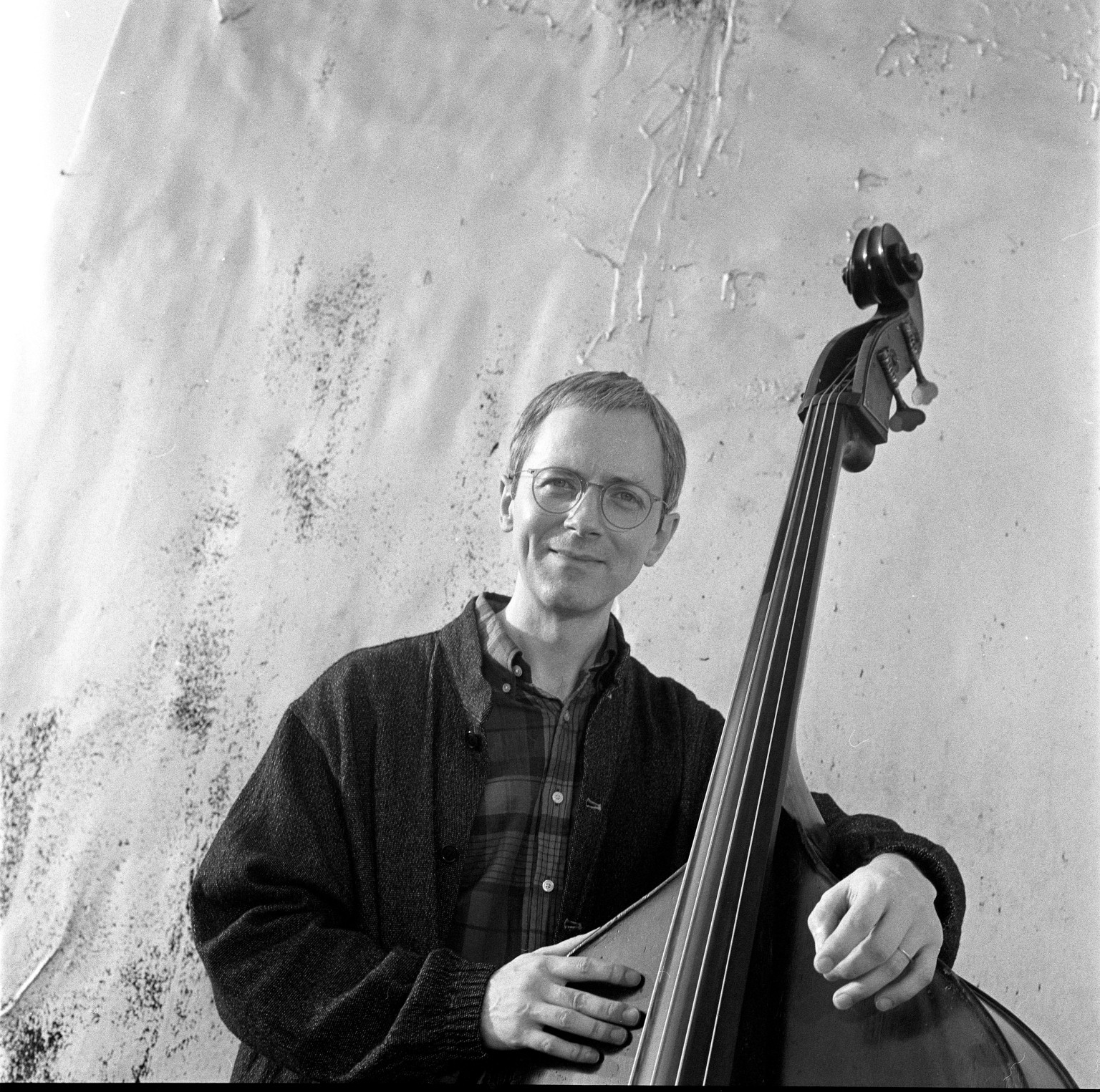
Thomas Morgan is a double bass player based in New York. He has recorded and toured all over the world as a member of Paul Motian’s bands, the John Abercrombie Quartet, Steve Coleman and Five Elements, Tomasz Stanko New York Quartet, Bill Frisell Trio, Jakob Bro Trio w. Joey Baron among many others. He has also collaborated with Dan Tepfer, Craig Taborn and Masabumi Kikuchi, and released albums with Bill Frisell, Small Town; Maria Laurette Friis, Colors, and with Jakob Bro/Joe Lovano, Once Around The Room. In November 2025 he stepped forward with his first solo project, Around You Is a Forest (Loveland Music). The record is built around WOODS, a virtual string instrument Morgan designed in SuperCollider that evokes the sound of plucked and struck string instruments – West African lute-harps, Asian zithers, the Hungarian cimbalom, marimbas – while operating according to generative code that Morgan shaped into a living, evolving instrument.