I samarbejde Goethe-Institut Dänemark, Københavns og Roskilde Universitet inviterer Seismograf/DMT til seminar tirsdag den 3. juni kl 16-18 Teater Repulique i forbindelse med Klangfestivalen 2014.

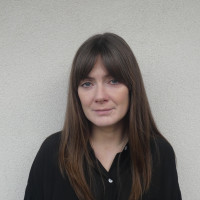
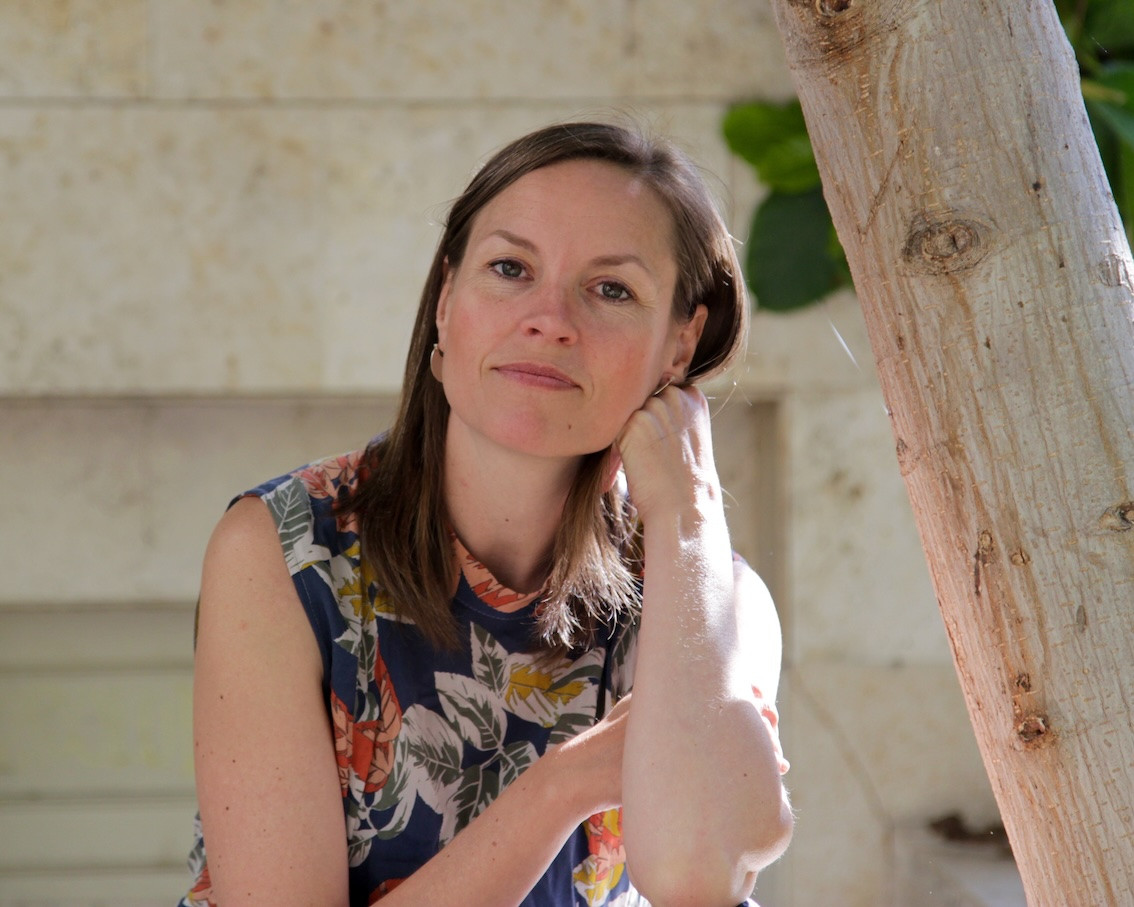
Ved seminaret " Modernisme, politik og det stedsspecifikke" har vi inviteret Dr. Kersten Glandien, Musikkritikeren Henrik Friis og komponisten Johannes Kreidler. Dr. Kersten Glandien fortæller om lydkunstscenerne i Berlin fra 1970erne og frem til i dag. Musikkritikeren Henrik Friis spørger, hvad der skete den radikale tyske modenisme efter Lachenmann og Spahlinger. Svarene søges bl.a. gennem en analyse af Spahlingers betydning for den danske komponist Simon Steen-Andersen. Den tyske komponist Johannes Kreidler taler om de sidste 15 års udvikling i tysk ny musik og præsenterer sin analyse af periodens æstetiske, tekniske og diskursive forandringer. 

Seminaret er arrangeret og ledes af Sanne Krogh Groth (RUC, Seismograf/DMT) og Søren Møller Sørensen (KU). Det afholdes på engelsk og er blevet til i samarbejde med Goethe-Institut Dänemark.

Abstracts:

Dr. Kersten Glandien (Senior Lecturer, University of Brighton, UK):
"… too wide a field - SoundArt in Berlin"

This comment on the human condition by Theodor Fontane came frequently to my mind while researching the various facets of SoundArt in Berlin. Far from encountering ‘a scene’, I found myself facing a vast labyrinth of activities, artists, works, places, events, organisers and institutions, stretching back several decades.

In my paper I will attempt to give an insight into the extent and hybridity of Berlin Sound Art - from its beginnings in the 1970s under the special conditions of cold-war West Berlin, through the landmark-festivals and lively activities of the post-Wall period, down to its ubiquity and acceptance today. I will examine the main players, institutions, organisers and initiatives, trace the unusual political and cultural conditions that set the agenda in both parts of the city, outline the exciting process of fusion that followed - and examine the very different approaches taken to SoundArt in the city today and the aesthetic clusters they form.

Henrik Friis (Music critique, Politiken, DK):
"What happened to modernism?"

What happened to the strong modernist position in German music after Lachenmann and Spahlinger? Well, maybe it is alive and kicking – living on, for instance, as impossible timbre made by young Danish composers. With a strong advocate in the Berlin resident and Spahlinger student Simon Steen-Andersen.

A place to start is the search for a useful framework for the term modernism. The Spanish philosopher Ortega Y Gasset addresses the modernist position in European Art and Music in 1925 in his essay ‘The Dehumanization of the Arts’. He claims that, opposed to earlier epochs in the history of the arts, modern music is not unpopular, as in ‘not popular yet, but outspoken anti-popular. A search for modernism is in that sense a search for traces of thoughts of intellectual anti-popularism and dehumanization. Helmut Lachenman and Matthias Spahlingers music from the early 1970’s and onwards show some of the same alienating and non-popular characteristics. For instance the ‘Musique Concrete Instrumentale’ focuses the ear at the noise of the music production and continuously stops the listener from forgetting that the musical experience is in fact a musical construction. Or the Spahlinger concept of the endless beginnings. These intellectual traces are pursued in the recent music of Simon Steen-Andersen, i.e. the cd of 2010 ‘Pretty Sound’.

Johannes Kreidler (Composer, DE):
"New Music in Germany in the last 15 years."

Having started to become a professional composer towards the end of the 1990s, not only personally I've made my artistic development, but also in general I can draw an overview now on a period of time of which I think has made quite a shift, aesthetically, technically, discursively.

Fakta
Seminar. Klangfestivalen
Tirsdag den 3. juni kl 16-18
Teater Repulique, Østerfælled Torv 37, 2100 København Ø


in briefrelease
04.02

Poetic Nocturnal Rummaging

Bent Sørensen: »12 Nocturnes & Piano Concerto No. 3, La sera estatica«
Bent Sørensen. © Peter Christian Christensen

Why is it that one can always recognize a lullaby? This musical archetype, circular and hushed, sung into us with mother’s milk. Composer Bent Sørensen’s solo piano cycle 12 Nocturnes is a tribute to the night’s musical cultural heritage. The nocturne – a nocturnal, lyrical composition – merges with, among other forms, lullabies and cantatas in a poetic narrative from sunset to sunrise about what is close at hand and yet unfathomable: that the sun rises, that children are born, that stars can be glimpsed through small windows on earth, that the piano can create worlds with twelve tones.

Bent Sørensen wrote the twelve short nocturnes between 2000 and 2014 for pianist (and wife) Katrine Gislinge. They have previously been released digitally. Now they appear as a studio recording paired with Piano Concerto No. 3, La sera estatica. The premiere of this “ecstatic evening” stands in contrast to the nocturnes’ simple, balanced forms. With a dramatic opening, multiple orchestral groups, and crackling storminess in the soundscapes, the dreamy nocturnal universe is ruptured by a surging ardor that unfolds in two parts, where purer melodic lines gradually take over the second – complete with a distinct (night?) bell.

Yet the piano concerto’s sovereign quality does not quite come into its own when presented as a postscript to the nocturnes’ rounded narrative. The two elements work best separately, so that the ecstatic evening for full orchestra does not puncture the magic of stars scattered blinking across the piano’s staccato attacks, or Sigrid’s nocturnal dances and lullabies. There is ample drama in the beautifully conveyed single night – for even the child Sigrid will one day no longer be sung to sleep.

© PR

»For me, music is a rush in the chest – a way of understanding and expressing emotions.«

Cecilie Penney (b. 1990, Denmark) will be presenting the exhibition Rest and Routine – Duet for Sanatorium and Modern Hospital at Nikolaj Kunsthal from February. She is a visual artist and electronic composer working across sound, installation, video, and text. Her practice explores how infrastructure and cultural norms shape human behaviour, and how emotions and empathy unfold within structural, linguistic, and technological systems.

In recent years, Penney has focused in particular on the Scandinavian healthcare system and on how patients navigate institutions that can be difficult to access and understand. Through a conceptual approach, she examines how patients are often expected to conform to rigid frameworks that fail to accommodate individual needs. By creating imagined or alternative worlds, Penney explores new possibilities for healing and transformation within bureaucratic systems, while inviting reflection on how systemic change might emerge from emotional insight and collective rethinking.

Penney holds an MFA from the Royal Danish Academy of Fine Arts in Copenhagen and a BFA in Fine Art Photography from HDK-Valand in Gothenburg.

© Mishael Oladipo Fapohunda

»As Bertolt Brecht once wrote: 'In dark times, will there also be singing? Yes · there will be singing, about the dark times'.«

SLIM0 is a Copenhagen based doom/grunge/punk trio consisting of Mija Milovic (guitar), Lena Milovic (guitar) and Simin Stine Ramezanali (drums). The vocals of all three members can be heard throughout, the voice being a central element to the band's practice. SLIM0 uses minimal, albeit feisty arrangements to convey a strong sense of ominousness. Through crashed cymbals, distorted guitars and voices in unison, they present a full body of work hailing from personal takes on classic punk/rock tropes with SLIM0 as the omniscient narrator. Their debut album FORGIVENESS was released in October 2024 via 15 love. 

© Søren Lynggaard
© Søren Lynggaard

It is difficult not to read a great deal into trumpeter, composer and all-round musical visionary Palle Mikkelborg’s new solo album Light. He has long since passed retirement age, withdrew from touring in 2024, and with this release has presented something that very much feels like a kind of farewell.

The opening track, Per Nørgård’s »At tænde lys« (»To Light a Candle«), is pure Mikkelborg: his lyrical, elevated and elegiac solo trumpet, in both form and expression, speaks directly to the listener’s heart. Elsewhere, he draws on old soundscape recordings, combining them with piano and trumpet. The interplay between the old and the new creates a compelling mystique and casts a subtle, unsettling shadow over the music.

»Capricorn« perhaps stands out most strongly: a tender and romantic reimagining for solo piano of one of his own pieces, like a loving glance back at bygone times and former triumphs. And then, of course, the closing track, Thomas Laub’s »Stille, hjerte, sol går ned« (»Be Still, Heart, the Sun is Setting«), where Mikkelborg’s melancholic trumpet is joined by Jakob Bro’s guitar, Helen Davies’ harp and Thomas Lis’s choral soundscape. Together they create a piece of music that truly feels like a farewell, marked by both uncertainty and sorrow, but also acceptance and gratitude.

All in all, Light is the perfect distillation of Mikkelborg’s musical life – a cavalcade of the qualities that have always defined him as a musician: light, colour, life, mysticism, love. Whether this will be the final release from Mikkelborg’s hand, I do not know, but if it should prove to be the case, few swan songs have ever sounded so beautiful.

© Bjørn Giesenbauer
© Bjørn Giesenbauer

It is difficult to keep pace with Masami Akita. The 69-year-old Japanese noise artist, who since 1979 under the name Merzbow has helped shape the genre, released no fewer than a dozen albums in 2025 alone. On a rare mini-tour with stops in Helsinki, Stockholm and Aarhus, he showed that his energy remains intact. At Radar he gathered an audience that had travelled far to experience the godfather of noise – an artist who has consistently insisted on noise as a physical, almost tactile experience. Wearing a bucket hat, Akita constructed his trajectories with clear architectural precision. Layer upon layer of distortion and feedback took shape and struck like a brush of metal: hard, cutting, physical – uncompromising, yet at the same time remarkably nuanced.

Akita worked not only with electronics, but also with homemade metal instruments – first a banjo-shaped device, then a square musical saw – lending the sound a raw, tangible materiality. Everywhere, microscopic shifts in texture emerged, small fissures of tone within the massive pressure.

The opening set by frã (Francisco Moura) began the evening with a more fragile, yet persistent electronic texture, a precise counterpoint to Merzbow’s compact blocks of sound. Some might have wished for a gentler entry into the musical year 2026, but the concert underscored the ambitions Radar is currently pursuing.

English translation: Andreo Michaelo Mielczarek